
Reviewed · WINERY TOURS
Gran Canaria: Winery Tour, Wine Museum, and Tasting
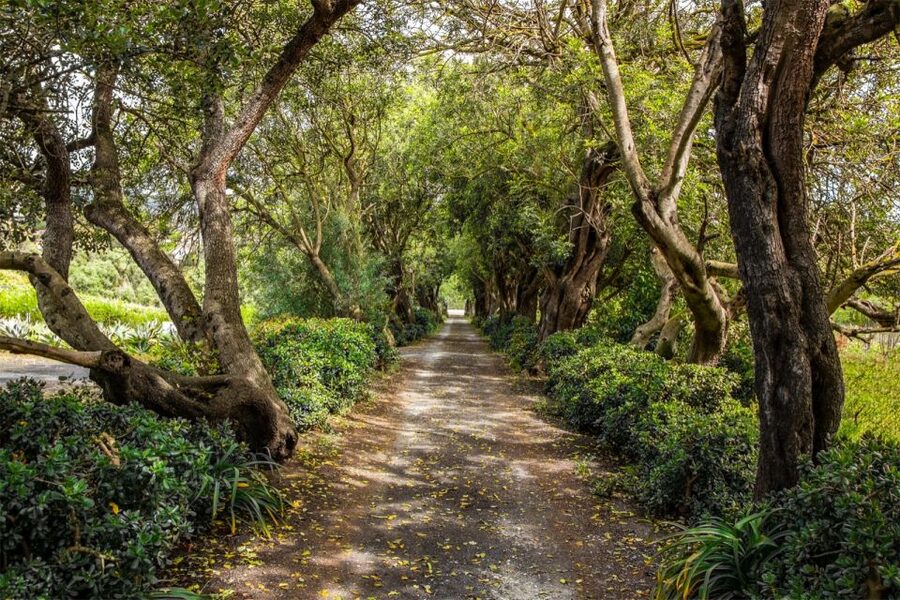
Gran Canaria’s wine story comes alive at Bodega San Juan, a family winery with more than a century of work behind it. You’ll walk among organic vineyards, see volcanic soil and local grape varieties, then move from an old stone lagar to a working cellar and modern production area.
I like the way this tour links family history with the practical work of growing grapes. I also like the relaxed finish: two wines with Gran Canaria cheese, toast, and olives, often served in the estate’s pretty garden. The main drawback is transport. There’s no hotel pickup, and reaching the winery by bus can take some planning.
Key points to know before you book
- A five-generation family winery: The estate has been cared for by the same family for generations, with records and photographs that reach back to the early 1900s.
- Gran Canaria’s only wine museum: Old machinery and winemaking tools show how production changed from hand labor to modern methods.
- A real cellar visit: You can smell wine fermenting in wooden casks and compare the older rooms with newer facilities.
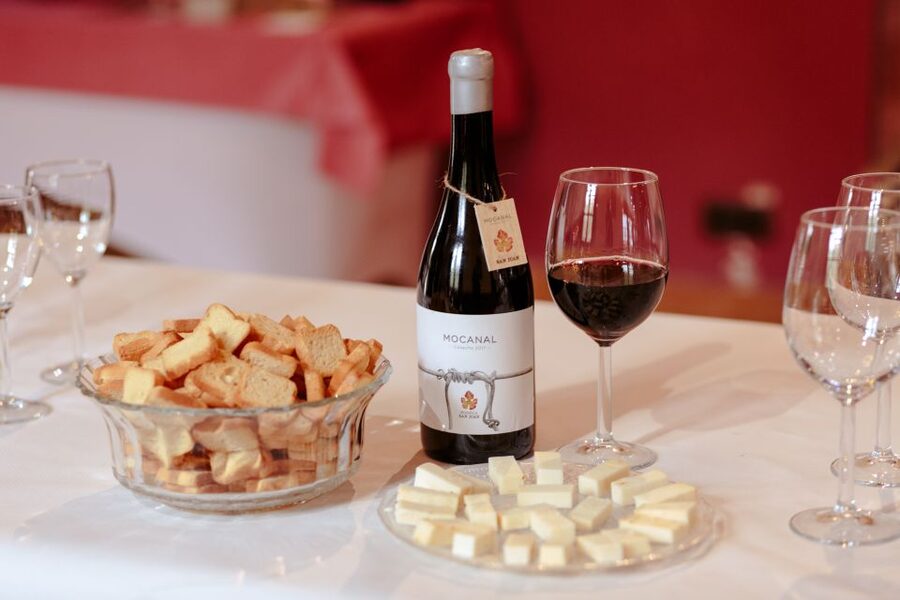
- A two-wine tasting: The tasting includes cheese, toasted bread, and olives, making this more than a quick sip at a counter.
- Maria is a favorite guide: She is known for clear English, humor, family stories, and helping visitors feel at ease.
- Allow time for the journey: The visit lasts 1.5 hours, but getting to Finca El Mocanal is separate from the tour and requires your own transport.
What makes Bodega San Juan worth your time
Wine tourism in Gran Canaria is not only about the drink in your glass. It is also about the island’s dry climate, sun, volcanic ground, and the effort needed to keep a small vineyard productive.
Bodega San Juan gives you a compact look at all of that in one visit. You begin at a family-run estate that dates back over five generations. Old photographs help put faces and stories to the property. This matters because the place does not feel like a large commercial wine operation. You are seeing a working family business with its own methods, buildings, tools, and memories.
The tour is also a good fit if you want something slower than the usual beach or sightseeing day. At 1.5 hours, it is long enough to explain the basics without taking over your afternoon. You get a farm walk, a museum visit, a cellar stop, and a tasting without committing to a half-day program.
I would not book this expecting a large production facility or a broad tasting menu. The visit is intimate and focused. You taste two wines, not a full flight, and the winery’s own red wine has not always been available to buy. For most people, that is a small concern, but serious wine shoppers should keep it in mind.
More Winery Tours in Spain
- Barcelona: Montserrat, Cogwheel, Black Madonna & Winery Tour
★ 4.8 · 5,633 reviews - Montserrat with Black Madonna & Medieval Winery with Tapas/Lunch
★ 5.0 · 5,209 reviews - Montserrat Full Day Tour with Farmhouse Lunch and Winery Visit
★ 5.0 · 1,068 reviews
Starting at the family estate
Meet at Bodega San Juan, Finca El Mocanal. There is no hotel pickup or drop-off, so you need to arrange your own way there.
The meeting point deserves attention because one person found the start location unclear, while another had difficulty reaching the area by bus. Public transport is possible, but it may be complicated. If you are relying on a bus, check the route and allow extra time. Driving or arranging a taxi may make the day easier, especially if you are traveling with family or have a fixed schedule afterward.
The tour takes place rain or shine. That means you should dress for time outdoors, even though part of the visit happens inside. You will walk through vineyard areas and estate grounds before moving into the museum and cellar.
Once the tour begins, the family background gives the visit its shape. You will look at old photographs and hear how the property has been maintained over five generations. The story is not just about dates. It explains how a small winery keeps working through changes in climate, equipment, and production methods.
Maria is one of the guides associated with the tour. She has been praised for her humor, clear English, and ability to adjust her explanations for different people in the group. She has also switched between languages when needed. The listed host language is English, so you should confirm language needs when booking if English is not comfortable for you.
Walking through the organic vineyards
The vineyard walk is where Gran Canaria’s setting begins to make sense. You will see the grapevines in the open air and hear about the island’s endemic grape varieties.
The tour explains the role of volcanic soil and the care needed to keep the crop in good condition. This is useful context because the final wine does not begin in a bottle or a tasting room. It begins with decisions about the vines, sun, soil, and timing.
You will also hear about the work involved in keeping the grapes healthy as they ripen. The details are practical rather than theatrical, which I prefer. You get a clearer sense of why small-scale wine production takes so much attention.
Bring a phone or camera if you enjoy taking pictures. The rolling vineyard views and old estate buildings give you plenty of appealing photo spots. The gardens can also be a pleasant setting for the tasting, with one visit describing butterflies around the group.
This portion may be less satisfying in poor weather, since the tour continues in rain or shine. Still, the museum and cellar give the visit indoor substance, so the whole outing does not depend on a sunny afternoon.
The 100-year-old stone lagar
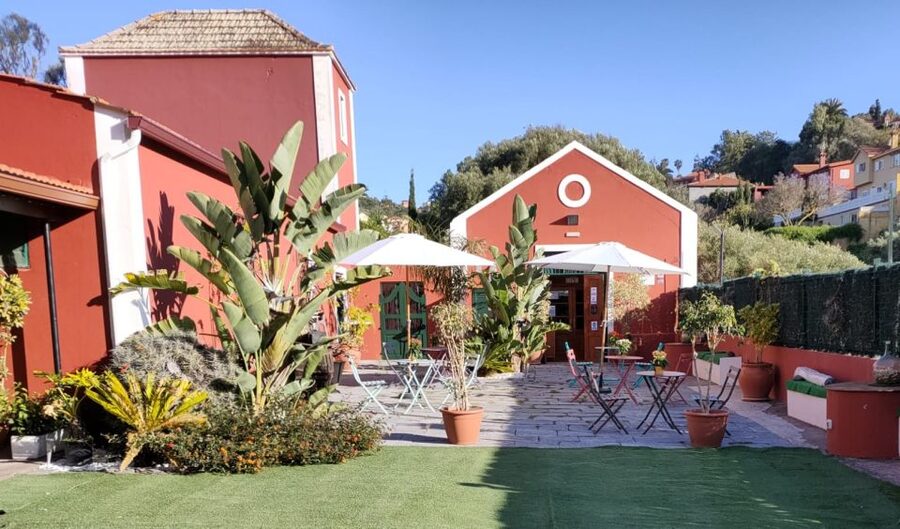
One of the most memorable objects on the estate is the old stone lagar. This is where grapes were once trodden by foot.
The lagar connects the present winery to an earlier style of production. Before modern equipment, turning grapes into wine required more direct physical work. Seeing the stone structure helps you picture that process far better than a spoken explanation alone.
You will also learn how the winemaking process changed over time. The point is not to pretend the old method was better in every way. Instead, the visit lets you compare the labor and tools of the past with the equipment used now.
For history-minded visitors, this may be the strongest part of the tour. It is a genuine piece of the estate rather than a recreated display. If you are mainly interested in tasting wine, it still gives the tasting more meaning because you have seen the work behind the bottle.
Same region, a different bottle:
- Montserrat Half-Day Tour with Tapas and Gourmet Wines
★ 5.0 · 7,359 reviews - Montserrat & Cogwheel Train, Gourmet Wine Tasting & Tapas/Lunch
★ 5.0 · 6,290 reviews - Barcelona Tapas and Wine Experience Small-Group Walking Tour
★ 5.0 · 5,804 reviews - Barcelona: Tapas Walking Tour with Food, Wine, and History
★ 4.8 · 4,261 reviews
Gran Canaria’s only wine museum
The small wine museum shows old machinery and equipment used in earlier production. It is not a huge museum, so keep your expectations in check. This is a focused collection within the winery, not a major standalone attraction.
That small size works well in a 1.5-hour visit. You can look closely at the tools, hear how they were used, and continue without spending an entire morning reading labels. The museum also helps explain the family’s connection to the property.
I like this old-to-new structure. You see the family photographs, the stone lagar, the older machinery, and then the modern production area. The sequence gives you a clear picture of change without turning the tour into a technical lecture.
The museum is especially useful for first-time winery visitors. You do not need prior wine knowledge to follow it. The guide explains the basic process from grape to bottle and shows how equipment has made some steps more efficient.
Entering the cellar and modern production area
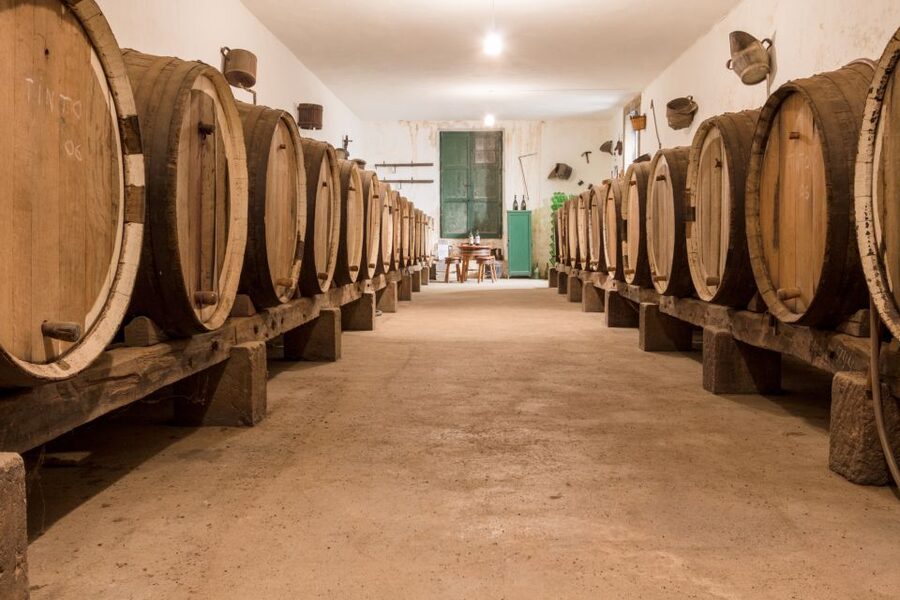
The cellar adds atmosphere, but it also gives you a practical lesson in fermentation. As you enter, you can smell wine working in wooden casks. That aroma is one of the sensory details that makes a cellar visit different from a museum display.
You will hear about the process used to create organic wine and how the winery handles production today. The tour compares the older cellar with the modern facility, so you can see how tradition and newer methods share the same estate.
Do not expect a long technical seminar on winemaking chemistry. The focus is accessible and hands-on. You are learning the main steps, seeing the rooms, and understanding the care required at a small winery.
The cellar can also be a welcome break from the sun. Since the tour includes outdoor and indoor sections, it has a natural rhythm. You walk through the vines, examine old equipment, smell the casks, and then settle into the tasting area.
The tasting: two wines and local snacks
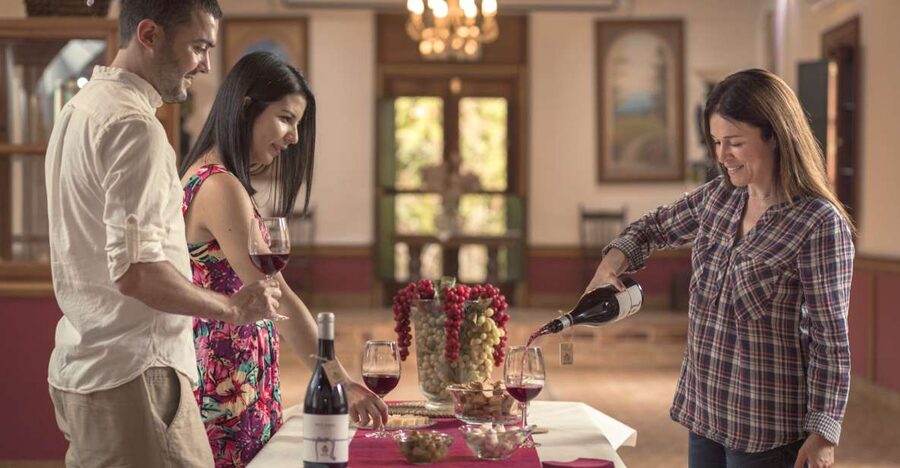
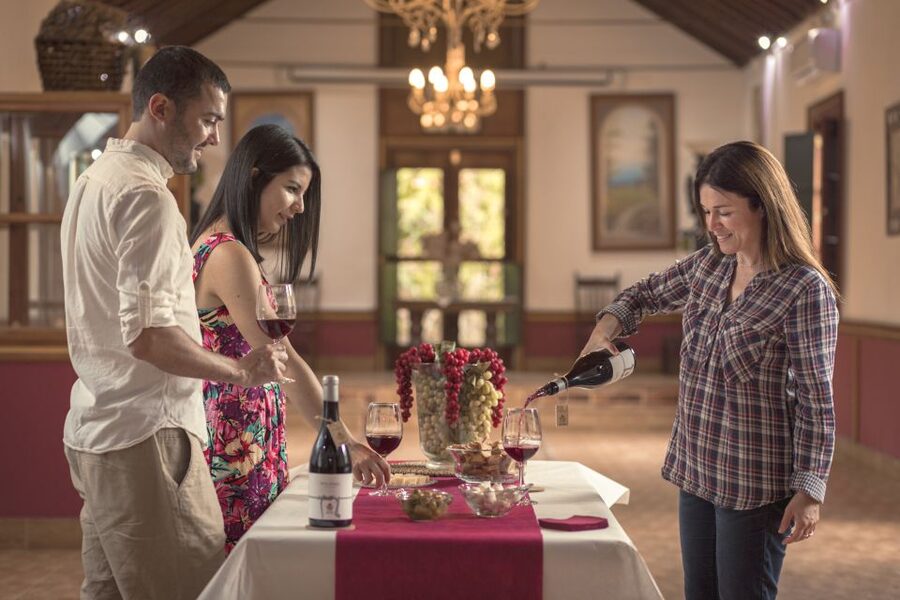
The tasting comes at the end, after you have seen where the wine begins. You receive two wines along with Gran Canaria cheese, toasted bread, and olives.
That food matters. Cheese and bread give you something to eat between sips, while the olives add another local flavor. The tasting feels like a small regional snack rather than a formal wine exam, so you can enjoy it even if you are not an expert.
You will have a chance to compare the wines and ask questions about what you are drinking. The tasting is not described as a large selection, but two wines are enough to give you a simple comparison after the tour.
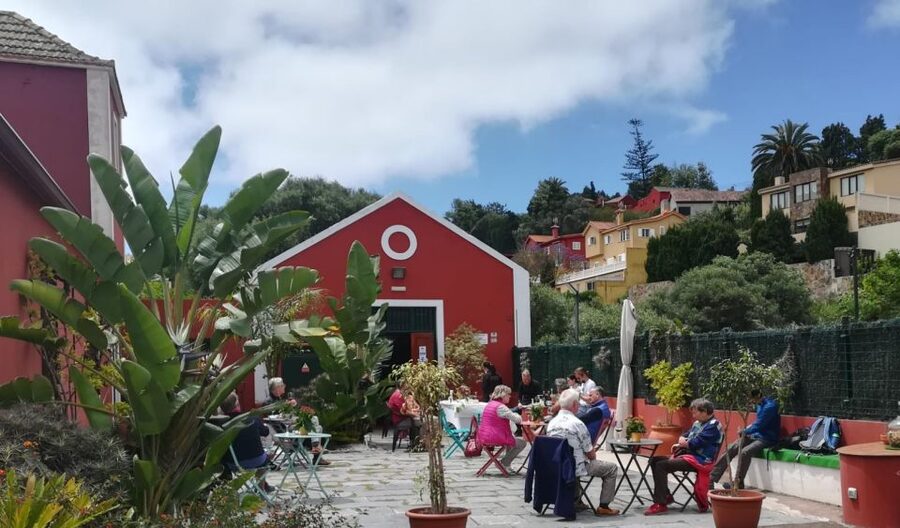
The garden setting is one of the nicest details associated with the visit. If your tasting is served outdoors, you may sit among the estate’s plants and buildings, with butterflies nearby. That setting makes the final portion feel calm and social.
If you hope to take wine home, ask what is available on the day. One person especially liked the winery’s red wine but found that none was available to buy. Another couple bought two bottles. Availability can vary, so do not assume every wine poured will be in stock.
Price, timing, and practical value
At $34 per person, this is a strong value if you want a guided introduction to Gran Canaria wine. The price includes the farm tour, wine tasting, cheese, toast, and olives. You also get access to the museum, cellar, vineyard areas, and family history.
The value comes from the variety packed into 90 minutes. A simple tasting at a bar might cost less, but it would not show you the vineyards, old lagar, museum, and production rooms. A longer winery outing might offer more pours, but it would also take more time from your day.
The short length makes this easy to pair with other plans. You can fit it into an afternoon or use it as a break from resort time. I would still avoid scheduling something immediately afterward because transport to and from the estate is your responsibility.
Free cancellation is available up to 24 hours before the tour for a full refund. You can also reserve and pay later, which helps if your Gran Canaria plans are still shifting.
The tour is suitable for adults who enjoy food, drink, local history, and family businesses. It can also work for a birthday outing or a quiet afternoon with a partner. One birthday visit included a parent and was praised for its friendly pace and adaptable guide.
Who should book this winery visit?
I would choose this tour if you want a personal look at Gran Canaria’s wine culture without spending half a day at a large estate. It is particularly good for people who like old buildings, working farms, family stories, and tastings with something to eat.
You will also enjoy it if you are curious about how island conditions affect wine. The tour discusses volcanic soil, local grape varieties, sunlight, and crop care, giving you more context than a standard tasting.
Families may find the museum and old equipment more interesting than a purely wine-focused visit, though the tasting itself is aimed at adults. Couples and small groups get a relaxed setting, and the guide may be able to take photos during the visit.
I would think twice if you need hotel transport, want a large number of wines, or are looking for a fully indoor activity. The tour continues in bad weather, and the bus journey can be awkward. It is also not the best choice if your main goal is to buy a particular bottle, especially the estate’s red.
Should you book Bodega San Juan?
Yes, if you value character over scale. For $34, you get a friendly introduction to a five-generation winery, a genuine old cellar, a 100-year-old lagar, Gran Canaria’s only wine museum, a vineyard walk, and two wines with local snacks.
Plan your transport carefully, wear something comfortable for walking outdoors, and leave room for a relaxed tasting rather than expecting a large wine course. If Maria is guiding your visit, you can expect clear explanations, family stories, and a light touch.
This is a small, well-priced cultural outing. It gives you a better feel for Gran Canaria than another hour beside a hotel pool, and it does so without asking for much of your day.
FAQ
How long does the winery tour last?
The tour lasts 1.5 hours.
How much does the experience cost?
The listed price is $34 per person.
Where does the tour meet?
You meet at Bodega San Juan, Finca El Mocanal.
Is hotel pickup included?
No. Hotel pickup and drop-off are not included.
What language is the tour offered in?
The listed host language is English.
How many wines are included?
The tasting includes two wines.
What food comes with the tasting?
The tasting includes Gran Canaria cheese, toasted bread, and olives.
Does the tour include a vineyard visit?
Yes. The experience includes a farm tour and a walk through the organic vineyards.
Can I see old winemaking equipment?
Yes. The wine museum contains old machinery, and the tour also includes a 100-year-old stone lagar and the old cellar.
Can I cancel for a refund?
You can cancel up to 24 hours in advance for a full refund. You can also reserve now and pay later.
More Museum Visits in Spain
- Picasso Museum and Walking Tour Plus Optional Wine & Food Tasting
★ 5.0 · 596 reviews - Tenerife: Wine Museum Ticket with Local Wines & Food Tasting
★ 4.5 · 393 reviews - Picasso Museum and Walking Tour Plus Wine Tasting Upgrade
★ 4.3 · 111 reviews - Porto: Cálem Cellar Tour, Interactive Museum & Wine Tasting
★ 4.5 · 4,113 reviews
Newest wine reviews around Spain
- Visit La Joya Escondida de la Ribera del Duero Winery★ 5.0 · 43 reviews
- Full day at the winery, visit, tasting, aperitif and lunch★ 4.5 · 60 reviews
- Visit a winery of the 19th century and its draft★ 5.0 · 62 reviews
- Ribera del Duero Underground Cellar & Wine Tasting Experience★ 4.5 · 49 reviews
- Visit and Wine Tasting at the Territorio Luthier Winery★ 5.0 · 89 reviews
- Semi-Private Rioja Tour of 3 Premium Wineries from Bilbao★ 5.0 · 128 reviews
- Basque Best Bites – #1 Food & Wine tour of Bilbao★ 5.0 · 268 reviews
- Rioja & Txakoli Wine Tasting in Bilbao with a Local Sommelier★ 5.0 · 40 reviews
Winery Tours, compared.

Tuscany Day Trip from Florence: Siena, San Gimignano, Pisa and Lunch at a Winery
Read our review →
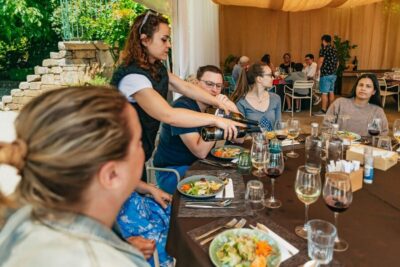
Douro Valley with Winery Lunch, Tastings & Cruise
Read our review →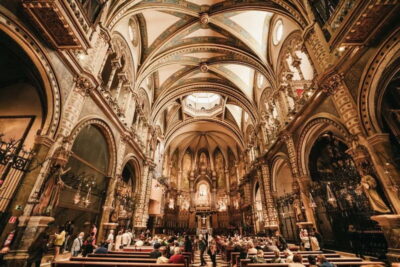
Montserrat, Cogwheel, Black Madonna & Winery Tour
Read our review →
Montserrat with Black Madonna & Medieval Winery with Tapas/Lunch
Read our review →
Wine Tour: Paarl, Franschhoek & Stellenbosch incl 3 wineries
Read our review →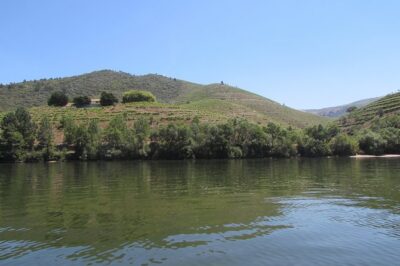
Douro Valley Tour: 2 Vineyard Visits, River Cruise, Winery Lunch
Read our review →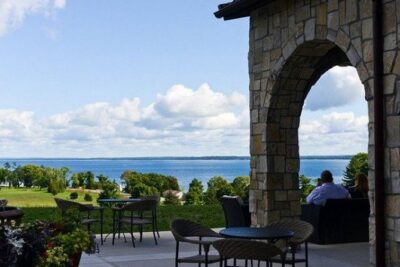
5-Hour Traverse City Wine Tour: 4 Wineries on Old Mission Peninsula
Read our review →Lists this tasting appears in