
Reviewed · SPAIN WINE TOURS
La Palma: Roque de los Muchachos Stargazing Tour with Wine
The best part of this La Palma outing comes after sunset, when a telescope may bring Saturn’s rings, moons, planets, star clusters, and nebulae into view. I like that you get both a high-mountain sunset with wine and a proper night-sky session, rather than a quick look at stars from town. I also like that someone else handles the steep, dark mountain roads.
The trade-off is the long evening and the lack of open toilet facilities in the mountain area. You may return to your hotel as late as 1 a.m., and the cold at 2,426 meters is real. Bring serious warm layers, even in summer, and check the moon and weather before booking.
Key points to know before you book
- Saturn can be part of the show: A good viewing night may reveal Saturn’s rings and several moons through the telescope.
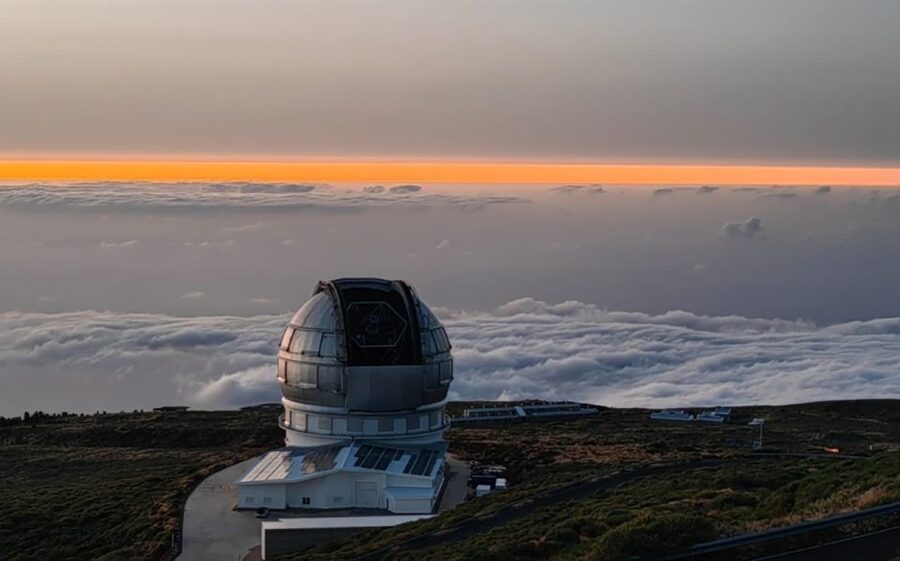
- The summit is 2,426 meters high: You visit the Roque de los Muchachos viewpoint and see the observatory buildings from outside, but you do not enter them.
- The evening has three distinct parts: Mountain viewpoints, sunset with one glass of wine, then guided telescope observation.
- The ride removes a real burden: Hotel pickup and drop-off mean you do not need to drive steep roads at night.
- Full moon is a deal breaker: The activity cannot run during a full moon because its light washes out many stars.
- Plan for a late return: Drop-off is between 10 p.m. and 1 a.m., depending on sunset and the season.
Why La Palma is such a strong place for stargazing
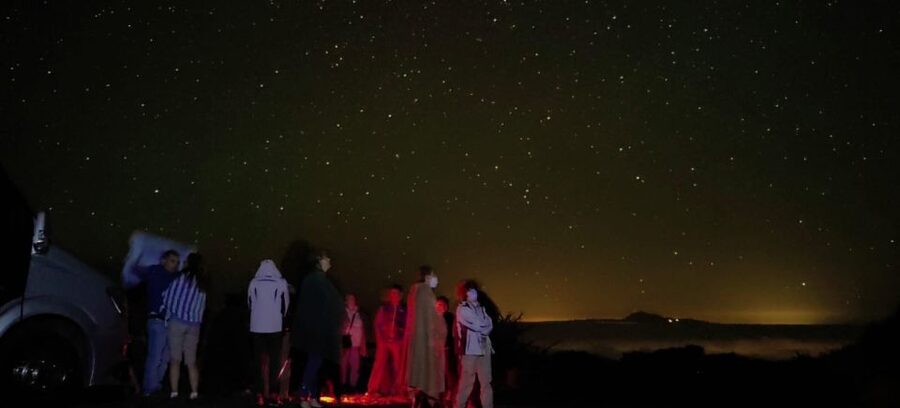
La Palma offers something that city visitors quickly notice: a much darker sky. At the Roque de los Muchachos viewpoint, you are high above the island at 2,426 meters, near one of the world’s important astronomy sites.
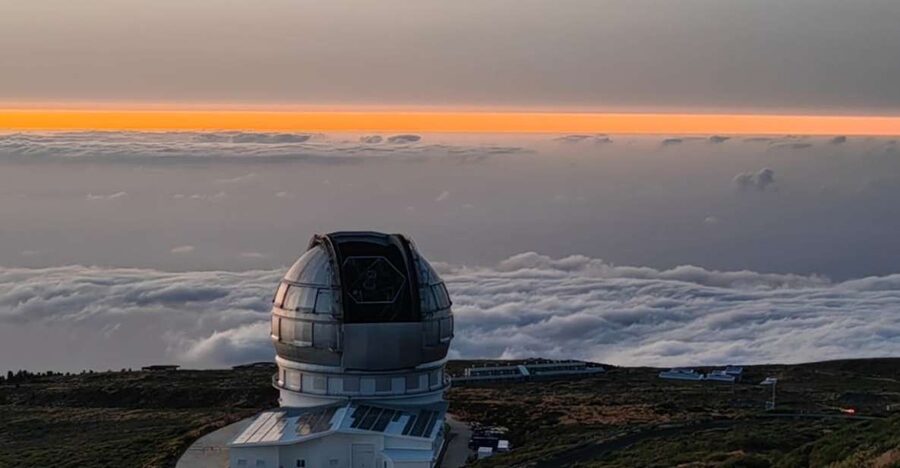
The altitude matters. So does the location away from heavy city lighting. Your guide explains why so many large telescopes are placed here and points out the facilities along the road. You are not entering the observatories, and this is not an indoor observatory tour. The appeal is being outside, under the same dark sky the scientific instruments use.
I find that context makes the night more meaningful. Without it, you might simply see a collection of domes and buildings on a mountain. With an explanation of what each telescope does and why the site was chosen, the summit becomes part of the experience rather than just a photo stop.
The guide’s role is important here. The tour operates in English, Spanish, and German, and the group may be divided by language for the telescope session. Stefanie has led some departures, explaining both the observatory area and the night sky in three languages. Max has driven some evenings, a useful detail when the road feels steep and demanding in the dark.
More Wine Tours in Spain:
- Montserrat Half-Day Tour with Tapas and Gourmet Wines
★ 5.0 · 7,359 reviews - Montserrat & Cogwheel Train, Gourmet Wine Tasting & Tapas/Lunch
★ 5.0 · 6,290 reviews - Barcelona Tapas and Wine Experience Small-Group Walking Tour
★ 5.0 · 5,804 reviews
The ride up from Fuencaliente, Cancajos, Santa Cruz, or Los Llanos
Pickup is available from Fuencaliente, Los Cancajos, Santa Cruz de La Palma, or Los Llanos, depending on the option you choose. The exact meeting point can vary, so check your booking details carefully. The bus carries a La Palma Transfer & Tours sign, which helps you identify it.
The six to seven-hour duration includes a substantial amount of driving. That is not wasted time, but you should understand the shape of the evening. La Palma’s summit is not a quick hop from the coastal resort areas, and the return journey comes after several hours outside in the cold.
I consider the transport one of the strongest reasons to book. The mountain roads are steep, winding, and unfamiliar, and the return takes place at night. A skilled driver lets you watch the views on the way up and relax on the way down instead of concentrating on bends and headlights.
One caution: road closures can lengthen the journey. A delayed route may reduce time at one of the summit viewpoints, as happened on an especially difficult evening. The company can also cancel a route when weather conditions make it unsuitable. If that happens, you can change the date during your stay or receive a full refund.
Roque de los Muchachos viewpoint and the observatory area
The first major stop is the Roque de los Muchachos viewpoint, close to the highest point of La Palma. From here, you look across the island and see the telescope installations on both sides of the road.
Your guide explains the purpose of the telescopes and why this high, dark location works so well for astronomy. This is the educational heart of the first part of the tour. You are not simply being driven to a high point for a photograph.
Keep your expectations clear: the observatory is not open for a nighttime visit on this experience. You remain outside and view the buildings from the road and viewpoints. Some departures have had limited time in the observatory area because it closes around 7 p.m., so the precise schedule can affect how long you spend there.
That timing changes with the season. Sunset controls the start time, and the company may adjust the schedule as the year progresses. A summer evening and a winter evening will not feel alike, even though the basic plan remains the same.
The height also changes the weather. The summit can be cold and exposed, and the temperature may drop sharply after sunset. I would treat warm clothing as essential, not as a polite suggestion. A jacket, extra layers, and warm trousers are sensible. Comfortable shoes also help, though the supplied information does not promise a particular walking route or distance.
Sunset, wine, and a second mountain viewpoint
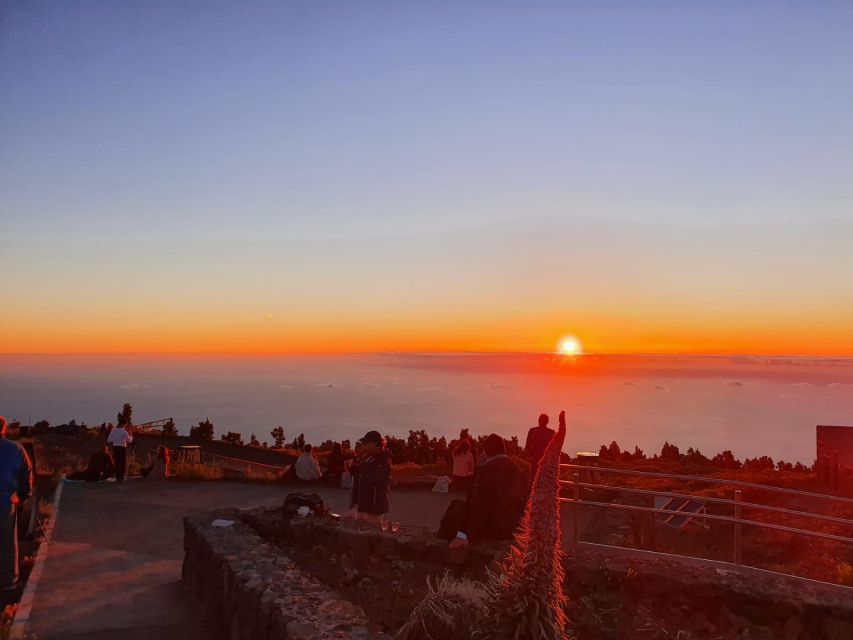
After the observatory area, the bus continues to another viewpoint chosen for the sunset. Here you receive one glass of wine and watch the light fade over La Palma.
This is a smart pause between the daytime view and the dark-sky session. You get time to adjust to the cold, take photographs, and enjoy a simple local-style moment without rushing straight into astronomy. The wine is a small inclusion, not a tasting experience, so do not book this expecting a vineyard visit or several pours.
The exact viewpoint depends on conditions and the evening schedule. That flexibility is useful because sunset visibility can change with cloud and wind. It also means the tour is not a fixed checklist where every departure unfolds at the same minute.
You should carry water and any food you need for the evening. The information provided confirms one glass of wine, but it does not promise a meal. One departure used a lay-by for a picnic after the observatory area closed, which shows that the stop may be practical rather than polished.
The lack of toilets is the bigger issue. There are no open toilet facilities available for the whole mountain portion of some departures. I would use the facilities before leaving your hotel or pickup area and avoid drinking more than you need during the drive.
Same region, a different bottle:
- Barcelona: Montserrat, Cogwheel, Black Madonna & Winery Tour
★ 4.8 · 5,633 reviews - Montserrat with Black Madonna & Medieval Winery with Tapas/Lunch
★ 5.0 · 5,209 reviews - Barcelona: Tapas Walking Tour with Food, Wine, and History
★ 4.8 · 4,261 reviews - Madrid Tapas & Wine Tasting Walking Tour – Small Group Local Bars
★ 5.0 · 3,644 reviews
Telescope viewing after dark
The final stop is the reason most people choose this outing. Once it is properly dark, your guide sets up a quality telescope and helps you examine the sky.
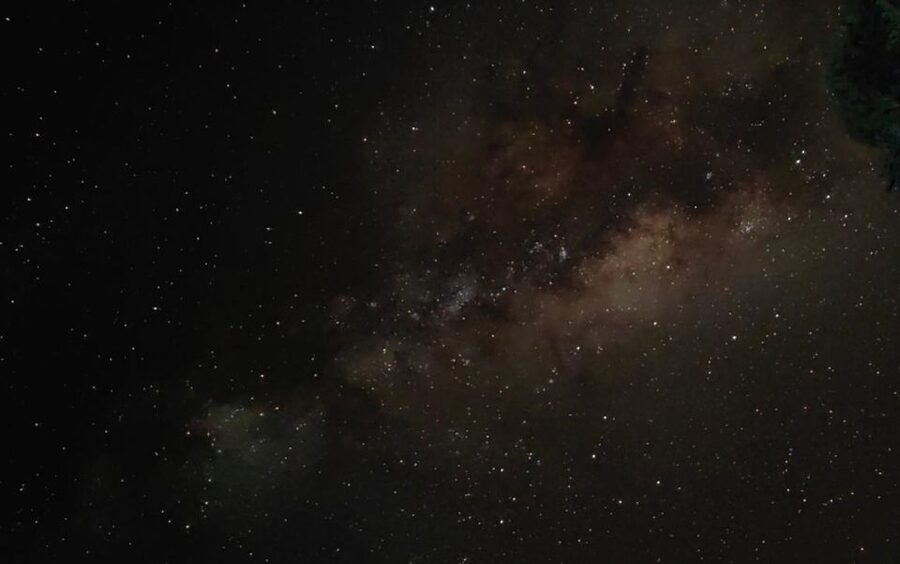
The exact objects depend on the date, weather, and visibility. You may see planets, galaxies, nebulae, and star clusters. On a clear evening, the Milky Way can be visible to the naked eye, while the telescope brings distant objects into sharper focus.
Saturn is a memorable possibility. One evening included a view of its rings and three of its moons, along with the Milky Way and a star cluster seen with binoculars. That is not a guarantee for every departure, but it gives you a good sense of what a successful night can offer.
The guide also helps you identify what you are seeing. That matters because the sky can look like a mass of points at first. A clear explanation gives shape to the experience and helps you understand why La Palma is prized by astronomy enthusiasts.
Groups may be divided into English, Spanish, and German sessions. This should make the explanations easier to follow, though the overall tour can still include people speaking several languages. Stefanie has been praised for explaining the galaxy and the telescope work in three languages, and other guides lead the same type of observation.
Cloud is the great variable. The tour depends on darkness and clear enough skies, so there is no promise that every listed planet or deep-sky object will appear. A weather cancellation brings the option to change dates during your stay or receive a full refund, but cloud during an operating tour can still affect what you see.
Cold, darkness, and the practical side of the evening
The cold deserves repeated attention. At this altitude, standing still beside a telescope after dark can feel much colder than walking around town. Summer does not remove the need for warm clothing, and winter can be especially demanding.
Bring:
- Warm layers, including a proper outer jacket
- A camera
- A charged smartphone
- Water and any food you need
- Sensible footwear for outdoor viewpoints
A charged phone is useful for meeting the bus and for photos, but do not expect it to replace a camera for night-sky images. The supplied information does not promise special photography support, and smartphone results will depend on your device and the darkness.
The late finish also affects your next day. Return to pickup points is scheduled between 10 p.m. and 1 a.m., depending on sunset and time of year. If you have an early flight, a demanding hike, or a morning excursion planned, place this tour on a night when you can sleep in afterward.
The bus solves the driving problem but not every comfort issue. There may be no toilet on the mountain route, and one departure included a long journey made worse by road closures. I would choose this tour for the sky, not for a relaxed coach ride.
Is the $65 price good value?
At $65 per person, the tour is fairly priced if you want the complete evening without renting a car or arranging separate transport. The fee covers the round-trip hotel transfer where included, guide service, the mountain viewpoints, telescope observation, and one glass of wine.
A self-drive outing might look cheaper at first, but you would still need to handle fuel, night driving, mountain roads, weather decisions, and the work of finding a suitable dark-sky viewpoint. You would also lose the guide’s explanations of the telescopes and the objects in the sky.
The value is strongest for visitors who do not already have astronomy equipment or local knowledge. A good telescope and a guide can turn a cold night into a memorable one, especially if Saturn, a bright planet, or a star cluster is visible.
The value is weaker if you expect entry into the observatories, a full meal, an indoor venue, or guaranteed clear skies. You are paying for an outdoor astronomy evening in a remote place. That means conditions can shape the result.
Free cancellation up to 24 hours before departure and reserve-now, pay-later booking add useful flexibility. Still, keep an eye on the moon phase. The activity cannot take place during a full moon because its brightness reduces the visibility of the other stars.
Who will enjoy this La Palma night tour?
I would choose this tour if you want to see La Palma’s dark sky but do not want to drive to the summit. It suits couples, families with older children, and anyone curious about astronomy who prefers a guided explanation to simply looking upward.
It is also a good fit for photographers, though you should bring realistic expectations. The sunset and telescope subjects provide photo opportunities, while the night sky may be better appreciated with your eyes than with a phone.
You need to be comfortable with a long evening outdoors. The tour involves high altitude, cold, darkness, changing weather, and a late return. If you dislike winding roads, have strict bathroom needs, or prefer a short activity with a guaranteed schedule, this may not be your best choice.
For astronomy fans, the mix is unusually strong: observatory context, a high viewpoint, sunset wine, transport, and telescope viewing in one outing. The experience does not give you access to professional observatory interiors, but it does let you see why the site matters and then look at the sky yourself.
Should you book it?
Book this tour if you want a guided night under La Palma’s dark sky and value safe transport more than a quick, polished sightseeing stop. The chance to see Saturn’s rings, the Milky Way, galaxies, or star clusters through a telescope makes the evening special, while the summit views give it more substance than a standard stargazing session.
Go in prepared for cold, limited toilet access, a six to seven-hour commitment, and a possible late return. Check the moon phase, wear more clothing than you think you need, and keep your schedule loose in case weather or road conditions change. With those expectations, the $65 price offers solid value.
FAQ
Where does the tour pick me up?
Pickup is available from Fuencaliente, Los Cancajos, Santa Cruz de La Palma, or Los Llanos, depending on the option booked. The meeting point may vary, so check the selected option carefully.
How long does the stargazing tour last?
The tour lasts about six to seven hours. Return to your hotel or meeting point is scheduled between 10 p.m. and 1 a.m., depending on sunset and the time of year.
Do I enter the Roque de los Muchachos observatory?
No. The tour visits the viewpoint and lets you see the telescopes from outside, but you do not enter the observatory because it is closed at night.
Is the tour available in English?
Yes. Live guiding is available in English, Spanish, and German. Groups may be divided by language during the telescope observation.
What happens if the weather is bad?
The route may be canceled because of weather. You can then change the date during your stay or request a full refund.
Can I take the tour during a full moon?
No. The activity cannot take place during a full moon because moonlight affects the visibility of the other stars.
What should I bring?
Bring warm clothing, a camera, and a charged smartphone. Warm layers are especially important because the summit becomes very cold after sunset.
Is a meal included?
No meal is listed as included. The tour includes one glass of wine, so bring any food or additional drinks you will need for the long evening.
Newest wine reviews around Spain
- Visit La Joya Escondida de la Ribera del Duero Winery★ 5.0 · 43 reviews
- Full day at the winery, visit, tasting, aperitif and lunch★ 4.5 · 60 reviews
- Visit a winery of the 19th century and its draft★ 5.0 · 62 reviews
- Ribera del Duero Underground Cellar & Wine Tasting Experience★ 4.5 · 49 reviews
- Visit and Wine Tasting at the Territorio Luthier Winery★ 5.0 · 89 reviews
- Semi-Private Rioja Tour of 3 Premium Wineries from Bilbao★ 5.0 · 128 reviews
- Basque Best Bites – #1 Food & Wine tour of Bilbao★ 5.0 · 268 reviews
- Rioja & Txakoli Wine Tasting in Bilbao with a Local Sommelier★ 5.0 · 40 reviews
Spain Wine Tours, compared.

Montserrat Half-Day Tour with Tapas and Gourmet Wines
Read our review →
Montserrat & Cogwheel Train, Gourmet Wine Tasting & Tapas/Lunch
Read our review →
Barcelona Tapas and Wine Experience Small-Group Walking Tour
Read our review →
Montserrat, Cogwheel, Black Madonna & Winery Tour
Read our review →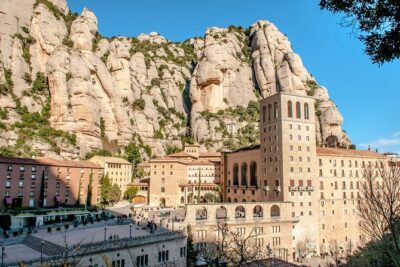
Montserrat with Black Madonna & Medieval Winery with Tapas/Lunch
Read our review →
Tapas Walking Tour with Food, Wine, and History
Read our review →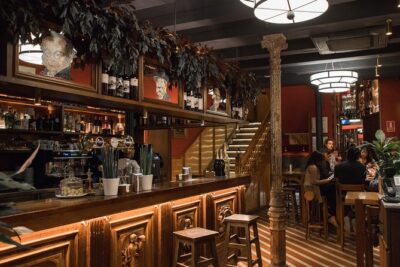
Madrid Tapas & Wine Tasting Walking Tour – Small Group Local Bars
Read our review →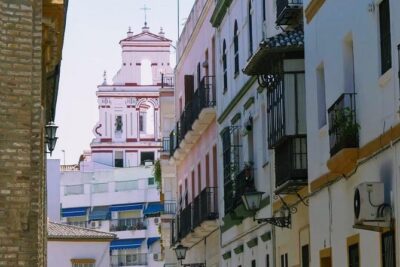
Sevilla Food Tour: Tapas, Wine, History & Traditions
Read our review →Lists this tasting appears in