
Reviewed · PORT WINE TASTINGS
Porto: What is Fado? Commented Live Concert with Port Wine
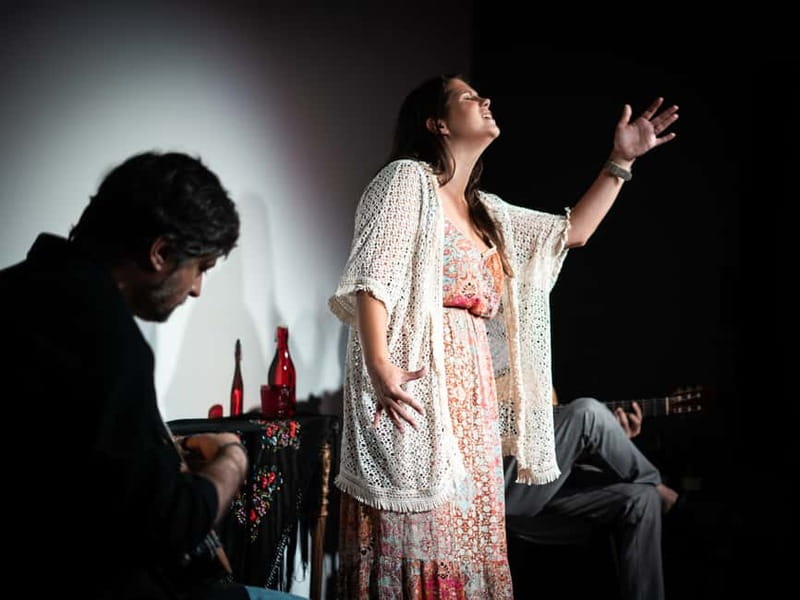
Porto’s Fado na Baixa is not just a concert. It is a compact lesson in why Fado matters to Portugal, with live singers, Portuguese guitar, short films, personal stories, and a glass of Tawny Port. The show moves from Lisbon’s intense traditional style to the very different music of Coimbra, then follows Fado into the modern era.
I like the clear storytelling, which gives you a way into music that can otherwise feel mysterious. I also like the intimate room and the balance of male and female voices. The main consideration is time: at one hour, the program gives you a good introduction, but anyone wanting a full evening of Fado will find it brief. The vintage chairs may also feel less comfortable than the music deserves.
Key points at a glance
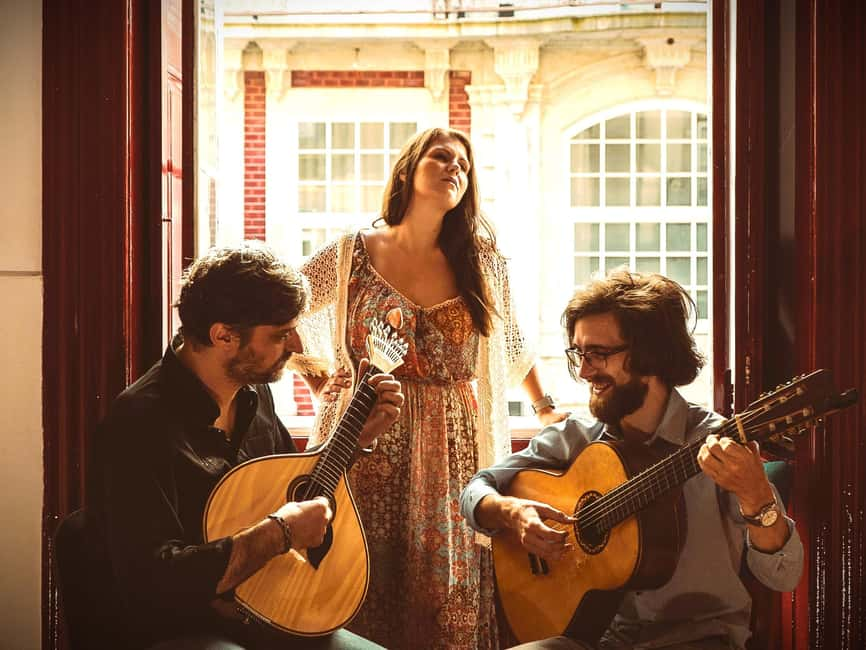
- Four performers, four views of Fado: Two singers and two musicians present contrasting voices, styles, and instruments.
- Lisbon and Coimbra together: You hear the dramatic Fado associated with Lisbon and the student tradition of Coimbra.
- Portuguese guitar close-up: The show explains the instrument and lets you hear the different playing approaches used in Lisbon and Coimbra.
- History without a lecture hall feel: Short multimedia sections and personal testimonials explain the music between live numbers.
- Port with the performance: A glass of Tawny Port gives the evening a distinctly Portuguese pairing.
- Central Ribeira setting: The licensed auditorium is at Rua de São João 99, close to the Douro River.
What Fado na Baixa is really offering
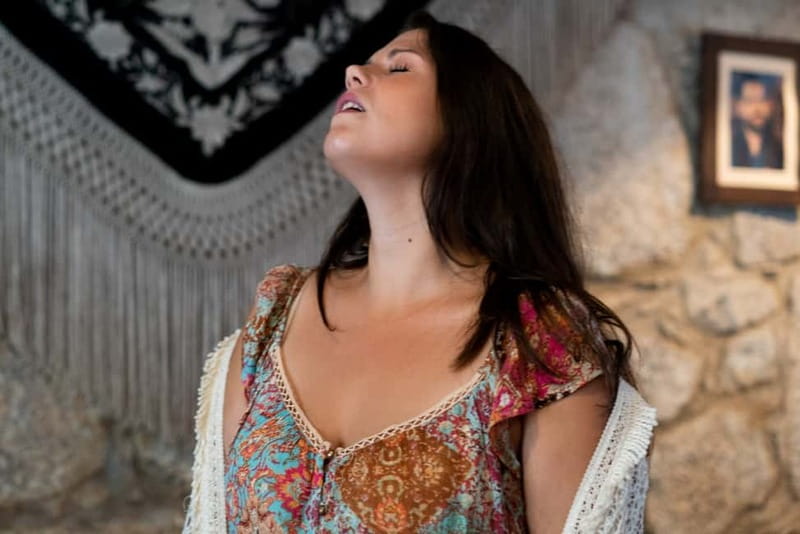
Fado is often described as Portugal’s song of longing, but that phrase only gets you part of the way. The music carries ideas of fate, separation, love, work, memory, and saudade, a Portuguese feeling of missing something or someone. Without context, you may admire the singing without understanding why the music carries such weight.
This performance solves that problem with a simple structure. Live music does the emotional work, while short filmed sections and spoken material explain what you are hearing. Testimonials are presented in several languages, including English, French, Spanish, and Portuguese, so you can follow the meaning even if you know little about Portugal’s musical traditions.
I find this format useful for first-time listeners. The show does not expect you to arrive already familiar with Fado singers, guitar styles, or Coimbra customs. It gives you enough background to listen with sharper ears, then lets the performers take over.
The auditorium sits in a 19th-century building in Porto’s Ribeira district, at Rua de São João 99. This puts the experience close to the Douro River and within easy reach of the city center’s main sights. You are not being sent out to a distant concert hall for a long formal production. The location fits neatly into an evening in the old city.
More Port Wine Tastings in Porto:
- Porto: Live Fado Show with Glass of Port Wine
★ 4.8 · 6,498 reviews - Porto: Bridges Cruise & Sunset & Port Wine Cellar Option
★ 4.2 · 4,180 reviews - Porto: Fado & Port Wine in Traditional Portuguese Music Shop
★ 4.8 · 2,906 reviews
The opening: traditional Lisbon Fado
The first musical section presents traditional Lisbon Fado, the style most strongly associated with the genre’s early development and international image. Expect a serious, concentrated mood, with the singers placed at the center and the instruments giving the voice room to carry the story.
This part matters because it establishes the emotional language of Fado. The songs may sound restrained at first, but the feeling is strong. Rather than relying on a large ensemble or dramatic stage effects, the performance uses voice, guitar, and silence. That closeness is one reason the small auditorium works well.
The show includes both male and female singers. That contrast helps you hear how the same broad tradition can change with the singer’s tone, phrasing, and stage presence. The two vocal styles also keep the program from feeling like a single long performance in one register.
You may hear songs about fishermen and the people waiting for them, a subject that connects work, danger, distance, and family life. The themes are direct, but they gain force from the way the singers deliver them. If you do not understand every word, the commentary and mood still give you a useful frame.
The Portuguese guitar and the Tawny Port pause
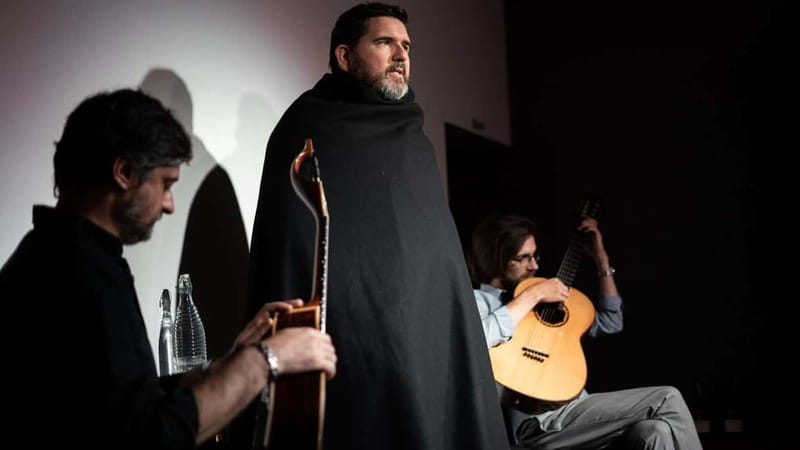
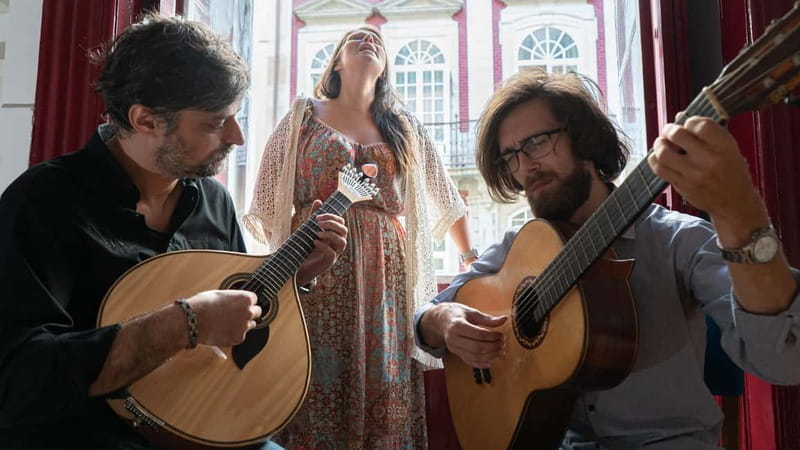
One of the most distinctive sounds in Fado comes from the Portuguese guitar. It is smaller and shaped differently from a standard guitar, with a bright, ringing tone that can sound almost conversational beside the singer.
The musicians explain the instrument and its role before allowing the sound to speak for itself. This is especially worthwhile if you play guitar or enjoy close listening. A musician who knows only the familiar sound of a six-string guitar may be surprised by the speed and precision of the Portuguese guitar parts.
The performance also compares Lisbon and Coimbra playing techniques. The distinction is not treated as a minor technical footnote. It helps you hear that Fado is not one fixed style performed the same way throughout Portugal.
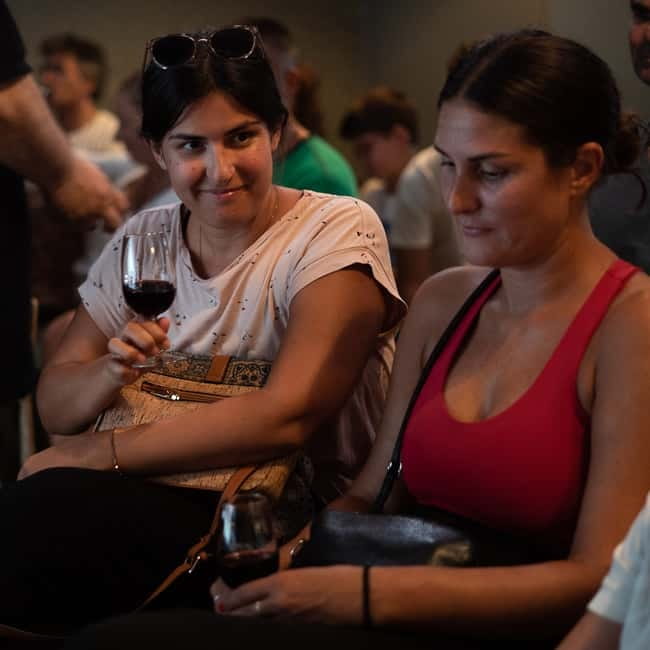
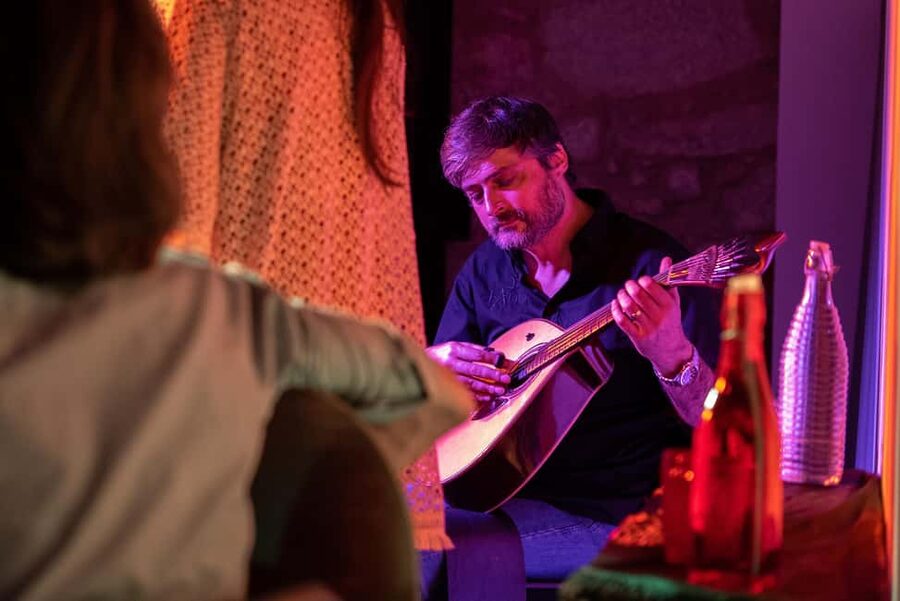
At this point, you taste a glass of Tawny Port. It is a small serving, not a separate tasting session, but it fits the music and setting. Port gives you one more cultural reference point while the Portuguese guitar carries the program forward.
If you do not drink alcohol, check the available serving options before booking. The experience includes Port, and the supplied details do not confirm a nonalcoholic alternative. That is a minor issue for most people, but it matters if you are avoiding alcohol.
Coimbra Fado and the student tradition
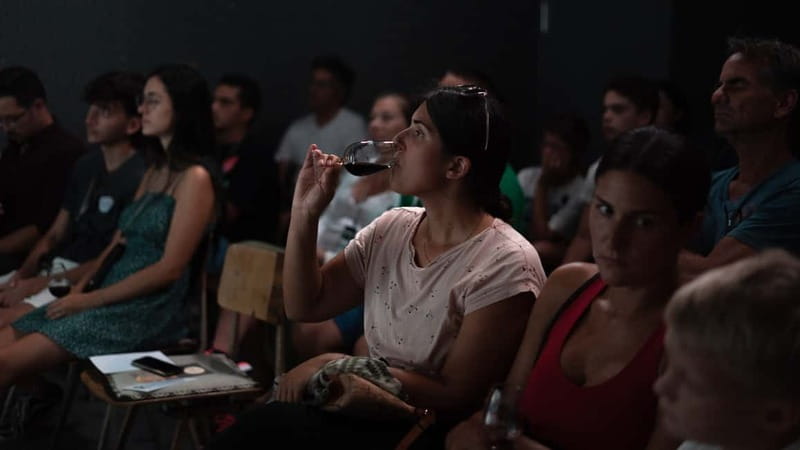
The Coimbra section is one of the most useful parts of the program because it introduces a style many visitors do not know. Coimbra Fado is linked to the city’s university tradition and is performed here by a male singer who was a student at Coimbra University, as tradition requires.
The sound and setting are different from the Lisbon material. The Coimbra style is closely tied to students, university life, and the city’s own musical identity. A personal reflection connected with life at the university helps make that tradition easier to understand.
This is not simply a second version of Lisbon Fado. The program places the two styles side by side so you can listen for the contrast in the playing and the way the music is presented. For me, that comparison gives the show more value than a concert made up of songs from one tradition only.
The performance can also involve the audience. At selected moments, the singers guide the room through a simple sing-along. You are not expected to perform a solo or become part of the band. The interaction is light, but it breaks down the distance between stage and audience and gives you a feel for how songs can belong to a wider community.
More Concerts in Porto:
- Porto: Fado Live Music, Wine & Cultural Introduction
★ 4.9 · 150 reviews - Warsaw Concert: Chopin – Painted by Candlelights with Wine
★ 4.8 · 1,442 reviews - Porto: Authentic Fado Concert With Port Wine & Views
★ 4.8 · 543 reviews - Krakow: Chopin Concert by Candlelight with Wine
★ 4.6 · 447 reviews
Amália Rodrigues and the changing sound of Fado
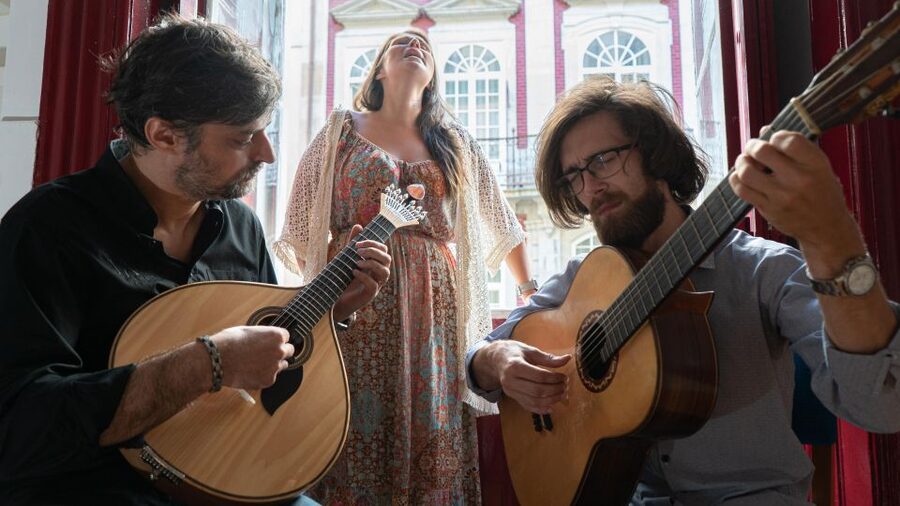
The next section turns to Amália Rodrigues, widely known as the queen of Portuguese Fado. The program shows how she reshaped traditional Fado and helped bring it to a much wider audience.
This portion gives the evening a useful historical bridge. You first hear the older forms, then learn how one major singer changed the reach and sound of the music. That makes it easier to understand why Fado can be both strongly tied to tradition and open to new ideas.
The multimedia material supports this part rather than replacing the musicians. Short clips explain the context, then the live performers return you to the sound itself. The transitions are designed to inform without stopping the concert for a long classroom-style talk.
One caution: if you prefer uninterrupted music, the spoken and filmed sections will interrupt the flow. The material is generally brief, but this is a cultural presentation as much as it is a concert. You are paying for explanation as well as performance.
From tradition to contemporary Fado
The final section looks at how Fado continues to develop. The program touches on new poetic approaches, musical fusions, and ways of honoring older forms while keeping the genre alive.
This is an important ending because it avoids treating Fado as a museum piece. You see a tradition that can change without losing its identity. The performers connect the old songs and techniques with later interpretations, giving you a more current view of Portuguese music.
The show also explains why Fado remains meaningful to Portuguese people. That connection is stronger than a simple list of dates or famous names. You hear how the music carries personal memory, place, and emotion, then see how those ideas can survive in different arrangements and styles.
A particularly moving song for some listeners is Balada de Despedida, associated with the Coimbra tradition. The program’s mix of personal testimony and live performance gives songs like this more emotional weight than they would have in isolation.
The performers and the room
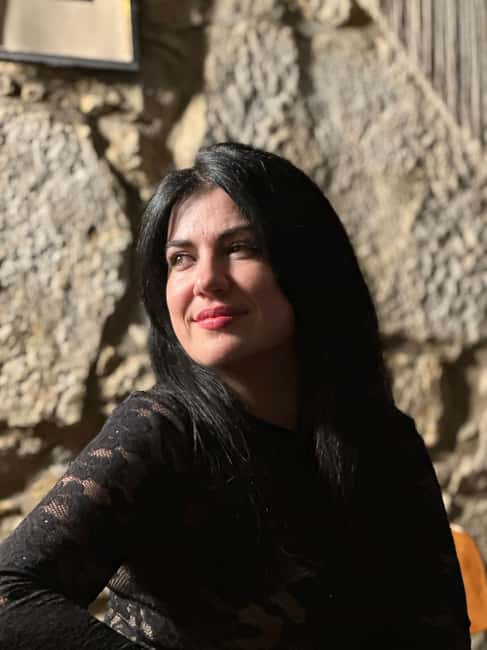
The cast includes two Fado singers, one male and one female, supported by two musicians. The instrumental team includes guitar and Portuguese guitar, with Mario Henriques identified as an excellent Portuguese guitar player and Rato as another highly regarded player in the ensemble.
The small room is a good match for Fado. You can focus on the singers’ faces, the shape of the instruments, and the quiet moments between lines. This is not a large spectacle with scenery and elaborate staging. Its strength is attention and closeness.
The auditorium is licensed and located in a 19th-century building. That setting adds character, though the chairs have a vintage look and may not suit everyone. Because the program lasts only an hour, most people should manage comfortably, but do not expect modern theater seating.
The venue is wheelchair accessible. The host or greeter service can operate in Portuguese, Spanish, English, or French, while the audio guide is available in English, French, Spanish, and Portuguese. That language support is important because the explanatory material is a central part of the experience, not a small extra.
Is one hour enough?
For a first meeting with Fado, I think one hour works well. You receive a clear route through the music without committing an entire evening, and the show fits easily before dinner or after a day of sightseeing.
The compact length is especially helpful if you are traveling with teenagers or family members who may not want a long formal concert. The audience interaction, changing sections, and multimedia clips keep the format moving.
The tradeoff is depth. You will hear several styles, but only a limited selection from each. You will not get a full nightclub-style Fado evening or an extended set from one singer. If your main goal is to listen to Fado for hours, seek out a longer performance as well.
I would treat this as an introduction and orientation. Afterward, you will be better prepared to recognize the difference between Lisbon and Coimbra traditions and to choose a more specialized Fado performance if you want more.
Price, planning, and practical value
At $18 per person, the experience offers solid value. You receive a live performance, multimedia content, an audio guide, and a glass of Port in a central Porto venue. The price is modest for an organized cultural activity, especially when you consider that it combines a concert with a structured explanation of the music.
The location can save you time and transport costs. Fado na Baixa is in the heart of Ribeira, near the Douro River, so you can pair it with an evening walk through the historic center. Check the available starting times when booking, since the exact schedule is not fixed in the information provided.
You can cancel up to 24 hours before the activity for a full refund, and the reserve-now, pay-later option allows you to keep your plans flexible. These terms are useful if your Porto schedule depends on weather, dinner reservations, or a day trip.
If you are using a language other than Portuguese, English, French, or Spanish, confirm that the available audio and commentary will work for you. The main explanatory support is offered in those four languages.
Who should book this Fado experience?
I recommend it most strongly if you are new to Fado and want more than background music. The commentary gives you a clear reason to listen, while the live performances keep the program from feeling like a history lesson.
It is also a good fit for:
- Couples looking for a calm cultural evening
- Families with older children or teenagers
- Music lovers interested in guitar technique
- Visitors with limited time in Porto
- Anyone curious about the difference between Lisbon and Coimbra Fado
- People who want a central, wheelchair-accessible venue
You may want something else if your priority is a long, uninterrupted concert, a large theatrical production, or a late-night Fado house atmosphere. The multimedia sections and compact structure are helpful for beginners, but less appealing to someone who already knows the tradition well.
Should you book it?
Yes, if you want a well-priced introduction to Portuguese music with real performers and enough explanation to make the songs meaningful. The strongest parts are the live voices, the Portuguese guitar, the comparison between Lisbon and Coimbra, and the way the show connects old traditions with modern Fado.
Book it as a one-hour cultural stop, not as a complete Fado evening. Arrive ready to listen closely, accept the short educational sections as part of the performance, and enjoy the Port slowly. For many visitors, that is enough to turn Fado from an unfamiliar sound into one of the most understandable and memorable parts of a Porto visit.
FAQ
Where is Fado na Baixa located?
The auditorium is at R. de São João 99, 4050-553 Porto, in the Ribeira district near the Douro River.
How long does the Fado experience last?
The performance lasts one hour.
How much does the experience cost?
The listed price is $18 per person.
Is Port wine included?
Yes. The experience includes a glass of Tawny Port.
What types of Fado are presented?
The program includes traditional Lisbon Fado, Coimbra Fado, material connected with Amália Rodrigues, and contemporary approaches to the genre.
Who performs in the show?
The performance features two Fado singers, one male and one female, along with two musicians. The music includes guitar and Portuguese guitar.
Is the Coimbra singer connected with the university tradition?
Yes. The male Coimbra Fado singer is a former student at Coimbra University, following the tradition associated with this style.
What languages are available?
The host or greeter service is available in Portuguese, Spanish, English, and French. The audio guide is available in English, French, Spanish, and Portuguese.
Is the venue wheelchair accessible?
Yes, the auditorium is wheelchair accessible.
Can I cancel the booking?
You can cancel up to 24 hours in advance for a full refund. The reserve-now, pay-later option is also available.
Newest wine reviews around Porto
- Porto: Tuk tuk Tours with Port Wine Tasting★ 4.5 · 65 reviews
- Porto Wine Tasting Experience with Portuguese Tapas Plate★ 4.7 · 356 reviews
- Porto: Tile Painting Workshop with Tea and Port Wine★ 4.9 · 66 reviews
- Porto: Sunset Walking Tour with Port Wine and Views★ 4.6 · 95 reviews
- Porto: Taylor’s Port Cellar Tour & WOW The Wine Experience★ 4.5 · 136 reviews
- Porto: Douro River Boat Tour with Wine Tasting★ 4.9 · 167 reviews
- Porto: Douro River Cruise w/ Portuguese Wines & Local Host★ 4.9 · 166 reviews
- Porto: Self-Guided Bike and Boat Tour with Port Wine Tasting★ 4.7 · 52 reviews
Port Wine Tastings, compared.
Bridges Cruise & Sunset & Port Wine Cellar Option
Read our review →
Fado & Port Wine in Traditional Portuguese Music Shop
Read our review →
Port Wine Lodges Tour Including 7 Port Wine Tastings (English)
Read our review →
Charming Sailboat Cruise with Port Wine,Sunset Option
Read our review →
Douro River Boat Cruise with Port Wine Tasting
Read our review →
Graham’s Port Lodge Tour with Premium Wine Tastings
Read our review →
Intimate Fado Show & Port Wine in Trindade Noble Hall
Read our review →Lists this tasting appears in