
Reviewed · MUSEUMS
Porto: The Wine Experience, Best Wine Museum in the World
The Wine Experience at Porto’s WOW complex turns winemaking into a walk-through lesson, starting with soil and grape roots and ending with a glass of red, white, or Port. The exhibits explain Portugal’s wine regions clearly, and the final tasting with wine specialists such as João gives the visit a useful, human finish.
I like the hands-on displays and the way the museum covers both production and Portuguese geography. I also like that beginners can follow it without feeling lost. The main consideration is timing: the posted visit lasts 90 minutes, but the exhibits can easily hold you for two hours, and the tasting is near the end.
Key points to know before you go

- Wine from root to bottle: Follow each stage of production, from soil, climate, and grape variety through fermentation, aging, cork, and bottling.
- Portugal beyond Port: Compare regions including Vinho Verde, the Douro, Alentejo, the Azores, and Madeira.
- Three guided pours: The tasting includes a red, a white, and a Port wine, with a non-alcoholic alternative available.
- Built for curious beginners: Short films, scent activities, interactive displays, and clear panels keep the subject approachable.
- Allow extra time: Ninety minutes is the stated duration, but two to two and a half hours is realistic if you read and try the interactive stations.
- Part of a larger complex: WOW also has other museums, shops, restaurants, outdoor spaces, and river views, so plan this as part of a longer stop in Vila Nova de Gaia.
Entering WOW and finding The Wine Experience
The Wine Experience is part of the World of Wine, known as WOW, in Vila Nova de Gaia, across the Douro from Porto’s historic center. Your ticket is shown directly at The Wine Experience entrance. That sounds simple, but the complex contains several museums and businesses, so signs can take a little study when you first arrive.
I would not plan this as a rushed pop-in between other appointments. The museum opens daily from 10:00 AM until 7:00 PM, with last entry at 7:00 PM, and you can use your ticket at any time on your selected date during opening hours. Bank holiday hours may change, so check before setting out.
The setting adds value. WOW has outdoor areas, restaurants, shops, and views toward the river, so you can pair the museum with lunch, a drink, or another exhibition. One useful plan is to visit earlier in the day, when the museum may be quieter, then stay in the complex afterward.
More Museum Visits in Porto:
- Porto: Cálem Cellar Tour, Interactive Museum & Wine Tasting
★ 4.5 · 4,113 reviews - Bordeaux Wine and Trade Museum Admission Ticket with Wine Tasting
★ 4.5 · 599 reviews - Picasso Museum and Walking Tour Plus Optional Wine & Food Tasting
★ 5.0 · 596 reviews
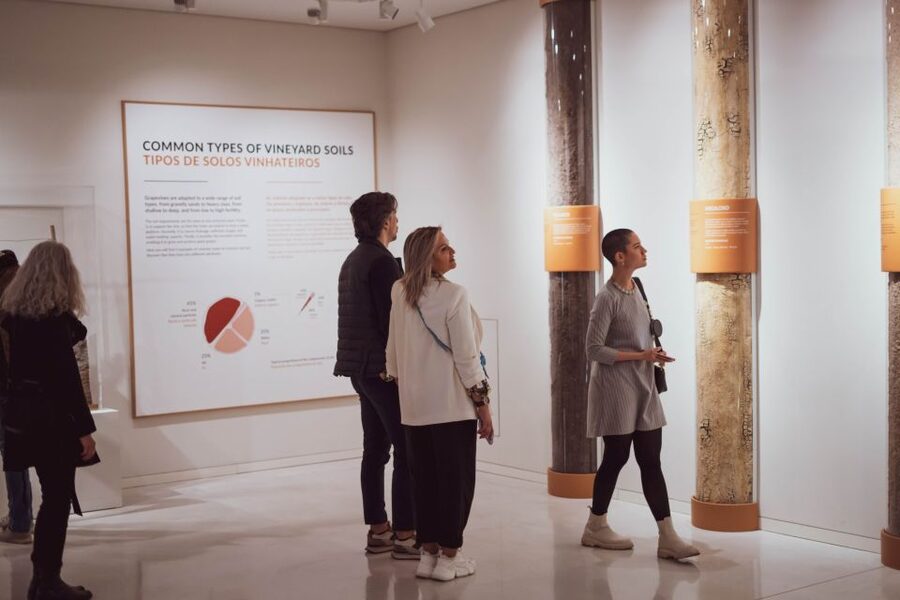
Starting with soil, climate, and grape variety
The first part gives you the building blocks of wine. Instead of beginning with a list of famous bottles, the museum asks you to think about what happens before a bottle exists: the soil, the climate, the grape, and the place where the vine grows.
That approach is useful because it explains why wines made from different grapes, or from the same grape in different regions, can taste so different. You do not need much prior knowledge. The information is presented through short films, panels, visual props, and interactive elements rather than long walls of technical text.
The focus on viticulture, the growing of grapes, is one of the museum’s better choices. Many wine visits jump quickly to barrels, bottles, and tasting rooms. Here, you spend time considering the vine itself, from the first growth of the plant to the condition of the fruit at harvest.
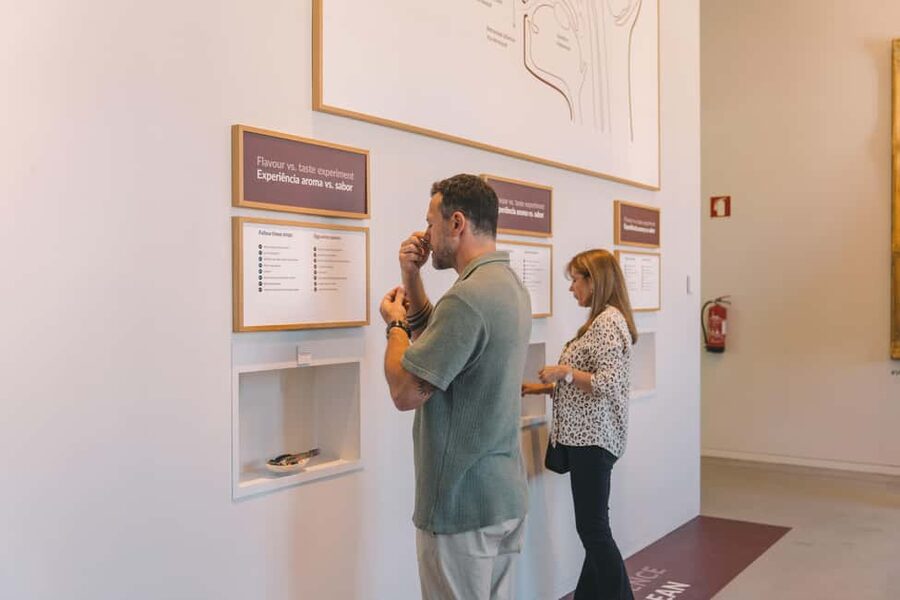
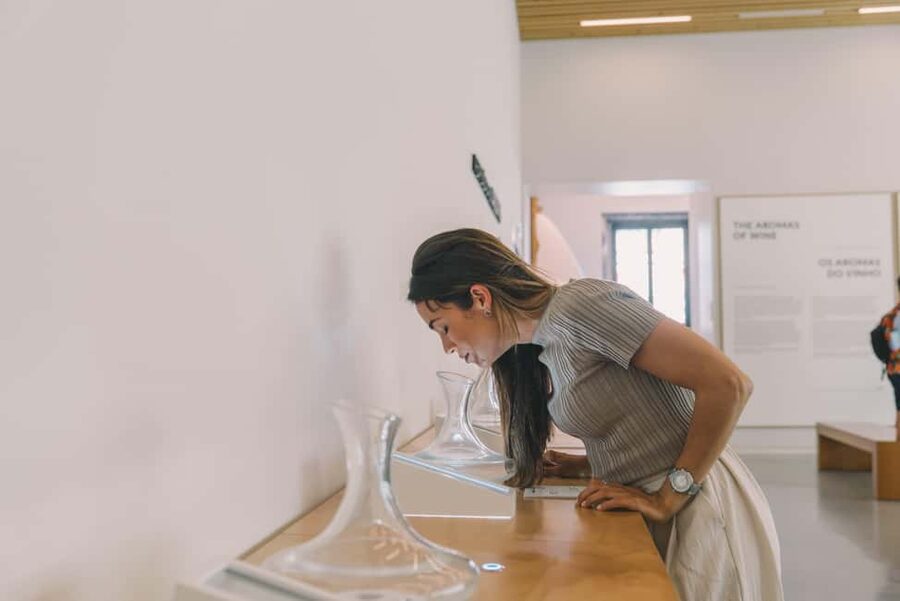
You will also encounter sensory activities linked to wine aromas. These are not a substitute for tasting, but they give you a practical way to think about familiar scents and flavors. I find this especially helpful for anyone who has ever struggled when a wine description says it smells of fruit, flowers, spice, or wood.
Following the grape from vine to bottle
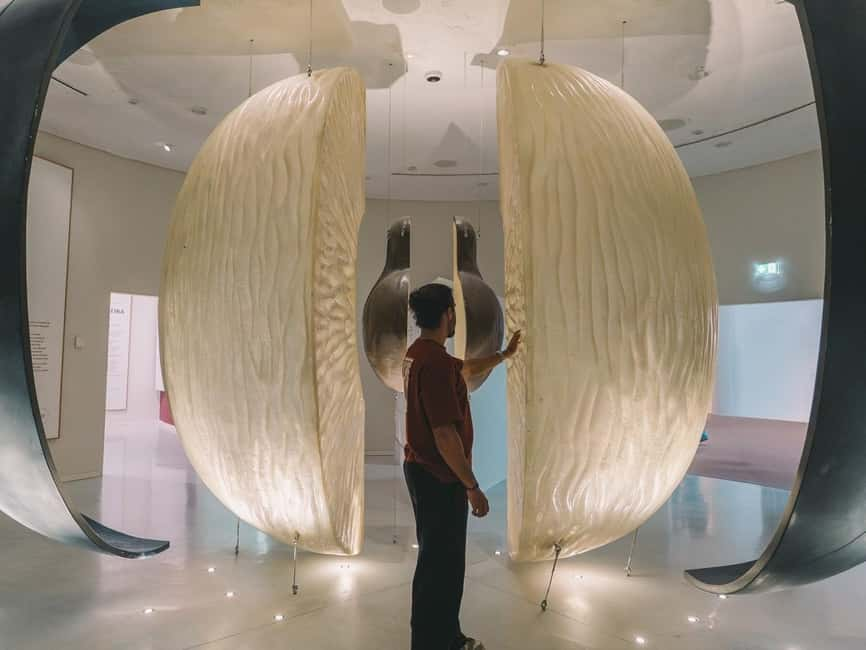
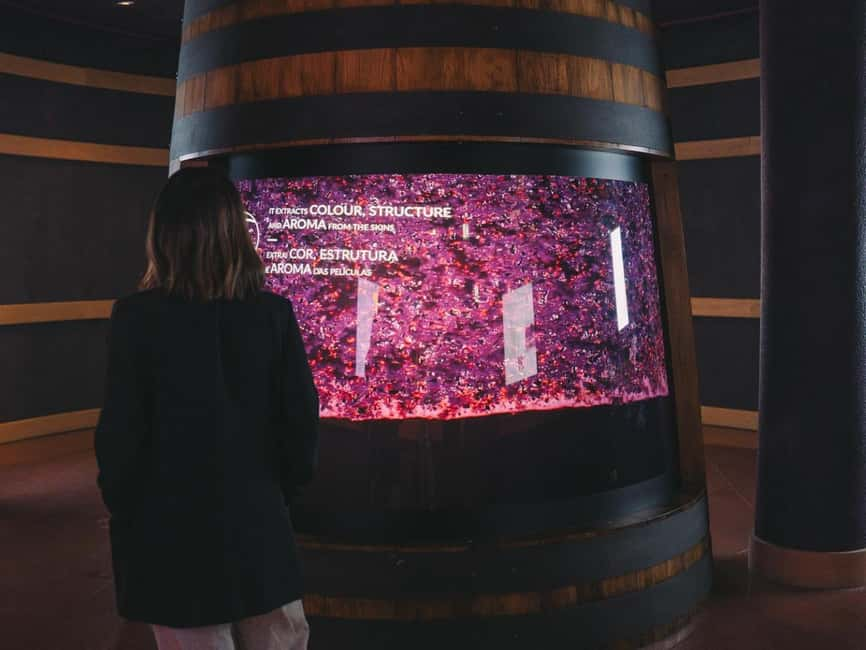
The museum’s main sequence follows the production process in order. You move from the early life of the vine through harvesting, crushing, fermentation, and the later stages that prepare wine for the bottle and glass.
This order makes the visit easy to follow. You are not simply looking at equipment or reading a timeline. You see how one decision leads to another. Grape variety matters. So does climate. Fermentation changes the juice. Aging and storage shape the final character. Bottling and cork complete the path.
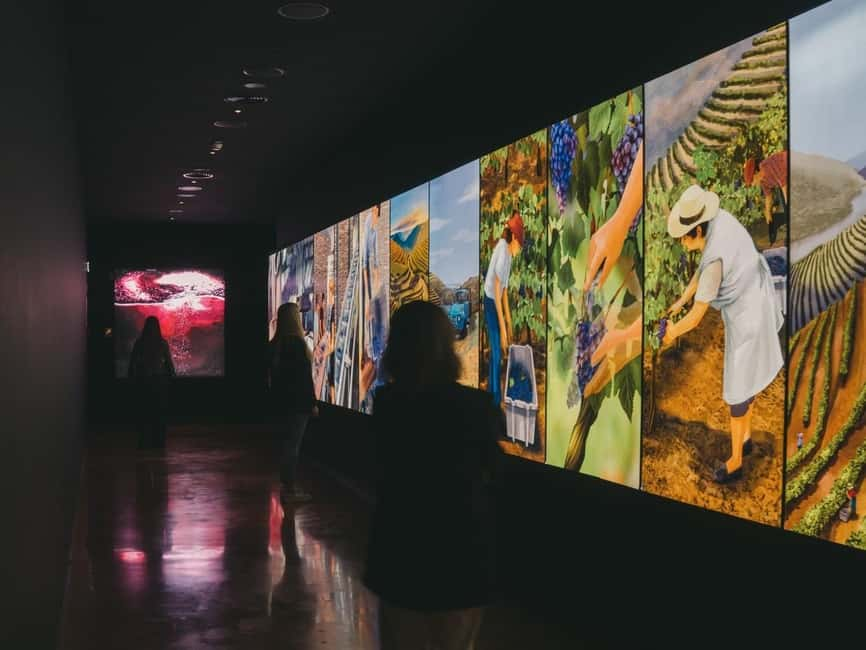
Short explanatory films help break up the reading. The visual displays also make the visit easier for families and mixed-age groups. A 14-year-old can find enough movement and variety to stay interested, while an adult who already knows something about wine can spend more time on the production details.
The museum is modern and polished, but it is not only about spectacle. Its best moments explain a process that can seem mysterious when you encounter only the finished bottle. I like leaving with a clearer idea of why winemaking is a chain of choices rather than one single act.
Portugal’s wine regions in one compact visit
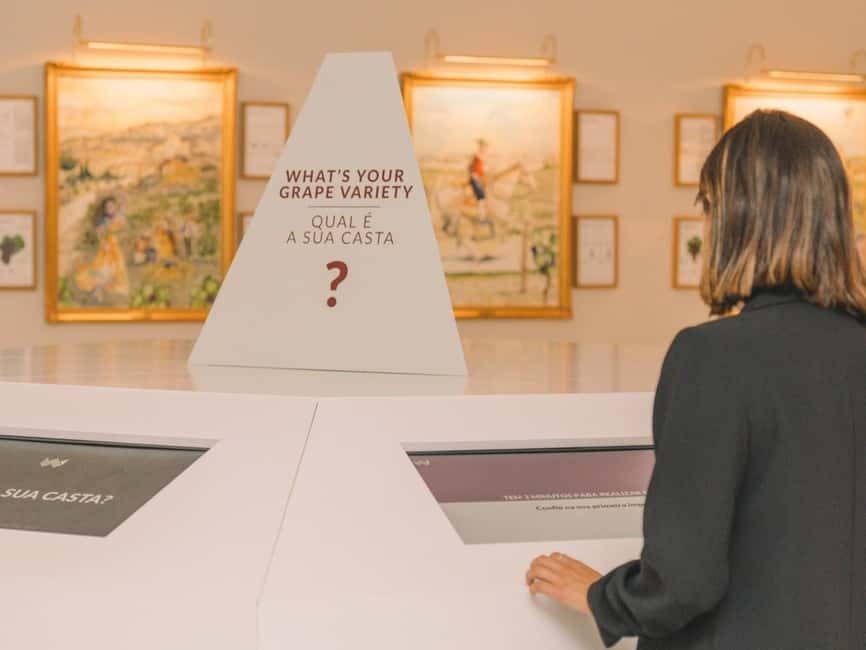
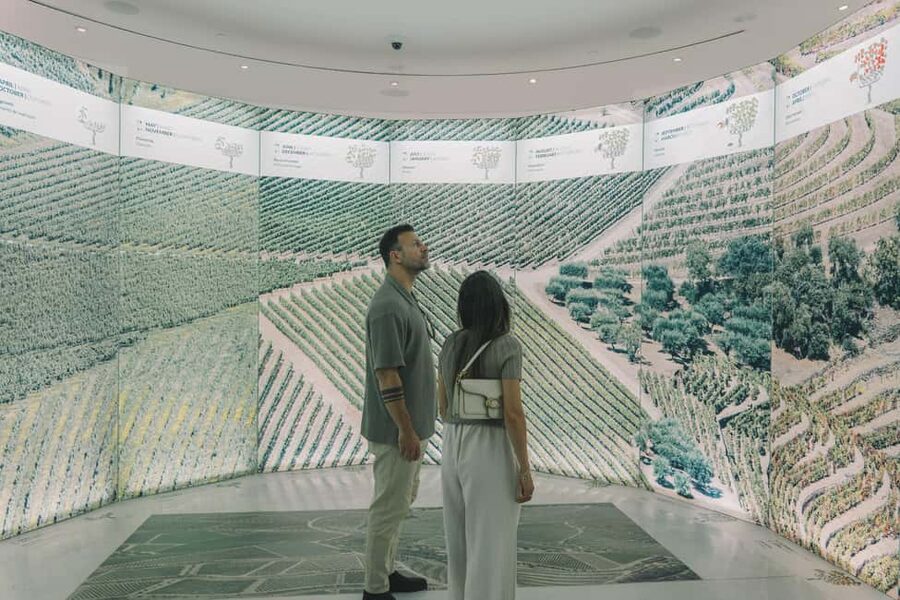
The Portuguese section is where the museum becomes especially useful for a Porto visit. You get a broad look at the country’s wine-producing areas, from the cool, green hills associated with Vinho Verde to the warmer Alentejo plains.
The Douro receives natural attention. Its terraced vineyards and connection to Port make it central to the wine culture of northern Portugal. The museum also reaches beyond the mainland, introducing the volcanic soils of the Azores and Madeira. That range helps you see Portugal as more than a country known only for Port.
You will not become an expert on every region in one visit, but you will gain a map in your head. That matters when you later see Portuguese bottles on a restaurant list or in a shop. The names will have some meaning, and you can begin to connect place, climate, grapes, and style.
The museum also presents wine as part of Portuguese culture, not simply as an agricultural product. The result is a useful bridge between geography, local traditions, and what appears in your glass. If your Portugal trip includes the Douro Valley, Madeira, or the Azores, this section gives you helpful context before you go.
More Wine Tours in Porto:
- From Porto: Douro Valley w/ Boat Tour, Wine Tasting & Lunch
★ 4.7 · 19,061 reviews - Complete Douro Valley Wine Tour with Lunch, Wine Tastings and River Cruise
★ 5.0 · 12,920 reviews - Porto: Douro Valley with Winery Lunch, Tastings & Cruise
★ 4.7 · 7,002 reviews - Porto: Live Fado Show with Glass of Port Wine
★ 4.8 · 6,498 reviews
The tasting: red, white, and Port
The tasting comes at the end, so keep an eye on the clock. The route is sequential, and it is easy to spend longer than planned with the exhibits. Arriving late in the day could leave you hurrying through the final section or reaching the tasting close to closing time.
You receive three wines: a red, a white, and a Port. A wine specialist explains how to taste, how to notice basic characteristics, and how to describe what you like. João has received particular praise for his friendly, clear approach, and Audrianna has also led tastings that visitors found informative and well explained.
This is not presented as an elite tasting for trained sommeliers. It is more practical than that. You learn how to look at the wine, smell it, taste it, and think about its balance and character. The point is not to guess a label correctly. The point is to become more comfortable choosing a wine for yourself.
The selection is suitable for an introductory museum visit, but do not expect a rare-vintage tasting at this price. Some pours are fairly simple. That is a fair trade-off for a $29 ticket that also includes the museum entry. If your main goal is an ambitious Port tasting, a specialist cellar visit may serve you better.
For many people, though, the tasting is the part that makes the information stick. After seeing how grapes become wine, you can connect the process to an actual drink. The three styles also give you a basic comparison rather than focusing only on one kind of wine.
How long should you plan?
The listed duration is 90 minutes, and that works if you move steadily through the displays and do not read every panel. I would allow at least two hours if you have a real interest in wine or enjoy interactive museums.
Some visits can run to two and a half hours. That is not a problem if you are using the museum as the main activity at WOW, but it matters if you have booked a restaurant table or another timed attraction. The tasting is at the end, so do not assume you can simply skip ahead without missing part of the experience.
A morning visit can be a good choice. The museum may be quiet, giving you time to use the displays without waiting. A hot day is another reason to put it on your schedule, since the museum provides a cool indoor break and the complex has places to rest afterward.
If you want to combine it with other WOW museums, give yourself a broad time window. The complex has more than this one exhibition, and the outdoor spaces and river views can easily encourage a longer stay.
Price, value, and what you actually receive
At $29 per person, the ticket is not the cheapest museum entry in Porto. Its value depends on how much of the visit you use. You receive access to a large, purpose-built wine exhibition, an audio guide, and three tastings. You also get a structured explanation of Portuguese wine regions that would take several separate visits to assemble on your own.
The audio guide is available in English, Spanish, Portuguese, French, German, and Korean. That makes the museum more flexible for international visitors, although the tasting itself adds the benefit of direct explanation from staff.
I consider the price reasonable for wine drinkers and for anyone who wants more than a quick tasting. It is less compelling if you plan to spend only 45 minutes inside or if you are interested solely in drinking Port. In that case, a port lodge visit or a bar tasting may be a better fit.
The final tasting is modest rather than lavish. That is the main value question. You are paying for the full teaching experience, with the drinks as the conclusion, not for three premium pours alone.
Accessibility and practical comfort
The Wine Experience is wheelchair accessible. Lifts make the museum accessible, although one practical note is that some shops in the wider complex may not have the same setup.
The museum is designed to be easy to navigate, but finding the correct entrance at WOW can take some attention. Once inside, the route is laid out in a logical order, with signs, films, panels, and interactive stations guiding you from one stage to the next.
You can use the ticket anytime on the selected date during opening hours rather than being tied to one exact museum entry time. That flexibility is useful, but it does not remove the need to watch the clock if you want to complete the tasting before closing.
Free cancellation up to 24 hours in advance and the option to reserve now and pay later are helpful if your Porto plans are still shifting. These terms can change, so confirm them when booking.
Who will enjoy this museum most?
I would recommend The Wine Experience to four main groups:
- Wine beginners: You get a clear starting point without needing to know Portuguese grapes or wine vocabulary.
- Wine lovers: The production displays and regional material add context beyond a simple glass of Port.
- Families with older children: The interactive elements and short films make the subject easier to follow than a traditional text-heavy museum. The tasting is for adults, with a non-alcoholic option available.
- Visitors planning a wider Portugal trip: The sections on the Douro, Vinho Verde, Alentejo, Azores, and Madeira help you understand places you may visit later.
I would be more cautious if you dislike museums, do not want to read or watch explanatory material, or want only a high-end tasting. The exhibition is the main event. The wine at the end completes it.
Small details that improve the visit
Start with enough time to finish the route. The most common practical mistake is treating this as a quick tasting with a few displays attached.
Use the audio guide if you want more detail in your preferred language. If you are visiting with someone who knows little about wine, take advantage of the scent stations and interactive activities rather than rushing toward the tasting.
Plan a drink or meal afterward if your schedule allows. WOW’s outdoor spaces and river views make a natural follow-up, and the wider complex has restaurants, shops, and other museums. A drink on the terrace can be a pleasant way to talk through what you have learned.
Finally, remember what this museum does best. It gives you a broad, well-organized introduction to wine production and Portuguese wine culture. It does not replace a vineyard visit in the Douro or a serious Port cellar tasting, but it gives those experiences more meaning.
Should you book The Wine Experience?
I would book it if you want a clear, interactive introduction to wine and have at least two hours to spare at WOW. The strongest reasons are the logical root-to-bottle route, the Portuguese regional coverage, and the guided red, white, and Port tasting with staff such as João or Audrianna.
I would skip it only if your priority is drinking premium wines rather than learning how wine is made. For $29, the tasting alone is not the whole bargain. The value comes from the complete visit, and that makes it a sensible choice for beginners, curious families, and wine lovers building a better understanding of Portugal.
FAQ
Where is The Wine Experience located?
It is located at the World of Wine complex, known as WOW, in Vila Nova de Gaia in Portugal’s Norte Region.
How much does The Wine Experience cost?
The listed price is $29 per person.
How long does the experience last?
The stated duration is 90 minutes. You may want to allow two hours or more if you read the displays, use the interactive features, and take your time with the tasting.
What wines are included in the tasting?
The tasting includes one red wine, one white wine, and one Port wine.
Is a non-alcoholic option available?
Yes. A non-alcoholic alternative is available instead of the wine tasting.
What languages are available for the audio guide?
The audio guide is available in English, Spanish, Portuguese, French, German, and Korean.
What are the opening hours?
The Wine Experience is open daily from 10:00 AM until 7:00 PM, with last entrance at 7:00 PM. Hours may vary on bank holidays.
Is the museum wheelchair accessible?
Yes. The museum is wheelchair accessible, and lifts are available. Some shops in the wider complex may have different access arrangements.
Can I cancel my booking?
You can cancel up to 24 hours in advance for a full refund. The activity also offers a reserve-now, pay-later option.
Newest wine reviews around Porto
- Porto: Tuk tuk Tours with Port Wine Tasting★ 4.5 · 65 reviews
- Porto Wine Tasting Experience with Portuguese Tapas Plate★ 4.7 · 356 reviews
- Porto: Tile Painting Workshop with Tea and Port Wine★ 4.9 · 66 reviews
- Porto: Sunset Walking Tour with Port Wine and Views★ 4.6 · 95 reviews
- Porto: Taylor’s Port Cellar Tour & WOW The Wine Experience★ 4.5 · 136 reviews
- Porto: Douro River Boat Tour with Wine Tasting★ 4.9 · 167 reviews
- Porto: Douro River Cruise w/ Portuguese Wines & Local Host★ 4.9 · 166 reviews
- Porto: Self-Guided Bike and Boat Tour with Port Wine Tasting★ 4.7 · 52 reviews
Museums, compared.
Bordeaux Wine and Trade Museum Admission Ticket with Wine Tasting
Read our review →
Picasso Museum and Walking Tour Plus Optional Wine & Food Tasting
Read our review →
Wine Museum Ticket with Local Wines & Food Tasting
Read our review →
Vothonas: Wine Museum Ticket with Tastings and Audio Guide
Read our review →
Chopin Piano Concert at Chopin Gallery with a Glass of Wine
Read our review →Guided tour and tasting at La Cantina Frrud – Wine Museum
Read our review →
Aÿ-Champagne: Pressoria Champagne Museum with Tasting
Read our review →
Gran Canaria: Winery Tour, Wine Museum, and Tasting
Read our review →Lists this tasting appears in