
Reviewed · WINE & FOOD PAIRINGS
Sofia Afternoon Walking Tour with Wine and Food Tasting
Sofia makes a strong first impression when you see its Roman ruins, Ottoman mosque, Orthodox churches, grand civic buildings, and pedestrian streets within one compact walk. This tour finishes with Bulgarian wine and local bites, including lukanka, katak, kopoolu, and Elena fillet, so you get both city sights and a taste of the country.
I like the small-group format, which can make the walk feel personal, especially when guides such as Danitsa, Denitsa, Maria, Dani, and Daniel can adjust their explanations to your questions. I also like the route’s range, from Ancient Serdika to the Sophia Monument and St. George Rotunda. The main caution is the food portion: some people found it generous enough for a light meal, while others found the tasting modest, with only one glass of wine.
Key points at a glance
- Roman, Ottoman, Orthodox, and modern Sofia in one walk: The route brings several layers of the city together without requiring transport between stops.
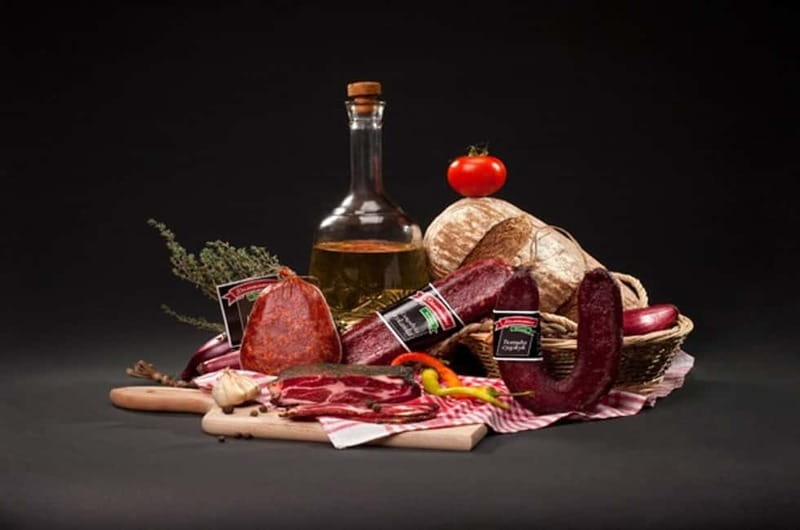
- A tasting built around Bulgarian specialties: Expect wine with foods such as lukanka, katak, kopoolu, and Elena fillet, with vegetarian and vegan requests accepted.
- Guides are the heart of the experience: Danitsa, Denitsa, Maria, Dani, and Daniel have been singled out for warmth, clear English, humor, and useful historical detail.
- A compact three-hour introduction: You cover central Sofia at a steady walking pace, then finish near Solunska Street.
- Good for first-time visitors: The route includes many of the city’s best-known central sights and helps you understand how they fit together.
- Know what the tasting is not: This is a sightseeing walk with a wine stop, not a long restaurant crawl or a full Bulgarian dinner.
Why this walk works well in central Sofia
At $82 per person, this is not the cheapest way to see Sofia. You are paying for a professional guide, a three-hour walk, and a food and wine stop rather than simply joining a free orientation walk.
The value depends on what you want from your first afternoon. If you want a fast list of monuments, you may find the price high. If you want someone to connect Roman ruins, religious buildings, political history, and daily city life, the cost makes more sense. The small-group setup matters here. A good guide can answer your questions, alter the emphasis, and point out details you could easily miss on your own.
The tour has earned a 4.5 rating from 43 reviews, with especially strong praise for the guides. Danitsa received repeated approval for being attentive, outgoing, and easy to talk with. Maria was valued for explaining Sofia over many decades of change, while Dani and Daniel were praised for mixing facts with humor. That human element is important in a city where the stones often tell only part of the story.
You should plan on a real walk. The route is central and does not require a bus or taxi, but the experience is not suitable for wheelchair users. Wear shoes you can walk in comfortably, and leave room in your afternoon for the final food stop.
More Wine and Food Pairings in the world:
- Pisa, Siena and San Gimignano Day Trip with Lunch & Wine Pairing
★ 4.5 · 6,006 reviews - Lisbon: Food and Wine Small Group Walking Tour
★ 4.9 · 4,082 reviews - Lisbon Small-Group Portuguese Food and Wine Tour
★ 5.0 · 3,972 reviews
Starting at the National Theater garden
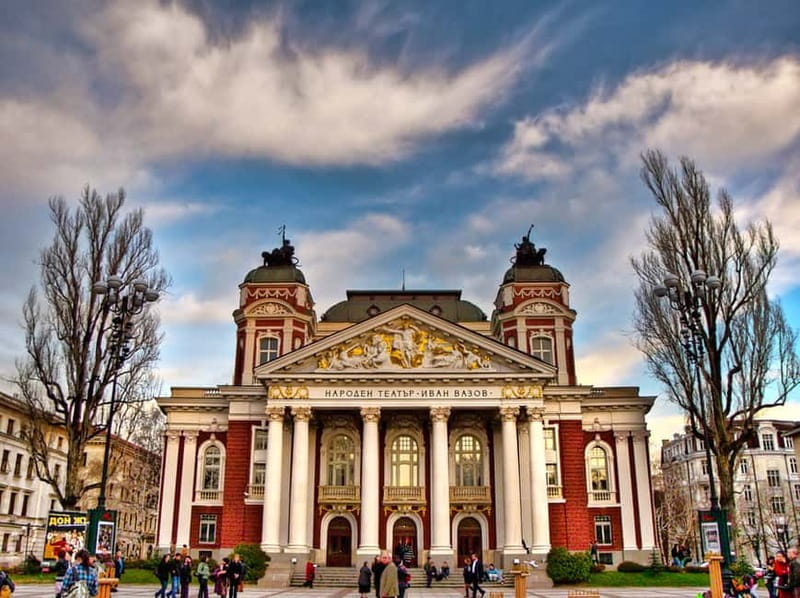
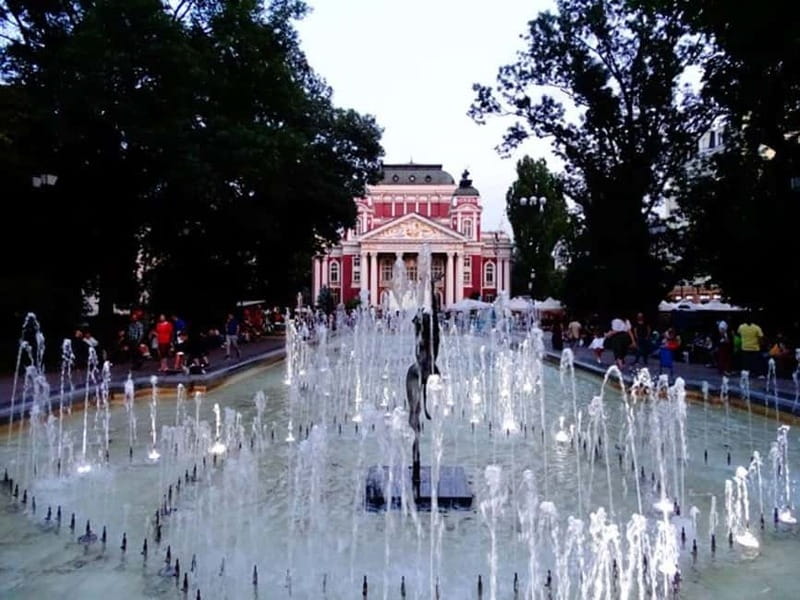
Meet your guide in front of the Grand Hotel Sofia. From there, the first major stop is the Ivan Vazov National Theatre, one of the city’s most recognizable buildings.
The theater’s garden gives you a pleasant start because it offers a little breathing room before the denser streets and archaeological sites ahead. Your guide can set the historical frame here, explain the building’s role in Sofia’s cultural life, and help you notice how the formal theater and garden contrast with the older remains later in the walk.
The route only lists about five minutes of walking to this stop, so the tour gets moving quickly. You are not spending the opening section on transport or a long transfer. That makes this a useful choice if you have only an afternoon to get your bearings.
The tour is guided from the outside and along the surrounding streets. The information provided does not promise entry into the theater, so you should treat this as a city walk rather than a theater visit.
Reading Sofia’s Roman foundations at Ancient Serdika
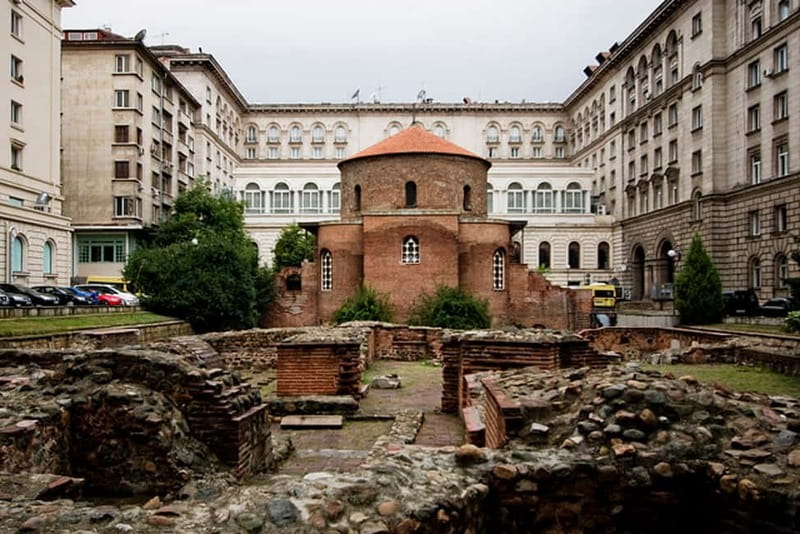
Ancient Serdika is one of the most important stops because it shows how much of Sofia’s modern center sits over an older city. The archaeological complex gives you a direct look at Roman remains among present-day streets, shops, and public buildings.
Your guide spends about 20 minutes here. That is enough time to explain the site and put the Roman settlement into the wider story of Sofia without turning the tour into a museum lecture. I particularly like this stop for first-time visitors because it changes how you read the rest of the city. A church, street, or civic building is no longer just an isolated sight. It becomes part of a city built in layers.
The site is also a practical reminder that Sofia’s attractions are close together. You do not need a full-day archaeological excursion to see substantial Roman remains. The drawback is that a short guided visit cannot cover every detail, so you will need a separate museum visit if ancient history is your main interest.
The Banya Bashi Mosque and Sofia’s Ottoman chapter
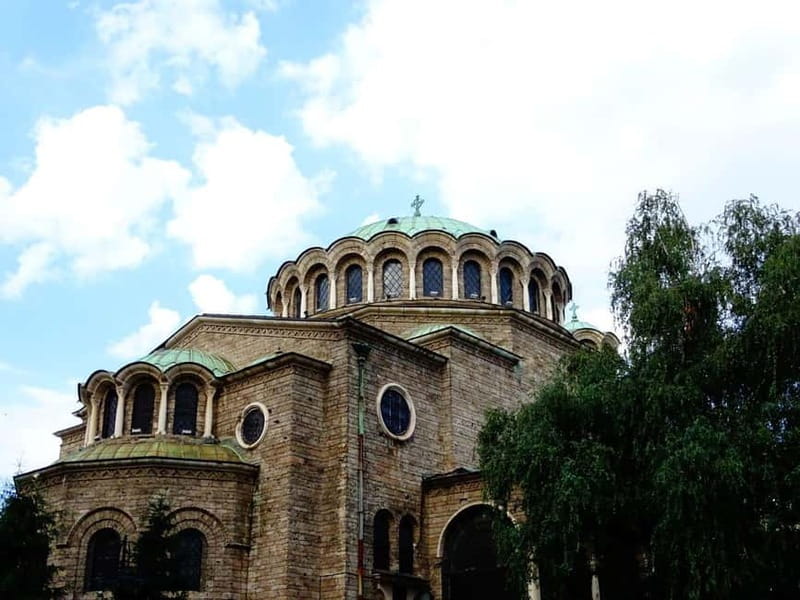
The Sofia Central Mosque, generally known as Banya Bashi Mosque, brings a different religious and architectural tradition into the walk. Its presence near the Roman complex makes the city’s long sequence of political and cultural changes visible within a few minutes on foot.
The guide gives this stop around 20 minutes. That is useful because the mosque is more than a photo stop. You can ask about its place in the city and about the Ottoman period, while also seeing how the building shares central Sofia with Orthodox churches, Roman remains, and modern institutions.
The exact details covered can depend on your guide and the group’s questions. Guides have been praised for explaining Sofia’s history in a clear, conversational way, so this is one of the points where a small group has real value. You can ask for context instead of simply moving on after taking a picture.
As with the National Theater, do not assume that this walking tour includes an interior visit. The experience is built around seeing the main sights and receiving explanations along the route.
More Food Experiences in the world:
- From Split: Krka Waterfalls, Food & Wine Tasting Tour
★ 5.0 · 9,326 reviews - From Split: Krka Waterfalls, Food & Wine Tasting Tour
★ 4.9 · 6,598 reviews - Winner 2025 Undiscovered Lisbon Food & Wine Tour by Eating Europe
★ 5.0 · 6,390 reviews - Winner 2025 Florence Sunset Food & Wine Tour by Eating Europe
★ 5.0 · 5,015 reviews
Civic Sofia at the City Court and Palace of Justice
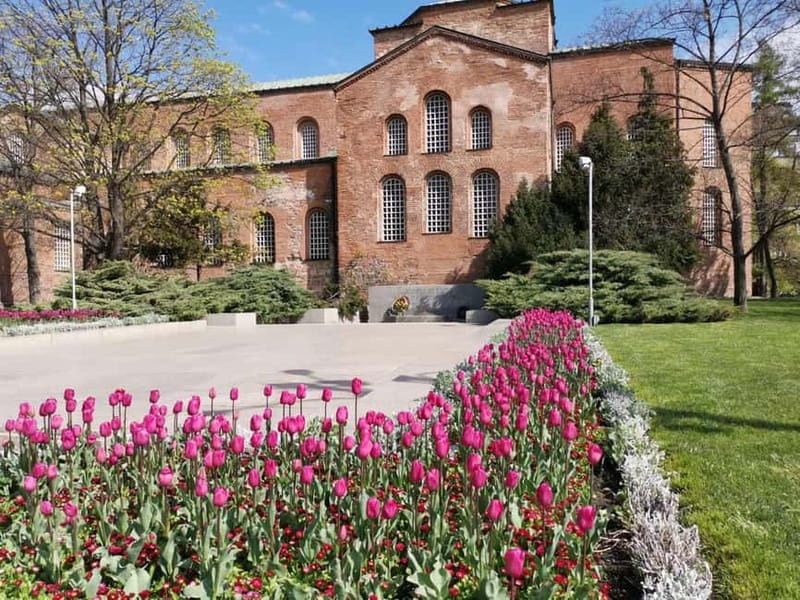
The route continues to the Sofia City Court, near the Palace of Justice area. This section shifts attention from ancient and religious buildings to the institutions of modern Bulgaria.
That change is useful. A city tour can become a parade of old monuments, but Sofia’s civic buildings show how the capital functions today. Your guide can connect the architecture and location to public life, state institutions, and the city’s changing identity.
The scheduled explanation here lasts about 20 minutes. You will not spend the entire time inside a government building, and no interior access is promised. Instead, expect a street-level interpretation of the area. This may be less visually dramatic than Ancient Serdika or the Rotunda, but it adds balance to the walk.
I would pay attention here if you like politics, architecture, or the practical workings of a capital city. If you want only headline sights, this portion may feel slower. The advantage is that it gives the tour more substance than a simple checklist of churches and statues.
The Sophia Monument and the symbols of the capital
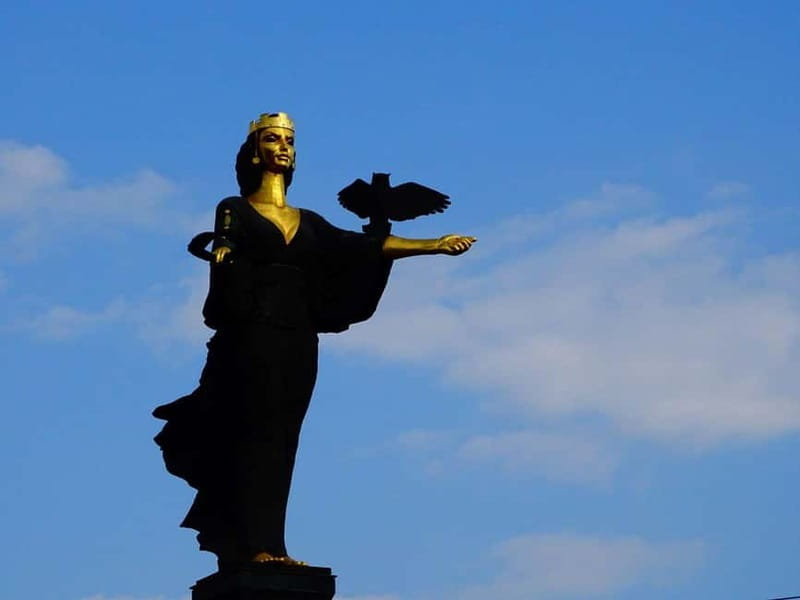
The Saint Sofia Monument, often called the Sophia Statue, is another central landmark on the route. It gives your guide a chance to explain one of the city’s modern symbols and the ideas attached to Sofia’s name and identity.
This is a good place to pause and ask questions. Monuments often look self-explanatory until someone explains why they were created, what they replaced, and how people understand them today. The guide’s role is especially useful here because the statue is surrounded by busy central-city life, while its meaning reaches back through Sofia’s long past.
The stop is planned for roughly 20 minutes. That may sound long for a monument, but the time allows for more than a quick photograph. You can use it to connect the statue with the nearby mosque, churches, ruins, and public buildings you have already seen.
The route also includes popular pedestrian areas such as Graf Ignatiev Street and Vitosha Boulevard. These streets help you see Sofia as a lived-in capital rather than an open-air collection of monuments. The supplied details do not give a fixed time at each of these streets, so they may be covered while walking between the main stops.
The St. George Rotunda, one of Sofia’s oldest sights
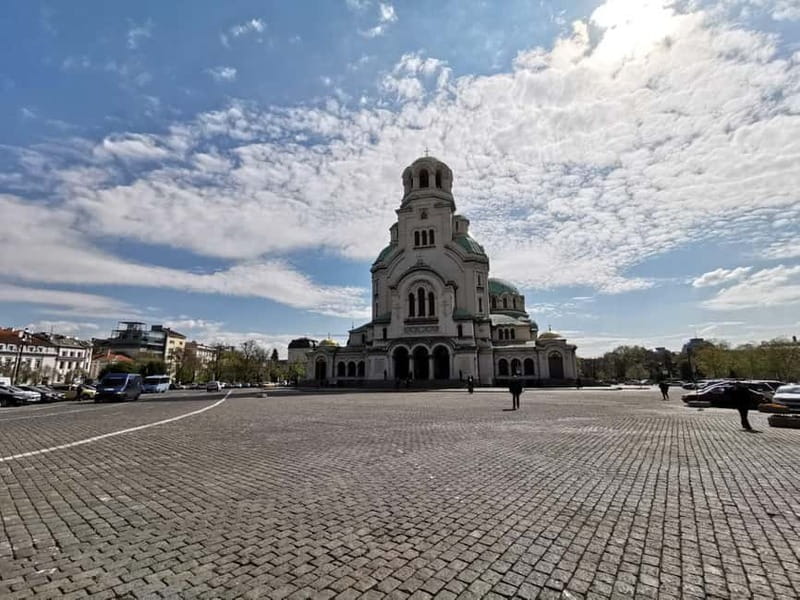
The St. George Rotunda is likely to be one of the most memorable stops. This small church sits amid the modern city and is closely associated with Sofia’s Roman past, making it another place where old and new stand close together.
The guided visit is listed at about 20 minutes. That gives you time to take in the building, understand its place in the city, and ask about the surrounding remains. The Rotunda works particularly well after Ancient Serdika because you have already started thinking about Sofia as a city built layer upon layer.
Do not expect a long church service or a private archaeological session. This is a concise sightseeing stop within a wider route. Still, the setting gives the guide plenty to explain, and the compact scale of the building makes a useful contrast with the grand National Theater and civic buildings.
This is also where the walking route feels most coherent. You have moved from culture to archaeology, religion, government, and public symbols, then returned to a small historic building embedded in the city center.
Finishing with Bulgarian wine and local food
The final stop is a traditional restaurant near Solunska Street in the old city center. Here you receive a glass of Bulgarian wine with local meat bites and other Bulgarian specialties.
The foods named for the tasting include:
- Lukanka, a seasoned Bulgarian cured sausage
- Katak, a dairy-based spread
- Kopoolu, a vegetable spread commonly associated with eggplant and peppers
- Elena fillet, a cured meat specialty
- Other local meat bites, depending on the serving
The food is meant to accompany the wine, not replace a full dinner. This distinction matters. One person described the food as a welcome light meal in a pleasant tavern, while other feedback found the serving limited, with one glass of wine and a small amount of food. I would book this expecting a well-chosen introduction to Bulgarian flavors, not a multi-course feast.
The stop is still valuable because Bulgarian food can be hard to understand from a menu alone. A tasting lets you try several textures and seasonings in a short time, and your guide can explain what you are eating. You also finish seated in a traditional restaurant rather than ending abruptly on a sidewalk.
Vegetarians and vegans are welcome, but you should state your dietary needs when you reserve. The same applies to gluten intolerance, nut-free, egg-free, fish and seafood-free, and sugar-free diets. The tour specifically asks you to provide this information in advance, so do not wait until you arrive.
Guide style, languages, and group size
The tour is offered in English and Spanish. The strongest feature across the experience is the guide rather than a special entry ticket or a private venue.
Guides named in the feedback include Danitsa, Denitsa, Maria, Dani, and Daniel. Danitsa and Denitsa were praised for being attentive, friendly, and able to make the visit feel personal. Maria was described as especially strong at explaining Sofia’s events and landmarks through her long familiarity with the city. Dani and Daniel were appreciated for humor as well as historical detail.
The group is described as small, but no maximum size is supplied. You might have a very intimate outing, as some groups have been only two people, or you may walk with a few more people. A small group can also make the wine stop more relaxed and give you room to ask about food, history, or places to return to later.
The language promise is clear, but the exact guide is not guaranteed. If you have a strong preference for English or Spanish, select the appropriate option when booking and check the available starting time.
Who will get the most from the $82 price
I would recommend this for a first afternoon in Sofia, especially if you want a broad introduction without arranging several separate visits. You will see major central sights, get a basic framework for the city’s past, and sample local food before deciding what deserves a longer visit.
It also suits solo visitors and couples who value conversation. The small-group format and guide-led route can feel far more useful than walking between monuments with only short notes from a phone.
The tour is less suitable if you want a full meal, extensive museum time, or a slow photography walk. The schedule covers many stops in three hours, so the pace is purposeful. Wheelchair users should choose another experience because the tour is specifically not suitable for them.
The cancellation terms reduce some booking risk: you can cancel up to 24 hours before the start for a full refund, and you can reserve now and pay later. Hotel pickup and drop-off are not included, so you need to reach the Grand Hotel Sofia on your own.
Should you book this Sofia walking tour?
Book it if you want the city’s main central sights explained by a personable guide, with a modest Bulgarian tasting at the end. The best reasons are the range of the route, the strong guide feedback, and the chance to connect Roman, Ottoman, Orthodox, and modern Sofia in a single afternoon.
Do not book it expecting a lavish food tour. The tasting is a pleasant finish and a useful introduction to local flavors, but portions may be light. At $82, the tour is best value for someone who wants context, conversation, and a compact orientation to Sofia, not simply wine and snacks.
FAQ
How long does the Sofia Afternoon Walking Tour with Wine and Food Tasting last?
The tour lasts approximately three hours, including the central Sofia walk and the final wine and food tasting.
Where does the tour start?
You meet in front of the Grand Hotel Sofia.
Where does the tour finish?
The tour finishes near Solunska Street in Sofia’s old city center, after the traditional restaurant stop.
Which sights are included?
The route includes the Ivan Vazov National Theatre and garden, Ancient Serdika, Banya Bashi Mosque, Sofia City Court, the Sophia Monument, and St. George Rotunda. It also passes through central streets such as Graf Ignatiev Street and Vitosha pedestrian street.
What food and drink are included?
You receive a glass of Bulgarian wine and local bites. Foods named for the tasting include lukanka, katak, kopoolu, Elena fillet, and other local specialties.
Can vegetarians and vegans join?
Yes. Vegetarians and vegans are welcome, but you should provide your dietary requirements when making the reservation.
What languages are offered?
The live guide is available in English and Spanish.
Is the tour suitable for wheelchair users?
No. The activity is listed as not suitable for wheelchair users.
Newest wine reviews around the world
- Charleston Winery, Brewery & Sightseeing Tour★ 5.0 · 39 reviews
- Jersey Premium Vineyard and Distillery Wine Tour and Tasting★ 5.0 · 176 reviews
- Gastronomy tour and wine tasting in traditional villages★ 5.0 · 32 reviews
- Wine & Olive Oil Tour with lunch at the White Mountains★ 5.0 · 71 reviews
- Kefalonia: Private Olive Oil, Honey & Wine Tasting Experience★ 5.0 · 32 reviews
- Chania Walking Food And Wine Night Tour★ 4.5 · 31 reviews
- Manousakis Winery Shuttle Service Tour and Taste★ 4.5 · 34 reviews
- Dreamy Cruise sunset tour with dinner and unlimited wine!★ 5.0 · 41 reviews
Wine & Food Pairings, compared.
Pisa, Siena and San Gimignano Day Trip with Lunch & Wine Pairing
Read our review →
Montmartre Hill French Gourmet Food and Wine Tasting Walking Tour
Read our review →
Rome by Night – Ebike Small Group Tour – Food and Wine (Option)
Read our review →
Vila Nova de Gaia: Port Wine Tasting with Cheese Pairing
Read our review →
Eat, Drink and Repeat: Wine and Food Tasting Tour in Venice
Read our review →
Authentic Food and Wine Tour in Porto by Food Lover Tour
Read our review →Lists this tasting appears in