
Reviewed · TENERIFE WINE TOURS
Tenerife: Flavours and Wines of Tenerife Gastronomy Tour
Tenerife’s food story makes more sense when you see it at the source. This half-day tour pairs Finca Las Margaritas banana plantation with Bodega Lagar de Chasna, where volcanic soil, local grapes, and Canarian snacks come together. I like the contrast between the hands-on farm visit and the slower wine tasting. I also like the return to your hotel by early afternoon, leaving room for the beach or another outing.
The main consideration is lunch. You receive a traditional Canarian snack selection, but this is not a large sit-down meal. The four-hour schedule also depends on several hotel pickup points in Costa Adeje and nearby resort areas, so the exact start time will be confirmed after booking.
Key points
- Banana cultivation up close: Walk through a working plantation and learn how Tenerife’s signature fruit is grown.
- More than a fruit tasting: Finca Las Margaritas also introduces you to gofio production and other local products.
- Wine from volcanic ground: Bodega Lagar de Chasna explains how Tenerife’s winegrowing differs from mainland European methods.
- A particularly good white-wine tasting: Two white wines were singled out as especially enjoyable, though the full selection includes several styles.
- A guide who can adapt: Peter received special praise for repeating explanations in French for a small group, even though the advertised tour languages are English, German, and Spanish.
- A compact food tour: At $81 per person, the price covers transport, guiding, tastings, and a Canarian lunch-style snack.
Two very different tastes of southern Tenerife
Many Tenerife excursions focus on scenery, beaches, or resort entertainment. This one takes a more grounded route. You start with agriculture, then move into wine, so you get to see how food is produced before tasting it.
That order matters. A banana on a plate is familiar. A banana plant in a plantation is another thing entirely. You learn how the fruit is cultivated, see the plants at close range, and get a better sense of the work behind one of the Canary Islands’ best-known products.
Later, the mood changes at Bodega Lagar de Chasna. The farm visit is active and practical. The winery visit is about tasting, conversation, and the character of Tenerife’s wine. Between the two stops, you get a useful introduction to local eating without giving up your entire day.
The tour runs for four hours and includes hotel pickup and return. That makes it a sensible choice if you are staying in Costa Adeje, Playa de las Américas, or one of the listed resort areas and do not want to arrange a rental car.
More Wine Tours in Spain:
- Montserrat Half-Day Tour with Tapas and Gourmet Wines
★ 5.0 · 7,359 reviews - Montserrat & Cogwheel Train, Gourmet Wine Tasting & Tapas/Lunch
★ 5.0 · 6,290 reviews - Barcelona Tapas and Wine Experience Small-Group Walking Tour
★ 5.0 · 5,804 reviews
The first stop at Finca Las Margaritas
The banana plantation is the most distinctive part of the experience. At Finca Las Margaritas, you take a guided walk through the farm and learn about banana cultivation from the people who work with it.
This is not simply a quick stop for a piece of fruit. The visit covers the growing process and gives you a chance to touch and examine the plants. One useful detail from the experience is that you can feel the strength of the banana leaves, which makes the farm visit more interactive than a standard talk followed by a tasting.
You also learn about gofio, a toasted grain product central to Canarian cooking. Gofio has long been used in island food, and introducing it alongside the banana helps show that Canarian cuisine is not just about imported holiday ingredients or restaurant versions of Spanish food.
The tasting includes bananas and other typical products. The exact selection can vary, but the point is to sample local flavors in the place where at least one of them is produced. I like this kind of stop because it gives you a story to take home. You are not just told that bananas matter to Tenerife. You see the plants and learn how they are cultivated.
The plantation should suit families, food-focused visitors, and anyone who prefers a working agricultural site to a formal museum. It also gives you something to do with your hands, which is useful if you find ordinary guided commentary a little dry.
Wear comfortable shoes. You will be walking around a farm, and the tour specifically recommends practical footwear rather than sandals or dress shoes. You should also bring warm clothing, since the later mountain road and winery stop may feel cooler than the southern resort coast.
The mountain road to Bodega Lagar de Chasna
After the plantation, the outing continues along a mountain road toward Bodega Lagar de Chasna. The route itself provides changing views and a useful transition from lowland agriculture to Tenerife’s wine country.
The tour does not present the road as a separate sightseeing stop, so you should think of it as part of the journey rather than a long photo session. Still, it adds variety. You move from banana cultivation to higher ground and from fruit farming to vineyards.
This is also why warm clothing is sensible. Tenerife can be sunny at the coast while the interior feels cooler, particularly when you are moving up through the mountains. The supplied information does not give an exact elevation or weather guarantee, so a light extra layer is the safest choice.
Wine tasting at Bodega Lagar de Chasna
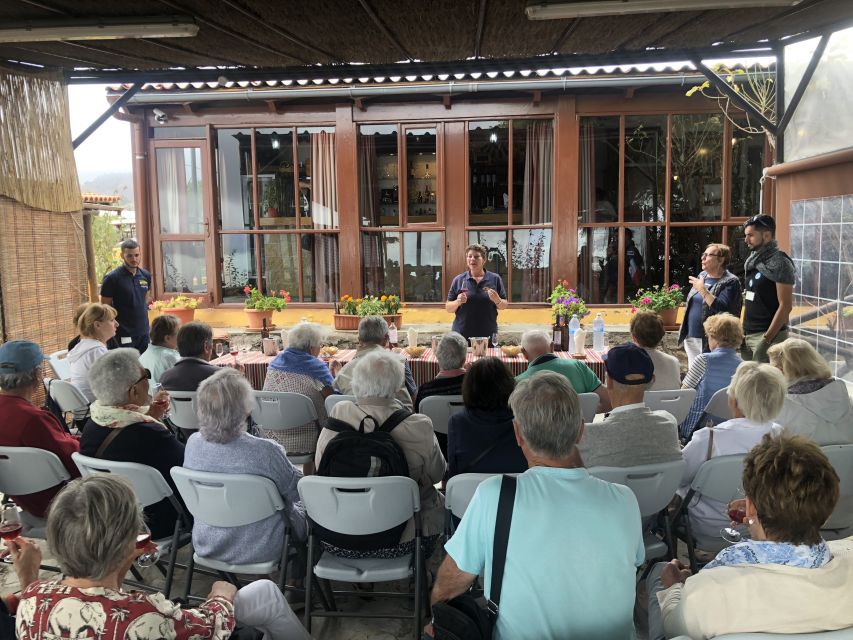
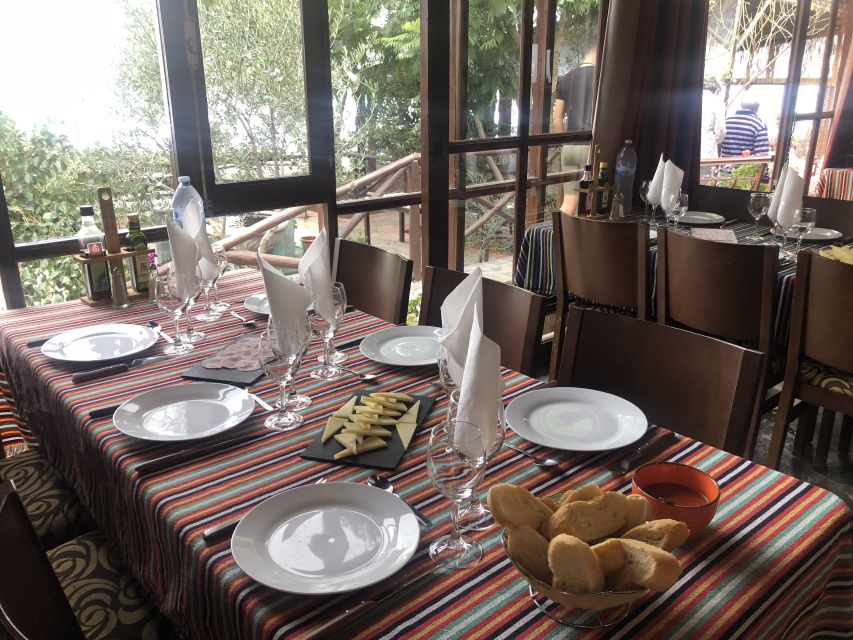
Bodega Lagar de Chasna is the second major stop and the place where the tour shifts from farm education to tasting. You sample several Tenerife wines with local snacks, including homemade mojo according to the experience details.
The pairing is important. Wine on its own can become a parade of glasses and grape names. Local food gives you something to compare with the wine, and mojo brings a distinctly Canarian note to the table. The tasting is designed as a relaxed food experience rather than a technical wine course.
You also learn how volcanic ground affects Tenerife’s winegrowing and how local production differs from methods used in mainland Europe. That context makes the wines easier to understand. Tenerife is not simply reproducing familiar Spanish styles in another location. Its island setting and volcanic ground are part of the explanation for why the wines taste and develop differently.
The tasting includes white wines and other varieties. Two of the white wines were especially well received, while the other wines also earned positive attention. If you usually reach for white wine, this stop may be the highlight of the day. If you prefer red or mixed tastings, you should still have enough variety to make the visit worthwhile, though the exact pours are not specified.
The winery’s host is described as humorous and engaging, which can make a difference in a tasting. Wine visits are much better when explanations are clear and the atmosphere does not feel stiff. The guide also plays an important role. Peter was praised for taking time to repeat explanations in French for two participants, even though English, German, and Spanish are the listed tour languages. That suggests some flexibility in how the information is delivered, but French is not promised as a standard language.
You should expect tasting rather than a full winery production tour with detailed cellar access. The information confirms a visit to one of Tenerife’s notable wine cellars and a wine tasting, but it does not specify barrel rooms, vineyard walks, or a particular number of wines. Book it for the combination of wine and local food, not for a lengthy technical winery inspection.
Same region, a different bottle:
- Barcelona: Montserrat, Cogwheel, Black Madonna & Winery Tour
★ 4.8 · 5,633 reviews - Montserrat with Black Madonna & Medieval Winery with Tapas/Lunch
★ 5.0 · 5,209 reviews - Barcelona: Tapas Walking Tour with Food, Wine, and History
★ 4.8 · 4,261 reviews - Madrid Tapas & Wine Tasting Walking Tour – Small Group Local Bars
★ 5.0 · 3,644 reviews
What the included food really amounts to
The tour includes a typical Canarian lunch, but it is best understood as a substantial snack or tasting spread. The food served with the wine includes local products and homemade mojo, and the experience finishes with traditional Canarian fare.
That distinction is worth making before you book. If you want a large midday meal with several courses, you may need to eat again later. If you want a regional bite that fits naturally around a wine tasting, the food provision should be enough.
I like this format for a half-day outing. A heavy lunch would slow down the rest of your day, while a few local dishes keep the focus on tasting and leave you free for dinner plans. The tour is also a good introduction if you are not yet familiar with Canarian food. You get to try several products without committing to a full restaurant meal.
The food is not presented as generic tapas. Gofio, mojo, bananas, wine, and local snacks connect the two stops and give the excursion a clear regional identity. That is the real value here.
Is $81 a fair price?
At $81 per person, this is not the cheapest way to spend four hours in Tenerife. The price becomes easier to justify when you count what is included: hotel pickup and drop-off, transport, a live guide, the plantation visit, food tastings, wine tastings, and the traditional Canarian snack meal.
You are also paying for convenience. The pickup network covers many hotels and meeting points around Costa Adeje and nearby resort zones, including stops near Siam Park, Fañabé, El Duque, Playa de las Américas, and Costa Adeje. You do not need to find the plantation or winery yourself, and you avoid arranging a designated driver for the wine tasting.
For two people, the total cost is significant. I would compare it with the price of a rental car, fuel, separate tastings, and a meal before deciding. The organized tour makes more sense if you want a guide to explain the farming and wine, or if you prefer not to drive after drinking.
The value is strongest for visitors who want context, not just consumption. You could buy bananas and wine on your own for less, but you would miss the explanation of cultivation, gofio, volcanic ground, and the differences between island and mainland wine production.
Pickup points and the four-hour schedule
Pickup is included, but you need to tell the operator where you are staying. The exact pickup time and place are sent by email, so check your messages before the day of the tour.
The many listed pickup points are useful, but they also mean the tour does not begin at one universal time for everyone. The vehicle may need to collect people from several hotels and meeting points. Allow a little flexibility around the stated start time.
The same arrangement applies to the return. You are dropped back at one of the listed locations, with the tour planned so you can continue enjoying the rest of your day. That makes it easy to combine with a relaxed afternoon, though you should avoid booking another fixed activity too close to the return time.
Because the tour includes transport on a mountain road, comfortable shoes and a warm layer are the practical choices. The supplied details do not specify a group size, vehicle type, or accessibility arrangements, so ask the operator directly if any of those points matter for your plans.
Who will enjoy this tour most
I would recommend this experience to you if you want a short introduction to Tenerife’s food and wine rather than a full-day sightseeing trip. It works particularly well for:
- Couples looking for a shared tasting experience
- Families interested in farms and fruit cultivation
- Food-focused visitors who want local products, not only restaurant meals
- Wine drinkers who want to understand Tenerife’s volcanic growing conditions
- Visitors staying in the southern resort area without a rental car
- Anyone who wants to finish early enough for an afternoon at the hotel or beach
It may be less suitable if you want a large lunch, a long vineyard hike, or a highly technical wine seminar. It is also not the best fit if you dislike scheduled pickup routes or want complete control over how long you spend at each stop.
The tour is conducted in English, German, and Spanish. If language is important, confirm the available language before booking. Peter’s flexibility with French is encouraging, but French is not listed as a regular option.
Cancellation and booking flexibility
You can cancel up to 24 hours before the experience for a full refund. The reserve-now, pay-later option also gives you some flexibility while you settle your Tenerife plans.
That is useful for a short holiday, when weather, beach days, and other excursions can shift your schedule. Still, you should provide your accommodation details promptly so the pickup can be organized and the exact meeting information can reach you by email.
Should you book the Tenerife gastronomy tour?
Book this tour if you want real local food with a clear sense of place. The banana plantation is the strongest reason to go, especially if you enjoy seeing how familiar food is grown. The winery then adds a second angle, with Tenerife wines, homemade mojo, gofio, and a relaxed Canarian snack tasting.
At $81, it is best viewed as a guided food-and-wine outing with transport, not as a bargain lunch. The experience earns its price through the farm access, explanations, tastings, and the convenience of hotel pickup and drop-off.
I would choose it for a first taste of Tenerife’s agricultural and wine traditions, particularly if you are staying in the south and want to keep your afternoon free. I would skip it only if you need a full meal, a long winery tour, or a completely private schedule.
FAQ
How long does the Tenerife gastronomy tour last?
The experience lasts four hours.
What is the price per person?
The listed price is $81 per person.
Is hotel pickup and drop-off included?
Yes. Hotel pickup and drop-off are included at selected locations in the southern Tenerife resort area. You need to provide your accommodation details so the exact pickup time and place can be sent by email.
Which places does the tour visit?
The tour visits Finca Las Margaritas banana plantation and Bodega Lagar de Chasna winery.
What food and drinks are included?
The experience includes wine tastings, food tastings, local products, bananas, gofio-related products, homemade mojo, and a typical Canarian snack or lunch.
Which languages are available?
The live tour guide service is available in English, German, and Spanish.
What should I bring?
Bring comfortable shoes and warm clothing.
Can I cancel the tour or pay later?
You can cancel up to 24 hours in advance for a full refund. A reserve-now, pay-later option is also available.
Newest wine reviews around Spain
- Ribera del Duero Underground Cellar & Wine Tasting Experience★ 4.5 · 49 reviews
- Visit a winery of the 19th century and its draft★ 5.0 · 62 reviews
- Visit and Wine Tasting at the Territorio Luthier Winery★ 5.0 · 89 reviews
- Semi-Private Rioja Tour of 3 Premium Wineries from Bilbao★ 5.0 · 128 reviews
- Basque Best Bites – #1 Food & Wine tour of Bilbao★ 5.0 · 268 reviews
- Rioja & Txakoli Wine Tasting in Bilbao with a Local Sommelier★ 5.0 · 40 reviews
- Rioja wine region with visit to winery & Vitoria-Gasteiz★ 4.5 · 32 reviews
- Bilbao Pintxo Tasting Paired With Spanish Wines★ 5.0 · 55 reviews
Tenerife Wine Tours, compared.
Tacoronte: Guided Winery Tour with Wine and Cheese Tastings
Read our review →
Wine Museum Ticket with Local Wines & Food Tasting
Read our review →

Lists this tasting appears in