Reviewed · ITALY WINE TOURS
Amalfi: Make Fresh Pasta, Mozzarella, & Tiramisù with Wine
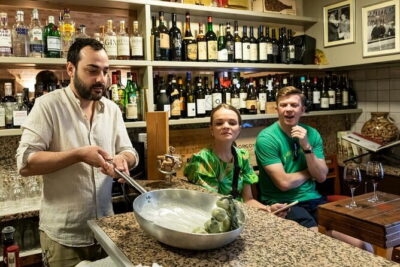
The best part of this Amalfi cooking class is that you do not just watch someone prepare lunch. You knead pasta, shape tagliatelle, work with mozzarella, and layer tiramisu before sitting down to eat. Ferdinando brings the class to life with jokes, music, and clear instruction, while the farm setting gives the lesson a real sense of place.
I like the generous meal and the chance to taste produce and wine made at the farm. I also like that the class works for a wide age range, from young children to older family members. The main catch is getting there: the farm is high above town, and walking can mean a long climb up stairs. A bus is often more practical than relying on a taxi.
Key points to know before booking
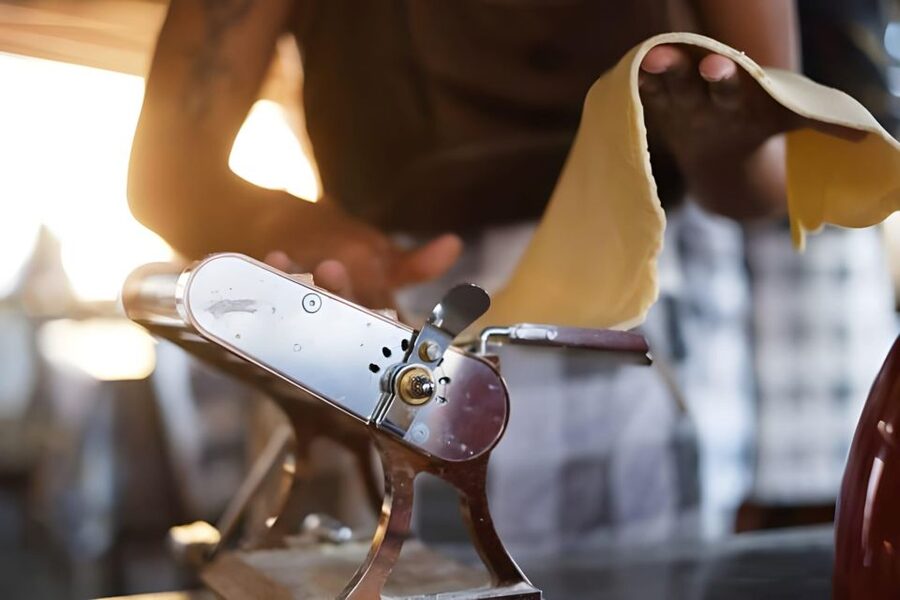
- You make three Italian staples: Fresh tagliatelle, mozzarella, and tiramisu all feature in the hands-on lesson.
- Ferdinando is the main personality: Expect a warm, funny instructor, with Michael and other assistants helping during some sessions.
- The meal can be generous: You eat what you prepare, plus extra farm food and local wine.
- The farm has real character: Gardens, goats, chickens, hillside views, and a glimpse of the Mediterranean add more than a standard kitchen can.
- Allow extra time for the setting: The advertised class lasts one to two hours, but some sessions have run longer.
- Sort out transport early: Hotel pickup is not included, the meeting point varies, and the hilltop location is not simple to reach on foot.
Why this farm class feels different from a city cooking lesson
Many cooking classes in Italy take place in a professional kitchen or a rented apartment. This one takes you to a working farm above the Amalfi Coast, where the surroundings are part of the experience.
You may see a vegetable garden, goats, and chickens before you even start cooking. The views stretch across the hills, with some spots offering a glimpse of the Mediterranean. That setting matters because it connects the food to the land around you. You are not simply learning a recipe from a printed card. You are seeing where some of the ingredients come from and eating in the place where they were grown or made.
The atmosphere is informal. Italian music may be playing, wine appears during the meal, and the instructors keep the mood light. Ferdinando is frequently singled out for his humor and energy, but the class is not just a comedy routine. The cooking remains clear and practical, with each person given something to do.
That balance suits people who want a social afternoon rather than a strict culinary course. If you hope to master advanced pasta technique or leave with a detailed professional syllabus, this may feel relaxed. If you want to cook, eat well, meet people, and enjoy a rural corner of Amalfi, it makes good sense.
More Wine Tours in Italy:
- Tuscany Day Trip from Florence: Siena, San Gimignano, Pisa and Lunch at a Winery
★ 5.0 · 21,634 reviews - Florence: Pasta Cooking Class with Unlimited Wine
★ 4.9 · 10,285 reviews - Florence: Chianti Wineries Tour with Wine Tasting
★ 4.5 · 10,071 reviews
Making tagliatelle by hand
The pasta portion begins with dough. You learn how to knead it, work it into shape, and turn it into tagliatelle. The pleasure here is in the physical work. Your hands are involved from the start, so you can feel how the dough changes as you handle it.
The class is designed for beginners. You do not need previous cooking experience, and the instructors demonstrate the steps before you try them. Children can take part as well. One family found that even a three-year-old could join in, while another family with children aged six, eight, sixteen, and twenty all stayed engaged.
That range is useful if you are booking for a mixed-age group. Younger children can help with simple preparation, while older children and adults get more involved in shaping the pasta and following the instructions. The social setup also means that solo visitors and couples are not left out.
The stated description includes a vegetable sauce made with local and seasonal ingredients. Keep in mind that the level of participation in the sauce may vary. One attendee noted that the sauce was homemade but was not prepared entirely by the class. You should expect to make the pasta itself, while some of the sauce work may be handled by the team.
That is not a serious flaw, but it is worth knowing if the sauce is the part you most want to learn. The value is still strong because the pasta is fresh, the ingredients are tied to the farm, and you get to eat the finished dish soon after making it.
The mozzarella lesson adds a second kind of hands-on cooking
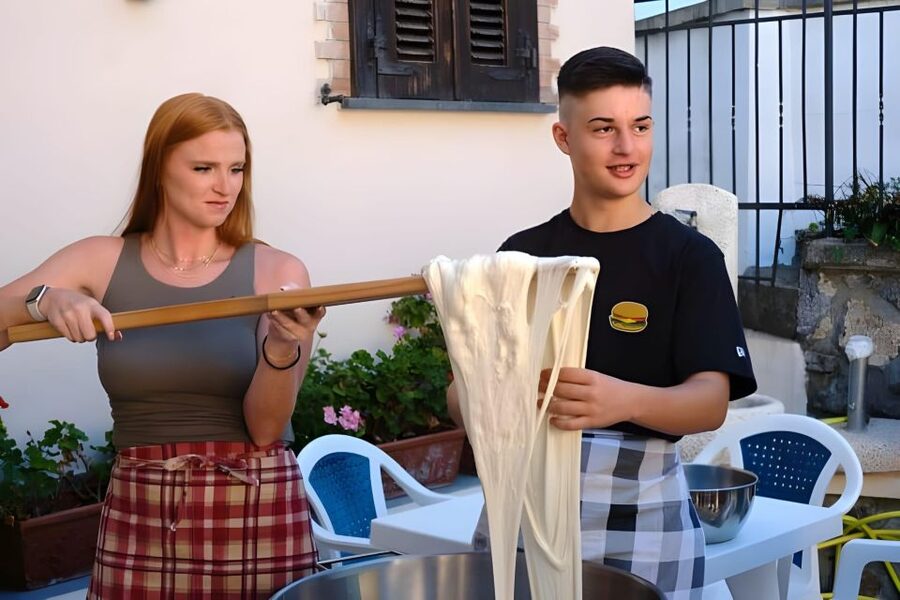
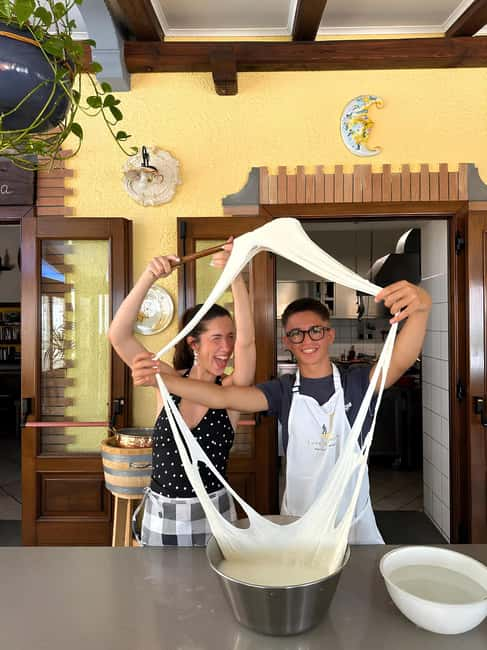
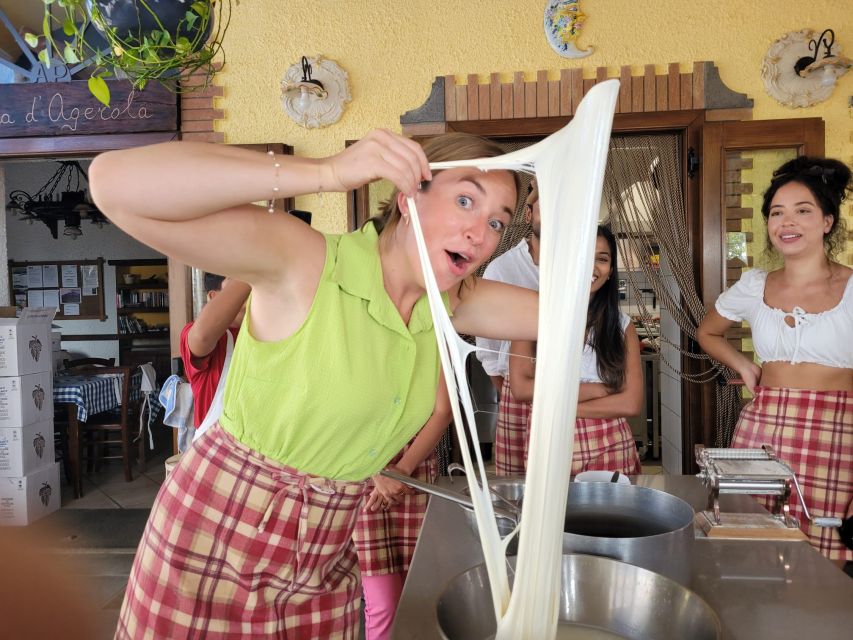
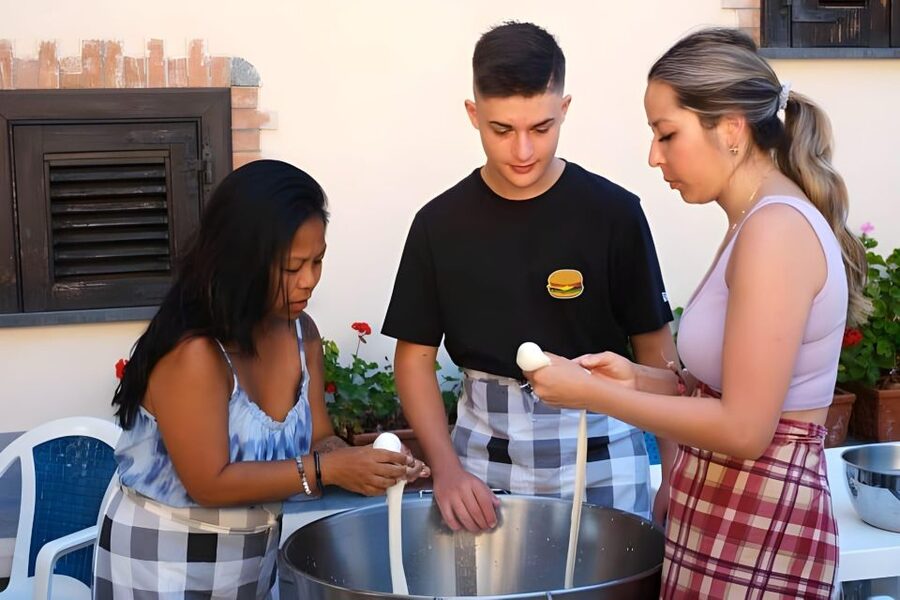
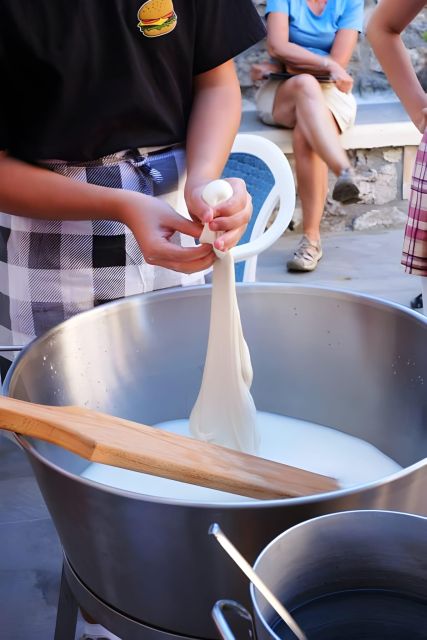
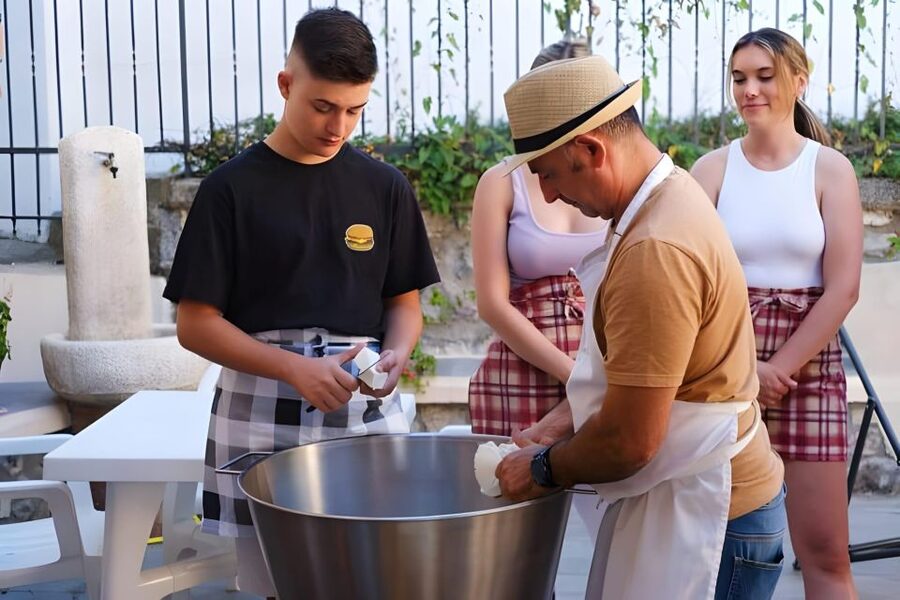
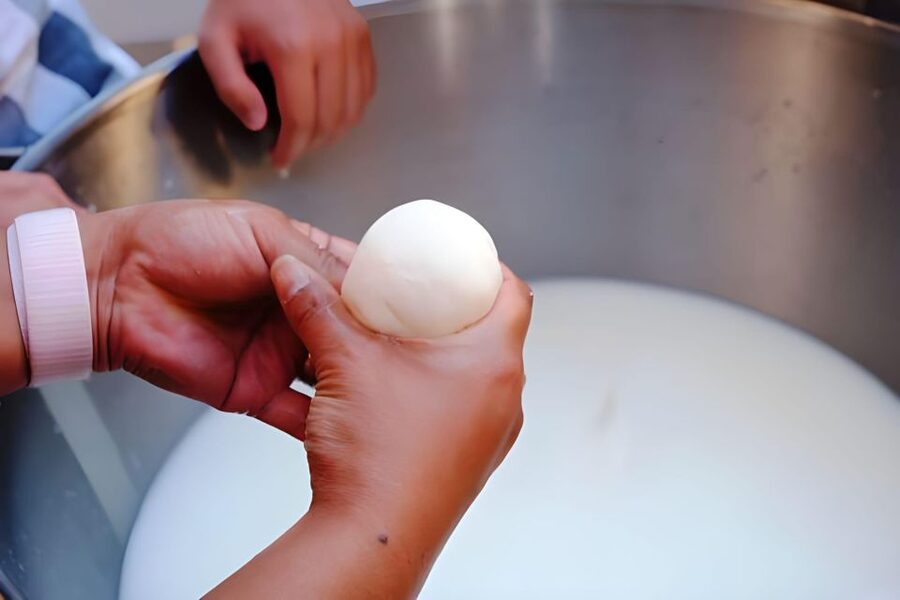
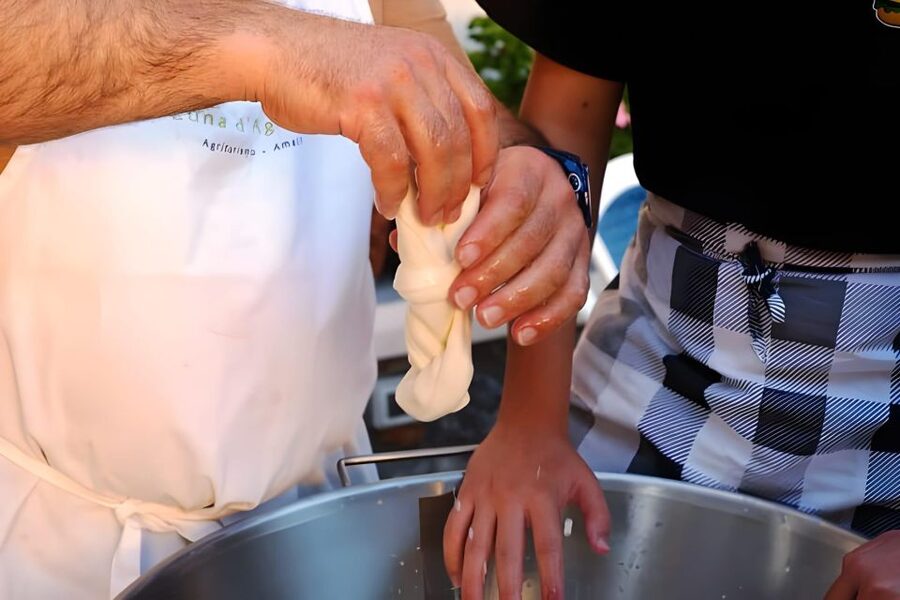
Mozzarella gives the class a change of pace. Pasta is about dough, flour, and shaping. Mozzarella introduces you to the production of a soft cheese and shows another side of Italian food preparation.
The details of the cheese-making process can vary with the session, but the experience includes learning about mozzarella production and taking part in the preparation. That makes the class more varied than a pasta-only lesson. You move from working with wheat to working with dairy, then finish with a dessert.
The mozzarella is also part of the meal. You are not making something just for display. The food comes back to the table, along with other farm products and wine. Several people found the amount of food surprising, with multiple rounds served during the class.
That generosity is one of the strongest reasons to consider the activity. At $34 per person, you are paying for instruction, a farm visit, a cooked meal or dinner depending on the start time, and a wine tasting. In Amalfi, where food and organized activities can quickly become expensive, that is a fair price if you make full use of the meal and the setting.
Tiramisu keeps the class friendly for beginners
The final cooking task is tiramisu. You learn how to prepare its creamy layers, then let the dessert become part of the meal.
Tiramisu is a smart choice for this kind of group lesson. It is familiar, approachable, and does not require advanced pastry skills. The class gives you a useful introduction to assembling an Italian dessert without turning the afternoon into a technical baking course.
The three-part structure also helps the session keep moving. You make one dish, pause to eat or chat, then continue with the next station. Some people especially enjoyed the rhythm: prepare the food, relax with wine and conversation while the team clears and resets, then return to the next task.
Do not expect every minute to be filled with instruction. The pauses are part of the social experience, and they give the cooking a relaxed pace. If you want nonstop activity, the breaks may feel loose. If you want time to talk with your group and enjoy the farm, they are welcome.
Same region, a different bottle:
- Small-Group Wine Tasting Experience in the Tuscan Countryside
★ 5.0 · 7,392 reviews - Florence: Pasta & Tiramisu Cooking Class with Unlimited Wine
★ 4.9 · 6,708 reviews - Florence: Pasta Cooking Class with Unlimited Wine
★ 5.0 · 6,413 reviews - Pisa, Siena and San Gimignano Day Trip with Lunch & Wine Pairing
★ 4.5 · 6,006 reviews
Lunch, wine, and food from the farm
After the practical work, you sit down to eat. The meal may be lunch or dinner, depending on the time you book. You taste the tagliatelle, mozzarella, tiramisu, and additional food prepared or supplied by the farm.
The ingredients are a major part of the appeal. The farm uses its own produce, and one attendee specifically described the ingredients as organic. The exact dishes beyond the advertised menu can vary, so you should not book this expecting a fixed restaurant-style menu. Instead, think of it as a generous farm meal built around the dishes you help prepare.
Wine made at the farm is included. The homemade wine received plenty of praise, and it is served as part of the meal rather than treated as a separate add-on. This makes the class feel more like an afternoon with a local family than a formal lesson.
Drink responsibly, especially if you still need to travel back down the hill. The activity does not include hotel pickup or drop-off, and the location can be awkward after several glasses of wine. If you are not driving, plan your return route before you arrive.
The food is another reason this works well for non-cooks. You can take part at your own level and still have a satisfying meal. Nobody needs to arrive as a serious kitchen enthusiast.
Ferdinando, Michael, and the tone of the class
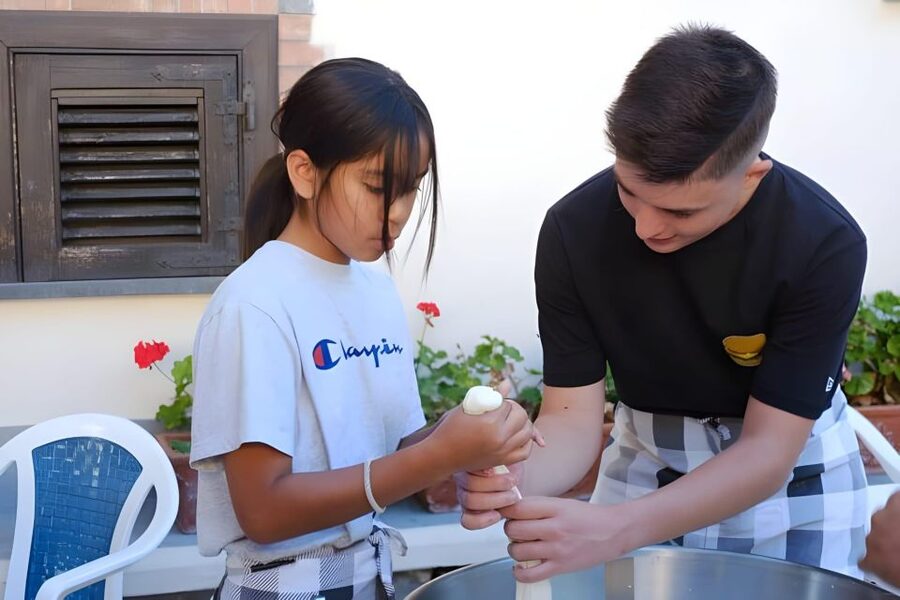
The hosts shape the experience as much as the recipes. Ferdinando is repeatedly described as funny, welcoming, and easy to learn from. Michael assists during some sessions, and other team members help with the preparation and service.
Expect a class with personality. Music, jokes, conversation, and wine are part of the tone. The instructors explain the process, but they do not treat mistakes as a problem. That is helpful if you feel nervous about cooking in front of strangers.
The English instruction is suitable for international visitors, and Italian is also available. The language setup is especially useful for families or couples who do not speak Italian but still want a local food experience. The demonstrations and hands-on format give you more than words alone.
The informal style can also mean that the exact timing and order are not rigid. One session lasted three hours, despite the stated duration of one to two hours. You should allow a little breathing room in your schedule, especially if you have a ferry, train, or timed reservation afterward.
Reaching the farm above Amalfi
Transportation is the biggest practical issue. Hotel pickup and drop-off are not included, and the meeting point can vary depending on the option you book. Read the meeting instructions carefully instead of assuming the class begins in central Amalfi.
The farm is up a hill. Walking there may involve a lot of stairs, and one person described the route as difficult. Taxis are not always readily available, so depending on finding one at the last minute is not wise.
A bus may be the better choice if you are coming from town. Confirm the correct stop and allow time for the final walk. If you are driving, parking is included, which is useful, but the hill road still deserves care.
This is not a reason to skip the class. It is simply the part most likely to cause stress if ignored. Contact the provider if you are unsure about the meeting point, and keep your route home in mind before the wine begins.
Who will get the most from this experience
I would choose this class for families, couples, groups of friends, and solo visitors who enjoy meeting people. It is especially good for a group with mixed interests because the cooking is active, the meal is social, and the setting gives non-cooks something to enjoy.
Families should note the wide age range that has worked well in practice. Small children can participate with adult help, while older children can follow the recipes and take on more responsibility. The informal setting is likely easier for children than a long restaurant meal.
Couples who want a break from sightseeing will find the pace pleasant. You cook together, share food, and have time to talk. Solo visitors can also fit in because the class brings several people around shared workstations and a communal meal.
You may want to choose another activity if you need a short, tightly timed lesson or if walking uphill is difficult. You should also be aware that the experience is more about enjoyment and local hospitality than precise culinary training. The recipes are useful, but the mood is relaxed and sometimes spontaneous.
Is $34 a good value in Amalfi?
At $34 per person, the price is one of the experience’s strongest points. You receive the cooking lesson, a guided farm visit, food for lunch or dinner, wine tasting, parking, and an English or Italian instructor.
Comparable food activities often charge more once a full meal and drinks are included. Here, you are also paying for access to a private-feeling farm setting, not only for a class in a basic kitchen. The food portions appear generous, and extra farm products may be served alongside what you make.
The value depends on your expectations. If you want a polished, quiet class with individual attention and exact recipe instruction, the casual format may not be ideal. If you want three popular Italian dishes, a filling meal, wine, views, and a friendly host for $34, it is a strong deal.
Remember to count transportation separately. The low price does not cover getting to or from your hotel, and the hill can add time or cost if you need local transport.
Booking details worth keeping in mind
The experience offers free cancellation up to 24 hours before the start time, with a full refund. You can also reserve now and pay later, which helps if your Amalfi schedule is still changing.
The duration is listed as one to two hours, but I would avoid placing a tight appointment immediately afterward. The food, conversation, and group pace can extend the visit, and one reported session lasted about three hours.
Classes are offered in English and Italian. Parking is included, but hotel pickup and drop-off are not. Check the meeting point for your selected option because it may differ between bookings.
Should you book it?
Book this class if you want to cook with your hands, eat a generous farm meal, and meet warm hosts in a hillside setting. Ferdinando’s humor, the farm produce, homemade wine, and the chance to make pasta, mozzarella, and tiramisu give it more character than a basic pasta demonstration.
I would be cautious only if you need easy transport, a strict end time, or a formal chef-training session. For most visitors, the climb and flexible timing are manageable with planning. At $34, this is a particularly good choice for families and food lovers who want an enjoyable Amalfi memory without a high price tag.
FAQ
How much does the Amalfi cooking class cost?
The activity costs $34 per person.
How long does the cooking class last?
The stated duration is one to two hours. Allow extra time because some sessions can run longer, with one session lasting about three hours.
What dishes will I learn to make?
You will learn to make fresh tagliatelle, mozzarella, and tiramisu. The pasta is served with a vegetable sauce made with local and seasonal ingredients.
Is a meal included?
Yes. Lunch or dinner is included, depending on the start time. You eat the food prepared during the class along with additional farm food.
Is wine included?
Yes. A local wine tasting is included, with wine produced at the farm.
What languages are available?
Instruction is available in English and Italian.
Is transportation from my hotel included?
No. Hotel pickup and drop-off are not included. The meeting point may vary by booking option.
Can I cancel the booking?
Yes. You can cancel up to 24 hours in advance for a full refund. A reserve-now-and-pay-later option is also available.
Newest wine reviews around Italy
- Etna trekking and wine tasting★ 5.0 · 28 reviews
- Etna Tour and Lunch in a Winery with Wine Tasting★ 5.0 · 97 reviews
- Cooking Class and Wine Pairing in Capri★ 5.0 · 57 reviews
- WINE TOUR with sommelier in a winery near Cagliari★ 5.0 · 27 reviews
- Cagliari 3 Hours Luxury Motorboat Tour – Wine and Snorkeling★ 5.0 · 118 reviews
- Wine Experience: vineyard, wines and food★ 5.0 · 155 reviews
- Dinner in the vineyard with wine tasting and walk★ 5.0 · 58 reviews
- Wine Tour and Tasting of Lugana Wines in Desenzano★ 5.0 · 58 reviews
Italy Wine Tours, compared.

Tuscany Day Trip from Florence: Siena, San Gimignano, Pisa and Lunch at a Winery
Read our review →
Small-Group Wine Tasting Experience in the Tuscan Countryside
Read our review →
Pisa, Siena and San Gimignano Day Trip with Lunch & Wine Pairing
Read our review →
Tuscany & Montepulciano Day Trip with Lunch & Wine Tasting
Read our review →
SMALL-GROUP Wine Safaris: Tuscan Wine Tasting Tours from Florence
Read our review →