Reviewed · WORKSHOPS
Cagliari Home Cooking Class: Pasta, Wine & Sardinian Flavors
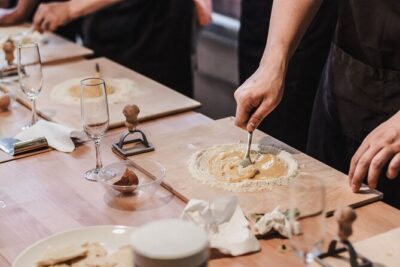
Sardinia’s most memorable meal may begin with flour on your hands. In this three-hour Cagliari cooking class, you make culurgiones, the island’s folded filled pasta, along with fresh tagliatelle, then eat what you have prepared with local wine and a full Sardinian meal.
I like the small group of six because pasta making needs patient help, and I like the setting in a real home kitchen rather than a polished restaurant classroom. The hosts, including Giulia and Maria, are praised for explaining each step clearly and working kindly with first-time pasta makers.
The main consideration is location. The class is near Cagliari Airport, which is handy for an arrival or departure day, but it may not be the best choice if you want an activity in Cagliari’s historic center. Hotel pickup is not included, so you must make your own way to the entry point.
Key points to know before you book
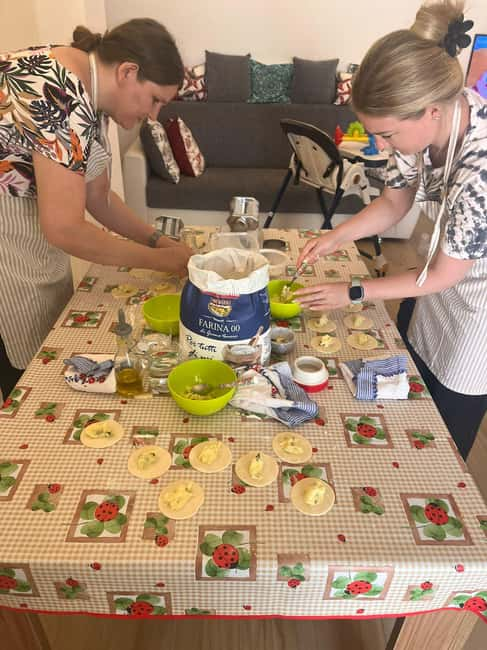
- You make two Sardinian pasta styles: Learn the shaping of filled culurgiones as well as fresh tagliatelle.
- The meal is more than a pasta tasting: Expect Sardinian cheeses, cured meats, honey, wine, dessert, and homemade Mirto.
- First-time cooks are welcome: You need no prior pasta-making experience, and the hosts provide hands-on guidance.
- The group is capped at six: This gives you a better chance to ask questions and get help with tricky pasta folds.
- The airport-area location has a practical use: It can fit neatly around an arrival or departure from Cagliari.
- Recipes go home with you digitally: You can try the dishes again after your Sardinia trip.
Why making culurgiones matters
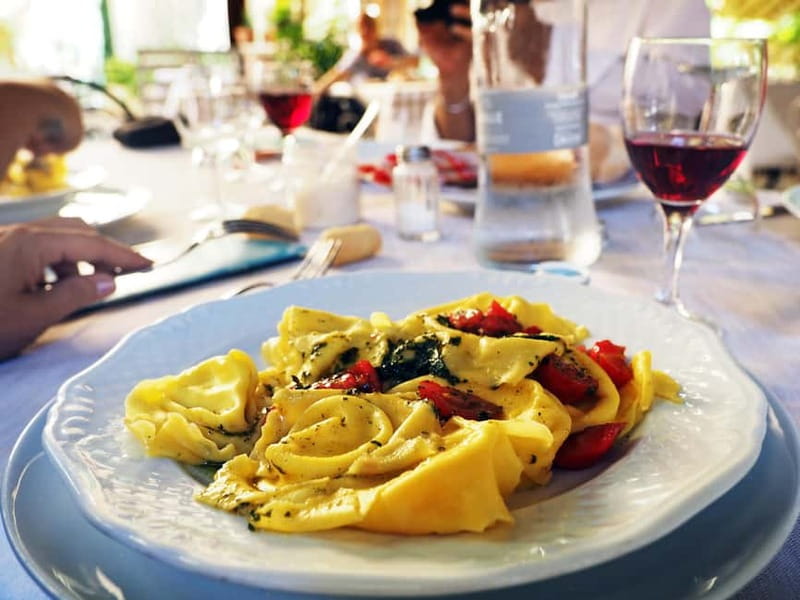
Culurgiones are not ordinary ravioli. This traditional Sardinian pasta is filled, sealed, and shaped by hand, with the edges often folded into a distinctive pattern. The appeal of learning them here is not just the finished plate. You get to see how a simple dough becomes a regional food with its own look and method.
You will also work with fresh tagliatelle. That gives the class a useful contrast: culurgiones require careful filling and sealing, while tagliatelle lets you focus on rolling and cutting pasta. If you have never made pasta before, that combination gives you two techniques to take home rather than one.
The class uses local flours and straightforward methods passed down through Sardinian kitchens. No complicated equipment or advanced cooking skill is required. Bring curiosity, patience, and an appetite.
I would pay close attention during the shaping stage. Rolling dough is fairly forgiving, but filled pasta can split if the dough is too thin, the filling is too generous, or the edges are not sealed well. The small group makes it easier to get immediate help instead of struggling quietly at the end of the table.
More Workshops in Italy:
- Florence: Pasta Cooking Class with Unlimited Wine
★ 4.9 · 10,285 reviews - Florence: Pasta & Tiramisu Cooking Class with Unlimited Wine
★ 4.9 · 6,708 reviews - Florence: Pasta Cooking Class with Unlimited Wine
★ 5.0 · 6,413 reviews
A three-hour meal built around your own pasta
The experience follows a sensible rhythm. First comes the hands-on preparation, then the meal. That order matters because you are not simply watching someone cook a Sardinian dish. You are sitting down to taste the result of your own work.
The exact starting time varies, so check the schedule when booking. The class can work as a lunch or dinner, and the included meal is described as a three-course experience. Since the session lasts three hours, allow enough time afterward rather than trying to squeeze in another fixed appointment.
After the pasta work, the meal begins with Sardinian antipasti. You can expect regional cheeses, cured meats, local honey, and wine. This opening course gives you a wider taste of the island before the pasta arrives. It also makes the experience feel like a proper home meal rather than a cooking demonstration followed by a token sample.
The prepared pasta is served with traditional sauces. You may have spent much of the class concentrating on dough and folds, so this is the point where the work becomes dinner. The reviews describe generous portions, and one participant specifically noted leaving very full. If you are planning this for a child or a light eater, keep the substantial meal in mind.
Dessert finishes the meal, followed by homemade Mirto. This myrtle liqueur is one of Sardinia’s best-known after-dinner drinks. It gives the experience a clear local finish, though anyone who does not drink alcohol should remember that both wine and Mirto are part of the stated menu.
The hosts make a difference
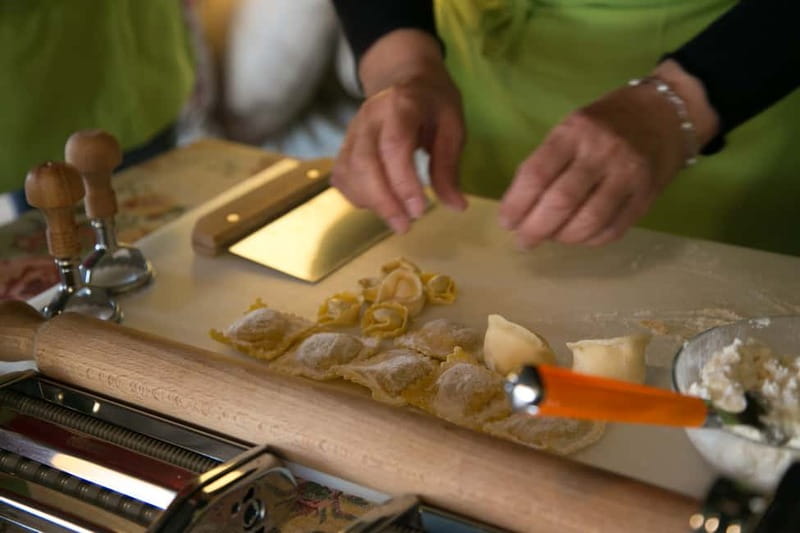
A pasta class depends heavily on the person teaching it. The strongest reports focus on the hosts’ patience, warmth, and ability to make the techniques understandable.
Giulia has been praised for showing beginners how to make culurgiones without making the process feel intimidating. One account also described her as happy to answer questions and provide help whenever needed. Maria was singled out for being patient with a young daughter, which is useful information for families considering the class.
The instructors speak English, German, Italian, and Spanish. That broad language range is a real advantage in a hands-on class, where a small misunderstanding can lead to a torn pasta sheet or a poorly sealed dumpling.
You should still expect to participate rather than be treated like a diner at a restaurant. The host can demonstrate and correct your technique, but you will need to roll, fill, fold, and shape the pasta yourself. That is the point of the experience, and it is also what makes the recipes useful once you get home.
Why the six-person limit is useful
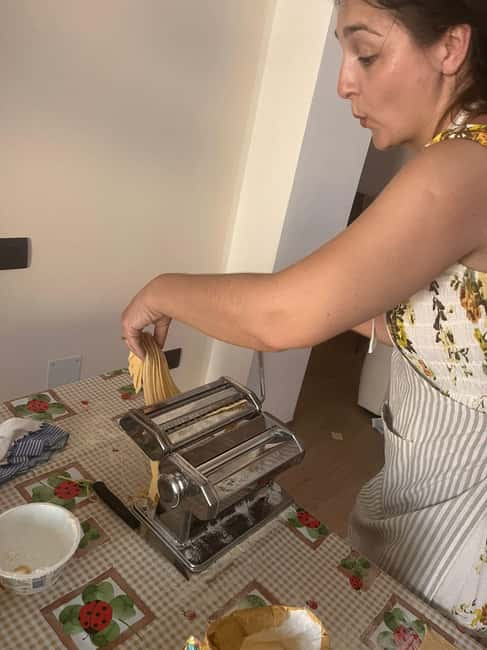
A group limit of six is one of the most practical features here. Pasta making involves small movements, and the instructor needs to see what you are doing. In a large class, you may watch from the back or wait for help. With six people, the teacher can spend more time checking dough, showing a fold again, or helping you recover from a broken seal.
The size also suits mixed groups. You might arrive as a couple, with children, or alone and join other food lovers. The format leaves room for conversation around the table without turning the meal into a crowded group event.
A small group does not guarantee a private class. If privacy matters, check the booking terms before reserving. The stated format is a small shared group, not an automatically private lesson.
More Wine Tours in Italy:
- Tuscany Day Trip from Florence: Siena, San Gimignano, Pisa and Lunch at a Winery
★ 5.0 · 21,634 reviews - Florence: Chianti Wineries Tour with Wine Tasting
★ 4.5 · 10,071 reviews - Small-Group Wine Tasting Experience in the Tuscan Countryside
★ 5.0 · 7,392 reviews - Pisa, Siena and San Gimignano Day Trip with Lunch & Wine Pairing
★ 4.5 · 6,006 reviews
Eating Sardinia beyond the pasta
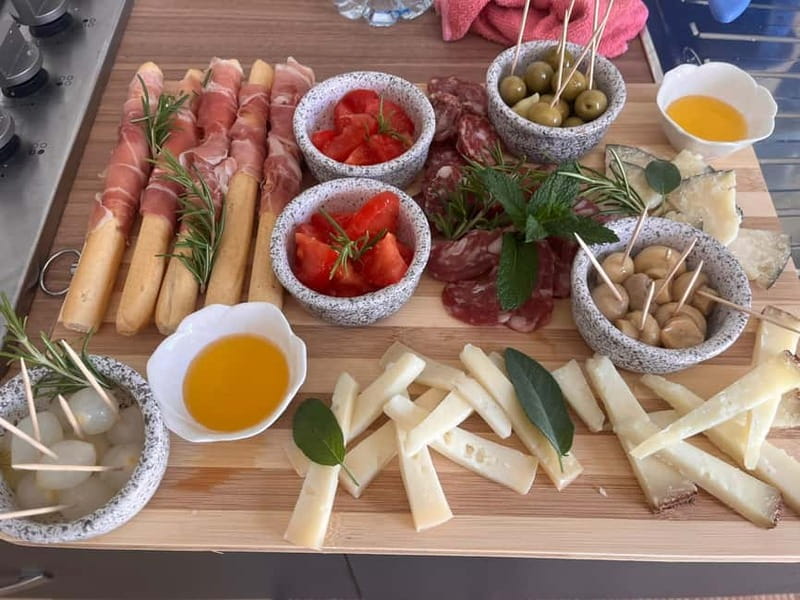
The antipasti course is important because Sardinian food is not only about pasta. The combination of cheese, cured meat, honey, and wine shows how the island balances salty, savory, and sweet flavors at the same table.
Local honey with cheese is a particularly useful pairing to notice. It is simple, but it gives you an idea of how a Sardinian meal can rely on a few strong ingredients rather than a long list of complicated additions. The cured meats and regional wine add more context before your handmade pasta arrives.
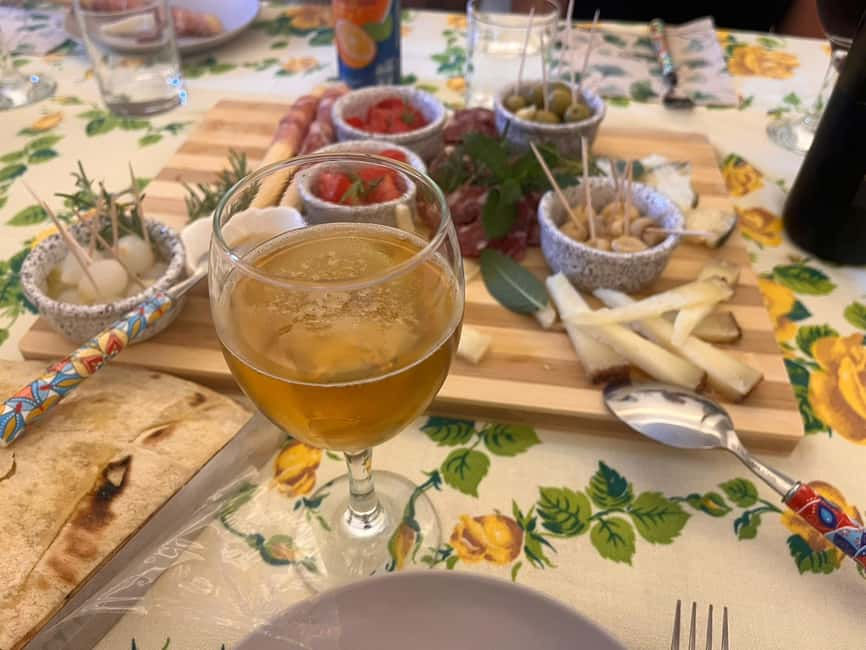
The meal is served in a cozy home setting. That changes the mood from a standard cooking school to a personal introduction to local food customs. You are eating in the same place where you learned the recipes, and the host can connect the dishes to the process while everything is still fresh.
There is a tradeoff. A home kitchen does not offer the formal service, restaurant menu, or polished production of a commercial food tour. If you want a refined tasting menu, this is not the right format. If you want to sit at a local table and learn a few useful dishes, the setting makes good sense.
The airport-area location and who it suits
The location near Cagliari Airport is both a strength and a limitation. It is convenient if you are arriving in Sardinia and want a first meal before continuing your trip, or if you have time before a flight home. It can also work well for a short stay focused on food rather than sightseeing.
You will need to arrange your own transport. Hotel pickup and drop-off are not included. When you arrive at the meeting point, ring the entryphone labeled Callegari. Keep that instruction handy, especially if you are carrying luggage or arriving after a flight.
For a visitor staying in central Cagliari, compare the travel time and cost of reaching the class with the $98 price. The fee includes instruction, the full food experience, regional wine, dessert, Mirto, and digital recipes. That is a fair amount of food and teaching for three hours, but the value depends partly on how easily you can reach the kitchen.
If you are using the class between flights, do not cut the timing too close. The activity itself lasts three hours, and you still need travel time to the airport, check-in, and security. The convenient location helps, but it does not remove the need for a sensible buffer.
Is $98 a fair price?
At $98 per person, this is not a cheap pasta lesson. It is also not just a lesson. You receive hands-on instruction, a meal with several courses, antipasti, wine, dessert, homemade Mirto, and digital recipes to use later.
I see the best value in the combination of food and access. A restaurant meal would let you taste Sardinian dishes, but it would not teach you how to make culurgiones. A short cooking demonstration might cost less, but it would not give you the same amount of practice or include a substantial meal.
The value is weaker if you are mainly looking for a quick lunch or already know how to make filled pasta. In that case, the three-hour commitment may feel long. It is stronger for first-time pasta makers, food-focused couples, families with children old enough to participate, and anyone who wants a practical souvenir rather than another object in a suitcase.
The generous portions also matter. The meal includes food before and after the pasta you make, so you should not plan this as a small snack between sightseeing stops.
What to bring and how to approach the class
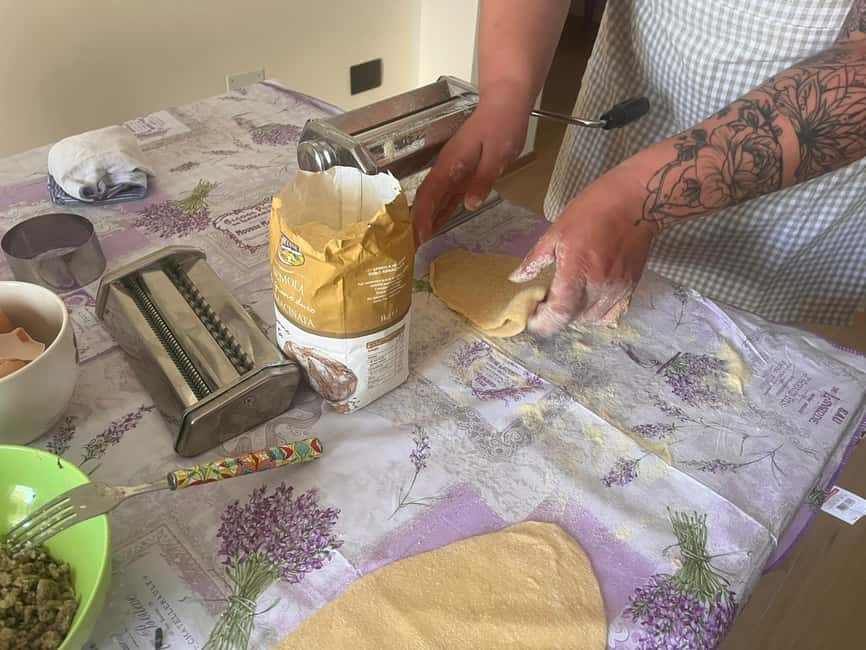
You do not need prior experience. Wear something comfortable and be ready to work with flour and dough. The supplied information does not specify an apron, so avoid clothing that you would be upset to mark.
Come hungry, but not so hungry that you rush the instruction. The best part of a class like this is learning the small corrections: how the dough feels, how thin to roll it, how much filling to use, and how to close the edges.
If you are cooking with a child, Maria’s patient approach with a young participant suggests that families can fit the format well. Still, the class is three hours long, and filled pasta requires attention. An older child who enjoys making things with their hands will likely get more from it than a very young child who cannot stay focused.
For couples, the class gives you an activity with a clear shared result. You can divide the work, compare shapes, and then eat together. Solo participants may also find the six-person size less awkward than a large group lesson.
Who should book this Cagliari cooking class?
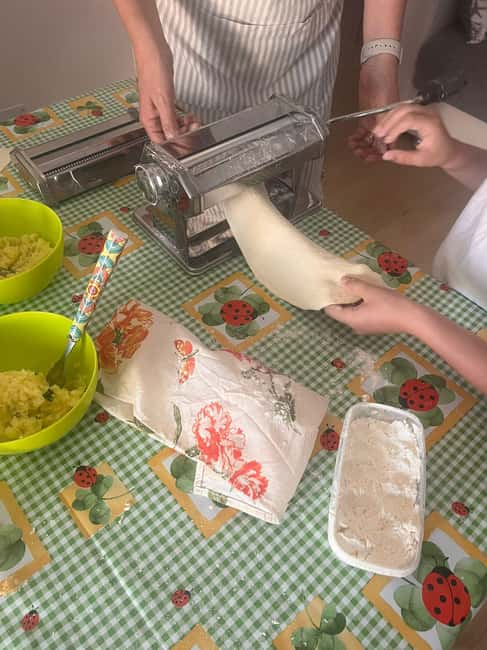
This experience fits you best if you:
- Want to learn a recognizable Sardinian dish rather than generic Italian pasta
- Enjoy hands-on activities and do not mind making mistakes
- Prefer a home meal to a restaurant-only food experience
- Are interested in local cheese, cured meat, honey, wine, dessert, and Mirto
- Need an activity near Cagliari Airport
- Want recipes you can repeat at home
- Are comfortable sharing a small group with up to five other people
Think twice if you need hotel transportation, want a class in central Cagliari, avoid alcohol, or prefer a quick meal with no practical instruction. The class has a clear focus on participation, so passive sightseeing is not what you are buying.
Should you book it?
I would book this class if you want Sardinia to stay with you after the trip. Culurgiones are a more distinctive lesson than standard spaghetti, and the meal adds enough food and regional flavor to justify the three-hour schedule for many visitors.
The strongest reasons to reserve are the patient teaching, the six-person limit, the generous meal, and the chance to learn from hosts such as Giulia or Maria. Check the starting time, plan your own transport, and treat the airport-area location as a practical feature rather than a central Cagliari sightseeing stop.
At $98, it is best viewed as a cooking lesson plus a full Sardinian lunch or dinner. If that combination appeals to you, this is a useful, tasty way to spend part of your Cagliari stay.
FAQ
How long does the Cagliari cooking class last?
The experience lasts three hours. Starting times vary, so check availability for the date you want.
How much does the cooking class cost?
The price is $98 per person.
What pasta will I learn to make?
You will learn to prepare traditional Sardinian culurgiones, a filled pasta, and fresh tagliatelle.
Is previous cooking experience required?
No. The class is suitable for beginners and teaches the pasta-making process by hand.
What food and drink are included?
The meal includes Sardinian antipasti with cheeses, cured meats, honey, and regional wine. You also eat the pasta you prepare, then finish with a traditional dessert and homemade Mirto liqueur.
How many people are in the class?
The group is limited to six participants.
What languages does the instructor speak?
Instruction is available in English, German, Italian, and Spanish.
Newest wine reviews around Italy
- Etna trekking and wine tasting★ 5.0 · 28 reviews
- Etna Tour and Lunch in a Winery with Wine Tasting★ 5.0 · 97 reviews
- Cooking Class and Wine Pairing in Capri★ 5.0 · 57 reviews
- WINE TOUR with sommelier in a winery near Cagliari★ 5.0 · 27 reviews
- Cagliari 3 Hours Luxury Motorboat Tour – Wine and Snorkeling★ 5.0 · 118 reviews
- Wine Experience: vineyard, wines and food★ 5.0 · 155 reviews
- Dinner in the vineyard with wine tasting and walk★ 5.0 · 58 reviews
- Wine Tour and Tasting of Lugana Wines in Desenzano★ 5.0 · 58 reviews
Workshops, compared.
Pasta & Tiramisu Class with Fine Wine by the Vatican
Read our review →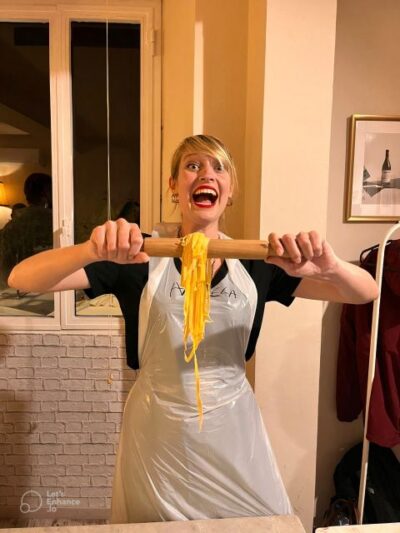
Pasta Making Class with Wine, Limoncello, and Dessert
Read our review →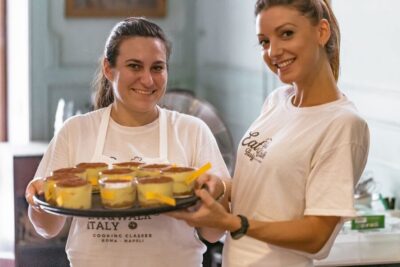
Fettuccine & Tiramisù: Cooking Class with Wine & Limoncello
Read our review →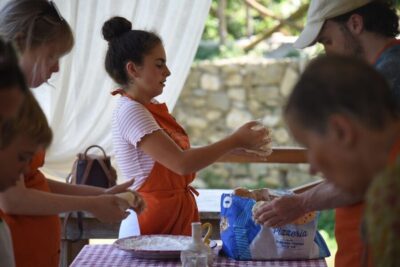
Pizza Lesson, Wine, and Limoncello at a Local Farm
Read our review →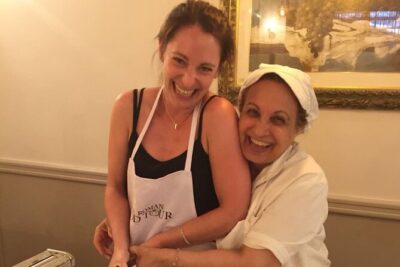
Rome Pasta and Tiramisu Class: Ravioli, Fettuccine & Fine Wine 5*
Read our review →
Premium Pizza & Gelato Preparation Class with Wine
Read our review →