
Reviewed · LECCE WINE TOURS
Lecce: Pasta Making Class in 1400s-Era Courtyard with Wine
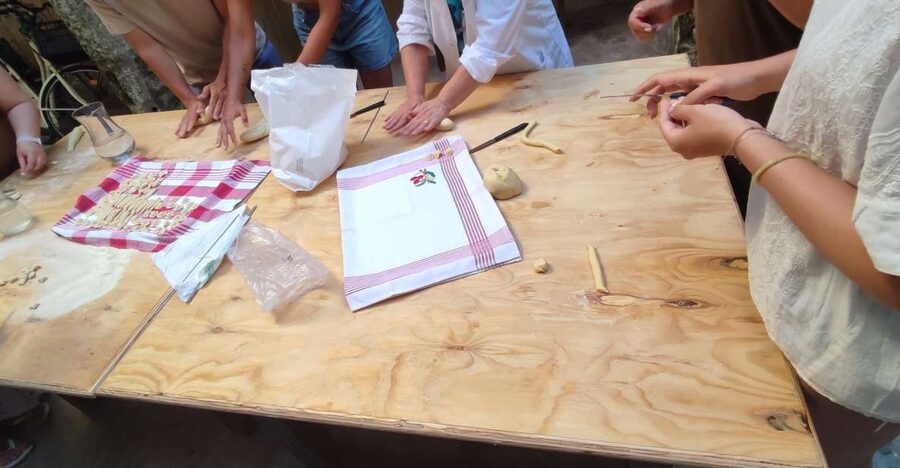
Lecce’s pasta class takes place inside the courtyard of the Faggiano Archaeological Museum, a remarkable 1400s-era setting where flour, water, and patient instruction turn into orecchiette and sagne. You work with local cooks, then sit down to eat what you made with wine.
I like the hands-on teaching, especially because the cooks show each step and correct your technique instead of leaving you to watch. I also like the shared meal, which turns a cooking lesson into an easy way to meet people from several countries. The main drawback is group size: classes can reach about 20 people, so the worktables may feel crowded.
Key points at a glance
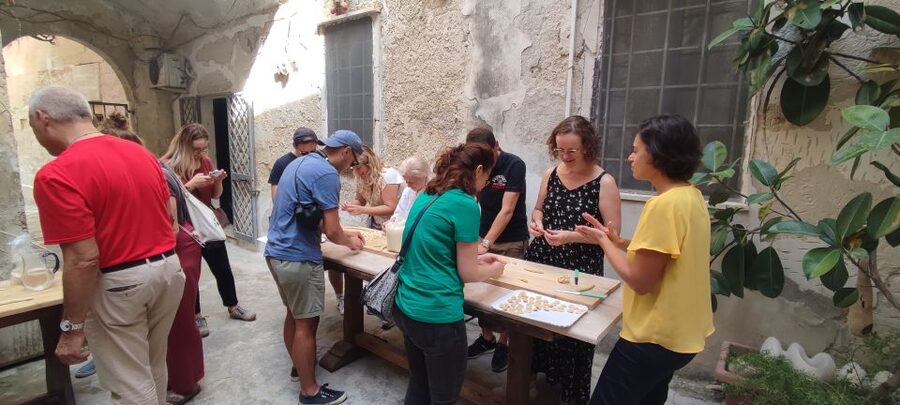
- Historic setting: Make pasta in a courtyard connected with the Faggiano Archaeological Museum in central Lecce.
- Two Apulian shapes: Learn to form orecchiette and sagne, with some sessions also described as including maccheroni.
- Local instruction: Italian cooks lead the practical work, supported by guides who speak Italian, English, and French.
- Pasta becomes dinner: Eat the pasta you made, with wine and, in some sessions, snacks, dessert, or local music.
- Good social activity: Expect a shared table and a friendly international group rather than a private lesson.
- Simple planning: The class lasts 2.5 hours, costs $68 per person, and does not include transport.
Why this Lecce pasta class feels different
Many cooking classes put you in a bright teaching kitchen built for tourists. This one puts you in an old courtyard in the heart of Lecce. The setting matters. You are not just learning a recipe in a classroom. You are handling flour in a place linked to a family museum and to the everyday food traditions of Salento.
The courtyard dates from the 1400s, and the class takes place at the Faggiano Archaeological Museum on Via Ascanio Grandi 58. That gives the evening a strong sense of place before anyone touches the dough. If you are already exploring Lecce’s old town, the central location also makes this an easy activity to fit into your day without arranging a separate ride.
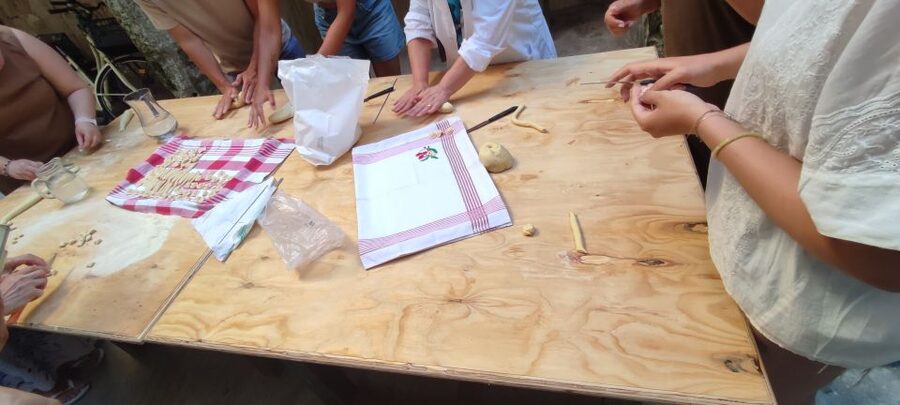
I especially like the mix of old surroundings and plain, practical instruction. The cooks do not treat orecchiette as a decorative craft. You mix water and flour, work the dough, and use your hands and simple tools to shape it. The result may look easy when an experienced cook does it. It is less easy when you try it yourself, which is part of the fun.
More Workshops in Italy:
- Florence: Pasta Cooking Class with Unlimited Wine
★ 4.9 · 10,285 reviews - Florence: Pasta & Tiramisu Cooking Class with Unlimited Wine
★ 4.9 · 6,708 reviews - Florence: Pasta Cooking Class with Unlimited Wine
★ 5.0 · 6,413 reviews
Arriving at the Faggiano Archaeological Museum
You meet directly at Via Ascanio Grandi number 58, at the Faggiano Archaeological Museum. Transport is not included, so plan to make your own way there. The address is in central Lecce, making it most useful for people staying in or visiting the old town.
The museum connection adds an unusual layer to the activity. This is not simply a rented room with a pasta demonstration. The historic courtyard is part of the attraction, and the old walls create the atmosphere that many people hope to find in a cooking class in southern Italy.
You should bring a passport or ID card. The class runs rain or shine, so the weather does not normally change the plan. If the minimum number of participants is not reached, the class can be canceled, with notice and a refund.
Mixing flour and water with a local cook
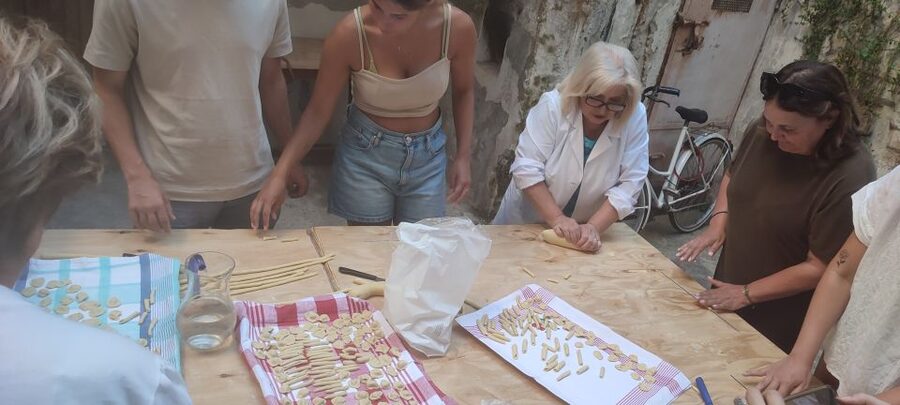
The practical lesson begins with the basics: flour, water, and the right feel for the dough. A local woman and professional cook guides you through the process, showing how to mix the ingredients and how to handle the tools. You are not expected to arrive with pasta-making skills.
The instructors have a direct, hands-on teaching style. That helps when you are trying to shape a piece of pasta that keeps collapsing or sticking. Several people found the work harder than it looked, and that is worth knowing before you book. Orecchiette takes practice. The cooks may correct you firmly, but the tone is intended to keep the class moving and the pasta on track.
English support is available, along with Italian and French. Guides such as Luciana and Teresa have been praised for clear explanations, patience, humor, and strong language skills. The exact instructors may vary, but you can expect local cooks supported by multilingual staff.
The best approach is to accept correction and keep trying. Your first few pieces may look uneven. By the end, you should have a better feel for the motion and a much clearer understanding of why handmade pasta is a skill rather than a quick party trick.
Shaping orecchiette and sagne
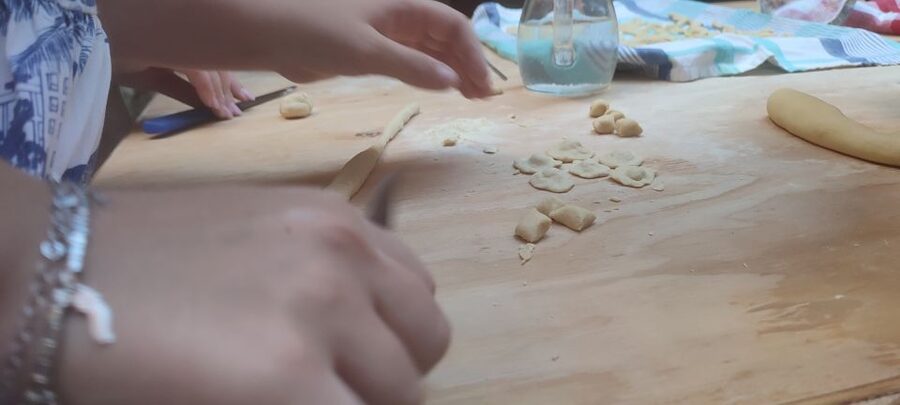
Orecchiette means little ears, a reference to the small curved shape. It is closely tied to Puglia and has become one of the region’s best-known foods. The class teaches you how to make it by hand rather than simply showing you a finished bowl.
You will also work on sagne, another pasta associated with Puglia. Some descriptions of the activity and several participant accounts refer to maccheroni as well, so the exact second shape may vary slightly by session. The central promise remains the same: you learn more than one traditional Apulian pasta form and then eat the results.
This is where the class earns its price. A meal in Lecce can give you a taste of regional pasta, but it does not show you how that pasta is made. Here, you leave with a repeatable technique. You may not produce perfect orecchiette on your first attempt at home, but you will know the basic dough and hand movements.
The work is social. Participants often help one another, laugh at their misshapen pasta, and compare methods across the table. If you prefer quiet, precise instruction with lots of personal space, the group format may not suit you. If you enjoy meeting people while doing something practical, it is a strong fit.
More Wine Tours in Italy:
- Tuscany Day Trip from Florence: Siena, San Gimignano, Pisa and Lunch at a Winery
★ 5.0 · 21,634 reviews - Florence: Chianti Wineries Tour with Wine Tasting
★ 4.5 · 10,071 reviews - Small-Group Wine Tasting Experience in the Tuscan Countryside
★ 5.0 · 7,392 reviews - Pisa, Siena and San Gimignano Day Trip with Lunch & Wine Pairing
★ 4.5 · 6,006 reviews
From worktable to shared dinner
Once the pasta is made, it is cooked and served to the group. You eat the food you helped prepare, usually with wine. Several sessions have also included snacks, an appetizer, dessert, or local music while the pasta cooks, though these extras should not be treated as guaranteed parts of every booking.
The meal is simple by design. The appeal is not a formal restaurant menu. It is the satisfaction of seeing your flour and water become dinner, then sharing the result around a communal table in an old courtyard.
Wine helps turn the second half into a relaxed social evening. You may be seated with people from several countries, and the shared meal gives everyone an easy subject to talk about. This is one reason the activity works well for solo visitors and couples who want more than a private dinner.
The food itself has a practical payoff. You taste the texture of fresh pasta and see how the shapes hold sauce. That makes the regional cooking lesson more useful than a demonstration where you never sample the finished dish.
Group size, pace, and atmosphere
The class lasts about 2.5 hours. That is enough time for instruction, shaping, cooking, and eating without taking up a whole day. An evening session can work especially well after sightseeing, since the activity ends with dinner rather than leaving you to find another meal.
Group size is the main point to consider. Several people describe groups of around 20. That can make the room feel busy, especially when everyone is working at once. On the other hand, the group setting is also a big part of the charm. You meet people from different countries, share jokes about difficult pasta shapes, and sit down together at the end.
The instructors appear to manage the larger format by moving around the tables and giving individual help. Still, do not book this expecting a private lesson. You will get direct guidance, but you will also be part of a lively class.
The atmosphere is friendly and informal. Guides have been singled out for being cheerful and clear, while the cooks are remembered for their character as much as their technique. Some participants describe the local women as funny and firm. That combination can be more memorable than a polished but impersonal presentation.
What the $68 price gets you
At $68 per person, the value depends on what you want from a food activity. You receive a 2.5-hour class, a professional cook, use of the cooking equipment, the historic museum setting, your handmade pasta, and wine with the meal. Transport is not included.
For a simple meal, the price would be high. For a central Lecce activity that combines instruction, food, drinks, a historic site, and a social evening, it is reasonable. You are paying for the setting and the teaching as much as for the ingredients.
The class also gives you a skill you can try again at home. That matters if you enjoy food culture rather than only tasting dishes. You can watch someone shape orecchiette in a restaurant kitchen, but learning the motion yourself gives you a better sense of the work behind the food.
I would compare it with the cost of a guided food tour or dinner activity in Lecce. This class offers less variety than a tasting tour, but more participation. Choose it if you want to make one regional dish well enough to understand it, rather than sample many foods in small portions.
Who should book this experience
This is a good choice for couples, families with older children, solo visitors, and anyone who likes meeting people over food. Children and teenagers have taken part successfully, and the activity can work well for families because it is tactile and creative rather than lecture-based.
It also suits visitors who want a cultural activity in the evening. You get food, a drink, conversation, and a look at local cooking traditions in one booking. If you are staying in Lecce’s old town, the central meeting point makes the plan especially convenient.
You may want to skip it if you need a quiet, private class or have limited patience for repetitive handwork. The pasta can be tricky, the group may be large, and the instructors may correct you often. That is not a flaw for most people, but it is part of the format.
The class is wheelchair accessible. Since the tour runs in the same place regardless of weather, ask the provider directly about any personal access needs before booking if you require specific arrangements.
Booking details worth knowing
You can cancel up to 24 hours before the start time for a full refund. The reserve-now, pay-later option lets you hold a place without paying immediately, which is useful when your Lecce plans are still shifting.
Check the available start times before choosing your day. The activity takes place rain or shine, and the minimum group requirement applies. If that minimum is not reached, the course may be canceled and you will be notified and refunded.
The provider is LecceGo. Instruction is available in Italian, English, and French. Bring your passport or ID card, and arrive at the Faggiano Archaeological Museum rather than expecting a hotel pickup.
Should you book the Lecce pasta class?
Book it if you want a social, hands-on evening built around a real Apulian food tradition. The historic courtyard, local cooks, multilingual guidance, and shared dinner make this more than a quick pasta demonstration.
Go in expecting a group class, not a private kitchen lesson. You may shape imperfect orecchiette, receive a few firm corrections, and work elbow to elbow with other participants. For many people, that friendly disorder is exactly what makes the night memorable.
At $68, it is a solid value for a 2.5-hour activity that includes instruction, equipment, food, wine, and an unusual central Lecce setting. If learning one of Puglia’s signature pastas sounds more appealing than another restaurant meal, this is an easy pick.
FAQ
Where does the pasta-making class meet?
The meeting point is Via Ascanio Grandi number 58, at the Faggiano Archaeological Museum in central Lecce.
How long does the activity last?
The class lasts 2.5 hours.
How much does the experience cost?
The price is $68 per person.
What types of pasta will I learn to make?
The class teaches traditional Apulian pasta, including orecchiette and sagne. Some descriptions also refer to maccheroni, so the second pasta shape can vary by session.
Is wine included?
Yes. You eat your handmade pasta with wine after the class.
Is transportation included?
No. You must arrange your own transportation to the meeting point.
What languages are available?
The instructors and guides can provide instruction in Italian, English, and French.
Is the class wheelchair accessible?
Yes, the activity is listed as wheelchair accessible.
What should I bring?
Bring a passport or ID card.
Can I cancel for a refund?
Yes. You can cancel up to 24 hours in advance for a full refund.
Newest wine reviews around Italy
- Etna trekking and wine tasting★ 5.0 · 28 reviews
- Etna Tour and Lunch in a Winery with Wine Tasting★ 5.0 · 97 reviews
- Cooking Class and Wine Pairing in Capri★ 5.0 · 57 reviews
- WINE TOUR with sommelier in a winery near Cagliari★ 5.0 · 27 reviews
- Cagliari 3 Hours Luxury Motorboat Tour – Wine and Snorkeling★ 5.0 · 118 reviews
- Wine Experience: vineyard, wines and food★ 5.0 · 155 reviews
- Dinner in the vineyard with wine tasting and walk★ 5.0 · 58 reviews
- Wine Tour and Tasting of Lugana Wines in Desenzano★ 5.0 · 58 reviews
Lecce Wine Tours, compared.
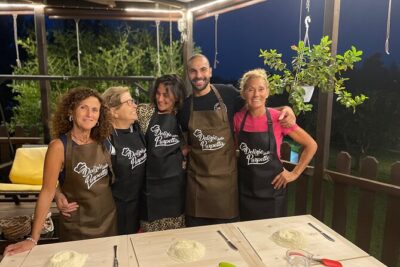
Cooking class, dinner and wine tasting near Lecce
Read our review →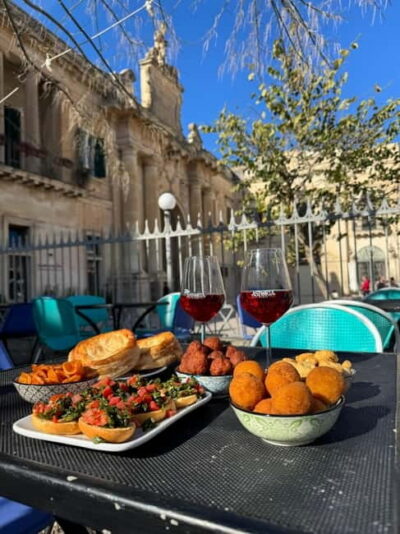
Lecce: Guided Street Food Walking Tour with Food and Wine
Read our review →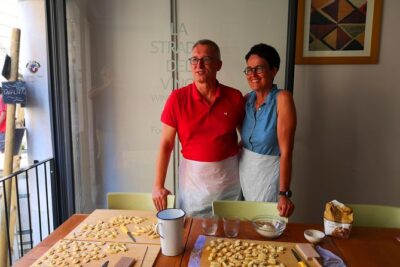
Orecchiette Cooking Class and Wine Pairing in Lecce
Read our review →
Lists this tasting appears in