
Reviewed · PALERMO WINE TOURS
Palermo: Pizza & Tiramisu Class with Free Flowing Fine Wine
Palermo’s best pizza lesson may begin with dessert. At Pizzeria I Viziosi, you make tiramisu first, then work with dough, sauce, and toppings before baking your own Margherita in the neighborhood’s oldest wood-fired oven. Rita and Angelo keep the mood loose, while the cooking remains practical and traditional.
I like the way you get real hands-on work, not just a demonstration. I also like the old mozzatura technique, a 600-year-old method for cutting dough, plus the wine and soft drinks served while you cook. The main caution is the food policy: the traditional recipe uses gluten, dairy, and eggs, and the kitchen cannot guarantee a completely contamination-free meal.
What makes this Palermo class worth your time
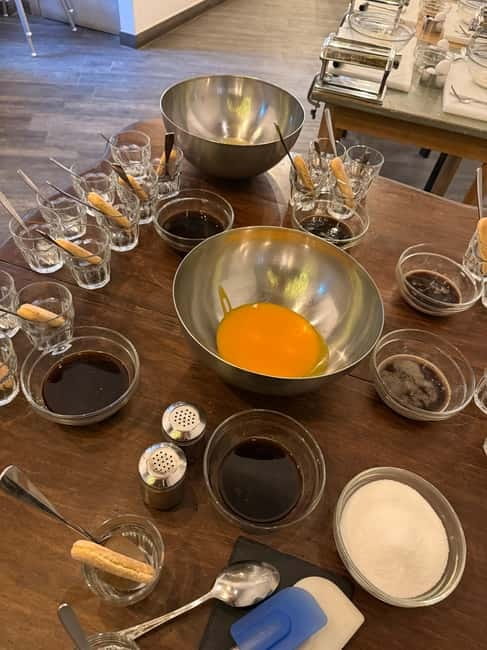
- Tiramisu comes first: Prepare the dessert step by step before moving on to pizza.
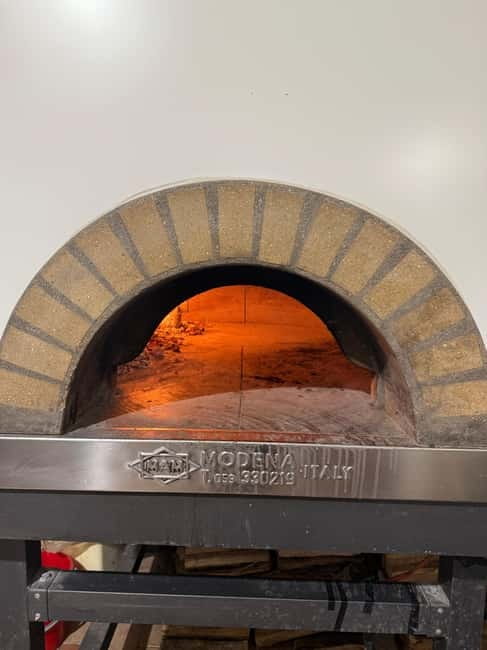
- An old wood-fired oven: Your pizza is baked in the neighborhood’s oldest oven.
- A traditional dough technique: Learn the 600-year-old mozzatura method for cutting dough.
- Friendly local instruction: Rita often translates and guides the class, while Angelo and other chefs handle the cooking.
- Wine with the meal: Wine, including red or white options, plus soft drinks and water are included.
- A full three hours: You have time to cook, eat, talk, and enjoy the relaxed atmosphere without rushing.
Starting at Pizzeria I Viziosi
You meet inside Pizzeria I Viziosi in Palermo. There is no hotel pickup, so plan your own way to the restaurant and arrive five to 10 minutes before the scheduled start.
The class takes place in a working pizzeria, which matters. You are not cooking in a polished demonstration kitchen built only for tourists. You see the restaurant setting, the kitchen, and the oven that gives the session its sense of place.
The atmosphere is informal. Rita is often the English-speaking host and translator, while Angelo or another pizza chef leads the practical work in Italian. This setup works well for a cooking class because you can watch the technique directly, then receive explanations in English.
I would not expect a quiet, highly formal lesson. The tone is social, with jokes, conversation, and plenty of interaction around the tables. That is a strength if you want an evening out as much as a cooking lesson. It may feel less tidy if you prefer every step to run on a strict timetable.
More Workshops in Italy:
- Florence: Pasta Cooking Class with Unlimited Wine
★ 4.9 · 10,285 reviews - Florence: Pasta & Tiramisu Cooking Class with Unlimited Wine
★ 4.9 · 6,708 reviews - Florence: Pasta Cooking Class with Unlimited Wine
★ 5.0 · 6,413 reviews
Making tiramisu before the pizza
The class commonly begins with tiramisu. Rita explains each stage, and you carry out the steps yourself rather than simply watching someone assemble the dessert.
This is a smart opening. Tiramisu gives you an easy first task while the pizza work gets organized. You can settle into the group, meet the instructors, and start using the equipment before tackling dough, which requires more technique.
The dessert also gives the class a second food focus. You are not paying for three hours of kneading followed by one pizza. You prepare both a sweet and savory Italian specialty, then finish by eating what you made.
The traditional recipe contains dairy and eggs. Substitutions may be available for some dietary needs, but the instructions remain based on the classic recipe. If you have an allergy or food restriction, tell the provider at booking, not just when you arrive.
Learning dough from scratch
After the tiramisu, you put on an apron and prepare the pizza dough from scratch. This is the most useful part for anyone who wants to understand why a restaurant pizza tastes different from a quick homemade version.
The instructors explain the ingredients and the value of using good-quality products. You learn by handling the dough, shaping it, and seeing how it responds, rather than hearing a long lecture about pizza theory.
One distinctive detail is the mozzatura technique, described as a 600-year-old method for cutting the dough. The class gives you a chance to try this traditional approach as part of the preparation.
Do not expect to become a professional pizzaiolo in one afternoon. The class is designed for beginners and for people who want a memorable food experience, not a full vocational course. Still, you leave with a clearer feel for dough and a better understanding of why simple pizza depends so heavily on technique and ingredients.
The experience is also forgiving. You do not need to arrive with cooking skills. The chefs demonstrate the steps, then help you carry them out. Rita’s translation is especially useful when the pizza chef is speaking Italian.
Building your Margherita
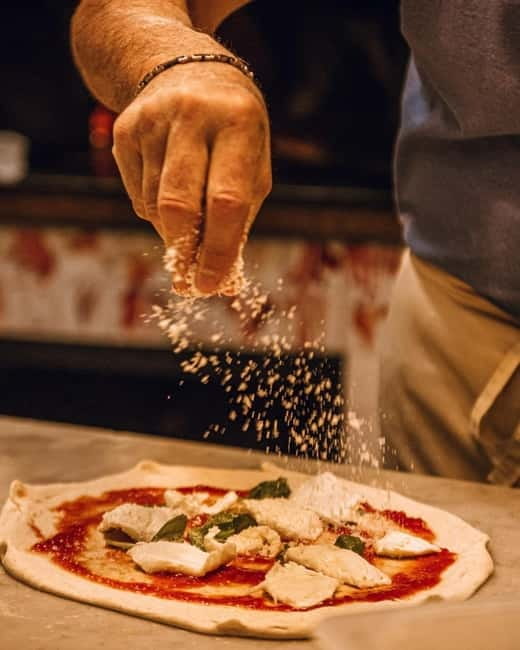
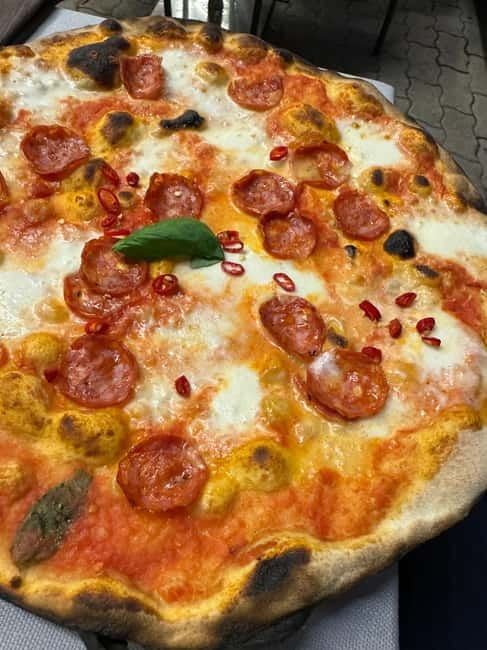
Once the dough is prepared, you shape your pizza and add the sauce and toppings. The focus is on a Margherita, a sensible choice for a lesson because it keeps the recipe simple and lets the dough and tomato sauce do most of the work.
This is where you begin to see the value of restraint. A pizza with a long list of toppings can hide mistakes. A Margherita gives you fewer places to hide, but it also lets you taste the quality of the base, sauce, and cheese.
One practical point is worth knowing: the experience is hands-on, but the cooking process is guided. If you expect to manage every stage entirely alone, you may find the format more structured than imagined. You prepare your pizza, but the professional kitchen and its chefs remain closely involved.
You can still have some fun with the shape. One participant requested a heart-shaped pizza, and the class accommodated it. That small detail captures the tone well: the lesson follows a traditional recipe, but it is not rigid.
More Wine Tours in Italy:
- Tuscany Day Trip from Florence: Siena, San Gimignano, Pisa and Lunch at a Winery
★ 5.0 · 21,634 reviews - Florence: Chianti Wineries Tour with Wine Tasting
★ 4.5 · 10,071 reviews - Small-Group Wine Tasting Experience in the Tuscan Countryside
★ 5.0 · 7,392 reviews - Pisa, Siena and San Gimignano Day Trip with Lunch & Wine Pairing
★ 4.5 · 6,006 reviews
Baking beside the old wood-fired oven
The finished pizza goes into the neighborhood’s oldest wood-fired oven. This is the class’s most memorable piece of theater, and it gives the meal a real connection to the pizzeria rather than a generic cooking-school feel.
You get to see the kitchen and oven at work. The wood-fired baking is also a useful reminder that pizza is about heat, timing, and confidence. A home oven can produce good results, but a restaurant’s traditional oven creates a different setting and rhythm.
The final result is a golden-brown pizza made with your own hands. The experience does not promise that every pizza will look perfect, and that is part of the appeal. The misshapen edge or uneven topping becomes part of your personal dinner.
Several aspects of the cooking process may happen at different speeds for different people. If two classes are running close together, the timetable can feel less orderly, especially near the end. One note from a family also pointed to overlapping classes as a small organizational weakness. Keep that in mind if you want a quiet, tightly controlled lesson.
Wine, soft drinks, and the finished meal
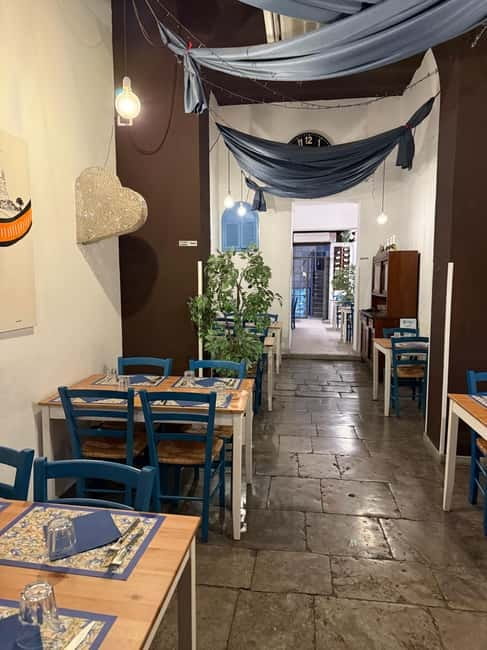
You eat your pizza after it comes from the oven. Wine is included throughout the experience, with red or white available, and soft drinks and water are also provided.
The phrase free-flowing wine is important here. This is not a single tasting pour. The format is social and generous, and wine helps turn the class into a relaxed meal. If you do not drink alcohol, the soft drinks give you another option.
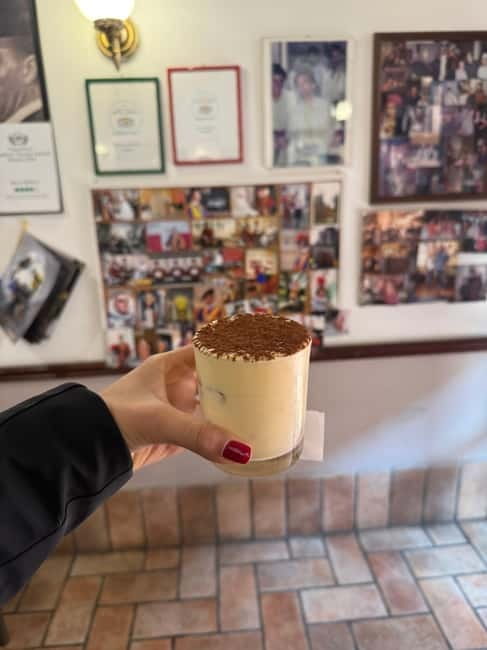
The tiramisu adds a sweet finish. You sample the dishes prepared during the class, so the meal is the reward for the work rather than a separate restaurant course.
I like this structure because the $81 price includes instruction, an apron, cooking equipment, ingredients, your pizza, wine, and soft drinks. You are paying for a three-hour activity, not just the food on the plate.
Still, the cost will feel high if you measure the outing against the price of a single Palermo pizza. The value comes from the local instruction, the old oven, the social setting, and the chance to make both dishes yourself. One person found the price a little steep even while enjoying the experience. That is a fair reaction if you are mainly looking for dinner.
The people who make the class work
The strongest part of this experience is the staff. Rita is frequently the English-speaking guide and translator, and her role helps bridge the gap when the pizza chef speaks Italian. Angelo is often described as warm, funny, and generous with his help, though the exact instructor may vary.
The combination of a local chef and a lively host gives the class its character. You receive instruction, but you also get the easy humor and conversation that make a shared meal feel less like a scheduled activity.
The class can work well for solo participants. You do not need to arrive with a large group, and the format encourages conversation with the other cooks. Couples, families with older children, and friends can all fit the setting.
Children under three are not suitable for the activity, and babies under one are excluded. A 12-year-old took part successfully, but the class still requires attention around hot ovens, food preparation, and a three-hour schedule.
Food restrictions need careful planning
The provider says dietary options are available and asks you to share your needs when booking. At the same time, the traditional instructions focus on gluten, dairy, and eggs, and the kitchen cannot guarantee zero cross-contamination.
That creates an important distinction. A substitution may be possible, but this is not a dedicated gluten-free, dairy-free, or allergy-safe kitchen. People with serious allergies should ask detailed questions before booking.
The supplied information lists vegans and people with gluten or lactose intolerance among those not suited to the activity, even though it also says some substitutes can be offered. I would treat the more cautious warning as the useful one. Contact the provider first and do not assume that a requested substitute makes the whole session safe.
Is three hours the right length?
Three hours gives the class room to breathe. You have time for tiramisu, dough, shaping, baking, eating, and conversation. The pace is not simply cook, take a bite, and leave.
That length can feel generous if you are hungry for a quick meal. The class is best treated as an evening activity, not a fast lunch stop. The wine and social element also encourage you to stay at the table after the cooking is finished.
The schedule may not be perfectly neat. A few people found the timing less organized when sessions overlapped, but the total duration and general pace were considered good. I would leave a little flexibility afterward rather than booking another fixed appointment immediately.
Who should book this experience?
I would choose this class if you want food to be the center of your Palermo evening. It suits beginners, couples, solo visitors, families with children old enough to take part, and anyone who likes meeting people over a shared meal.
It is especially good for you if you value participation. You knead, shape, top, bake, and eat. You also learn a specific old dough-cutting technique and see how a traditional pizzeria handles its oven.
I would skip it if you want a quiet restaurant meal, a formal culinary qualification, or a fully private class. I would also avoid booking without clarification if you have a serious allergy or need a strictly vegan, gluten-free, or lactose-free kitchen.
The $81 price is reasonable for a three-hour food activity that includes wine, tiramisu, pizza, ingredients, equipment, and instruction. It is less compelling if you only want the cheapest possible dinner.
Final call: book it for the experience, not just the pizza
Book this Palermo class if you want a friendly, hands-on night with local cooks, an old wood-fired oven, and enough wine to keep the conversation moving. The best parts are the practical dough work, the 600-year-old mozzatura method, Rita’s translation, and the chance to eat what you prepared.
Go in expecting a lively workshop rather than a perfectly timed professional course. Tell the provider about dietary needs in advance, arrive early, and leave space in your schedule. For most people who enjoy Italian food and a little group humor, this is a worthwhile way to spend three hours in Palermo.
FAQ
Where does the pizza and tiramisu class take place?
The class takes place at Pizzeria I Viziosi in Palermo, Sicily. You should enter the restaurant for the meeting point.
How long does the experience last?
The activity lasts three hours.
What food will I make?
You prepare tiramisu and a Margherita pizza. The pizza dough is made from scratch, then shaped, topped, and baked.
Is the pizza baked in a wood-fired oven?
Yes. Your pizza is baked in the neighborhood’s oldest wood-fired oven.
Is wine included?
Yes. Wine is included, along with soft drinks and water. Red or white wine may be available.
Is the class taught in English?
The activity includes a live English-speaking guide. Rita often provides translation while the pizza chef demonstrates the cooking.
Do I need cooking experience?
No cooking experience is stated as a requirement. The local chef demonstrates the steps, and you prepare the food with guidance.
Are ingredients and equipment included?
Yes. The price includes the pizza ingredients, cooking equipment, and an apron.
Can people with dietary restrictions take part?
The provider says substitutes are available for some allergies and food preferences, but the traditional recipe contains gluten, dairy, and eggs. Cross-contamination cannot be guaranteed, so you must report dietary needs when booking.
Is the class suitable for children?
Children under three are not suitable, and babies under one are not allowed. The activity may suit older children, but the supplied information does not give a specific upper age range.
Is hotel transportation included?
No. Hotel pickup and drop-off are not included. You need to make your own way to Pizzeria I Viziosi.
Can I cancel the booking?
You can cancel up to 24 hours in advance for a full refund. A reserve-now, pay-later option is also available.
Newest wine reviews around Italy
- Etna trekking and wine tasting★ 5.0 · 28 reviews
- Etna Tour and Lunch in a Winery with Wine Tasting★ 5.0 · 97 reviews
- Cooking Class and Wine Pairing in Capri★ 5.0 · 57 reviews
- WINE TOUR with sommelier in a winery near Cagliari★ 5.0 · 27 reviews
- Cagliari 3 Hours Luxury Motorboat Tour – Wine and Snorkeling★ 5.0 · 118 reviews
- Wine Experience: vineyard, wines and food★ 5.0 · 155 reviews
- Dinner in the vineyard with wine tasting and walk★ 5.0 · 58 reviews
- Wine Tour and Tasting of Lugana Wines in Desenzano★ 5.0 · 58 reviews
Palermo Wine Tours, compared.
Pizza and Gelato Cooking Class with Dinner and Wine
Read our review →
Palermo Food Tour: 10+ Tastings of Arancini, Cannoli, Wine & More
Read our review →Pasta & Tiramisu Cooking Class with Flowing Wine
Read our review →
Pasta and Gelato Making Class with Dinner and Wine
Read our review →
Full-Day Snorkeling Boat Tour with Lunch and Wine
Read our review →
Lists this tasting appears in