
Reviewed · GREECE WINE TOURS
Paros: Greek Cooking Class with Meal and Wine
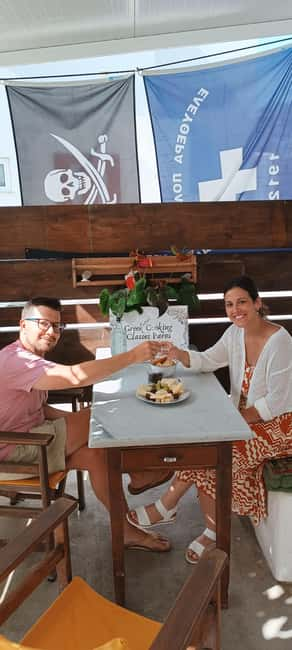
Paros cooking class with Iro turns a meal into a proper island welcome. You begin with local cheese, olives, olive oil, and souma, then work through Greek favorites before sitting down to eat what you helped prepare. The setting is tied to Parea Cuisine and the family’s own food traditions, not a polished demonstration kitchen built only for tourists.
I like the focus on local farm ingredients and the way Iro connects cooking with Greek farming, nutrition, and family life. I also like that you do real kitchen work, from tzatziki and keftedakia to moussaka or stuffed vegetables, rather than simply watching a chef. The main drawback is practical: the class costs $160 per person, lasts four hours, and you must arrange your own way to Parea Cuisine.
Key points to know before booking
- A meal built around Paros ingredients: Taste island cheeses, homemade olives, olive oil, souma, seasonal vegetables, and wine from Iro’s family farm.
- Hands-on Greek cooking: Prepare tzatziki, keftedakia, Greek salad, a traditional main course, and dessert.
- Warm instruction from Iro and George: Iro brings experience from a public culinary school for chefs, while George may help host the meal.
- A generous four-hour experience: Plan to leave well fed, especially if you sample every course and glass of wine.
- Best for adults and older teens: The class requires at least two participants and is not suitable for children under 14 or wheelchair users.
- Book with a little planning: Classes are by appointment only, require at least 24 hours’ notice, and transportation is not included.
A Greek cooking class with a family-table feel
The most appealing part of this Paros cooking class is its personal scale. You are not simply handed a recipe card and sent through a set of stations. Iro welcomes you into the cooking space connected with Parea Cuisine, where food, family, farming, and hospitality all meet.
Iro has taught at a public culinary school for chefs and runs Parea Cuisine with her family. That background matters because she can explain both the practical steps and the reasons behind them. You learn how a dish comes together, but you also hear about Greek food customs, the Mediterranean diet, local farming, and the produce grown on Paros.
George also helps host the experience on some dates. The tone is informal and social. You may be cooking with other participants, but the small-group feel helps the class resemble a shared family meal rather than a formal lecture.
The class is conducted in English and Greek. If you want a highly structured cooking lesson with exact timings and a printed recipe booklet, this may feel more relaxed than expected. If you want to understand how Greek food is prepared in a real home setting, that relaxed approach is part of the appeal.
More Workshops in Greece:
- Athens: Classic Cooking Class with Market Visit and Wine
★ 5.0 · 1,101 reviews - Athens: Food Market Visit and Cooking Class with Wine
★ 4.9 · 1,087 reviews - Greek Cuisine Cooking Class in Santorini with Recipes and Wine
★ 5.0 · 969 reviews
Starting with olive oil, cheese, olives, and souma
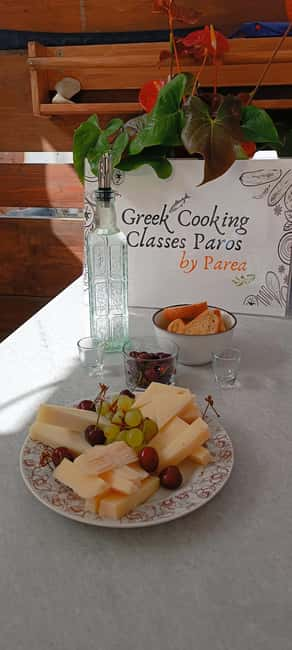
The class begins before you chop a vegetable. You start with an olive oil tasting, then sample local cheeses, homemade olives, and souma from a local distillery.
This opening gives you a useful introduction to Paros through flavor. The cheeses are characteristic of the island and are produced by local farmers. The olive oil tasting lets you compare flavor and texture rather than treating oil as a background ingredient. Homemade olives add another familiar Greek table staple, while souma brings in a local spirit made from grapes.
You may also receive bread and cheese as part of the opening spread. One particularly memorable detail is the mention of a six-month Gouda, which shows the range of island-made dairy products you may encounter. Exact cheese selections can change, since the class uses local and seasonal ingredients.
This is a generous start, so do not eat a large breakfast beforehand. The opening tasting is only the first part of the meal, and the finished dishes come later. You may also want to pace yourself with the wine, since homemade wine is served throughout the experience.
Making the Greek appetizers by hand
The first cooking tasks focus on dishes that are familiar to many visitors but still reveal plenty about Greek technique. You prepare tzatziki, keftedakia, and traditional Greek salad.
Tzatziki looks simple, but the balance of yogurt, cucumber, garlic, herbs, and olive oil makes a difference. This is a good chance to ask Iro about texture, seasoning, and how the ingredients are handled at home.
Keftedakia, or Greek meatballs, add a hands-on element. You shape and prepare them rather than merely tasting a finished plate. The work is straightforward enough for beginners, yet useful if you want to repeat the recipe in your own kitchen.
The Greek salad keeps the attention on the produce. With fresh island vegetables, local cheese, olives, and olive oil, the dish shows why ingredient quality matters in a cuisine with relatively few components. You are not hiding vegetables under a heavy sauce. You are learning how to let them carry the plate.
The class also gives you room to ask about knife skills and kitchen habits. The instruction is practical, with small tips mixed into stories about Greek food and daily life. That combination makes the lesson useful even if you already cook regularly.
Choosing the main course from seasonal Greek dishes
After the appetizers, you prepare one traditional Greek main course. The choices include seasonal stuffed vegetables, moussaka, pasticcio, or fresh fish of the day.
Stuffed vegetables may include tomatoes, peppers, zucchini, or aubergine. This option changes with the season, which is a good reason not to expect one fixed menu. The vegetables are central to the dish, and the preparation gives you a close look at the Greek habit of turning simple produce into a full meal.
Moussaka is the more familiar choice for many people. It offers a chance to learn the layers and preparation behind a dish that often appears on restaurant menus. Pasticcio provides another baked Greek classic, while the fresh fish option depends on what is available that day.
The exact main course is not guaranteed in advance, so tell the hosts if you have strong preferences or dietary needs when you book. The supplied information specifically asks you to report allergies at least 24 hours beforehand. That notice is important because the class is built around shared ingredients and a set cooking plan.
The recipes are not presented as museum pieces. They are connected to current island produce, family cooking, and the way Greek households use what is available. You come away with more than a list of ingredients. You see how a traditional meal is planned from first taste to final plate.
More Wine Tours in Greece:
- Santorini: Top Sights Day Trip, Wine Tasting, & Oia Sunset
★ 4.6 · 2,492 reviews - Santorini Wine Adventure with 12 Wine Tastings, Tapas and Sunset
★ 5.0 · 1,715 reviews - Tour and Wine Tasting in Mykonian Land
★ 5.0 · 1,357 reviews - Santorini Wine Stories: Sunset Tour with Tasting & Dinner
★ 5.0 · 1,285 reviews
Dessert, wine, and the meal you helped prepare
Dessert is either Greek halva or baklava. Both give the meal a sweet finish, though they offer different textures and styles. Halva is dense and fragrant, while baklava brings pastry, nuts, and syrup. The specific dessert may vary.
Homemade local wine is served as you cook and eat. The wine comes from Iro’s family farm, adding a direct connection between the table and the island’s agricultural life. You are not simply ordering a bottle from a restaurant menu. You are tasting another product tied to the hosts and their home.
The final meal is one of the strongest reasons to reserve four hours for this activity. You eat the appetizers, main course, salad, and dessert together, with wine and conversation along the way. Portions are generous, so arrive hungry and do not schedule a large meal right afterward.
This is also where the class becomes more than a lesson. You sit down with the people you cooked beside and share the results. That shared table is especially valuable for couples and small groups who want a social evening, not just a practical recipe session.
If you are hoping to take leftovers with you, bring a container only if the hosts allow it. The generous portions are frequently noted in the experience feedback, but takeaway arrangements are not formally included, so do not count on them.
What makes the Paros setting worthwhile
Paros is known for its food as much as for its beaches and villages, and this class gives you a way to connect the island’s ingredients with its people. The emphasis on local farmers is not a decorative theme. The cheese, olives, vegetables, olive oil, and wine all help explain what can be produced on the island.
I especially like the farm-to-table connection because it gives context to the food you will encounter elsewhere in Greece. After the class, a Greek salad is less likely to seem like a generic holiday dish. You will have seen the role of olive oil, local cheese, seasonal vegetables, and careful preparation.
The cooking also opens a window onto the Mediterranean diet. Iro discusses nutrition and the health benefits of the way Greek meals are built around vegetables, olive oil, grains, herbs, dairy, and moderate portions of meat. The class does not turn into a health lecture, but the subject adds meaning to the recipes.
There is a genuine community angle, too. Iro supports Paros farmers and takes pride in using high-quality local products. For you, that means your booking helps connect a food experience with the island’s small-scale producers, though the exact farm sources can vary by season.
Price, timing, and practical limits
At $160 per person, this is not a budget cooking lesson. The price makes more sense if you treat it as a four-hour food experience that includes tastings, instruction, a multi-course meal, dessert, wine, and cultural conversation.
You are also paying for a small, personal setting and experienced instruction. The hosts have culinary teaching backgrounds, and the class involves more than one plate or one recipe. If you would otherwise spend a substantial amount on a long restaurant meal, the value improves because you receive both dinner and a practical lesson.
Still, the price may be harder to justify if you mainly want a quick cooking demonstration. You should also factor in transportation because it is not included. The meeting point is Parea Cuisine, and you need to make your own way there.
Classes are by appointment only and require at least 24 hours’ notice. A minimum of two participants is required, so solo visitors cannot assume they can join a class alone. The free cancellation policy allows a full refund when you cancel at least 24 hours ahead, and you can reserve now and pay later.
The activity lasts four hours, but starting times depend on availability. Ask about the time before finalizing your day, especially if you have a ferry, flight, beach booking, or another evening plan.
Who will enjoy this class most
This experience suits you if food is one of the main reasons you travel. It is also a strong choice for couples, friends, families with older teenagers, and anyone who prefers meeting local people over moving from one sightseeing stop to the next.
You do not need advanced cooking skills. The instruction is suitable for beginners, while experienced home cooks can still pick up useful details about Greek ingredients, knife work, seasoning, and traditional preparation.
The class is less suitable if you have severe food allergies that cannot be managed in a shared kitchen, unless the hosts confirm they can accommodate you in advance. Tell them about allergies at least 24 hours before the class.
It is not suitable for children under 14 or wheelchair users. The class also may not fit travelers who need an early start or a tightly timed schedule, since appointment times vary and the meal takes several hours.
Should you book the Paros Greek cooking class?
I would book this if you want a warm, food-centered look at Paros rather than another standard restaurant meal. The combination of local cheese, olive oil, olives, souma, seasonal produce, homemade wine, and hands-on cooking gives the experience a clear sense of place.
Book it particularly if you value personal hosts and farm ingredients. Iro’s teaching style connects the recipes to Greek culture, farming, nutrition, and family life, while the final meal gives you time to enjoy the food without rushing.
Skip it if $160 feels too high for a meal and cooking lesson, if you need wheelchair access, or if your schedule cannot spare four hours. For everyone else, arrive hungry, give the hosts allergy information early, arrange transportation, and expect one of the more substantial food experiences available on Paros.
FAQ
Where does the cooking class take place?
The meeting point is Parea Cuisine in Paros. The class takes place in a kitchen connected with the hosts and their restaurant, with some sessions held in the family home.
How long is the Paros cooking class?
The experience lasts four hours. Starting times depend on availability and must be arranged by appointment.
What food is included?
You receive an olive oil tasting, local cheeses, homemade olives, souma, Greek appetizers, one traditional Greek main course, dessert, and homemade local wine.
Which Greek dishes will I prepare?
The class includes tzatziki, keftedakia, and Greek salad. The main course may be seasonal stuffed vegetables, moussaka, pasticcio, or fresh fish of the day.
What dessert will be served?
Dessert is either Greek halva or baklava.
Is wine included in the price?
Yes. Homemade local wine is included and is served during the cooking and meal.
Is transportation included?
No. You must arrange your own transportation to Parea Cuisine.
How many people are needed to book?
At least two participants are required. Larger groups can be arranged on request.
Can children attend the class?
Children under 14 are not permitted. The experience is suitable for participants aged 14 and older.
What languages are spoken?
The instructors speak English and Greek.
Newest wine reviews around Greece
- Gastronomy tour and wine tasting in traditional villages★ 5.0 · 32 reviews
- Wine & Olive Oil Tour with lunch at the White Mountains★ 5.0 · 71 reviews
- Kefalonia: Private Olive Oil, Honey & Wine Tasting Experience★ 5.0 · 32 reviews
- Chania Walking Food And Wine Night Tour★ 4.5 · 31 reviews
- Manousakis Winery Shuttle Service Tour and Taste★ 4.5 · 34 reviews
- Dreamy Cruise sunset tour with dinner and unlimited wine!★ 5.0 · 41 reviews
- Cruise to White Rocks & Xi Beach with lunch and wine★ 4.5 · 29 reviews
- Kefalonia Island Bus Tour- Wine Tasting, Melissani & Fiscardo★ 5.0 · 301 reviews
Greece Wine Tours, compared.

Top Sights Day Trip, Wine Tasting, & Oia Sunset
Read our review →
Santorini Wine Adventure with 12 Wine Tastings, Tapas and Sunset
Read our review →
Santorini Wine Stories: Sunset Tour with Tasting & Dinner
Read our review →
Classic Cooking Class with Market Visit and Wine
Read our review →
Swimming Cruise with Lunch, Wine & Live DJ on Board
Read our review →
Greek Cuisine Cooking Class in Santorini with Recipes and Wine
Read our review →
Small-Group Sunset Wine Tour with Santo Winery
Read our review →Lists this tasting appears in