
Reviewed · PORTO WINE TOURS
Porto: Tile Painting Workshop with Porto Wine – Sé do Porto
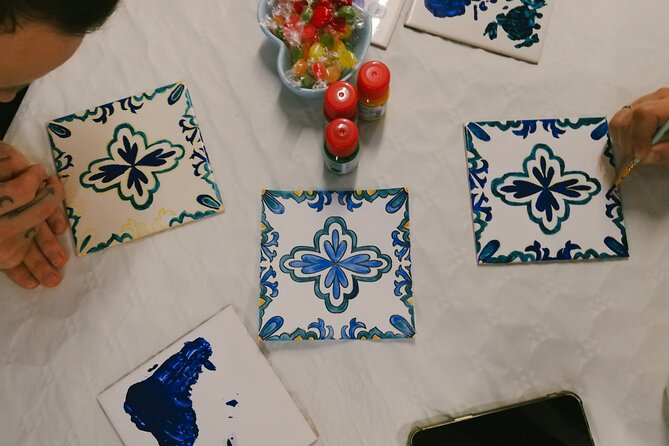
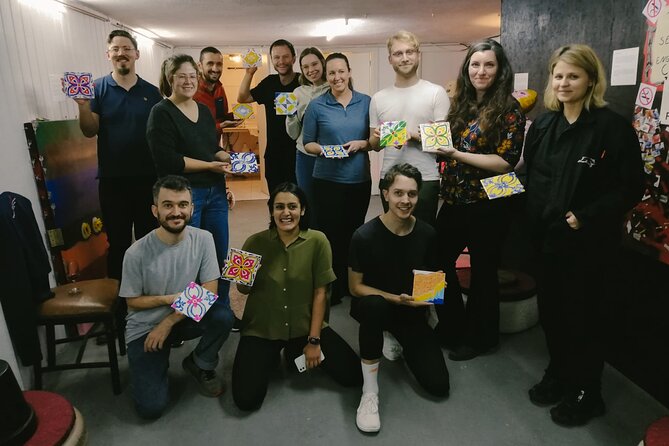
Porto’s blue-and-white tiles are not just pretty walls to photograph. At this workshop, you sit down with a real ceramic tile, learn how Portuguese patterns work, and make a souvenir with your own hands. I like the short cultural introduction and the patient help from artists such as Beatriz, Rita, Francisco, and Fernanda. The Port wine and local snacks make the two hours feel relaxed rather than like a formal art class.
I also like that you can copy a traditional Porto design or change the colors and make something personal. The main consideration is time: you paint one tile in two hours, and collection may require a wait afterward, sometimes about an hour, though some pieces have been ready in roughly 15 minutes. If you have a bus or train to catch, leave a generous cushion.
Key points at a glance
- Paint one ceramic tile: Choose a documented Porto pattern or create your own design.
- Learn before you paint: The session begins with an accessible introduction to Portuguese azulejos and their role in Porto and Lisbon.
- No art training needed: Instructors offer technical help throughout, and complete beginners can follow along.
- A sociable two hours: Port wine, coffee, juice, water, sweet treats, and savory snacks are included.
- Take home a useful souvenir: Your finished tile comes in a box after it has been prepared for collection.
- Good for mixed groups: Families with children over three, solo visitors, couples, friends, and work groups can all take part.
Why painting a Porto tile is worth two hours
Porto is full of azulejos, from church facades to railway halls and residential buildings. It is easy to admire them as decoration and move on. This workshop gives you a slower way to understand how the patterns are built, why the tiles matter, and how much care goes into even a small painted piece.
I like the balance between explanation and making. You are not asked to sit through a long lecture, and you are not simply handed a brush with no context. The opening talk covers the origins of Portuguese tiles and their lasting role in the cultural identity of Porto and Lisbon. That short lesson gives the painting a purpose.
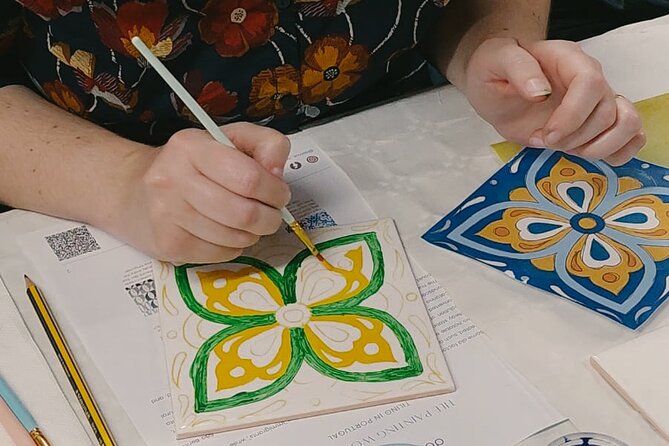
The activity also works well for people who do not think of themselves as artistic. The instructors explain the process, show techniques, and offer suggestions when you need them. You can follow one of the traditional designs closely, alter the colors, or add your own details. That range takes away the pressure to produce a perfect copy.
More Workshops in Porto:
- Porto: Pastel de Nata Cooking Class with Port Wine – Sé
★ 4.8 · 888 reviews - Port Wine class with 3 or 5 Port tasting and pairings
★ 4.9 · 441 reviews - Porto: Tile Painting Workshop with Tea and Port Wine
★ 4.9 · 66 reviews
Arriving near Sé do Porto
The workshop takes place at Domus Arte in the Sé area, close to Porto’s main sightseeing zone. That central setting matters because you can fit the activity into a day of exploring without making a separate trip far from the historic center.
The shop itself adds something to the visit. It is an art space with ceramic pieces and other items made by local artists, so you begin and end among examples of Portuguese craft. There is no pressure to buy anything, but you may find a small gift or another piece to take home.
The English-language session lasts two hours. That is enough time to hear the background, choose a design, paint at a comfortable pace, and talk with the other people at your table. It is not enough time to make several large pieces, so book it for the experience of creating one thoughtful tile rather than a full ceramics course.
Domus Arte also has a second location that is wheelchair accessible and stroller accessible. If those details matter for your group, confirm the exact location before booking. Smoking is not allowed indoors, and pets are allowed.
The opening lesson on Portuguese azulejos
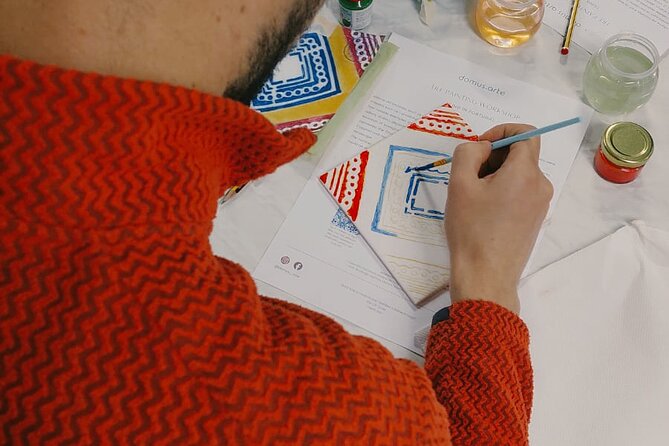
The workshop starts with a brief introduction to azulejos. You learn about the tiles’ origins and their place in Portuguese architecture and daily life, with attention to Porto and Lisbon.
This is one of the strongest parts of the activity because it changes the way you look at the city afterward. Once you understand that tile patterns can be repeated, adapted, and arranged as larger decorative panels, the facades around Porto become easier to read. A painted wall is no longer just a colorful background for a photograph.
The instructors also bring their own interests into the conversation. Francisco, for example, has been described as an artist and photographer who connects tile traditions with Porto culture, Fado, and local food. Rita has included stories about Portuguese culture, food, and music in her teaching. These personal touches help the class feel like a conversation about Portugal, not a memorized script.
The historical section is brief, so you should not expect a museum-style presentation or a detailed study of tile production. Its job is to give you enough context to make the practical part more meaningful. For most visitors, that is the right amount.
Choosing a pattern or creating your own
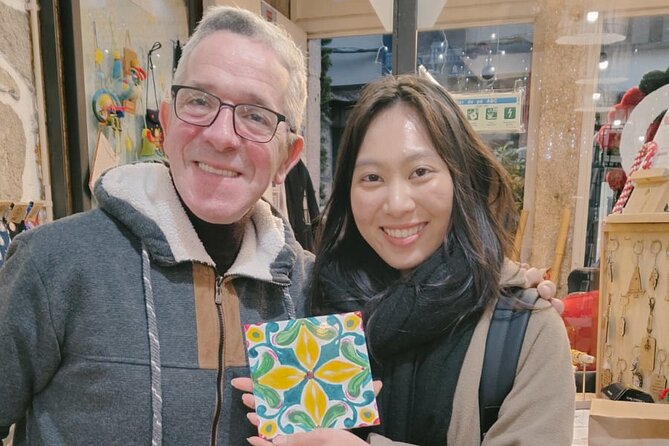
After the introduction, you receive a white ceramic tile and look through a selection of traditional patterns. The designs were chosen and documented from Porto’s streets, which gives the activity a direct link to the city outside the studio.
You can reproduce one of these patterns if you want a clear plan. This is the easiest route for a first-time painter, especially if you feel nervous about drawing freehand. You can also adjust the colors, add details, or make an original design. The instructors encourage personal touches, so your finished tile does not have to look like everyone else’s.
I would choose your design with the final souvenir in mind. A simple pattern with a few strong shapes may produce a more satisfying result than an ambitious scene squeezed into a small square. The point is not to prove your artistic ability. It is to make a tile that reminds you of Porto and that you will actually want to display.
You do not need prior experience. The wide choice of patterns helps beginners start quickly, while anyone who already enjoys painting can spend more time refining colors and details. The class is also forgiving for people who have not held a paintbrush since school.
More Wine Tours in Porto:
- From Porto: Douro Valley w/ Boat Tour, Wine Tasting & Lunch
★ 4.7 · 19,061 reviews - Complete Douro Valley Wine Tour with Lunch, Wine Tastings and River Cruise
★ 5.0 · 12,920 reviews - Porto: Douro Valley with Winery Lunch, Tastings & Cruise
★ 4.7 · 7,002 reviews - Porto: Live Fado Show with Glass of Port Wine
★ 4.8 · 6,498 reviews
Painting with help from the instructors
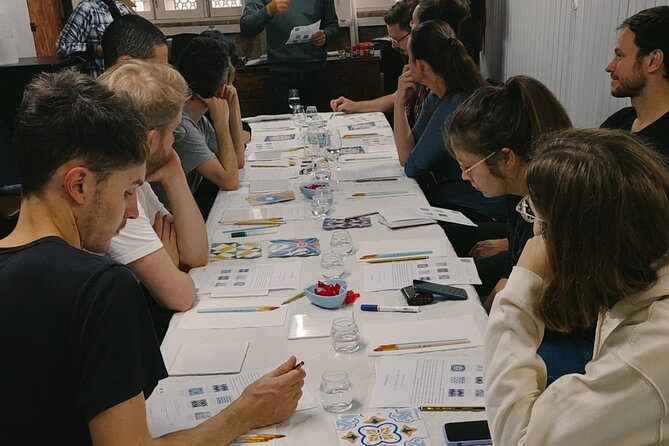
The instructors move around the room and give one-on-one guidance as people get started. Their role is practical and encouraging. They explain the technique, answer questions, and offer gentle corrections without taking control of your design.
Several instructors are named in the feedback for this activity. Beatriz is praised for helping beginners feel comfortable and for making room for personal creativity. Rita is described as friendly and clear with instructions. Francisco has worked well with families, including a young child, while Fernanda has been especially encouraging with first-time painters. José and José Antonio have also led sessions, and Daniela and Pedro are among the other instructors connected with the workshops.
The exact teacher depends on the date and session, but the pattern is clear: this is a guided craft activity, not an unattended table with supplies. You can ask for help at any point. That makes it a good choice for a group with mixed confidence levels, where one person wants detailed advice and another prefers to work quietly.
The painting itself is calm and focused. You may find yourself paying close attention to small lines and color choices. That concentration provides a useful break from Porto’s steep streets, packed sightseeing schedule, and constant decision-making.
Port wine, coffee, and small snacks
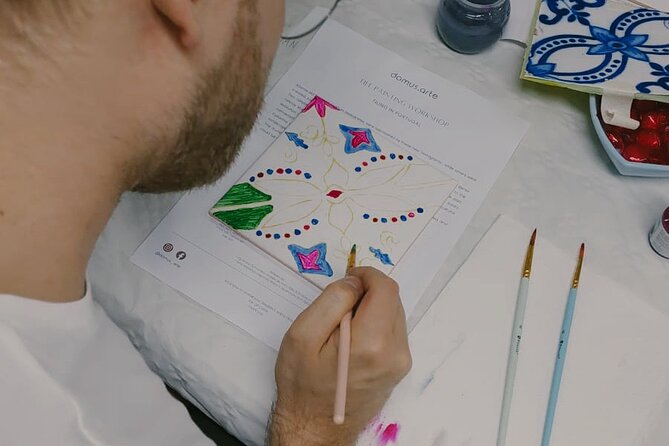
Port wine is served during the session, along with juice, water, coffee, and a selection of sweet and savory snacks. Local biscuits are mentioned often, and they pair naturally with a small glass of Port while you work.
This is more than a decorative extra. The food and drink help the workshop feel social, especially if you arrive alone or with only one companion. You can chat with people at the table, ask the instructor about Porto, or simply paint in silence with a cup beside you.
A glass of Port in the late morning may feel unusual, but it fits the setting. If you do not drink alcohol, juice, coffee, and water are available. The activity does not depend on drinking, and the snacks give you something to enjoy while the room settles into its rhythm.
The refreshments are not a full meal. Plan to eat beforehand if you need lunch or a substantial breakfast. Think of them as a pleasant accompaniment to the workshop rather than a food tour.
Collecting your finished tile

At the end, your tile is prepared so you can take it home in a box. The collection timing needs a little planning. Some people have collected their pieces around 15 minutes after finishing, while other information places the wait at about an hour.
That difference may depend on the session and the preparation stage. The sensible approach is to ask the staff when your tile will be ready and keep your schedule open. If you are catching a bus 45 minutes after the workshop, this could be tight. If you are staying in Porto for the afternoon, the central location gives you plenty of ways to fill the waiting time.
The boxed tile is a better souvenir than another mass-produced magnet because it records your own visit. It may not be technically perfect, and that is part of its value. You chose the pattern, painted the colors, and made the small decisions that distinguish it from a shop item.
The shop also sells other ceramic art and gifts made by local artists. Browse if you like, but the handmade tile you create is already the main takeaway.
Is the $41 price fair?
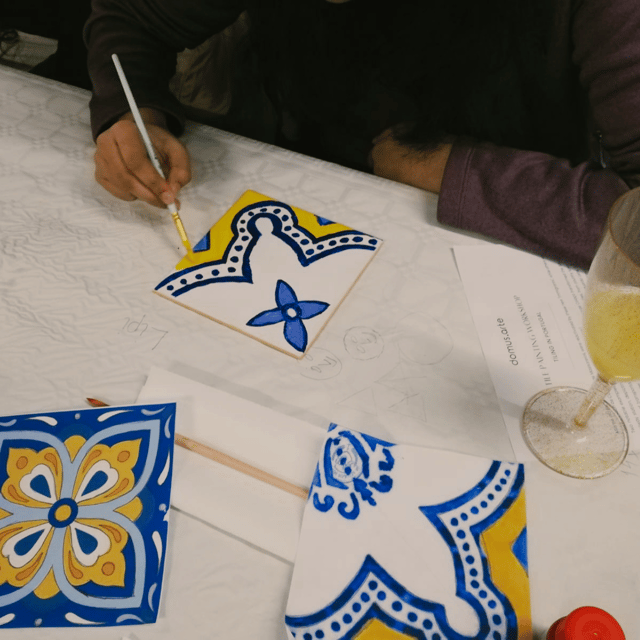
At $41 per person, this is not the cheapest two-hour activity in Porto. The price includes the instructor, tile, paint and other materials, the cultural introduction, technical guidance, drinks, snacks, and a box for your finished work.
I consider that fair value if you want an activity rather than another sightseeing stop. A guided tile session gives you time with an artist, a cultural explanation, and a physical souvenir. The Port wine and snacks add to the comfort, though they should not be the reason you book.
The value is strongest for couples, families, and small groups looking for something they can do together. It can also be a good choice on a rainy day, when painting indoors provides a welcome pause from wet pavements and crowded attractions. Solo visitors can meet other people without having to join a walking tour or make conversation the whole point.
The price is less compelling if you want to learn advanced ceramic techniques or produce several tiles. This is an introductory painting workshop with one tile per person. You pay for a guided cultural activity and a finished keepsake, not a professional studio course.
Who will enjoy this activity most?
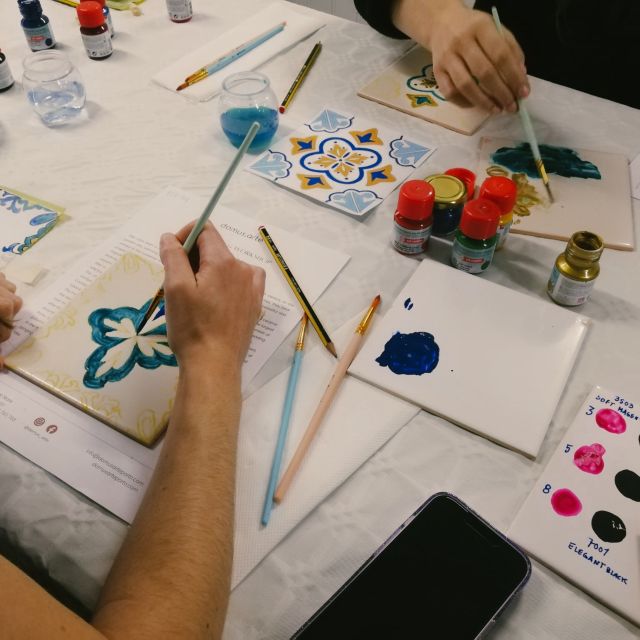
Families can bring children over three, and the teaching style suits mixed ages. One instructor has been especially helpful with a young child, but children still need to be able to sit, follow basic instructions, and handle painting materials. The activity is not suitable for children under three.
Couples and friends get a relaxed shared activity that does not require anyone to be an expert. It also fits birthday outings, bachelor and bachelorette groups, and team-building events. The structure gives everyone a task while leaving room for conversation.
Solo visitors should consider it seriously. You have a natural reason to talk with the people around you, but you can also focus on your own design. The central setting and friendly teaching make it easier to add a creative activity to a solo Porto itinerary.
People with accessibility needs should check which Domus Arte location applies to the selected session. One location is wheelchair and stroller accessible, but the information provided does not establish that both locations have the same access.
How to fit it into your Porto day
Book the workshop when you can spare more than the exact two-hour duration. Add time for arrival, painting, and tile collection. If you need to leave Porto soon afterward, confirm the pickup timing before you begin.
The Sé location makes it practical to pair the workshop with sightseeing nearby. You can paint in the morning, continue exploring afterward, and collect the tile once it is ready. You might also schedule it during the middle of a busy sightseeing day, when two quiet hours will keep the trip from feeling like a checklist.
Rainy weather is a natural match. So is a day when your feet need a rest. The workshop involves concentration rather than much movement, and the indoor setting gives you a break without wasting a valuable afternoon.
Because the class is in English, it works well for English-speaking visitors. If your group includes people who are not comfortable with English, check the language arrangements before booking, since English is the listed teaching language.
The final call: book it or skip it?
Book this workshop if you want to understand Porto’s tile tradition through your own hands, prefer a relaxed indoor activity, or need a souvenir with a personal story. The patient instruction, choice of patterns, drinks, snacks, and central location make the $41 cost reasonable for a two-hour cultural activity.
Skip it if you want a serious ceramics course, several finished pieces, or a tightly timed stop before transport. The tile collection wait can vary, and one tile is the expected output.
For most people, I would book it, then leave room afterward for collection and a stroll through the Sé area. You will leave with more than a painted square. You will look at Porto’s tiled buildings with a better eye, and you will have made a small piece of the city your own.
FAQ
How long does the Porto tile painting workshop last?
The workshop lasts two hours. You should also allow extra time for collecting the finished tile afterward, since preparation may take about 15 minutes to one hour.
Is the workshop suitable for beginners?
Yes. No previous painting experience is needed. Instructors provide technical guidance throughout the activity, and you can follow a traditional pattern or create your own design.
What is included in the $41 price?
The price includes an English-speaking instructor, one ceramic tile, all painting materials, a short introduction to Portuguese azulejos, technical guidance, Port wine, coffee, water, juice, sweet and savory snacks, and a box for taking the tile home.
Can children join the workshop?
Children over three can take part. The activity is not suitable for children under three.
Can I choose my own tile design?
Yes. You can select one of the traditional patterns taken from Porto’s streets, copy it, adjust it, or create an original design.
Is the activity wheelchair and stroller accessible?
Domus Arte has a second location that is wheelchair accessible and stroller accessible. Confirm the location of your chosen session before booking, since access may differ between locations.
Newest wine reviews around Porto
- Porto: Tuk tuk Tours with Port Wine Tasting★ 4.5 · 65 reviews
- Porto Wine Tasting Experience with Portuguese Tapas Plate★ 4.7 · 356 reviews
- Porto: Sunset Walking Tour with Port Wine and Views★ 4.6 · 95 reviews
- Porto: Tile Painting Workshop with Tea and Port Wine★ 4.9 · 66 reviews
- Porto: Taylor’s Port Cellar Tour & WOW The Wine Experience★ 4.5 · 136 reviews
- Porto: Douro River Boat Tour with Wine Tasting★ 4.9 · 167 reviews
- Porto: Douro River Cruise w/ Portuguese Wines & Local Host★ 4.9 · 166 reviews
- Porto: Self-Guided Bike and Boat Tour with Port Wine Tasting★ 4.7 · 52 reviews
Porto Wine Tours, compared.

Douro Valley w/ Boat Tour, Wine Tasting & Lunch
Read our review →
Complete Douro Valley Wine Tour with Lunch, Wine Tastings and River Cruise
Read our review →
Douro Valley with Winery Lunch, Tastings & Cruise
Read our review →


Historical Sites, Wine Experience, Lunch & Cruise
Read our review →
Authentic Small Group Douro Wine Tour with Lunch & River Cruise
Read our review →
Bridges Cruise & Sunset & Port Wine Cellar Option
Read our review →Lists this tasting appears in