
Reviewed · ROME WINE TOURS
Rome: Fresh Pasta-Making Class with Italian Chef and Wine
Making pasta from scratch is the heart of this Roman class. Chef Riccardo and his team teach you to shape long pasta, stuffed pasta, and other traditional forms, then turn your work into a three-course meal with wine. The class may take place at Riccardo’s grandmother’s home or at The Cooking Lab near Circonvallazione Gianicolense.
I like the small group of no more than 10 people, which gives the chefs room to correct your technique instead of simply demonstrating from across the room. I also like the focus on useful Roman dishes, especially carbonara and cacio e pepe, rather than a parade of recipes you will never make again. The main consideration is language: instruction is offered in English and Italian, and a multilingual group may mean some stories are translated only briefly.
Key points at a glance
- Three pasta styles in one class: You may make ravioli, fettuccine, spaghetti, tortellini, cappelletti, or spaghetti alla chitarra, depending on the session.
- Roman sauces are part of the lesson: Carbonara, cacio e pepe, and other classic sauces help you understand how pasta is finished, not just shaped.
- Chef-led and hands-on: Riccardo, Leo, William, Marco, Mattia, and other team members have been praised for clear demonstrations, patient instruction, and humor.
- A full meal follows the cooking: Your pasta becomes a three-course meal served with selected wine or prosecco.
- Good for home cooks: The class includes practical advice about ingredients, sauces, shopping, and methods you can repeat at home.
- Easy planning details: The class lasts three hours, accepts up to 10 participants, and offers free cancellation up to 24 hours before the start.
From Roman kitchen welcome to pasta dough
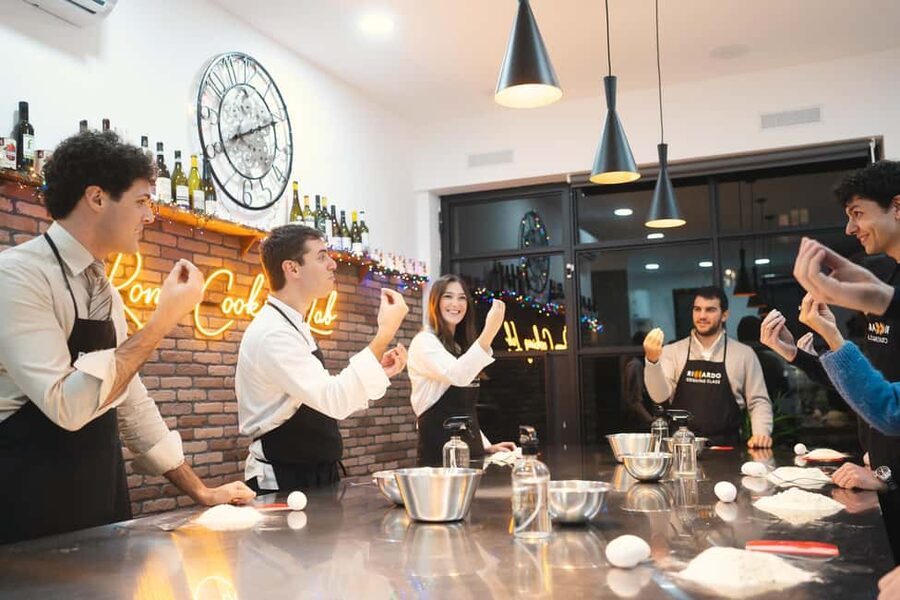
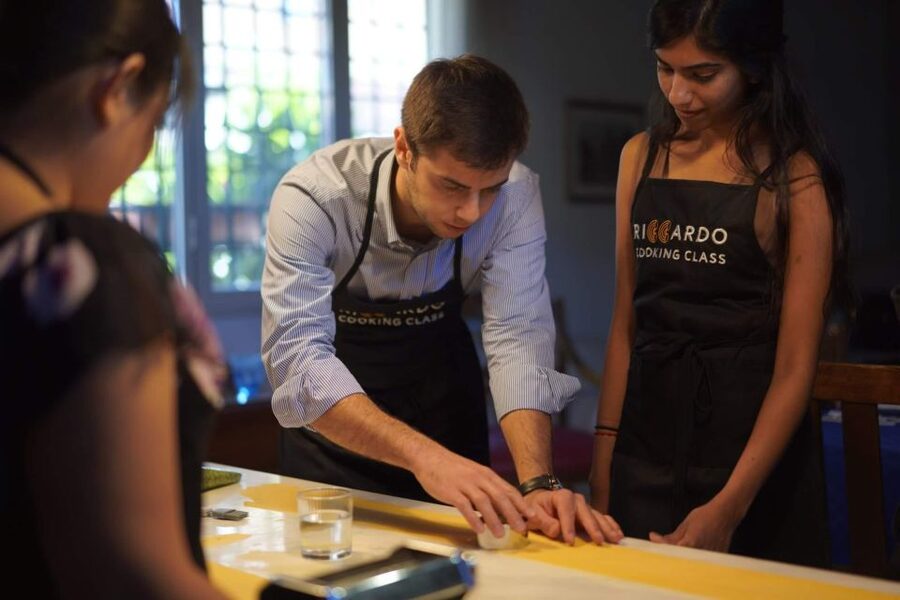
This is not a quick demonstration where you watch a chef roll dough and then pose for a photo. You are expected to work. The class begins when you meet the team at Riccardo’s grandmother’s house or at The Cooking Lab, a studio at Circonvallazione Gianicolense 418, close to a café.
The setting can change, but the tone is meant to feel like a meal with an Italian family. Aprons are provided, ingredients are set out, and the chefs guide you through the process from the first mixing and kneading to shaping and cooking. That hands-on format matters. Fresh pasta looks simple until the dough is too dry, the filling escapes, or the pieces stick together. A chef can fix those problems while you are still holding the dough.
The class has a listed limit of 10 participants. That is small enough for individual help, but it is still a shared activity. You will work alongside couples, families, solo visitors, and small groups, so the experience depends partly on how the group interacts.
The best reports from the class point to the teaching. Leo has been praised for adjusting his explanations to each person, while William is described as kind and patient. Riccardo and the rest of the team bring plenty of energy and kitchen tips. This is useful for beginners, but it should also keep more experienced home cooks interested.
More Workshops in Rome:
- Rome: Pasta & Tiramisu Class with Fine Wine by the Vatican
★ 4.9 · 4,852 reviews - Rome: Pasta Making Class with Wine, Limoncello, and Dessert
★ 4.9 · 3,177 reviews - Fettuccine & Tiramisù: Cooking Class with Wine & Limoncello
★ 4.9 · 2,103 reviews
Three kinds of pasta, not just one
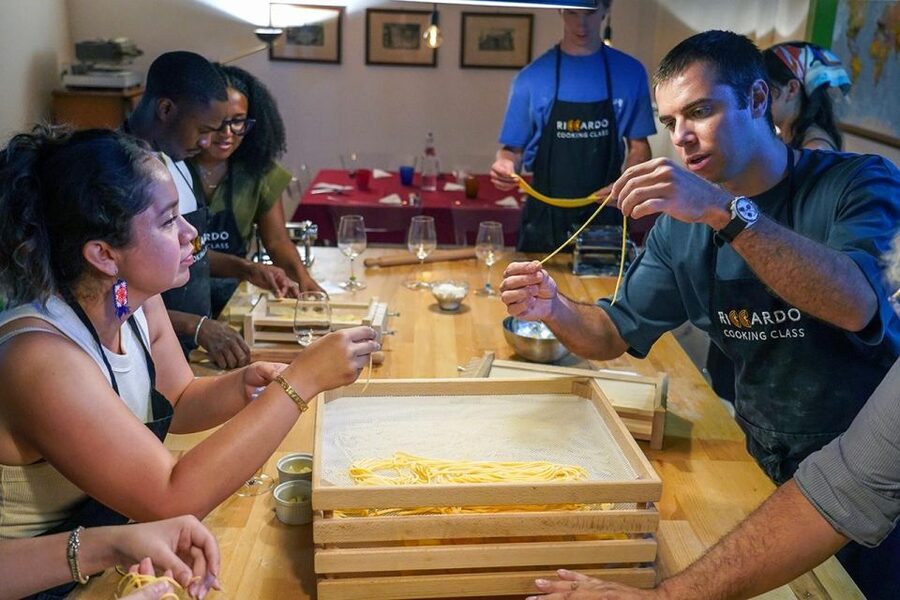
The class can include several pasta shapes, with sessions commonly producing three different types. The examples include ravioli, fettuccine, spaghetti, tortellini, cappelletti, and spaghetti alla chitarra. The exact mix may vary, so do not book with the expectation that every listed shape will appear in one lesson.
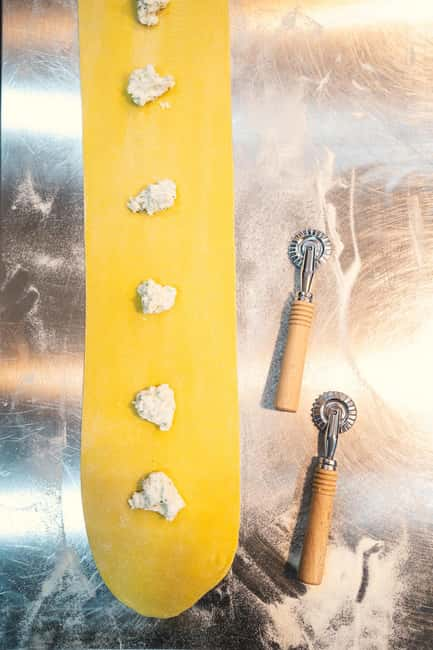
Long pasta teaches control. You learn how to roll and cut dough into strands, and you see why thickness matters once the pasta reaches boiling water. Stuffed pasta presents a different set of problems. The filling must be portioned carefully, the edges sealed firmly, and excess air pressed out before cooking.
Ravioli are especially useful for a home cook because the technique is easy to repeat with different fillings. Tortellini and cappelletti require more shaping skill, so they give you a look at the handwork behind the small filled pastas found across Italy. Spaghetti alla chitarra offers another method for cutting pasta into strands.
This variety is one of the class’s strongest features. A shorter lesson focused on one shape might help you perfect a single technique, but this class gives you a broader foundation. You leave with several methods rather than one recipe.
The class is also practical about texture. Fresh pasta is not merely dried pasta made softer. The flour, moisture, thickness, filling, and cooking time all affect the result. The chefs explain why the dough behaves as it does, which is more useful than simply telling you to copy a motion.
Carbonara, cacio e pepe, and the sauce lesson
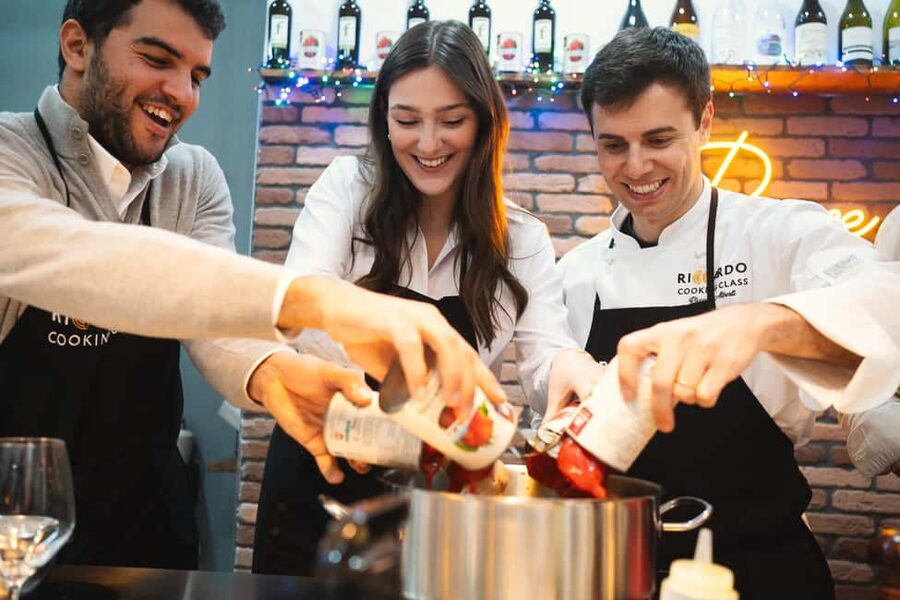
After the pasta comes the part that separates a good dish from a heavy one: the sauce. The class teaches traditional Italian sauces, including Roman favorites such as carbonara and cacio e pepe. These are excellent choices for a lesson because both look short and simple but demand care.
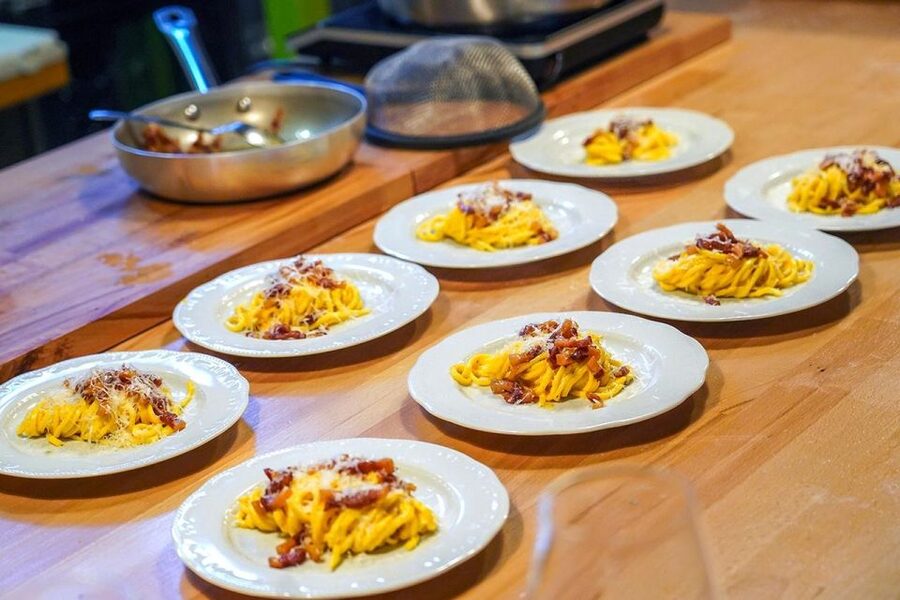
Carbonara depends on the balance of egg, cheese, pepper, and cured pork. The cooking method matters because too much heat can scramble the egg mixture. The class gives you a chance to see how the sauce becomes creamy without relying on cream. One session used guanciale, the traditional cured pork cheek, and showed why its flavor changes the finished dish.
Cacio e pepe is even more stripped back. Cheese, pepper, pasta, and starchy cooking water must come together without turning lumpy. It is a good lesson in timing and in using pasta water as an ingredient, not waste.
Other sauces may include arrabbiata, and the class can cover several sauces for the different pasta shapes. You may watch the chefs prepare some of the sauces while you work on the pasta. That division makes sense in a three-hour session, since certain sauce steps need close timing and a hot pan.
I like this part because it gives you food you can make at home. The pasta shapes may take practice, but the sauce lessons can change the way you cook on an ordinary weeknight. The chefs also discuss what to look for when shopping for ingredients and how to get better results from each one.
The meal: three courses and selected wine
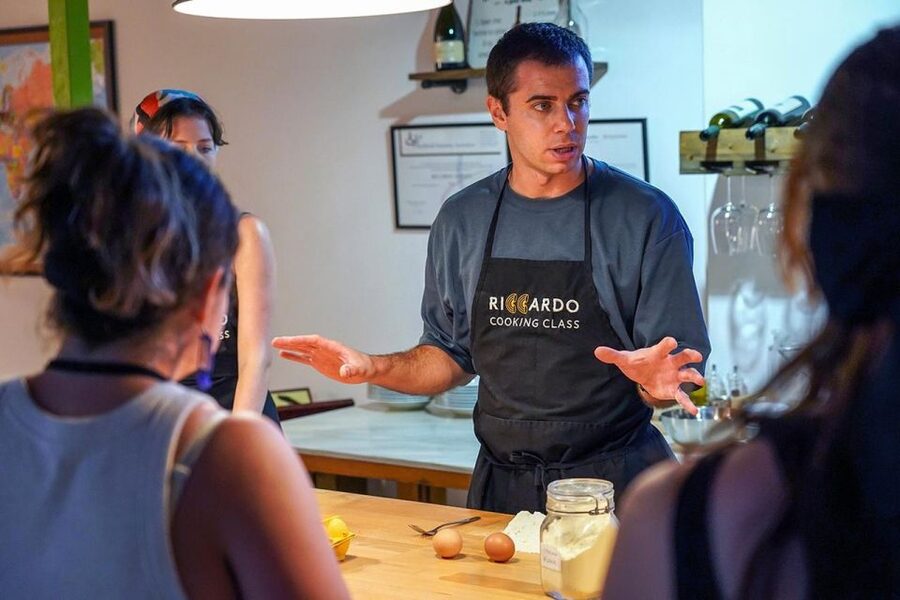
Once the cooking is finished, you sit down and eat what the group has prepared. The experience includes a three-course meal and selected wine, with prosecco served in at least some sessions. Several classes have paired different wines with different parts of the meal.
This is more than a useful extra. Sitting down together gives the class a natural finish and lets you taste the effect of your work. You can compare pasta shapes, see how each sauce clings to a different cut, and ask last-minute questions while eating.
The portions can be generous. One class produced so much pasta that the group had enough to take some home. You should not count on leftovers every time, since portions and group size can vary, but you are unlikely to leave after a token tasting.
The wine is complimentary as part of the meal. If you do not drink, the provided information does not specify an alternative beverage program, so mention any needs when booking. Wine can also shape the mood of the class. It makes the experience more social, but anyone seeking a strictly technical cooking workshop may find the meal and conversation take up part of the three hours.
The food itself receives the strongest praise. The class is repeatedly described as one of the best meals of a Rome visit, with particular appreciation for the pasta, sauces, and traditional carbonara. That does not mean this replaces a visit to a Roman restaurant. It gives you something different: a meal connected to the work you have just done.
More Wine Tours in Rome:
- Rome: Tuscany & Montepulciano Day Trip with Lunch & Wine Tasting
★ 4.5 · 5,232 reviews - Rome Food Tour: Unlimited Tastings with Fine Wine & Barolo
★ 5.0 · 3,365 reviews - Rome: Guided Food Walking Tour with Wine in Trastevere
★ 4.9 · 3,105 reviews - Rome: Tuscany & Montepulciano Day Trip with Lunch & Wines
★ 4.7 · 3,004 reviews
Why the teaching style matters
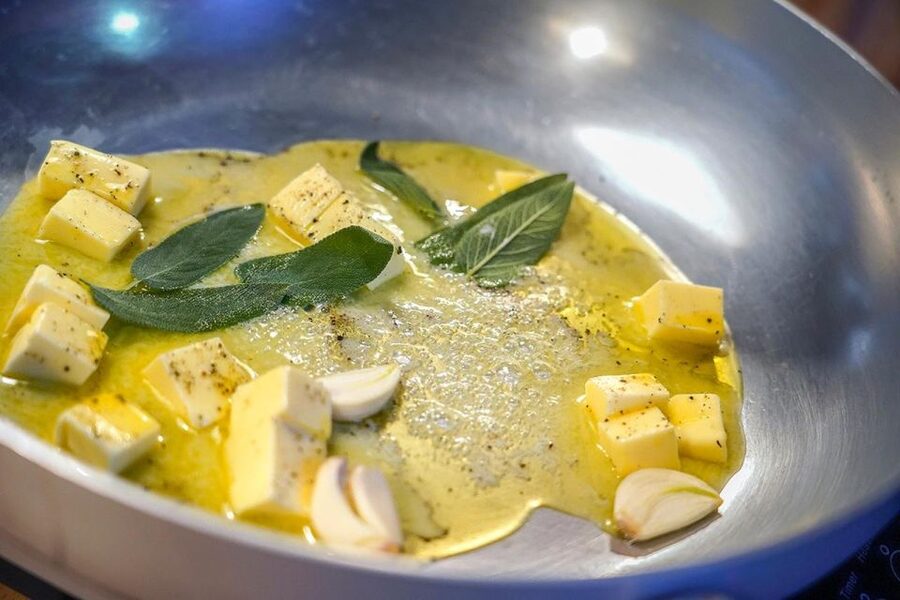
Cooking classes vary widely. Some hand you a recipe and ask you to follow it. This one puts more weight on demonstration, correction, and explanation. Riccardo’s team has been praised for showing each step, explaining why it matters, and involving every person at the table.
Leo is singled out for a lively style and clear instruction. William has been described as patient and engaging, and Riccardo is valued for his cooking knowledge and restaurant recommendations. Other team members, including Marco and Mattia, also take part in teaching.
The class is offered in English and Italian. English instruction is available, but group language can affect the flow. If several participants speak another language, the chef may switch between languages, and some stories or explanations may be translated in shorter form. One class had French-speaking participants, and the English-speaking participant felt partly left out during the longer French explanations.
That is not a reason to avoid the class, but it is a fair point to consider. If detailed English instruction is essential to you, ask about the language mix when you book or choose a session with an English-speaking group if that option is available.
The style suits people who enjoy a little conversation and humor with their cooking. It may be less suitable if you want a quiet, highly formal culinary school lesson. Most of the appeal comes from the human side of the class, as well as the food.
Getting there and fitting it into your Rome plans
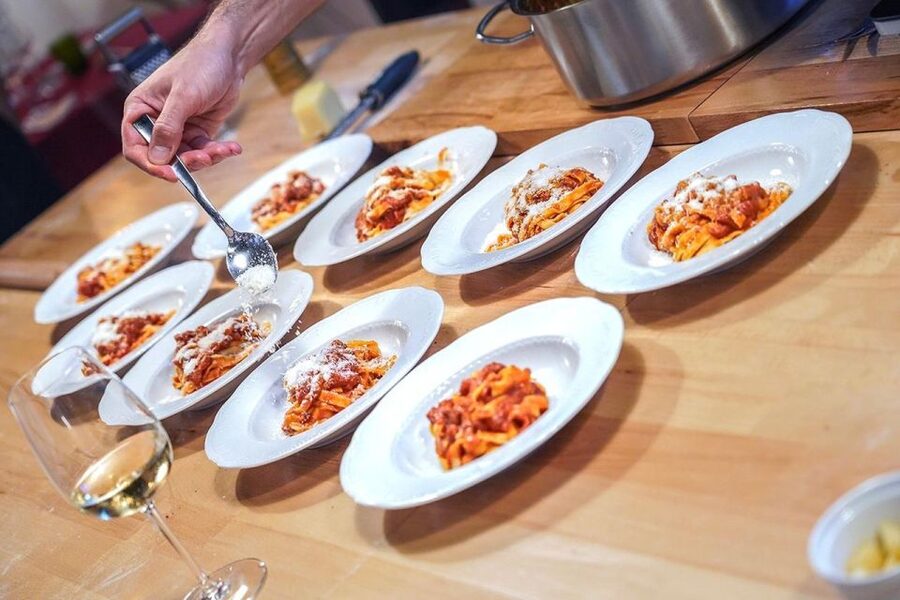
The Cooking Lab is at Circonvallazione Gianicolense 418, 00152 Rome, on the street near a café. The location is outside the main ancient-center sights, so allow time to reach it. The exact starting time varies, and the activity lasts three hours.
Public transportation can make the studio easy to reach from central Rome. Check the meeting instructions carefully before leaving your hotel, since the class may be held at the studio or at Riccardo’s grandmother’s house. A cooking activity is not the best choice for a tight schedule between timed museum entries. Give yourself enough time to arrive without rushing.
I would book this early in your Rome stay. The class gives you practical restaurant suggestions, including places for pizza, gelato, and Roman meals. More important, it teaches you what to look for in local food. Those tips can shape the rest of your visit.
The morning schedule mentioned by one participant ran from 11:00 to about 14:00. Since starting times can vary, confirm your chosen slot when booking. A midday class works well as lunch, while an afternoon class can become an early evening meal.
Price, group size, and what you get for $97
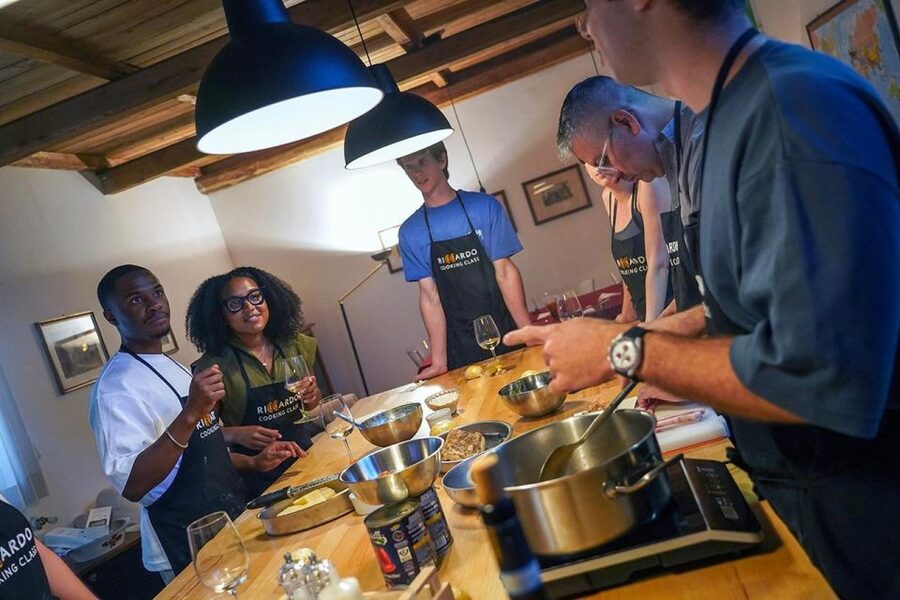
At $97 per person, this is not the cheapest way to eat pasta in Rome. You can order carbonara for far less, and a short pasta demonstration may cost less still. The price makes more sense when you count the meal, wine, ingredients, apron, instruction, and three hours of personal participation.
You are also paying for access to techniques that are hard to learn from a recipe alone. A recipe can tell you to knead until smooth or add pasta water until creamy. A chef can show you what smooth dough looks and feels like and when the sauce has reached the right texture.
The small group improves the value. A class with 25 or 30 people might offer the same menu but leave you watching from the back. With no more than 10 participants, the chefs can help with rolling, filling, sealing, and sauce work.
The value is strongest for people who will use what they learn. If you want only a meal, book a restaurant. If you want a polished, formal cooking certificate, this is not that type of class. If you want to bring home several pasta methods and Roman sauce skills, the price is reasonable.
Free cancellation is available up to 24 hours before the class, and you can reserve while paying later. Wheelchair access is listed, but you should still confirm the exact venue if accessibility is important because the class location may vary.
Dietary needs and private-class options
Vegetarian food is available, and you should give notice about allergies, intolerances, dietary restrictions, or ingredients you cannot eat. The supplied information does not promise that every request can be handled in the standard small-group class, so be specific when you book.
A private class can be arranged for special recipes and dietary needs. Possibilities listed include gnocchi, tiramisu, risotto, gluten-free pasta, dairy-free food, and vegan menus. These options require advance planning and may not be part of the regular $97 group format.
Aprons are provided for use. You may be able to keep one for an extra charge. That is a small detail, but it may appeal to families or home cooks who want a souvenir with a practical use.
Who should book this pasta class?
You should consider this class if you want to learn several techniques in one session, enjoy meeting other people, and like the idea of eating a meal made during the lesson. It works well for couples, families, solo visitors, and friends. You do not need to be an experienced cook.
It is especially useful early in a Rome visit. The cooking gives you local food context, and Riccardo’s team can point you toward other places to eat. Bring a willingness to work with your hands, ask questions, and share the table.
You may want another type of activity if you dislike group dining, avoid alcohol, need a fully fixed menu, or want instruction only in one language. The class is social and may include wine and conversation alongside the technical work.
Should you book it?
Yes, if fresh pasta is more appealing to you than a passive food tour. The strongest reasons to book are the three pasta styles, the Roman sauces, the patient chef-led teaching, and the full meal that follows. The class gives you skills you can use at home, not just a pleasant lunch in Rome.
Book early in your stay if you want restaurant advice and time to use it. Tell the team about dietary needs before arrival, and confirm the meeting location and language details. At $97, it is a fair buy for a three-hour class with a meal, wine, quality ingredients, and a group capped at 10 people.
FAQ
How long does the pasta-making class last?
The class lasts three hours. Starting times vary, so check availability for the date you want.
Where does the class meet?
The class may meet at Riccardo’s grandmother’s house or at The Cooking Lab. The listed studio address is Circonvallazione Gianicolense 418, 00152 Rome, on the street near a café.
How many people can join the class?
The class is limited to 10 participants, making it a small-group activity.
Which languages are used during the class?
Instruction is offered in English and Italian.
What types of pasta might I make?
Possible pasta types include ravioli, fettuccine, tortellini, cappelletti, spaghetti alla chitarra, and other long or stuffed pastas. The exact selection can vary by class.
Are wine and food included?
Yes. Selected wine is included, and the class ends with a three-course meal made during the activity. Some sessions also serve prosecco.
Can vegetarians join the class?
Yes. A vegetarian menu is available. You should also report allergies, intolerances, or other dietary restrictions before the class.
Can I cancel the booking?
You can cancel up to 24 hours in advance for a full refund. Reserve now and pay later is also available.
Newest wine reviews around Rome
- Rome: Painting Class with Unlimited Wine★ 4.8 · 109 reviews
- Rome: Trastevere Wine Tasting with Food Pairing and Gelato★ 4.9 · 168 reviews
- Rome: Vatican Street Food and Wine Tour with Farmers Market★ 5.0 · 37 reviews
- Rome: Trionfale and Prati Food and Wine Tasting Tour★ 4.8 · 115 reviews
- Rome: Trastevere Food Walking Tour with Beer and Wine★ 4.9 · 71 reviews
- Rome: Trastevere Food and Wine Tasting Tour★ 4.9 · 54 reviews
- Rome: Tipsy Painting Class with Fine Wine and Arts★ 4.9 · 178 reviews
- Rome: Private Guided Golf Cart Tour with Gelato or Wine★ 4.9 · 338 reviews
Rome Wine Tours, compared.
Tuscany & Montepulciano Day Trip with Lunch & Wine Tasting
Read our review →
Pasta & Tiramisu Class with Fine Wine by the Vatican
Read our review →
Rome Food Tour: Unlimited Tastings with Fine Wine & Barolo
Read our review →
Pasta Making Class with Wine, Limoncello, and Dessert
Read our review →
Guided Food Walking Tour with Wine in Trastevere
Read our review →
Tuscany & Montepulciano Day Trip with Lunch & Wines
Read our review →
Trastevere Food tour with Free-Flowing Fine Wine
Read our review →
Lists this tasting appears in