
Reviewed · PORT WINE TASTINGS
Porto: Tile Painting Workshop with Tea and Port Wine
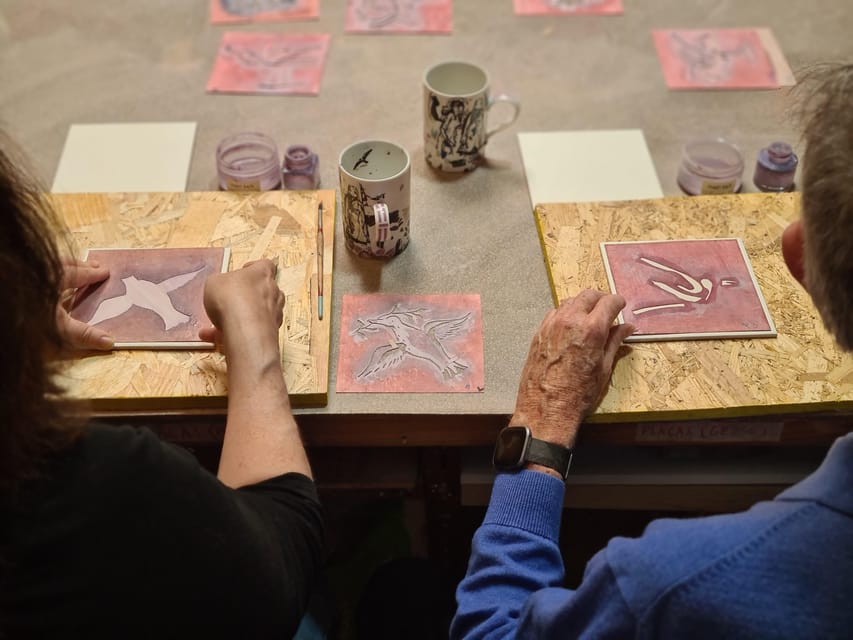
Porto’s tile tradition becomes much more personal when you hold a brush and make your own version. In this two-hour workshop, you learn why painted tiles matter in Portugal, study traditional designs, and create two tiles to take home after they are fired.
I like the mix of clear instruction and freedom to experiment, plus the fact that tea and biscuits make the studio feel relaxed rather than rushed. I also like the practical souvenir: your tiles are fired, packaged properly, and ready for pickup the next day. The main drawback is the return visit, so this works best if you have at least two days in Porto. The history section may also feel a little long if you mainly want painting time.
Key points to know before booking
- You paint two tiles per person, not just one, using traditional Portuguese motifs and supplied materials.
- The tiles are fired overnight, then collected around 11:00 or 12:30 the following day.
- Tea and biscuits are included, along with an introduction to Portuguese tile history and production methods.
- The class suits families, with children and teenagers able to take part under adult supervision.
- The workshop is near Campanhã train station and TIC bus station, making it useful before or after transport connections.
- English, French, and Japanese instruction is available, but French or Japanese must be requested when booking.
Why painting tiles makes sense in Porto
You see painted tiles all over Portugal, from houses and churches to public buildings and heritage sites. In Porto, they are not simply decorative extras. They help tell stories, add color to plain walls, and connect everyday buildings with the country’s artistic traditions.
That context gives the painting session a purpose. You are not just filling in a ready-made souvenir. You first learn how tiles became part of Portuguese art and culture, then use some of the same visual ideas in your own work.
The workshop also explains how traditional tiles are produced. This matters because the finished piece is shaped by more than the design on the surface. Clay, glaze, painting, and kiln firing all affect the final result.
I like this balance. You get enough cultural background to understand what you are making, but the class still ends with something useful and personal. Your tile may not look like a church panel, and that is fine. Its value comes from the fact that you made it in Porto.
More Port Wine Tastings in Porto:
- Porto: Live Fado Show with Glass of Port Wine
★ 4.8 · 6,498 reviews - Porto: Bridges Cruise & Sunset & Port Wine Cellar Option
★ 4.2 · 4,180 reviews - Porto: Fado & Port Wine in Traditional Portuguese Music Shop
★ 4.8 · 2,906 reviews
Arriving near Campanhã station
The store is near Porto’s Campanhã train station and the new TIC, or Terminal Intermodal de Campanhã, bus station. A school and a taxi square are beside the station, which should help you identify the area.
This location is practical but not especially suited to a leisurely arrival by car. One person specifically found the area unfriendly for parking, so I would avoid driving if possible. Public transport is the sensible choice, especially if you are already using Campanhã for a train or bus journey.
Give yourself enough time to find the store. The meeting point is described by nearby landmarks rather than a famous sight, and a station district can be confusing when you are carrying bags or watching the clock.
You do not need to arrange transportation as part of the activity. Getting to and from the workshop is your responsibility, and food or drinks beyond the included tea and biscuits are not covered.
The opening talk, tea, and tile tradition
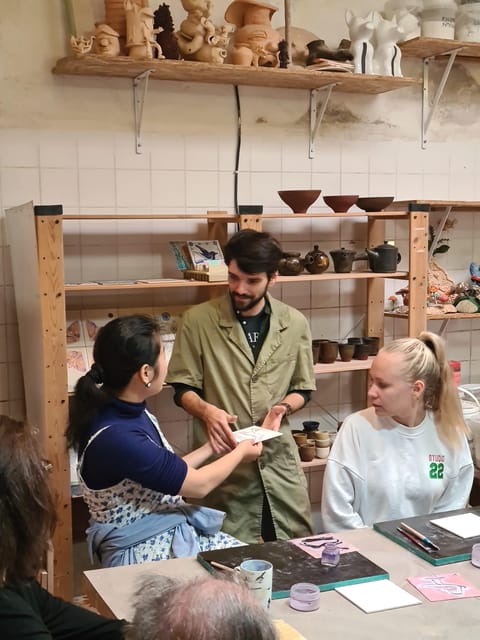
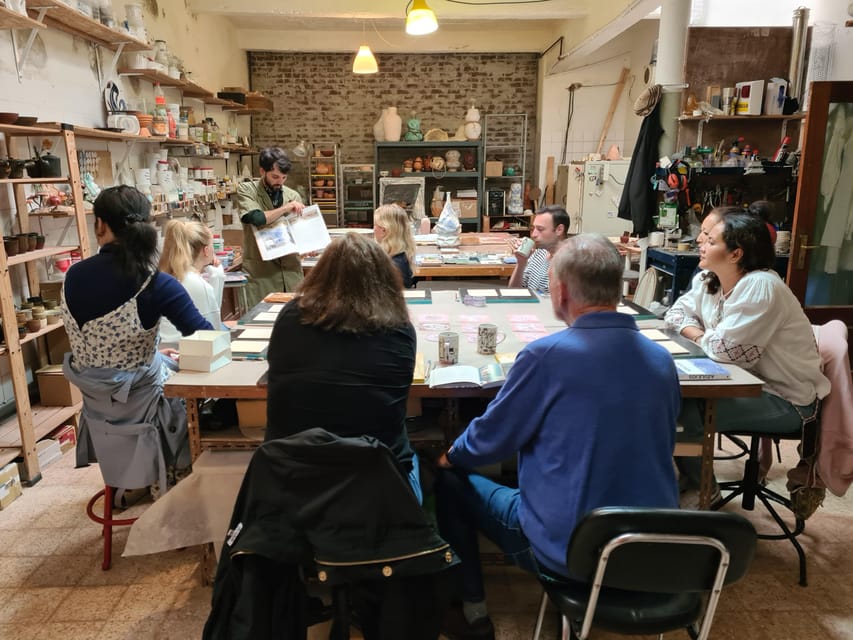
The class begins with an introduction to the history and cultural importance of Portuguese tiles. You can expect to see examples of tiles and decorative pieces while learning how they are used on monuments, houses, and heritage buildings across Portugal.
Tea and biscuits are served during this opening part. One type of tea has been described as a self-planted herbal infusion, which adds a friendly touch to the studio setting.
This first section helps you understand the designs before you begin. You may look through inspiration books and study traditional motifs, giving you a starting point if you arrive without a clear idea.
Still, the opening talk is the part most likely to test your patience if you are eager to paint. A family of four found that it could have been shorter, with more time left for tile work. If you already know a lot about Portuguese art, you may feel the same.
My advice is to treat the introduction as part of the experience rather than a delay. The class is not only about making a craft item. It is also a short lesson in one of Porto’s most visible forms of art. If you are booking mainly for the creative activity, though, keep your expectations realistic about the time available.
Learning the painting methods
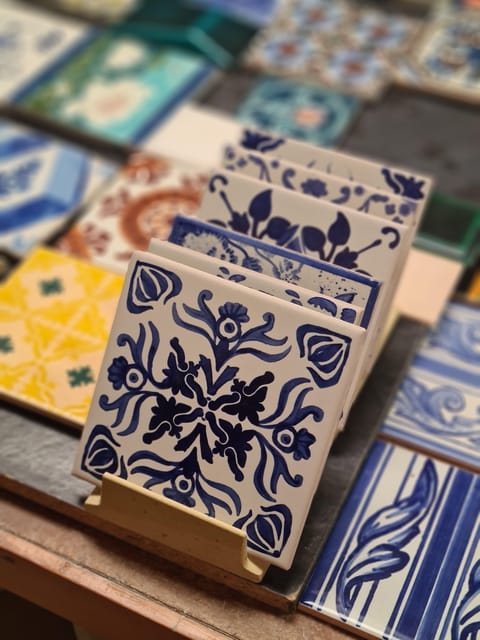
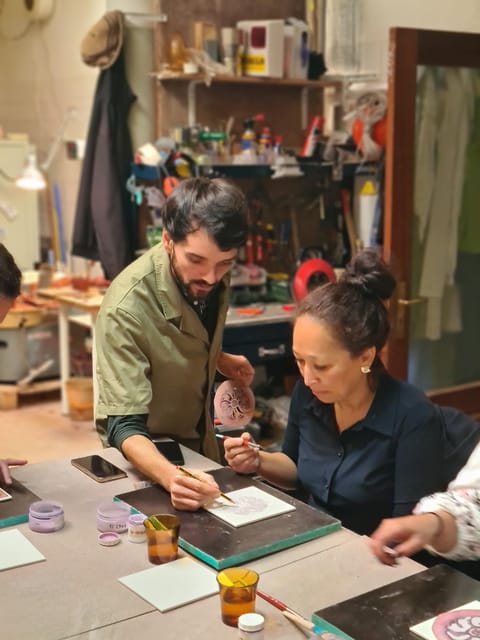
After the introduction, the instructor explains the techniques used to produce traditional Portuguese tiles. You receive the materials needed for the work, and guidance is available while you paint.
Stencils are provided, which is helpful if you are not confident drawing patterns by hand. They offer a structure without forcing every tile to look the same. You can follow a traditional motif, adapt it, or add your own choices.
The workshop seems to strike a useful middle ground. You are shown what to do, but the staff do not simply complete the tile for you. That leaves room for your own mistakes and decisions, which is exactly what makes the souvenir meaningful.
The instructor and assistant can answer questions and offer creative advice. David was singled out for being personable and helpful, while Francisco Pessegueiro is identified as the experience provider. Since the exact instructor can vary, check the language and guide arrangements when you book.
Instruction is available in English, French, or Japanese. If you need French or Japanese, state that at the time of booking. Otherwise, you risk arriving with the wrong language arrangement.
More Workshops in Porto:
- Porto: Tile Painting Workshop with Porto Wine – Sé do Porto
★ 4.9 · 1,095 reviews - Porto: Pastel de Nata Cooking Class with Port Wine – Sé
★ 4.8 · 888 reviews - Port Wine class with 3 or 5 Port tasting and pairings
★ 4.9 · 441 reviews - Florence: Pasta Cooking Class with Unlimited Wine
★ 4.9 · 10,285 reviews
Painting two Porto-inspired tiles
The main activity is painting two tiles per person. This is one of the strongest parts of the experience because two pieces give you room to try different approaches. You might use related patterns, make a matching pair, or simply see how your ideas change from the first tile to the second.
You are encouraged to work from traditional motifs, but the supplied information does not limit you to one fixed design. The inspiration books and stencils help you begin, while the instructor can advise as you work.
I would wear comfortable clothes and shoes. Painting is a hands-on task, and you will want to sit and concentrate without worrying about what you are wearing. The activity is creative rather than physically demanding, but children may need help staying focused through the introduction and the painting stage.
Families are a good match for this class. An eight-year-old, a teenager, and two adults were able to take part together, and the activity was described as successful for the whole family. It also suits couples, solo visitors, and anyone who prefers making a souvenir to buying one.
The two-hour duration gives you a proper introduction and time to paint, but it is not a long studio course. If you want a highly detailed or technically demanding ceramics lesson, this may feel introductory. If you want a manageable cultural activity with a finished object, the format makes sense.
The kiln firing and next-day pickup
You do not take the wet or unfired tiles away after class. The workshop fires them in a kiln, which gives the paint a finished surface and makes the pieces ready to carry home.
Pickup is around 11:00 or 12:30 the next morning, after roughly 24 hours. They are packaged properly, an important detail if you are putting them in luggage for a flight or a long train ride.
This timing is the main planning issue. You need to remain in Porto overnight and return to the workshop the next morning. The activity is not a good fit for a same-day visit or for a departure shortly after the class.
Plan the workshop early enough in your stay to leave room for the pickup. A class on your final afternoon could work only if your next morning is free and your transport schedule allows it. I would book it for the first or second day in Porto when possible.
The next-day collection also adds a pleasant sense of anticipation. You leave the studio without the final result, then return to see how the kiln has changed the painted surface. It turns a simple class into a small two-part experience.
What the $53 price includes
At $53 per person, the price is reasonable if you value both the instruction and the finished souvenir. You receive all painting materials, two tiles, tea and biscuits, kiln firing, and protective packaging.
The value is not just in the amount of paint or clay. You are paying for a guided introduction to Portuguese tile traditions, access to an artist’s studio, help during the process, and the technical step of firing the pieces afterward.
Compared with buying a decorative tile in a shop, this costs more. You could purchase a ready-made souvenir for less, but it would not carry your own design or the memory of making it.
The price also becomes easier to justify for families. Each person receives two tiles, so a group can create a set of personal keepsakes rather than sharing one small object. Children may value the activity itself more than the finished piece.
Food is limited to tea and biscuits. Do not treat this as a meal or plan to arrive expecting lunch. The workshop does not include transportation, and any other food or drink costs extra.
Group size and the feel of the class
A small group is available, which should make it easier to ask questions and get feedback while painting. The experience provider also requires at least two participants. If that minimum is not reached by the day before, the class may be canceled.
That minimum matters if you are booking alone or on a tight schedule. Keep an eye on confirmation details and avoid building an entire day around the workshop until the booking is secure.
The studio atmosphere is described as warm, welcoming, and safe for creative work. That does not mean the class is silent or formal. You can expect a social setting where people look at examples, ask questions, and work alongside one another.
I would choose this activity for a relaxed day rather than a packed sightseeing schedule. The painting needs attention, and the next-day pickup creates a second appointment. You will enjoy it more if you are not watching the clock for a museum booking across town.
Who should book this workshop
This is a strong choice for anyone who wants a personal souvenir and a little cultural context. It suits adults with no art experience, artistic people who want a local subject, and families looking for an activity beyond churches and viewpoints.
It is especially good for:
- Families with school-age children and teenagers
- Couples who want matching or contrasting souvenirs
- Solo visitors who enjoy guided creative activities
- Anyone interested in Portuguese design and historic buildings
- Visitors staying at least two nights in Porto
- People who prefer making an object to buying a standard souvenir
You may want to skip it if you dislike hands-on activities or have no time for next-day pickup. It is also less suitable if you need a long, advanced ceramics course with extensive technical instruction.
The class is accessible in the everyday sense of being simple to join, but the supplied details do not explain wheelchair access or other specific access arrangements. Contact the provider if those details matter to you.
Booking tips for a smoother visit
Book with the pickup in mind, not just the two-hour class. You need to return the following morning around 11:00 or 12:30, and you should leave enough time to reach your next appointment or transport connection.
Select your preferred language carefully. English is available, while French and Japanese need to be requested when booking.
Keep your clothing comfortable, and do not bring the assumption that one tile is the limit. Each person receives two tiles, along with the materials needed to paint them.
The activity allows free cancellation up to 24 hours in advance for a full refund. You can also reserve now and pay later, which is useful when your Porto schedule is still changing.
Should you book the Porto tile painting workshop?
Book it if you want more than a quick photo of Porto’s famous tiles. The workshop gives you cultural background, practical instruction, two pieces of your own work, and a reason to return to the area the next day.
The strongest features are the two tiles per person, helpful guidance, proper kiln firing, and the family-friendly format. The compromises are the station-area setting, limited parking, a possibly lengthy introduction, and the required next-day pickup.
For a two-hour activity at $53, I consider it good value for visitors who like making things. Put it near the start of your stay, request your language in advance, and protect time for collection. If you do that, you leave Porto with a souvenir that carries your own brush marks, not just a shop label.
FAQ
How long does the tile painting workshop last?
The workshop lasts two hours.
How many tiles does each person paint?
Each participant paints two tiles.
Are painting materials included?
Yes. All materials needed for tile painting are included.
Are the tiles fired after the class?
Yes. The workshop fires the painted tiles in a kiln.
When can I collect the finished tiles?
The tiles are ready about 24 hours after the class. Pickup is scheduled for the following morning, around 11:00 or 12:30.
Is packaging included for the tiles?
Yes. The tiles are packaged properly for collection.
Is tea included?
Yes. Tea and biscuits are included during the workshop.
Which languages are available?
Instruction is available in English, Japanese, and French. French or Japanese must be requested when booking.
Where is the meeting point?
The store is near Campanhã train station and the TIC Terminal Intermodal de Campanhã bus station. A school and a taxi square are beside the station.
Can I cancel the booking?
You can cancel up to 24 hours in advance for a full refund. You can also reserve now and pay later.
Newest wine reviews around Porto
- Porto: Tuk tuk Tours with Port Wine Tasting★ 4.5 · 65 reviews
- Porto Wine Tasting Experience with Portuguese Tapas Plate★ 4.7 · 356 reviews
- Porto: Sunset Walking Tour with Port Wine and Views★ 4.6 · 95 reviews
- Porto: Taylor’s Port Cellar Tour & WOW The Wine Experience★ 4.5 · 136 reviews
- Porto: Douro River Boat Tour with Wine Tasting★ 4.9 · 167 reviews
- Porto: Douro River Cruise w/ Portuguese Wines & Local Host★ 4.9 · 166 reviews
- Porto: Self-Guided Bike and Boat Tour with Port Wine Tasting★ 4.7 · 52 reviews
- Porto: Tuk-Tuk Tour, Douro River Cruise, and Wine Tasting★ 4.3 · 152 reviews
Port Wine Tastings, compared.


Bridges Cruise & Sunset & Port Wine Cellar Option
Read our review →
Fado & Port Wine in Traditional Portuguese Music Shop
Read our review →
What is Fado? Commented Live Concert with Port Wine
Read our review →
Port Wine Lodges Tour Including 7 Port Wine Tastings (English)
Read our review →
Charming Sailboat Cruise with Port Wine,Sunset Option
Read our review →
Douro River Boat Cruise with Port Wine Tasting
Read our review →
Graham’s Port Lodge Tour with Premium Wine Tastings
Read our review →Lists this tasting appears in