
Reviewed · BUDAPEST WINE TOURS
Budapest: Guided Street Food Tour with Sweet Wine
Budapest’s best food lesson may begin with a bowl of soup and end with sweet Tokaji wine. This 150-minute walk through District 7 links Jewish-Hungarian food traditions with the city’s rough-edged street-food scene, then moves into sit-down eateries for classic dishes, drinks, and a look at the neighborhood’s ruin-bar culture.
I like the way the tour gives you a broad first taste of Hungary without making you plan four restaurants yourself. I also like the strong local guide element: Kitti, Laura, Eszti, Peter, Kelly, and others are praised for explaining both the food and the city around it. The main caution is dietary: vegetarian options are available, but gluten-free and vegan diets cannot currently be accommodated, and the flódni dessert may not suit every sweet tooth.
Key points at a glance
- Four food stops in 150 minutes: You receive a planned selection of Hungarian dishes at street-food counters and sit-down eateries.
- District 7 with context: The walk begins at Kazinczy Street Synagogue and explores Budapest’s former Jewish neighborhood, including its connection to local cuisine and ruin bars.
- A full meal, not a tasting nibble: Soup, lángos, dumplings, stew, pastry, and drinks can leave you very full, so arrive hungry.
- Three alcoholic drinks included: Expect local wine, beer, and shots, with pálinka and sweet Tokaji wine part of the experience.
- Guides shape the evening: Strong English, friendly conversation, and useful Budapest recommendations are recurring features of the tour.
- Not suited to every diet: Vegetarian choices are offered, but gluten-free and vegan guests should choose another food tour.
Starting at Kazinczy Street Synagogue
The meeting point is easy to identify: you gather in front of Kazinczy Street Synagogue, where the guide holds a yellow Carpe Diem Tours flag. This is a sensible starting place because the tour is not only about eating. The synagogue gives the guide a place to explain how Jewish culture helped shape Hungarian food.
From there, you walk into District 7, Budapest’s former Jewish neighborhood. The district is now famous for nightlife and ruin bars, but the tour presents more than its party image. You see a part of Budapest where old religious and residential history sits alongside bars, street-food counters, and busy evening restaurants.
That contrast is one of the route’s best features. The neighborhood can feel gritty in one block and polished in the next. Food helps make sense of that change. You are not simply stopping at restaurants chosen for convenience. You are learning why certain dishes belong to Budapest and how the city’s food culture carries traces of different communities.
The walking is part of the experience, though you should still wear comfortable shoes. The route covers District 7 on foot, and the meal is spread across four stops rather than served in one restaurant. At roughly two and a half hours, it is long enough for a proper introduction without taking over your entire evening.
More Food Experiences in Budapest:
- Budapest Food Tour: Market to Tavern with 14+ Tasters & Wines
★ 5.0 · 434 reviews - Budapest: Food Tour Market to Tavern: 14+ Tasters & Wines
★ 4.9 · 375 reviews - Budapest Tipsy Food Tour with Wines, Small Group & Local Guide
★ 5.0 · 234 reviews
Soup and lángos: Hungary’s street-food welcome
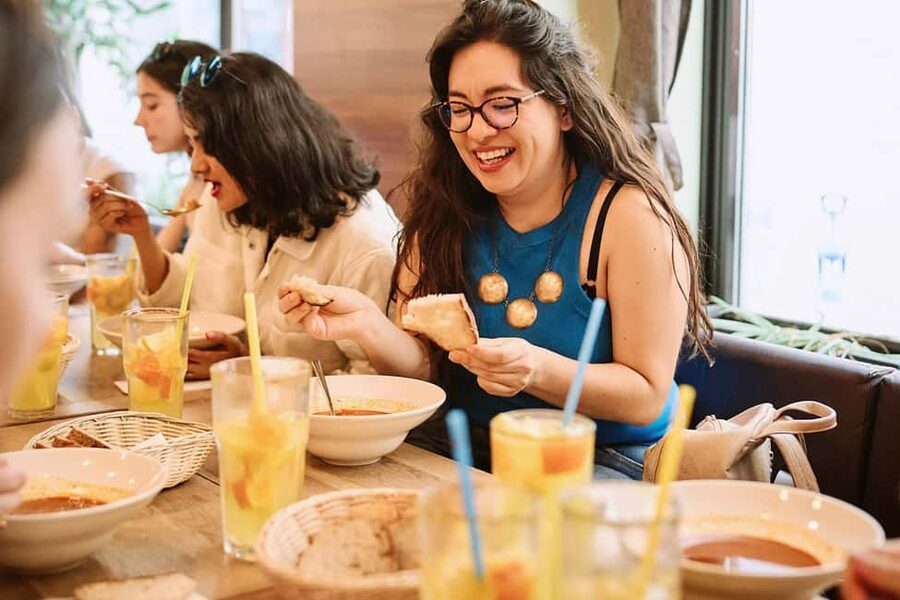
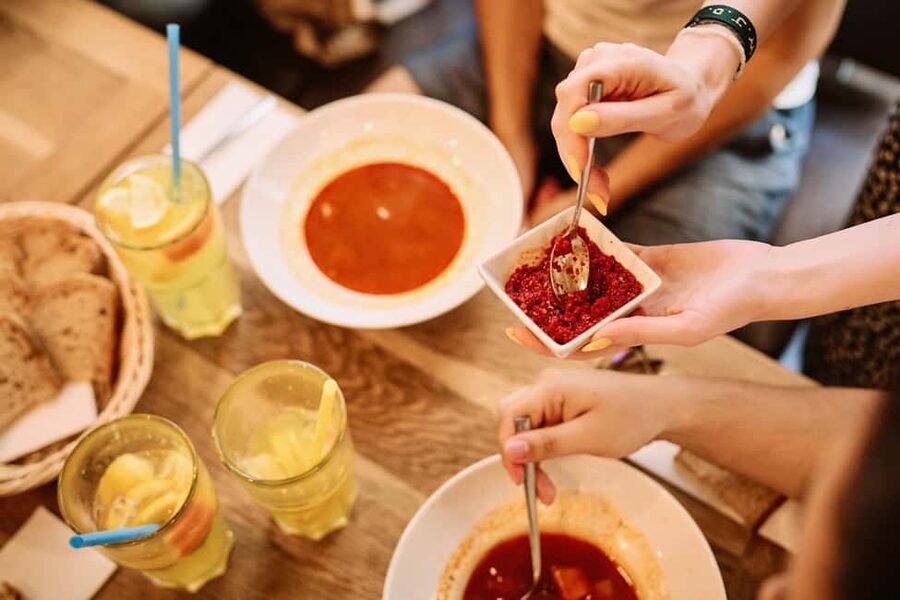
The early food stops focus on accessible Hungarian street food. A traditional soup gives the guide room to explain familiar ingredients and everyday eating habits before the heavier dishes arrive.
The exact soup can vary, but the choices described during the tour have included potato cream soup and yellow pea soup. Those may sound humble, yet they can be among the most useful dishes on the route. You might pass them on a menu without ordering, and the guide gives you a reason to try something outside your normal choices.
One guest especially enjoyed potato cream soup enough to return to the shop later in the week. That is the kind of practical discovery that makes a food walk worthwhile: you find a dish you might not have spotted alone, then gain a place to revisit.
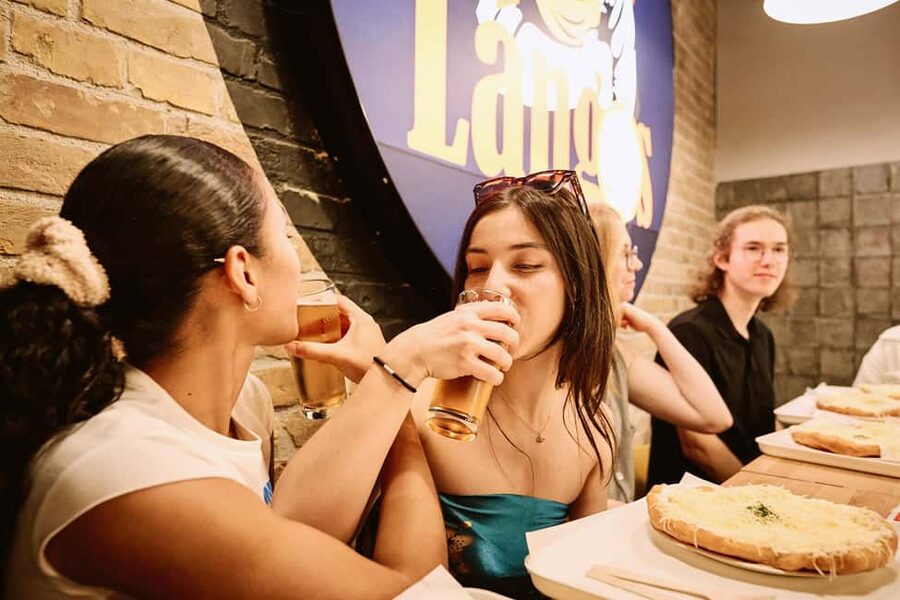
Next comes lángos, the famous deep-fried flatbread. It is filling, familiar in concept, and very Hungarian in the way it turns a simple dough into a substantial snack. If you have already eaten before joining the tour, this is where you may regret it. The food is served in real portions, not decorative bites.
The street-food section works well for first-time visitors because it gives you flavors and textures you can recognize while still introducing local habits. It is also a useful reminder that Hungarian food is not limited to paprika-heavy stews. Soups, fried dough, dumplings, pastry, and sweet wine all have a place at the table.
Sit-down dishes and Jewish-Hungarian connections
After the street-food stops, the route moves into atmospheric eateries for a more settled meal. This change of pace matters. You get to see how food functions in different settings, from a quick local snack to a dish enjoyed at a table with time for conversation.
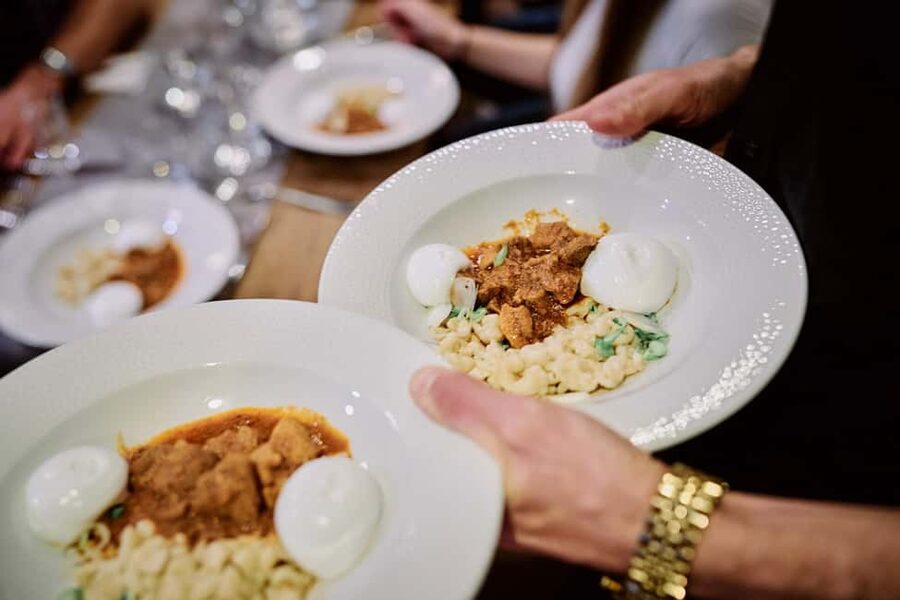
Expect classic Hungarian dishes such as nokedli dumplings and pork stew. Nokedli are small, soft dumplings often served alongside saucy dishes, and they help show the comforting side of Hungarian cooking. The pork stew offers the hearty main-course style many visitors associate with Hungary.
The tour also includes flódni, a Jewish-Hungarian pastry. It is an important choice because the guide’s opening discussion links District 7’s Jewish heritage with the food you eat later. Flódni is not simply a generic dessert added at the end. It represents the overlap of local and Jewish culinary traditions that gives this neighborhood much of its character.
Here, the tour is at its most useful for people who want context rather than a checklist of famous foods. The guide explains the dishes and customs as you go, so you can connect the food to the streets around you. Guides such as Laura, Kitti, Nika, Peter, Kelly, and Eszti have been praised for explaining the history behind each stop while keeping the group moving.
The dessert deserves a small warning. Flódni is a traditional choice, but it is not guaranteed to please everyone. If you prefer a lighter pastry or an apple strudel-style dessert, this particular stop may be less exciting than the soup, lángos, or stew. That is not a flaw in the tour’s cultural purpose, but it is worth knowing before you book.
Beer, pálinka, and sweet Tokaji wine
Three alcoholic drinks are included, with local wine, beer, and shots built into the food stops. The drinks are meant to match the food and give you a taste of Hungarian drinking culture rather than simply provide refreshments.
Pálinka is the strongest part of the lineup. This traditional fruit spirit is served as a shot, and the guide can explain its place in local culture. It is a small serving, but it can catch you by surprise if you are not used to spirits before a full meal.
The sweet wine from Tokaj is likely to be the favorite for many people. Tokaji is Hungary’s best-known wine region, and the sweet style gives the tour a clear regional touch. Some people specifically remembered this wine as a highlight, while one person felt the drink selection could have been better. That is a fair point: the included drinks add value, but the exact balance may not suit every palate.
You do not need to drink alcohol to take part. Non-alcoholic options are available. If you are traveling with children, avoiding alcohol, or simply want to stay clear-headed while walking at night, tell the guide at the start so the drink choices can be handled smoothly.
The name Tipsy Tours sets the tone, but you should not read it as a promise of a wild bar crawl. The food is the main event. The drinks add character and make it easier to chat with other people in the group.
More Guided Tours in Budapest:
- Budapest Cooking Class & Market Tour with Local Guide & Wines
★ 5.0 · 553 reviews - Budapest: Guided Food Tour with Wine, Beer, and Shots
★ 4.8 · 71 reviews - Rome: Guided Food Walking Tour with Wine in Trastevere
★ 4.9 · 3,105 reviews - Paris: Montmartre Cheese, Wine & Pastry Guided Walking Tour
★ 4.8 · 2,255 reviews
Guides make the difference
The guide is central to this experience. A food tour can easily become a sequence of plates and facts, but the strongest guides turn it into a conversation about Budapest.
Laura has been praised for her friendly manner, city knowledge, and ability to connect food with local history. Kitti is repeatedly described as energetic, warm, and good at keeping conversation flowing, especially with smaller groups. Eszti brings a lively style, while Peter is noted for personal recommendations and a relaxed sense of humor. Kelly has also handled larger groups well, keeping people on schedule while still explaining the dishes.
You may be led by one of these guides or by another member of the English-speaking team. The exact personality will vary, but the format gives the guide plenty of chances to talk with you. The small groups can be especially social, and the tour suits solo visitors who want to meet people over a shared meal.
Larger groups are possible. One group of 18 was managed well, though a smaller group will naturally make it easier to ask questions and have a longer conversation with the guide. A private group is also available if you want a more personal setting.
The guide’s recommendations at the end are useful. You can ask about ruin bars, local attractions, and places to return for another meal. I would book this early in your Budapest stay if you can. That way, you still have time to revisit a favorite food stop or use the neighborhood tips later.
Is $81 a fair price?

At $81 per person, this is not the cheapest way to grab dinner in Budapest. You can eat a single Hungarian meal for much less. The real question is what you are paying for beyond the food.
You receive four food stops, a guided walk through District 7, three alcoholic drinks or non-alcoholic alternatives, historical background, and priority service at the eateries. You also avoid the work of choosing unfamiliar dishes, finding suitable restaurants, and explaining what you want in a busy neighborhood.
The quantity matters. Several people found the portions generous and left very full. You should not plan a large meal before the tour, and you may not need dinner afterward. That makes the price easier to justify, especially when you add the drinks and the guide’s time.
The value is strongest for first-time visitors, solo visitors, and anyone who wants both food and a neighborhood introduction. If you already have favorite Budapest restaurants, speak Hungarian, or prefer to order at your own pace, the fixed menu may feel restrictive.
Priority service is another practical benefit. You move through four stops within a set time, so being expected at each place helps keep the evening on track. The tradeoff is that you do not choose every dish, and the selection may include something you like less, such as flódni or one of the drinks.
Dietary needs and practical details
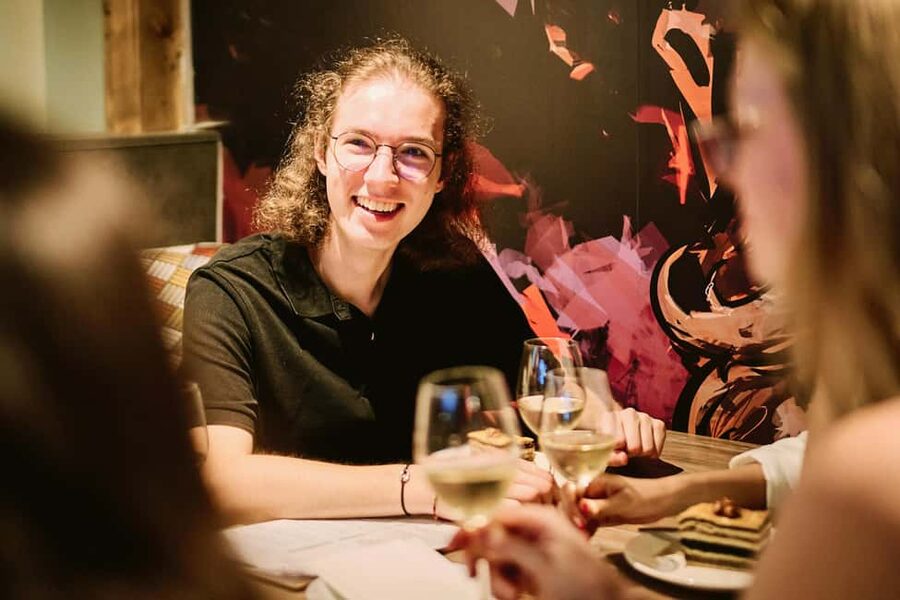
Vegetarian options are available, and a vegetarian guest was accommodated successfully. Still, the vegetarian selection may be smaller than the standard menu, so tell the company about your needs in advance.
Gluten-free and vegan diets cannot currently be accommodated. This is the clearest reason to skip the tour if you have strict dietary requirements. Do not assume that a dish can be altered once you arrive.
Bring a passport or ID card. The tour is in English and lasts 150 minutes. You should also plan for an evening of walking, standing, eating, and conversation rather than a seated restaurant meal.
Free cancellation is available up to 24 hours before the tour for a full refund, and you can reserve now and pay later. Those terms help if your Budapest plans are still shifting, but the more important booking decision is dietary suitability and how much food you want to eat in one sitting.
Who should book this District 7 food walk?

I would recommend it to first-time Budapest visitors who want a fast, friendly introduction to Hungarian food. You get a useful mix of street food, home-style dishes, Jewish-Hungarian pastry, local drinks, and neighborhood history.
It is also a strong choice for solo visitors. The shared stops give you easy conversation, and the guides make a real effort to include people rather than leaving everyone to eat silently.
Couples and small groups will appreciate the generous amount of food and the chance to learn where to go afterward. If you are planning a birthday or another small celebration, the guides may be able to help with a simple personal touch, as Peter did for one birthday group, though that should not be treated as a guaranteed feature.
I would be more cautious if you dislike fixed menus, cannot eat gluten, follow a vegan diet, or want a quiet, formal dinner. The route is social, the portions are substantial, and the drinks are part of the design.
Should you book it?
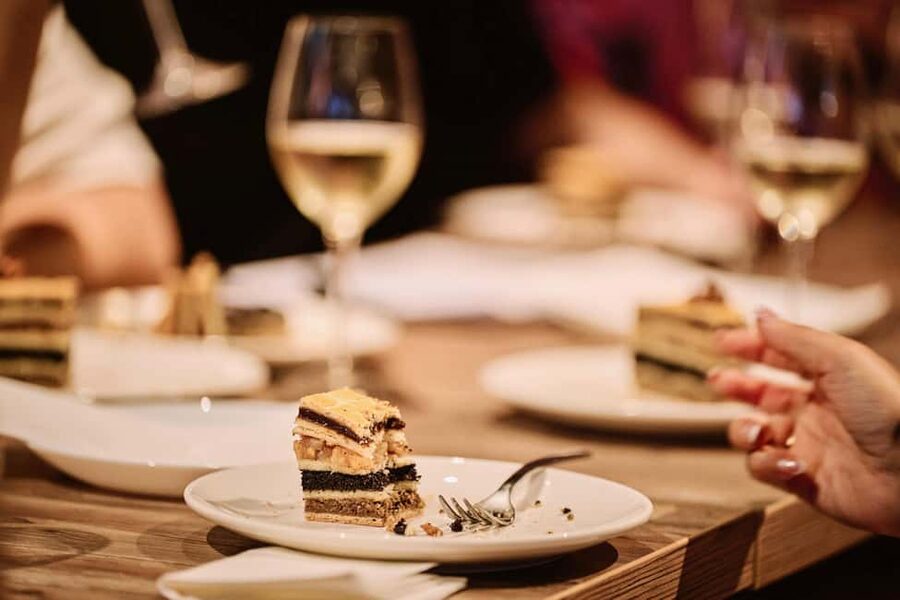
Book this tour if you want your first Budapest evening to combine eating with local context. The strongest reasons are the four-stop format, the generous portions, the District 7 setting, and the guides who explain why the food matters.
Go early in your stay, arrive hungry, and tell the company about vegetarian needs before you arrive. If flódni is not your favorite dessert or one drink misses the mark, the rest of the meal still gives you a broad and useful taste of Budapest.
At $81, it works best as a complete introduction rather than a cheap dinner. For someone who wants to eat well, meet people, and leave with a short list of places to try next, it is a sensible booking.
FAQ
Where does the Budapest food tour start?
The meeting point is in front of Kazinczy Street Synagogue. Look for the guide holding a yellow Carpe Diem Tours flag.
How long does the tour last?
The tour lasts 150 minutes, or two and a half hours.
What food is included?
The tour includes Hungarian food at four local eateries. Dishes may include traditional soup, lángos, nokedli dumplings, pork stew, and flódni pastry.
What drinks are included?
Three alcoholic drinks are included, consisting of local wine, beer, and shots. Pálinka and sweet Tokaji wine are part of the stated drink selection. Non-alcoholic options are also available.
Can vegetarians join the tour?
Yes. Vegetarian options are available, although there may be fewer choices than on the regular menu. You should share your dietary needs in advance.
Can the tour accommodate vegan or gluten-free diets?
No. Gluten-free and vegan diets cannot currently be accommodated.
Newest wine reviews around Budapest
- Private Wine Tasting in Budapest★ 5.0 · 107 reviews
- Evening Wine, Cheese, & Charcuterie Tasting in Budapest★ 5.0 · 121 reviews
- Budapest Unlimited Prosecco and Wine Cruise Day or Sunset Option★ 4.0 · 50 reviews
- Food and Wine Tasting in Budapest City Center with Sommelier★ 5.0 · 57 reviews
- Budapest Food Tour: Market to Tavern with 14+ Tasters & Wines★ 5.0 · 434 reviews
- Szentendre and Visegrad Private Danube bend Tour With Wine Tasting and Lunch★ 4.5 · 52 reviews
- Budapest Half-Day Wine Tour: 3 Family Wineries, Meal & Pálinka★ 5.0 · 38 reviews
- Palace District Evening Culinary, Wine, and History Walk★ 5.0 · 55 reviews
Budapest Wine Tours, compared.
Countryside Half-day Gastro-Wine Tour from Budapest Meal & pickup
Read our review →

Budapest Cooking Class & Market Tour with Local Guide & Wines
Read our review →

Budapest Food Tour: Market to Tavern with 14+ Tasters & Wines
Read our review →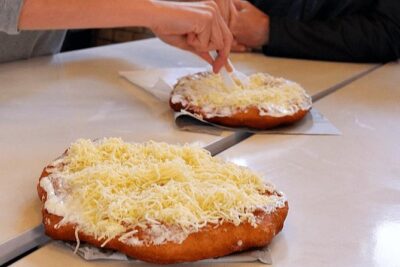

Lists this tasting appears in