
Reviewed · BUDAPEST WINE TOURS
Budapest Cooking Class & Market Tour with Local Guide & Wines
Budapest’s Central Market Hall is only the opening act here. You taste Hungarian pickles, cured meats, cheeses, and pálinka before buying ingredients for a shared meal in a Budapest-style kitchen. I like the way this links food to daily life, and I like that you leave with recipes you can make at home. The main caution is that the cooking can feel more social than hands-on, especially in a larger group.
I also like the warm, informal teaching style reported from guides such as Kinga, Mesi, Ben, and Birdie. You cook family-style dishes, sit down together, and pair the meal with wines from local wineries. Sunday visitors should expect a quieter market, and anyone with celiac disease should understand that shared-kitchen cross-contamination is possible.
Key points to know before booking
- Central Market Hall comes first: You taste Hungarian specialties and gather ingredients before cooking.
- The main dish can vary: Past sessions have prepared chicken paprikash, Hungarian sausage lecsó, and dumplings.
- The setting is home-style: The class takes place in a cozy Budapest apartment or apartment-style kitchen, not a formal culinary school.
- Wine is part of the experience: Local wines, pálinka, and non-alcoholic drinks are offered, though this may feel alcohol-focused if you do not drink.
- Small-group expectations need checking: The stated maximum is 12 participants, but one account described a group of 14.
- Dietary choices are available: Gluten-free, vegetarian, and vegan options can be arranged, but cross-contamination remains a concern.
Why this Budapest cooking class feels different
Many cooking classes begin with a counter, an apron, and a pile of prepared ingredients. This one begins in the market, where food has a face and a place. You see the paprika, sausages, cheeses, pickled vegetables, and other products before they become dinner.
That first step gives the meal some meaning. Hungarian cooking is not just about adding paprika to everything in sight. It reflects rural traditions, family habits, preserved foods, seasonal produce, and the influence of neighboring cultures. Your guide uses the market visit to explain those connections in plain language.
I especially like the family-recipe angle. The advertised menu includes Hungarian sausage lecsó with flour dumplings, described as a grandmother’s recipe. Other sessions have made chicken paprikash with homemade nokedli, sometimes described in English as Hungarian dumplings or spätzle. The exact dish may vary, so you should book this for the wider experience rather than one guaranteed recipe.
The class lasts about four hours and costs $99 per person. That is not a cheap meal, but it includes the market tour, tastings, instruction, ingredients, a shared meal, and wine pairings. If you would otherwise pay separately for a market tour and a sit-down dinner, the price becomes easier to justify. The value is strongest if you want conversation and cultural context, not just a recipe demonstration.
More Workshops in Budapest:
- Budapest: Essentials of Hungarian Wine Tasting Class
★ 4.9 · 174 reviews - Easy Cooking Class Budapest – with Market Walk (local wine & pálinka included)
★ 5.0 · 62 reviews - Florence: Pasta Cooking Class with Unlimited Wine
★ 4.9 · 10,285 reviews
Starting at Central Market Hall
You meet at Central Market Hall, Budapest’s grand indoor market near the Danube. The tour uses the building as more than a place to shop. Your guide points out food products, explains their role in Hungarian cooking, and offers tastings along the way.
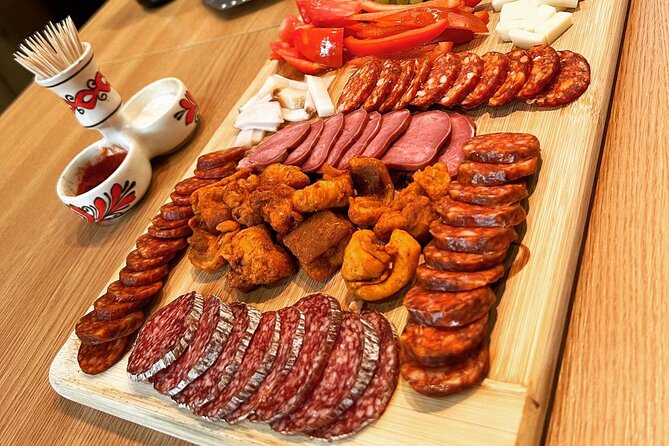
Expect samples of cured salami, local cheeses, pickled vegetables, and other specialties. Pálinka, the fruit brandy associated with Hungary, is also included as a tasting. You do not need to be an adventurous eater, but you should arrive willing to try strong, salty, sour, and spicy flavors.
The market portion usually takes around 30 minutes, based on the practical details provided by participants. That is enough time for an introduction and tasting route, but not enough for a long, unhurried exploration of every floor and stall. If you love markets, arrive early or return later on your own.
The day of the week matters. On Sundays, many market stalls are closed, and the visit may feel shorter and less active. The building still offers its architecture, history, and food displays, but I would choose a weekday or Saturday if the market itself is a major reason for booking.
You then help gather ingredients for the meal. That small act makes the cooking feel more connected to Budapest. Instead of working from food bought somewhere else, you see the products that go into your lunch or dinner.
The short walk to the cooking venue
After the market, you walk to the cooking venue. One account describes the walk as about 15 minutes, while others describe it as five to ten minutes, so allow a little flexibility. The group may also use a short bus ride, depending on the session and venue.
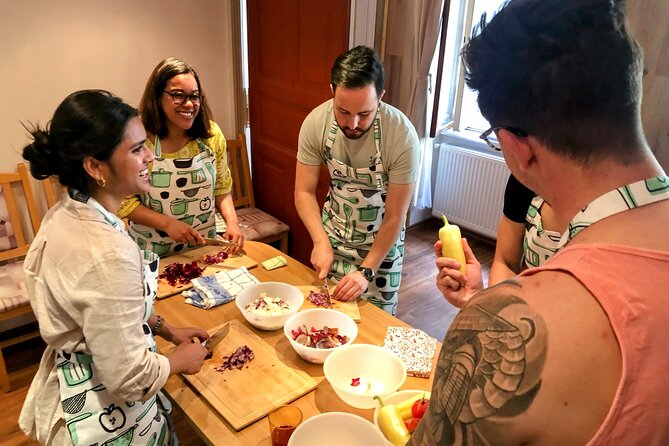
The destination is presented as a cozy Budapest home or apartment-style kitchen. Several accounts describe it as spacious, clean, and decorated like a real kitchen rather than a classroom. That matters. You are not simply watching a chef behind a counter. You sit close to the food, talk with the group, and take part in the preparation.
The home setting also creates the class’s strongest social feature. People who arrive as strangers often end up sharing a meal and swapping Budapest suggestions. Some participants have even continued their evening together afterward.
There is a tradeoff. A home kitchen is not designed like a professional teaching studio. If the group reaches the stated maximum of 12, not everyone can stand directly beside the cutting board or stove. One account described a group of 14 and found the room too crowded, although that may have involved a different Foodapest experience. I would confirm the expected group size if a small, quiet class is important to you.
Cooking Hungarian paprikash, lecsó, and dumplings
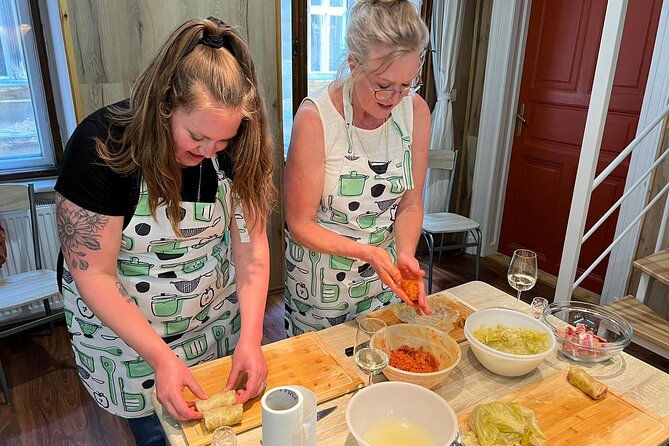
The hands-on work centers on a traditional Hungarian main course. Chicken paprikash with homemade dumplings has appeared often, while the sample menu lists sausage lecsó with flour dumplings. Lecsó is a paprika-seasoned vegetable stew, usually built around peppers, tomatoes, onions, and sausage or another main ingredient.
The recipes are approachable rather than technically demanding. You may chop onions, prepare the sauce, work with paprika, and make dumplings. That makes the class a good fit for beginners and for couples where one person cooks often and the other mostly watches at home.
The useful part is not just the recipe. Your guide explains how Hungarian cooks use paprika, how the ingredients work together, and how to reproduce the dish later. Recipe instructions are provided, and several participants felt confident enough to make the food again at home.
Do not expect a full professional cooking course. One dissatisfied participant felt there was too little hands-on work and too much waiting while the food cooked. If you want several complex dishes, knife-skills training, or a long pastry lesson, this may feel light. The class is better understood as a cultural meal with cooking built into it.
The menu also includes a traditional Hungarian pudding for dessert. Still, dessert has not appeared in every reported session. One account specifically noted that no dessert was made and preferred having more time in the market instead. If dessert is important to you, ask about the exact menu before booking.
More Guided Tours in Budapest:
- Budapest Tipsy Food Tour with Wines, Small Group & Local Guide
★ 5.0 · 234 reviews - Budapest: Guided Street Food Tour with Sweet Wine
★ 4.9 · 149 reviews - Budapest: Guided Food Tour with Wine, Beer, and Shots
★ 4.8 · 71 reviews - Rome: Guided Food Walking Tour with Wine in Trastevere
★ 4.9 · 3,105 reviews
Tasting salami, pickles, pálinka, and local wine
Food is served throughout the experience, not only at the end. You begin with cured meats and cheeses, then try Hungarian pickles and other market products while the main dish takes shape.
The pickles are worth your attention. Hungarian meals often use sour and preserved foods to balance rich sauces and meats. Tasting several varieties helps you understand the meal in a way that reading a recipe cannot.
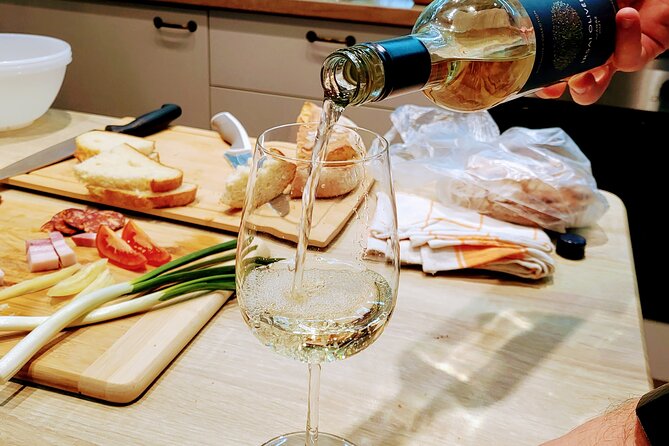
Pálinka is offered as a taster, and local wines are paired with the meal. Many people appreciate the generous, relaxed drinking atmosphere. If you enjoy wine, it adds to the communal feel and makes the four hours pass easily.
If you do not drink alcohol, tell the guide clearly at the start. Non-alcoholic options are available, including flavored water, but one account felt that non-drinkers were given fewer choices than drinkers. This is a fair point to consider. The class is not only about wine, but alcohol is part of its social rhythm.
You should also arrive hungry, but not famished. The class includes snacks and a full cooked meal, yet cooking takes time. You will be eating in stages rather than sitting down immediately for a large restaurant portion.
Guides who shape the afternoon
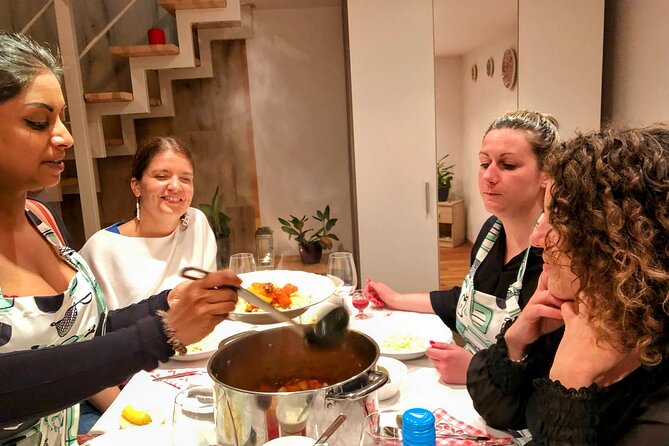
The guide makes a large difference here. Kinga is repeatedly described as warm, patient, and skilled at making a group feel at home. Mesi is praised for humor, clear instruction, and making sure each person takes part. Ben is described as welcoming and good at explaining both the market and the cooking steps. Birdie has also been praised for mixing instruction with laughs.
These guides do more than read out a recipe. They explain Hungarian food customs, answer questions, help translate market products, and often suggest places to visit during the rest of your stay. One memorable extra involved choosing an old postcard as a small souvenir, with the guide translating it.
The class is conducted in English. The group may include people with very different levels of cooking experience, from confident home cooks to complete beginners. A good guide keeps the pace comfortable for both, though the size of the group can affect how much individual attention you receive.
Dietary needs and mobility details
Gluten-free, vegetarian, and vegan choices are available, but you must communicate your needs in advance. Gluten-free guests should take the cross-contamination warning seriously. The kitchen is shared, and the ingredients and cooking surfaces may not be fully separate. If you have celiac disease, ask detailed questions before paying rather than assuming a gluten-free option means a medically safe kitchen.
The route involves walking through the market and then continuing to the cooking venue. One account describes roughly 30 minutes of market walking and another 15 minutes to the apartment. The exact amount depends on the pace and group.
The experience is near public transportation, and service animals are allowed. At Central Market Hall, an elevator was reported out of service during one visit, although the escalator worked. Anyone using a wheelchair or dealing with limited mobility should contact the provider before booking and ask about the current route and building access.
Who gets the most value from $99
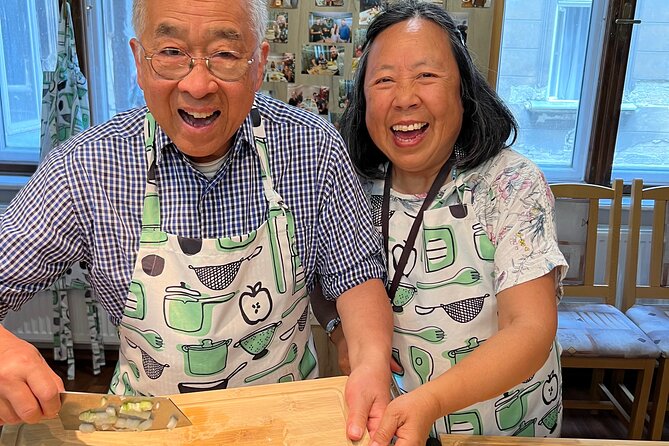
I would recommend this to you if you want food, conversation, and local context in one half-day. It works especially well for couples, families, solo visitors who enjoy meeting people, and anyone who wants to recreate a Budapest dish at home.
Children can take part, and one family found the experience suitable for an 11-year-old. The group format can be a plus for families because everyone has a task, though younger children may find the market walk and cooking wait less exciting.
The price makes less sense if you only want to eat Hungarian food. A restaurant meal will cost less and give you more control over the menu. It also may not suit you if you want a private class, a very small group, or several elaborate recipes.
The experience is recommended by 99 percent of participants and carries a five-star rating from 553 reviews, but the two lower ratings point to real issues: crowding, a short Sunday market visit, limited cooking duties, alcohol-heavy pacing, and uncertainty around dessert. Those concerns do not cancel the experience, but they help set the right expectations.
Free cancellation is available up to 24 hours before the start time for a full refund. Changes made inside that window are not accepted, and poor weather or an insufficient minimum group can lead to a rescheduled date or full refund.
Should you book the Foodapest cooking class?
Book it if you want to understand Hungarian food by tasting it, shopping for it, and cooking it with other people. The market visit, friendly guides, home-style venue, family recipes, and shared table give the afternoon more character than a standard demonstration class.
Choose a weekday or Saturday if Central Market Hall matters to you. Confirm the planned dish, group size, drink alternatives, and dietary safeguards before booking. With those points clear, the $99 price is reasonable for a four-hour food-and-culture experience.
Skip it if you want a tightly structured culinary lesson, a guaranteed dessert, a private kitchen, or a fully separate gluten-free setup. For most people who enjoy relaxed conversation and practical Hungarian cooking, this is one of the better ways to spend an afternoon in Budapest.
FAQ
Where does the Budapest cooking class begin?
The experience begins at Central Market Hall in Budapest, Hungary. It ends back at the meeting point after the market visit and cooking class.
How long does the experience last?
The class and market visit take approximately four hours.
What food will I cook?
The menu can vary. It includes Hungarian sausage lecsó with Hungarian-style flour dumplings, while other sessions have prepared chicken paprikash with homemade Hungarian dumplings. A traditional Hungarian pudding is listed, but dessert is not included in every reported session.
Are vegetarian, vegan, and gluten-free options available?
Yes. Vegetarian, vegan, and gluten-free options are available. The shared kitchen can involve cross-contamination, so anyone with celiac disease or a serious allergy should discuss the risk with the provider before booking.
How many people can join the class?
The experience is listed with a maximum of 12 participants. One account described a larger group, so you may wish to confirm the expected group size when booking.
Can I cancel for a full refund?
Yes. You can cancel at least 24 hours before the start time for a full refund. Cancellations or changes made less than 24 hours before the experience are not refunded or accepted.
Newest wine reviews around Budapest
- Private Wine Tasting in Budapest★ 5.0 · 107 reviews
- Evening Wine, Cheese, & Charcuterie Tasting in Budapest★ 5.0 · 121 reviews
- Budapest Unlimited Prosecco and Wine Cruise Day or Sunset Option★ 4.0 · 50 reviews
- Food and Wine Tasting in Budapest City Center with Sommelier★ 5.0 · 57 reviews
- Szentendre and Visegrad Private Danube bend Tour With Wine Tasting and Lunch★ 4.5 · 52 reviews
- Budapest Food Tour: Market to Tavern with 14+ Tasters & Wines★ 5.0 · 434 reviews
- Budapest Half-Day Wine Tour: 3 Family Wineries, Meal & Pálinka★ 5.0 · 38 reviews
- Palace District Evening Culinary, Wine, and History Walk★ 5.0 · 55 reviews
Budapest Wine Tours, compared.
Countryside Half-day Gastro-Wine Tour from Budapest Meal & pickup
Read our review →
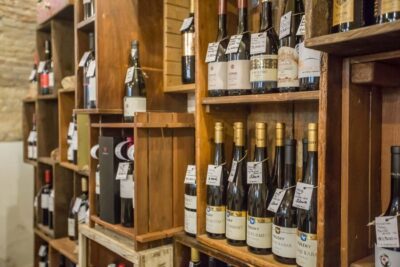

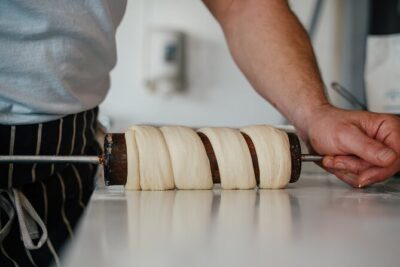
Budapest Food Tour: Market to Tavern with 14+ Tasters & Wines
Read our review →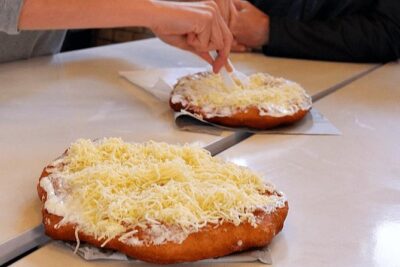

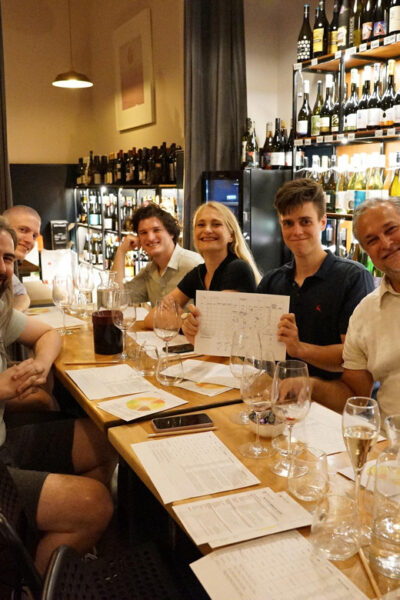
8-Tier Hungarian Wine Tasting in a Cozy Downtown Wine Bar
Read our review →Lists this tasting appears in