
Reviewed · CHIANTI WINE TOURS
Florence: Great Chianti Wine and Olive Oil Trail with Lunch
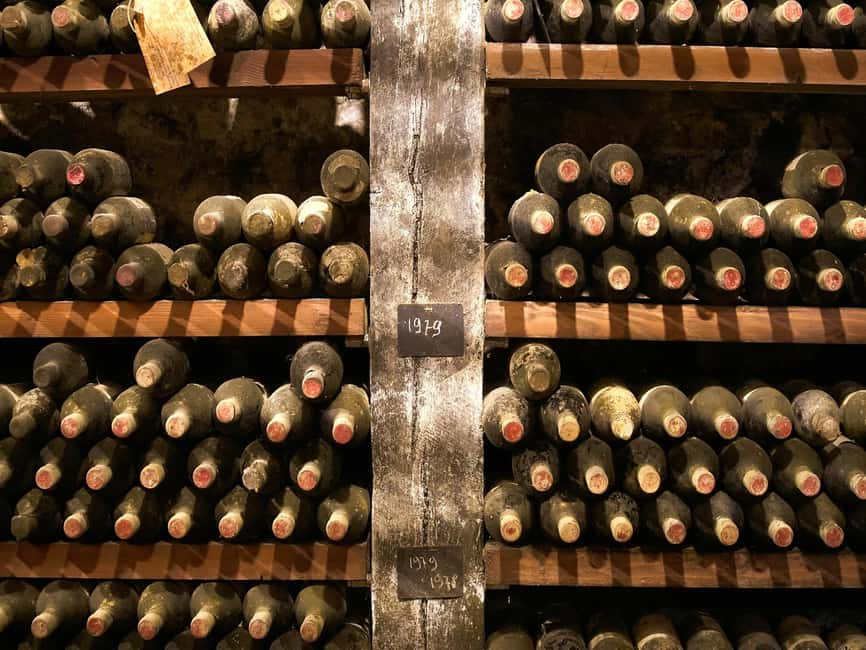
Chianti’s best moments are not found in a grand tasting room. They come on a hill road, inside an old cellar, or beside an olive press where someone explains why the oil tastes peppery. This half-day trip gives you all three: three wineries, a historic olive oil mill, and lunch at a boutique estate.
I like the mix of serious wine instruction and easy sightseeing. Guides such as Francesco, Chiara, Peter, and Lorenzo have been praised for their warmth, humor, and local knowledge, while the Mercedes minivan keeps the day comfortable. I also like the small-group feel, though the standard van can feel tight when it fills up, and lunch quality may not always match the wines.
Key points to know
- Three different wineries: Expect a mix of boutique producers, family estates, cellars, and generous tastings.
- Olive oil is a real feature: You may see the pressing process and learn how extra virgin olive oil is made.
- Lunch comes with wine pairings: The meal is served at a winery, with vegetarian, gluten-free, and other dietary needs accommodated when arranged ahead.
- Greve gives you a Tuscan village stop: The pause is scenic and useful, though some schedules allow only a short visit.
- Comfortable but not spacious transport: The Mercedes minivan has air conditioning and Wi-Fi, but full groups may find the seating snug.
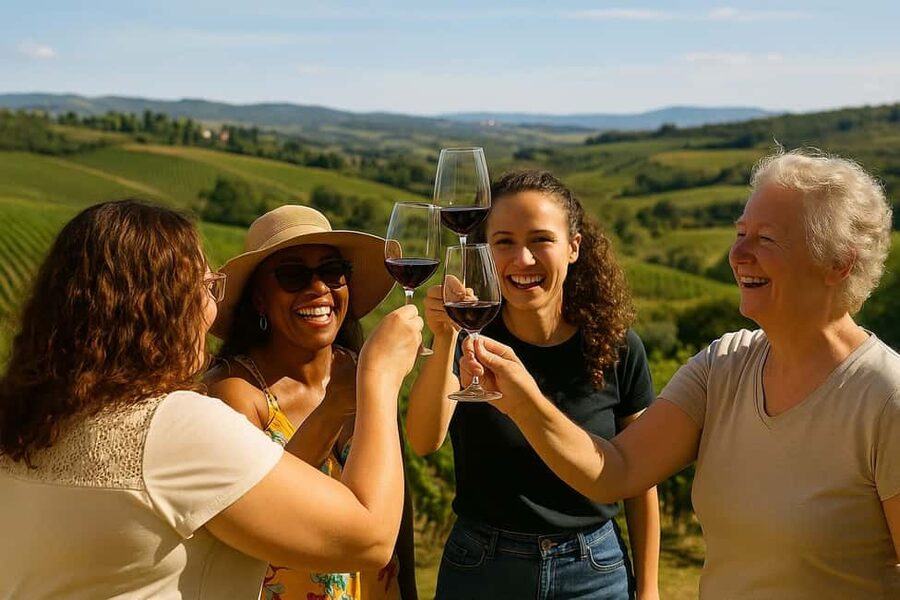
- The drinking adds up: With more than 10 small pours possible, eat something beforehand and pace yourself.
From Florence to the Chianti hills
The tour begins at Via dei Vagellai 22r, beside Piazza Mentana and across the Arno from central Florence. The meeting point is easy to place once you know the address, but check the exact location carefully. One useful improvement would be clearer reference to the nearby hotel or square landmark, especially if you are meeting early and want to avoid that familiar first-day worry of standing in the wrong spot.
From Florence, the road soon changes character. City buildings give way to the rolling Chianti hills, vineyards, olive groves, stone farmhouses, and hilltop views. You will not spend the day on long transfers. The drives between stops are generally manageable, and the countryside itself becomes part of the experience.
Your English-speaking driver also acts as guide. Names vary by departure, but guides including Francesco, Chiara, Peter, Cristina, Daria, Luisa, and Antonella have been singled out for their friendly manner, safe driving, clear explanations, and ability to keep a mixed group together. That matters here. A wine tour can become a string of tastings with little connection between them. A good guide gives you the thread linking the wine, olive oil, food, land, and local customs.
The tour runs in all weather. Bring an ID card or passport, wear shoes that can handle uneven ground, and carry a small snack. You will be offered food at lunch, but several hours of tasting before then can catch up with you.
More Chianti Wine Tours in Florence:
- Florence: Chianti Wineries Tour with Wine Tasting
★ 4.5 · 10,071 reviews - San Gimignano, Siena, Monteriggioni, Chianti Day Trip with Lunch & Wine Tasting
★ 4.5 · 4,432 reviews - Florence: Pisa, Siena, S. Gimignano, Chianti Wine & Lunch
★ 4.6 · 4,354 reviews
First winery: wine, olive oil, and the working estate
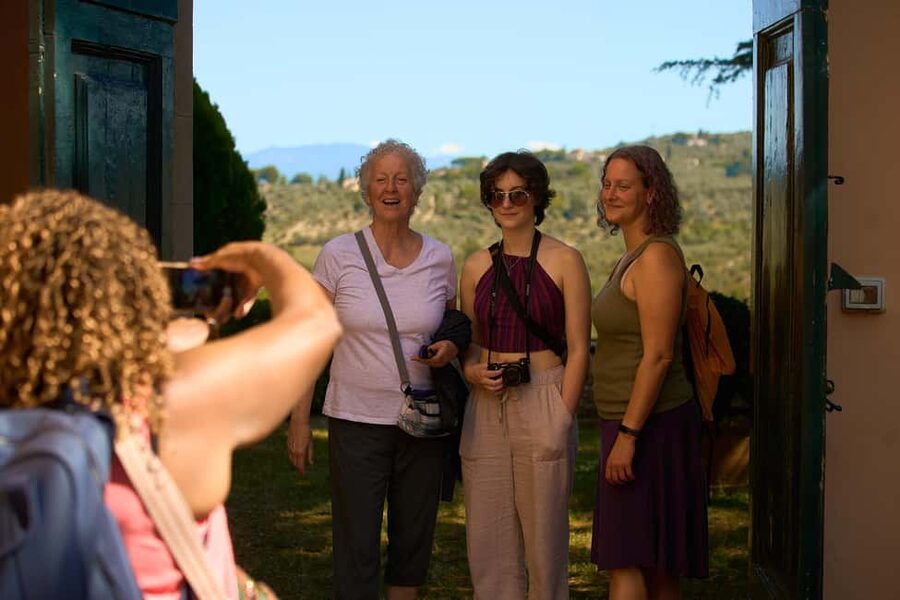
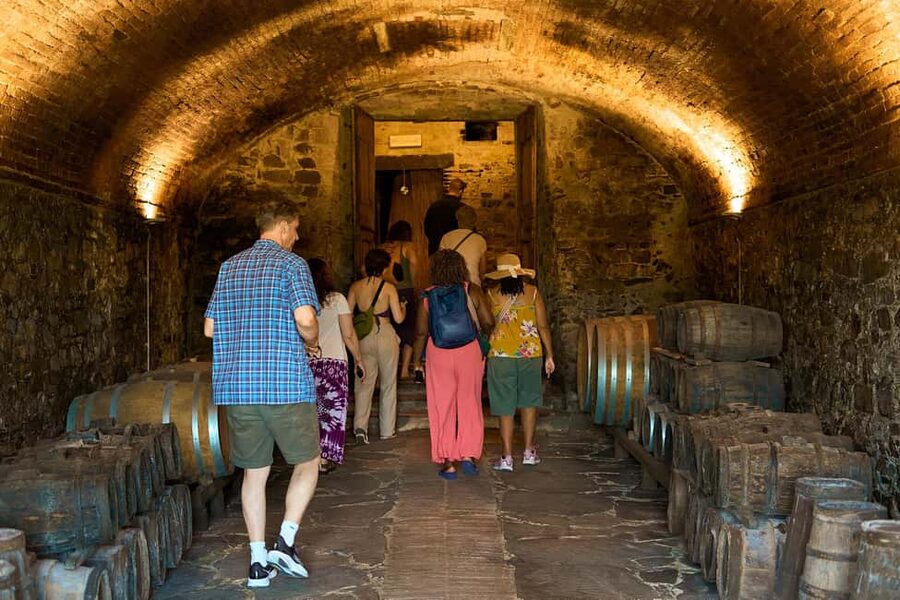
The first winery usually sets the tone. Rather than simply placing glasses on a counter, the visit may include a walk through the estate, an explanation of production, and a look at the olive oil operation. At some departures, you can observe the full pressing process, which becomes one of the day’s most memorable parts.
This is valuable because wine and olive oil are often treated as separate products in a shop, while Tuscan estates have traditionally worked with both. You learn how the same hills support vineyards and olive groves, and how much the final flavor depends on timing, handling, and storage.
The olive oil tasting is also more practical than many visitors expect. You may notice bitterness or a peppery finish that seems surprising at first. Those sensations can indicate fresh oil rather than a flaw. The guide or estate host explains what to look for, and the lesson gives you a better chance of buying good oil later in your trip.
Wine tastings here tend to include several Chianti or Chianti Classico labels, and sometimes reserve wines or other estate bottles. You are not expected to arrive with a trained palate. The useful lesson is learning to notice aroma, acidity, structure, finish, and balance without getting lost in fancy language.
One warning: the pours may be small, but there can be many of them. With three wineries and more than 10 samples possible, you should not feel obliged to drain every glass. Use the spittoon if one is available, drink water, and leave wine in the glass when you have had enough. A light breakfast or croissant is a good idea.
Second winery: a more personal look at Chianti wine
The second stop often has a different feel from the first. That variety is one of the tour’s strengths. You may move from a small artisan producer to a larger family estate, or from a quiet cellar to a host who gives a lively, personal presentation.
The best part is the comparison. Chianti Classico is not one single taste. Soil, altitude, grape blend, aging, and winemaking choices all change the result. The guide helps you compare the wines instead of treating each glass as another anonymous sample.
This is also where the pace can vary. Some groups have found the second winery slightly rushed, especially when an enthusiastic owner spends extra time telling stories. That is not necessarily a bad thing, but it can shorten the time for photographs or questions. If you have a specific interest, ask early. Guides generally make room for questions, but the schedule must still get everyone to lunch and back to Florence.
There may be opportunities to buy wine and olive oil at each estate. I like that the purchasing is presented as an option rather than the central purpose of the visit. Prices and shipping arrangements vary by producer, so ask about delivery before committing to bottles. One of the practical advantages of a guided day is learning which purchases are easy to send home and which are better enjoyed during your stay.
Greve in Chianti, a short stop with medieval character
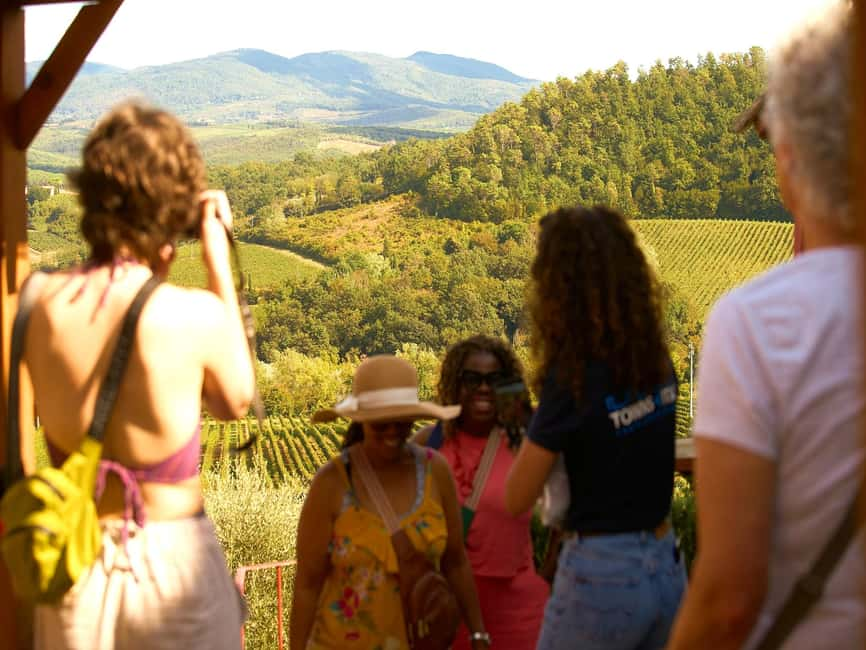
Greve is the village stop, and it breaks up the tastings with a little time on foot. It is known as a central town in the Chianti area, with a historic square and a compact old-town feel. The stop is intended for sightseeing, photographs, and perhaps a coffee rather than a full town tour.
You may find terracotta cats and other playful details around the village, along with the kind of quiet streets and old façades that make a short pause worthwhile. It is a chance to stretch your legs and reset your palate before the final winery.
The amount of free time can depend on the day. A well-paced departure gives you enough time to look around, but sales presentations or long tastings at earlier stops can reduce the village visit. If Greve is a major reason you are booking, understand that this is a brief stop, not a dedicated village excursion.
Still, the stop does its job. You get a taste of a Tuscan town without giving up the main purpose of the trip, which is wine and olive oil.
More Wine and Olive Oil Tastings in Florence:
- Florence: Tuscany Bike Tour with Wine & Olive Oil
★ 4.9 · 174 reviews - Sorrento Farm and Food Experience including Olive Oil, Limoncello, Wine tasting
★ 5.0 · 2,524 reviews - Split: Krka Waterfalls With Boat Cruise, Wine and Olive Oil
★ 4.3 · 1,507 reviews - From Mendoza: 3 Wineries, Olive Oil Factory Tour & Tasting
★ 4.6 · 901 reviews
The final winery combines lunch and a tasting
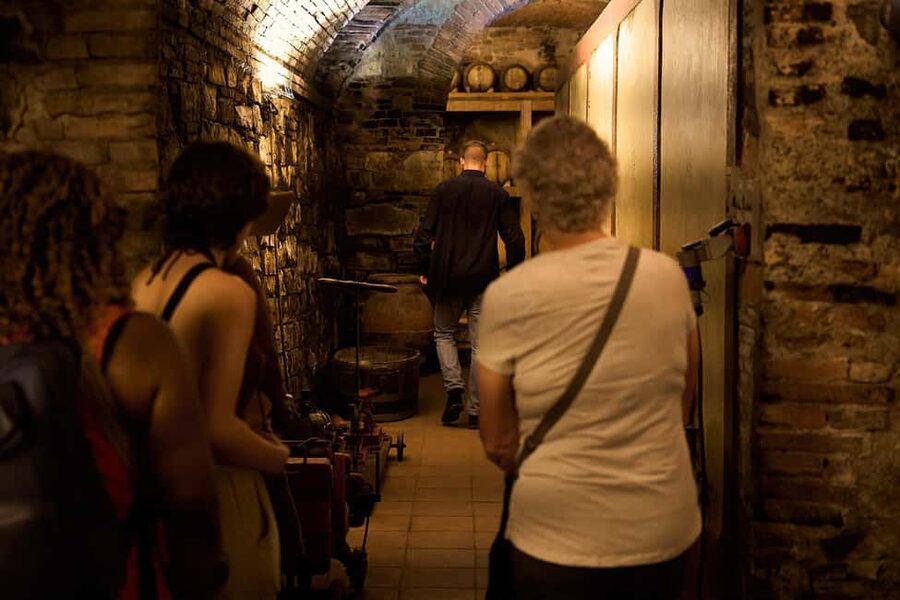
The third winery is usually the most substantial stop because it includes the three-course Tuscan lunch. This is where the day shifts from tasting room to shared meal, and it often becomes the social high point.
Expect traditional local food served with wine from the estate. The meal may include pasta or lasagna, along with other Tuscan courses selected by the winery. Wine pairings help you understand the practical side of the earlier lessons: which styles work with food, how acidity cuts through richer dishes, and why a wine that seems sharp alone may work well at the table.
Lunch quality is the one area where expectations should stay flexible. Many departures have had delicious meals, and some diners describe the lunch as one of the best meals of their Florence stay. Others found the food less impressive than the wine, with reheated lasagna mentioned as a disappointment. The menu and preparation can vary, so I would book this for the full wine-country experience rather than for a guaranteed gourmet meal.
Dietary needs can be handled when you provide notice. Vegetarian, gluten-free, and nut-related requirements have been accommodated on past departures, but do not wait until you sit down to mention them. Send the information ahead of time and repeat it to the guide on the morning of the tour.
The lunch stop is also where the group usually relaxes. By now, people have shared a van, compared notes, and tasted the same wines. The social side is not forced, but it is a natural benefit of a small group.
Learning to taste instead of simply drinking
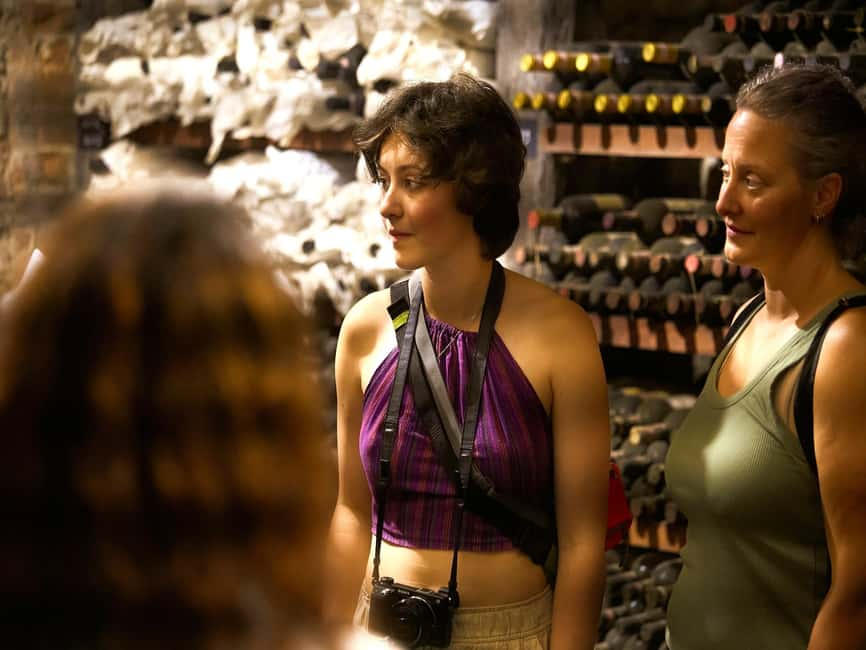
The sommelier-style instruction is aimed at ordinary wine drinkers, not professionals. You will be shown how to examine color, smell the wine, taste it, and think about its structure and aftertaste. That simple framework can make a big difference when you later face a long wine list in Florence.
Chianti Classico is the main focus, but the tastings can include Chianti Riserva and Supertuscan wines. The semi-private upgrade, limited to eight people, puts more emphasis on Supertuscans and offers a certified wine expert, more attention, and deeper cellar access when available.
Supertuscans are useful to try because they show another side of Tuscan winemaking. They are often bold, polished reds that sit alongside, rather than simply inside, the traditional Chianti conversation. If you already care about wine or want more technical discussion, the upgrade may justify its higher price.
For most people, the standard tour is enough. You still receive instruction, several tastings, and visits to three wineries. The upgrade is more about access and focus than about fixing a weakness in the regular experience.
Transport, group size, and the day’s pace
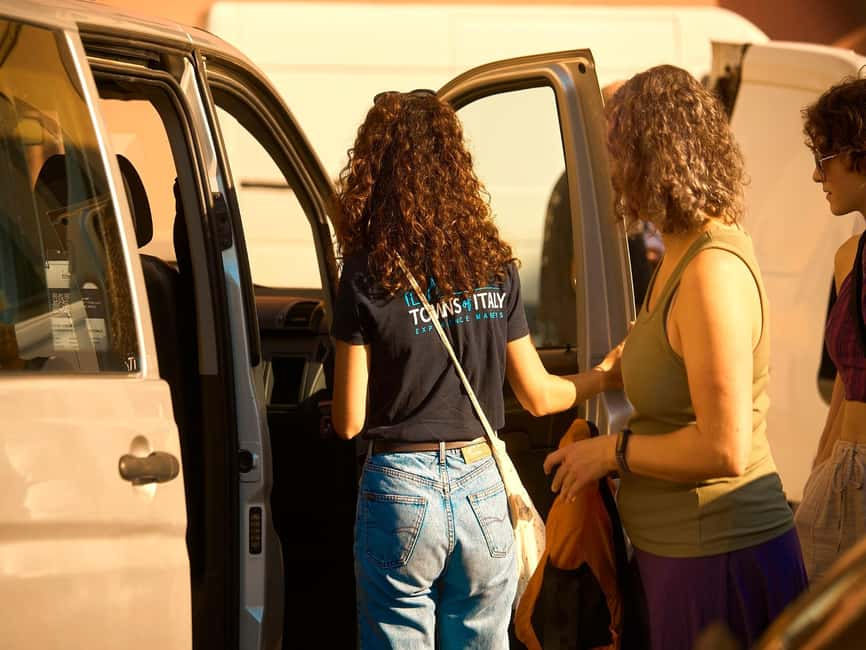
Transportation is one of the tour’s strongest practical features. The Mercedes minivan or minibus is air conditioned, and Wi-Fi is provided. The vehicle handles the winding Chianti roads far better than trying to drive after tastings, and you can watch the views instead of worrying about navigation.
The standard group is described as small, but the exact size can vary. Some departures have six people, while others combine two groups of eight. That still feels far more personal than a large coach, but a full van may feel cramped. One person specifically wanted a larger vehicle or fewer people for the price.
The duration is listed as five to seven hours, depending on the starting time, traffic, winery schedule, and pace of the day. Plan on giving the experience most of a day. It is not a quick morning outing that leaves you free for an early afternoon museum reservation.
The drop-off point is normally the same area as the meeting point, but one departure ended several minutes away, creating a longer walk back to accommodation. Do not count on a hotel drop-off. Some guides have helped with nearby drop-offs, especially in bad weather, but the stated arrangement is transport to and from the Florence meeting point.
Is $104 a fair price?
At $104 per person, the value is strong if you want several tastings and do not have a rental car. The price includes round-trip transport, three winery visits, wine tastings, olive oil instruction and tasting, a three-course lunch, the Greve stop, and an English-speaking guide.
Buying these pieces separately would take time and planning. You would need a designated driver, reservations at three estates, and a way to connect them by rural roads. The tour also protects you from a common problem with winery visits: spending the whole day at one estate and seeing little of the wider region.
The price is less compelling if you are mainly interested in one particular winery or want a long, slow lunch. The day covers a lot, so it favors variety over complete freedom. The included meal is useful and filling, but its quality may not always match the standard of the wines.
I would also compare the regular option with the semi-private upgrade based on your priorities. Choose the standard trip for broad exposure and good value. Pay more for the smaller group if personal instruction, Supertuscans, and extra cellar access matter to you.
Who will enjoy this Chianti day most?
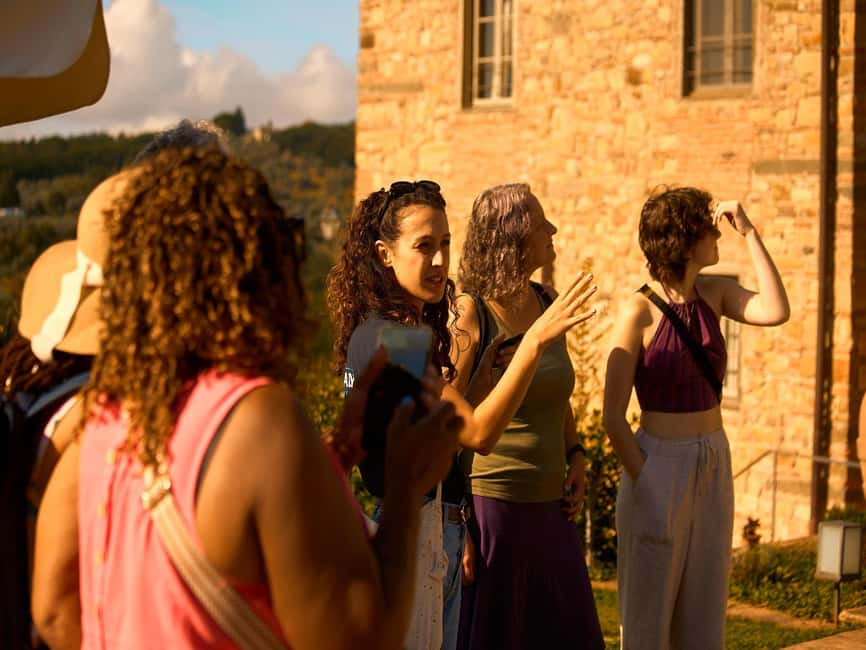
I would recommend this for a first visit to Tuscany, couples who want a countryside day without renting a car, and anyone who wants wine, olive oil, scenery, and food in one outing. It also works well for solo visitors because the small group gives you an easy social setting.
Wine beginners should feel comfortable. The tone is educational but not intimidating, and guides explain the basics in plain terms. Experienced wine drinkers may prefer the semi-private version, especially if Supertuscans are a priority.
This is not the best choice if you dislike group schedules, cannot tolerate a full day of tasting, or want extensive free time in Greve. It is also listed as unsuitable for pregnant women. Mobility needs should be shared in advance so the company can try to accommodate them.
Book early if you want a particular date, then arrive on time at Via dei Vagellai 22r. Rural winery schedules leave little room for late arrivals, even when the guide is kind and flexible.
Should you book it?
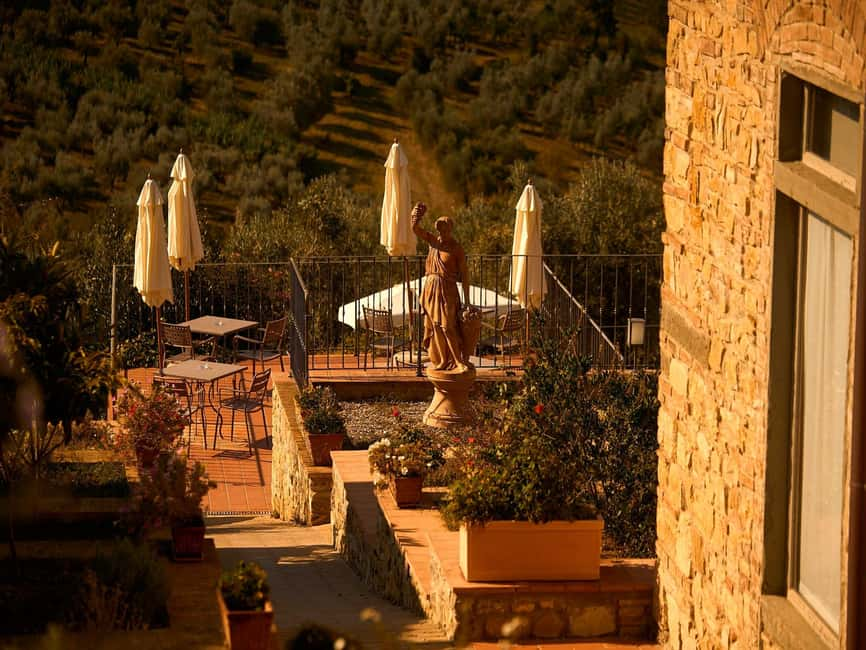
Yes, if you want an efficient and friendly introduction to Chianti from Florence. The strongest reasons are the three contrasting winery visits, the chance to see olive oil production, the comfortable transport, and guides who bring real personality to the day.
Keep your expectations realistic about lunch, group size, and the short Greve stop. Eat beforehand, pace yourself with the wine, and choose the semi-private option only if extra wine detail is worth the added cost. For most people, the standard tour offers a well-balanced day in the Tuscan countryside without the stress of driving.
FAQ
Where does the tour meet in Florence?
The meeting point is at Via dei Vagellai 22r, at Piazza Mentana, on the opposite side of the Arno River from much of central Florence.
How long does the Chianti tour last?
The stated duration is five to seven hours. Starting times vary, so you need to check availability for the date you want.
What does the tour include?
It includes round-trip transport in a Mercedes minibus or minivan, an English-speaking driver, three winery visits and tastings, an olive oil mill visit and tasting, a Greve stop, and a three-course Tuscan meal with wine.
Is the tour conducted in English?
Yes. The tour has a live English-speaking guide.
Can I choose a smaller group and learn about Supertuscan wines?
Yes. A semi-private upgrade is available for a maximum of eight people. It includes a certified wine expert and a special focus on Supertuscan wines.
What should I bring, and are there age restrictions?
Bring a passport or ID card. The tour runs in rain or shine. Anyone under 18 receives non-alcoholic drinks because Italian law does not allow alcohol sales to minors.
More Long Lunches in Florence
- Tuscany Day Trip from Florence: Siena, San Gimignano, Pisa and Lunch at a Winery
★ 5.0 · 21,634 reviews - Pisa, Siena and San Gimignano Day Trip with Lunch & Wine Pairing
★ 4.5 · 6,006 reviews - From Florence: Siena, San Gimignano, Pisa & Lunch at Winery
★ 4.8 · 4,538 reviews - Florence: S. Gimignano, Siena, Chianti Wine Tasting & Lunch
★ 4.6 · 3,102 reviews
Newest wine reviews around Florence
- Wine Tasting Experience with Three Types of Tuscan Wine★ 4.9 · 47 reviews
- Florence: Art of Pasta Cooking Workshop with Food and Wine★ 5.0 · 69 reviews
- SMALL GROUP Tuscany Wine Tasting Safaris with Lunch / Dinner★ 4.9 · 321 reviews
- Wine Tasting Experience with Seven Types of Tuscan Wine★ 4.9 · 30 reviews
- Florence/Badesse: Tuscany Group Vespa Tour with Wine Tasting★ 4.4 · 56 reviews
- Florence: San Gimignano & Volterra Day Trip with Food & Wine★ 4.7 · 57 reviews
- ROMANTIC WINE TOUR FOR 2 – Wine Tour in Chianti (Tuscany)★ 5.0 · 27 reviews
- Private Flavors of Florence Walking Tour(Food&Wine Included)★ 4.8 · 46 reviews
Chianti Wine Tours, compared.
San Gimignano, Siena, Monteriggioni, Chianti Day Trip with Lunch & Wine Tasting
Read our review →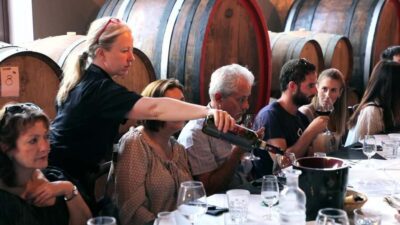
Pisa, Siena, S. Gimignano, Chianti Wine & Lunch
Read our review →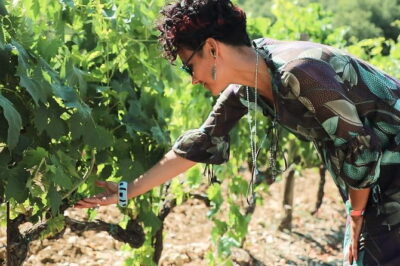
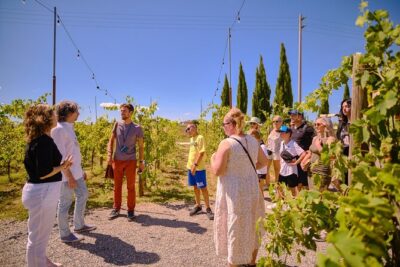
Siena, San Gimignano and Chianti Wines Day Tour from Florence
Read our review →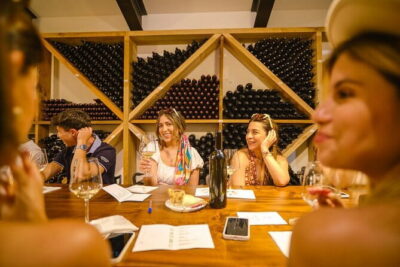
Half day Chianti Vineyard Escape from Florence with Wine Tastings
Read our review →
Tuscany Bike Tours Through the Chianti Hills with Wine Tasting
Read our review →
Lists this tasting appears in