
Reviewed · FLORENCE WINE TOURS
Florence: Tuscan cooking class with handmade pasta and wine
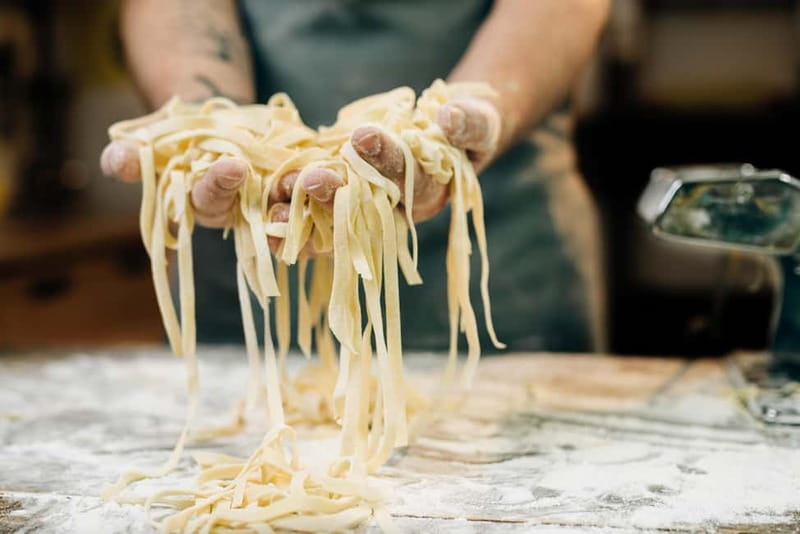
This Florence class puts you at the worktable, not just at the restaurant table. You make ravioli, tortelli, and pappardelle from scratch, then sit down to eat the results with Tuscan wine. I like the central location and the easygoing teaching style, especially from instructors such as Leon, Leo, Rudy, and Dino. The class is also a fine value at $34 for three hours, ingredients, equipment, instruction, food, and wine.
The main thing to check before booking is the exact menu for your session. The advertised class centers on three pasta types, while several recent sessions also included tiramisu and sometimes made two pasta types rather than three. You should also know that this is an adults-only activity, and the cooking school can be a little confusing to find if the meeting details do not clearly identify the restaurant.
Key points at a glance
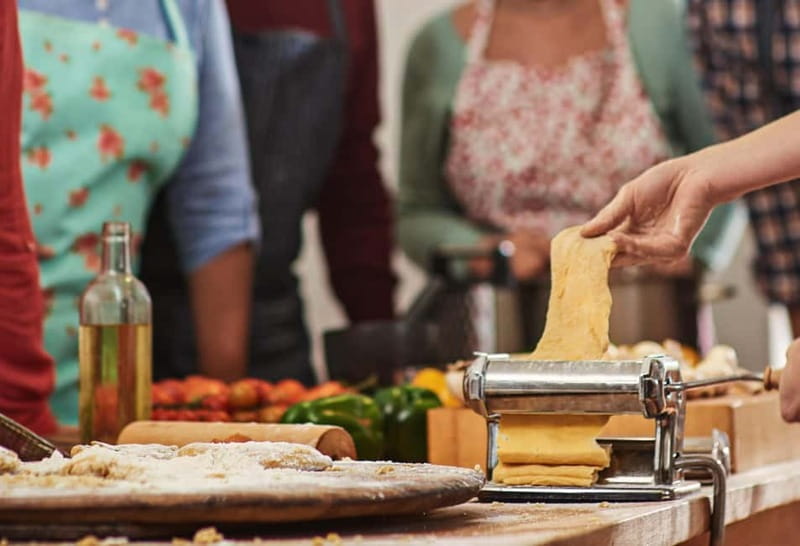
- Three pasta shapes: Learn the basic process behind stuffed ravioli, tortelli, and broad pappardelle.
- Chefs who teach with patience: Leon, Leo, Rudy, Dino, and other instructors guide beginners through each stage.
- A meal made by you: The pasta is cooked and served after class, with sauces and Tuscan wine or a non-alcoholic drink.
- Central Florence setting: The school is between Piazza della Signoria and Basilica di Santa Croce, handy for combining with sightseeing.
- Good value at $34: You get a three-hour activity, ingredients, equipment, instruction, and food rather than a quick demonstration.
- Menu details can vary: Tiramisu appears in many sessions, but it is not included in the core description, so confirm what your booking covers.
Making pasta in the heart of Florence
The setting does half the work. You are in central Florence, a short walk from Piazza della Signoria and Basilica di Santa Croce, surrounded by the city’s famous art and stone lanes. This is useful if you want a hands-on activity without spending part of your day getting to the countryside.
I like the location for another reason: it gives the class a sense of place without turning it into a sightseeing show. You are not being driven out to a remote estate or asked to watch someone cook from a distance. You are working in a professional kitchen and learning a food tradition that belongs at the center of any Tuscan visit.
The experience lasts three hours. That is long enough to mix dough, shape several pasta forms, cook the food, and sit down for a proper meal. It is also short enough to fit around a museum visit or an evening walk, though you should avoid booking it too close to another fixed appointment.
The cooking school is linked with the restaurant Tre Pepi in some sessions. If your confirmation uses a meeting point rather than the restaurant name, take an extra moment to check the address before arriving. One participant found the arrival instructions slightly confusing, and this is the kind of small problem that is easy to avoid in Florence, where nearby lanes and similar-looking entrances can slow you down.
More Workshops in Florence:
- Florence: Pasta Cooking Class with Unlimited Wine
★ 4.9 · 10,285 reviews - Florence: Pasta & Tiramisu Cooking Class with Unlimited Wine
★ 4.9 · 6,708 reviews - Florence: Pasta Cooking Class with Unlimited Wine
★ 5.0 · 6,413 reviews
The first lesson: dough, flour, and useful technique
You begin with the foundation of fresh pasta dough. The chef explains the ingredients, proportions, and handling technique, then shows you how to bring the dough together and work it until it reaches the right texture.
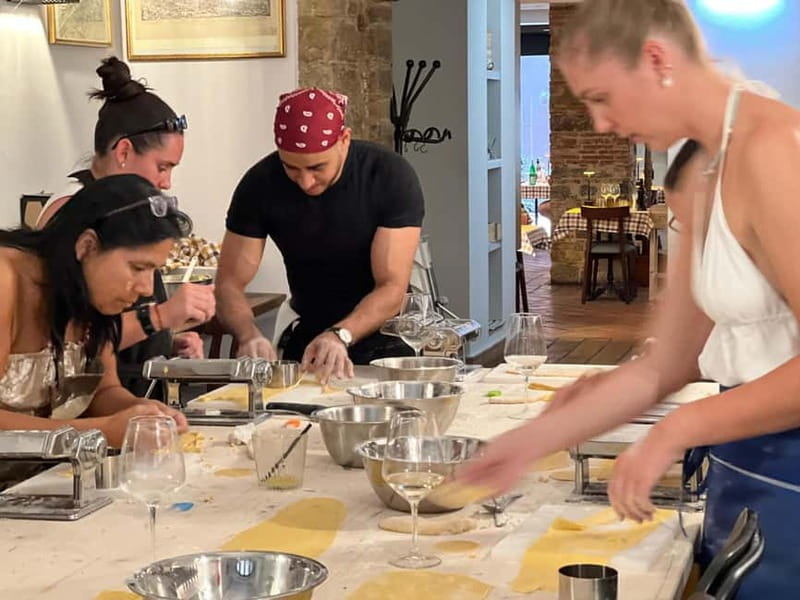
This is not a class where you simply watch a chef perform a polished kitchen routine. You are expected to take part. The instructors explain each step, then give you room to try it yourself. That matters for beginners, since pasta looks simple until the dough sticks to the work surface or refuses to roll evenly.
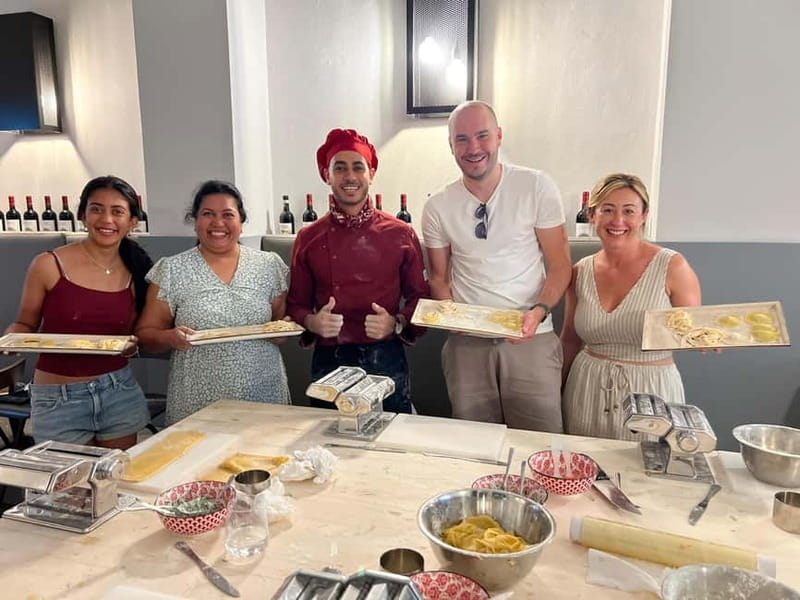
The teaching style is one of the strongest reasons to choose this class. Leon is repeatedly singled out for being patient, funny, and attentive, while Leo is praised for keeping people on track and making the techniques feel manageable. Rudy is also described as especially patient with questions. That personal help is valuable when the group has mixed ability levels.
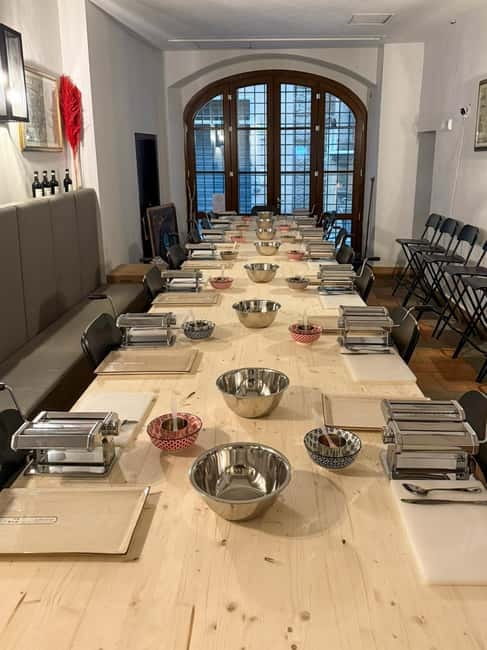
You will not need to bring cooking equipment. The kitchen supplies the tools and ingredients, so you can arrive ready to work. The class is held in a fully equipped kitchen, and the emphasis is on making pasta rather than learning a long list of culinary theory.
I would still keep your expectations sensible. In three hours, you can learn a useful home version of fresh pasta, but you will not become a professional pasta maker. The real benefit is learning a repeatable method and gaining the confidence to try it again.
Ravioli and tortelli: the careful part of the class
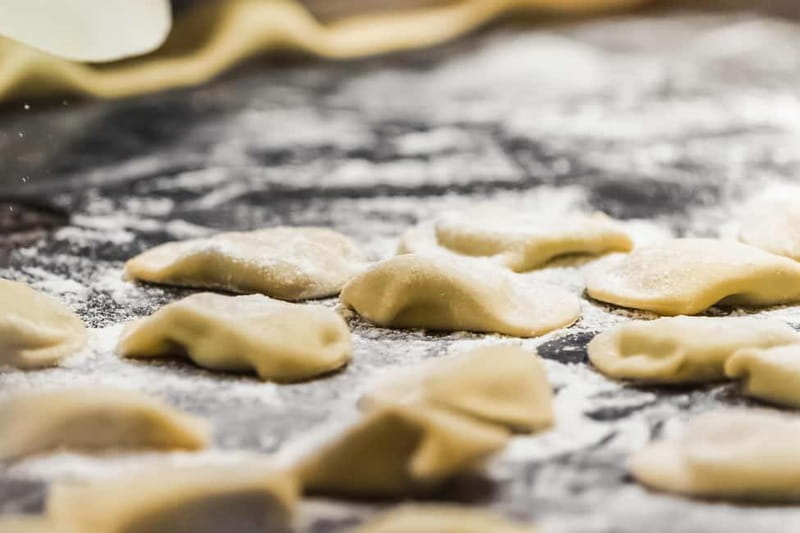
The stuffed pasta is likely to require the most attention. Ravioli and tortelli involve more than rolling dough and cutting strips. You need to portion the filling, leave enough space between each mound, press out air, and seal the edges firmly.
The class description promises both ravioli and tortelli, giving you a chance to compare two related shapes. The distinction is useful because stuffed pasta teaches skills that carry over to many Italian recipes. You learn how thin the dough should be, how much filling is practical, and how to avoid a seal that opens in the cooking water.
Some sessions have not required students to make the ravioli filling or sauces themselves. That is a fair trade for the available time, but it is worth knowing if you want a fully from-scratch kitchen experience. The class focuses on the pasta-making process, while the restaurant kitchen may handle parts of the filling, sauce, and cooking.
Do not see this as a weakness by itself. It means you spend more time on the technique most people came to learn. Still, if your goal is to prepare every element of a meal independently, ask about the current format before booking.
Pappardelle and the joy of simple pasta
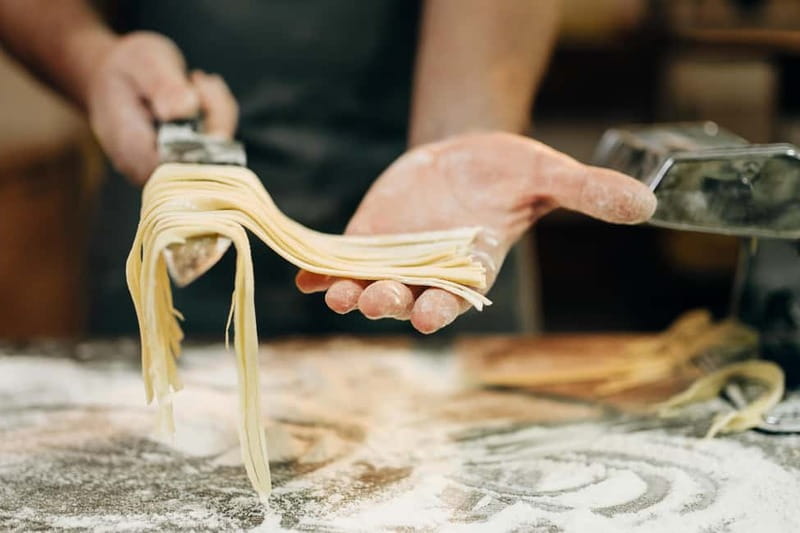
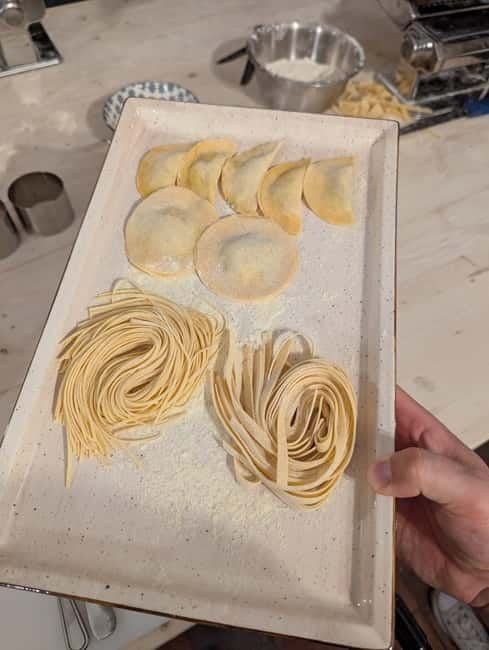
Pappardelle is the broad, soft pasta shape that gives you a satisfying change of pace. Once the dough is rolled, you cut wide ribbons and see immediately how thickness and width affect the finished dish.
This part usually feels less fussy than stuffed pasta. It lets you focus on even rolling and clean cutting, and it gives beginners a quick success. The class may also use other long pasta shapes in place of pappardelle, depending on the session. Some participants have made tagliatelle or spaghetti, while the official description lists pappardelle.
That variation is worth keeping in mind. You are booking a fresh pasta lesson, not a rigid menu with every detail guaranteed in the same order. The core promise is hands-on pasta preparation, and the exact shapes can change with the chef, group, or timing.
I like that the class covers both filled and unfilled pasta. You get a better feel for the range of Italian pasta than you would from learning one shape only. You also leave with techniques that are practical at home, using ordinary ingredients and basic kitchen equipment.
More Wine Tours in Florence:
- Tuscany Day Trip from Florence: Siena, San Gimignano, Pisa and Lunch at a Winery
★ 5.0 · 21,634 reviews - Florence: Chianti Wineries Tour with Wine Tasting
★ 4.5 · 10,071 reviews - Small-Group Wine Tasting Experience in the Tuscan Countryside
★ 5.0 · 7,392 reviews - Pisa, Siena and San Gimignano Day Trip with Lunch & Wine Pairing
★ 4.5 · 6,006 reviews
Cooking and eating what you made
After the preparation, the pasta goes into the kitchen to be cooked and dressed with sauce. You then sit down and eat the meal with the rest of the group.
This final stage is more important than it may sound. Fresh pasta tastes best when it goes from the worktable to the pot without a long wait. You get to see whether the dough was rolled correctly and how the sauces work with the different shapes.
The sauces have received strong praise, with tomato and ragù mentioned in connection with some sessions. You should not assume those exact sauces are guaranteed every time, but you can expect the staff to cook the pasta you made and serve it as a meal rather than handing it back unfinished.
Tuscan wine is included. White wine has been served, and red may also be available, but the exact choice can vary. Non-alcoholic drinks are offered, which makes the class workable for people who do not drink alcohol.
The meal turns the lesson into a social evening. You are not rushing out after shaping the last piece. You eat together, compare results, and meet people from different countries. Solo participants can fit in easily, and couples or families can work as a small team. The official age rule is 18 and over, so it is not an activity for younger children despite the relaxed tone.
Tiramisu may be part of your session
Tiramisu appears often in the actual class format described by participants, even though the main activity description focuses on pasta. In those sessions, the dessert is assembled early and placed in the refrigerator while the pasta is prepared.
That is a smart use of the three-hour schedule. Tiramisu needs time to set, so making it first gives you a dessert ready by the end. It also adds variety to the lesson, since you are working with a no-bake Italian dessert rather than spending the entire class on dough.
Some instructors have adapted the tiramisu recipe for individual preferences. If dessert is important to you, confirm that it is included in your selected time slot. I would not book on the assumption that every session has the same menu, since the supplied details describe pasta as the guaranteed focus.
When tiramisu is included, the meal feels especially generous for the price. You may leave having prepared two or three kinds of pasta plus dessert, although the exact combination can change.
Why the $34 price works
At $34 per person, this is inexpensive for a three-hour activity in central Florence. The fee includes the chef instructor, ingredients, equipment, the food you prepare, and Tuscan wine. A non-alcoholic drink is available instead of wine.
The value comes from the combination. You receive a lesson, a meal, and a social activity in one booking. Even if you care more about the cooking than the wine, the meal helps justify the cost because you are not paying separately for dinner afterward.
I would compare this with the price of a standard restaurant meal in central Florence. Here, you get the added benefit of learning a skill and meeting the people who share the table. It is not the right choice if you want a quiet, formal dinner, but it is hard to fault the price for an active evening.
The low price may also explain why the format can feel new and flexible. One session was described as a recently launched offering with a lower price than similar classes. That can work in your favor, though you should expect some variation in group size, menu, and instructor.
Small groups make the experience especially good. Several sessions had only three or four people, allowing the chef to give close help. Larger groups can still work, and the instructors have handled them well, but you may receive less individual attention when more people are at the tables.
Who will enjoy this class most
I would choose this experience if you want a break from museums and churches but still want something closely tied to Italian culture. It gives you a practical activity in the center of Florence, and you do not need advanced cooking skills.
It suits:
- First-time pasta makers who want clear, hands-on instruction.
- Couples looking for an informal evening that includes dinner.
- Solo participants who enjoy meeting people around a shared table.
- Adults traveling with family who want a low-pressure group activity.
- Home cooks who want to improve dough, shaping, and filled-pasta technique.
- Budget-conscious visitors who want a meal and activity for one moderate fee.
I would be more cautious if you want a long, technical workshop covering pasta fillings, sauces, regional food history, and professional knife skills. The class gives you a taste of several techniques rather than a full culinary course.
It is also not suitable for anyone under 18. Pets are not allowed, although assistance dogs are permitted. Smoking indoors, intoxication, alcohol and drug misuse, firework use, nudity, and bare feet are prohibited. The kitchen is wheelchair accessible.
Practical timing and language advice
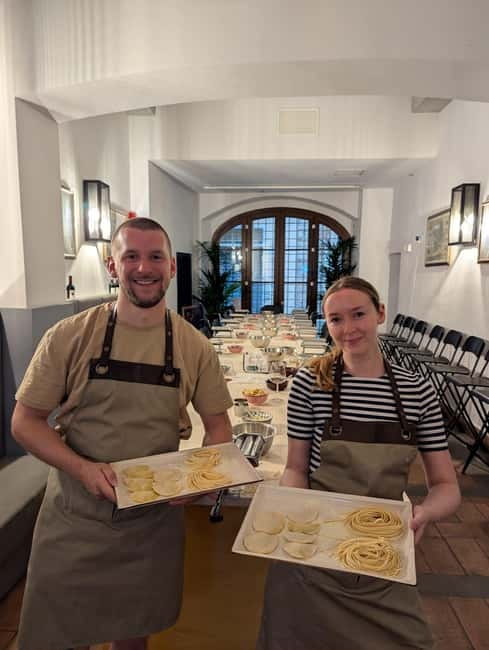
The class lasts three hours, with starting times varying by date. An evening session can work well as dinner, while an earlier class leaves your night free for Florence’s restaurants and squares.
The instruction is offered in English and Italian. If your group is mixed, you can expect the chef to demonstrate the process and explain it in English, as well as Italian. The atmosphere is informal, with humor and conversation built into the lesson.
You should arrive with comfortable clothing and a willingness to work with your hands. The necessary equipment is supplied, and pets and smoking are not permitted. If you have food allergies or dietary restrictions, the provided information does not promise specific substitutions, so ask before booking rather than assuming the recipe can be changed.
The booking terms are traveler-friendly: you can cancel up to 24 hours before the activity for a full refund, and the reserve-now, pay-later option lets you hold a place without paying immediately. Availability and exact start times depend on the date you choose.
Is this Florence pasta class worth booking?
Yes, if you want an affordable, social, hands-on evening in central Florence. The strongest reasons are the patient chefs, the chance to make and eat your own pasta, and the unusually low price for a three-hour class with wine included.
Book it with two small cautions. Confirm the meeting point, especially if the restaurant name is not clear, and check the exact menu because tiramisu and the number of pasta shapes may vary. If you are happy with a relaxed lesson rather than a formal culinary course, this is an easy way to add food, conversation, and a useful Italian skill to your Florence schedule.
FAQ
How long does the Florence pasta class last?
The activity lasts three hours.
How much does the cooking class cost?
The listed price is $34 per person.
Which pasta types will I learn to make?
The advertised class teaches ravioli, tortelli, and pappardelle. Some sessions may use other pasta shapes or cover two types instead, so check the details for your selected booking.
Is tiramisu included?
Tiramisu is included in many described sessions, but it is not part of the core advertised highlights. Confirm the menu for your date before booking.
Is wine included?
Yes. Tuscan wine is included, and non-alcoholic drinks are available.
Do I need to bring cooking equipment?
No. The necessary equipment is provided in the kitchen, along with the ingredients.
What languages are spoken during the class?
Instruction is available in English and Italian.
Can children attend?
No. The activity is not suitable for children under 18.
Can I cancel the booking for a refund?
Yes. You can cancel up to 24 hours in advance for a full refund.
Newest wine reviews around Florence
- Wine Tasting Experience with Three Types of Tuscan Wine★ 4.9 · 47 reviews
- Florence: Art of Pasta Cooking Workshop with Food and Wine★ 5.0 · 69 reviews
- SMALL GROUP Tuscany Wine Tasting Safaris with Lunch / Dinner★ 4.9 · 321 reviews
- Wine Tasting Experience with Seven Types of Tuscan Wine★ 4.9 · 30 reviews
- Florence/Badesse: Tuscany Group Vespa Tour with Wine Tasting★ 4.4 · 56 reviews
- Florence: San Gimignano & Volterra Day Trip with Food & Wine★ 4.7 · 57 reviews
- ROMANTIC WINE TOUR FOR 2 – Wine Tour in Chianti (Tuscany)★ 5.0 · 27 reviews
- Private Flavors of Florence Walking Tour(Food&Wine Included)★ 4.8 · 46 reviews
Florence Wine Tours, compared.
Tuscany Day Trip from Florence: Siena, San Gimignano, Pisa and Lunch at a Winery
Read our review →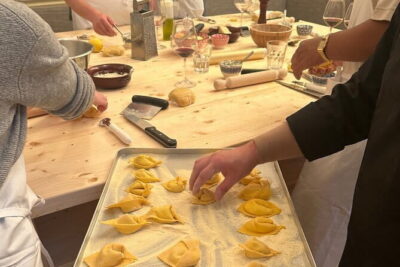
Small-Group Wine Tasting Experience in the Tuscan Countryside
Read our review →
Pisa, Siena and San Gimignano Day Trip with Lunch & Wine Pairing
Read our review →
SMALL-GROUP Wine Safaris: Tuscan Wine Tasting Tours from Florence
Read our review →
Winner 2025 Florence Sunset Food & Wine Tour by Eating Europe
Read our review →
San Gimignano, Siena, Monteriggioni, Chianti Day Trip with Lunch & Wine Tasting
Read our review →Lists this tasting appears in