
Reviewed · GENOA WINE TOURS
Genoa: Pesto Masterclass with Tasting and Wine
Genoa’s pesto is not just a sauce you spoon from a jar. Here, you grind it the old-fashioned way, using a Carrara marble mortar and wooden pestle, then eat your own pesto with trofie pasta and local wine. I like the hands-on work and the setting inside a family shop near Columbus’s House. I also like that the ingredients have a clear local identity, from PDO basil to Ligurian cheeses.
The main consideration is the price: $92 per person is a serious sum for a 2.5-hour food class. The value improves if you care about regional cooking, want a small group, and will use the included pesto jar and take-home know-how. The shop is also a working retail space, so it may feel less polished than a formal cooking school.
Key points
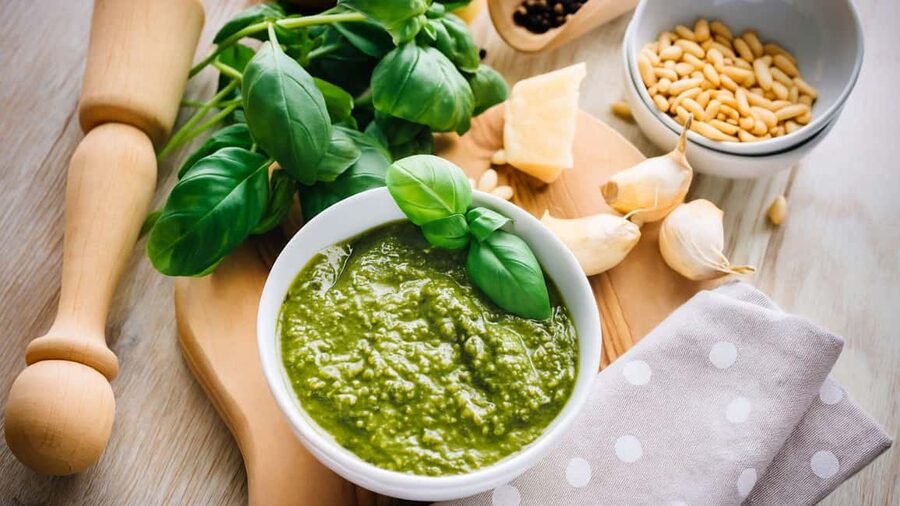
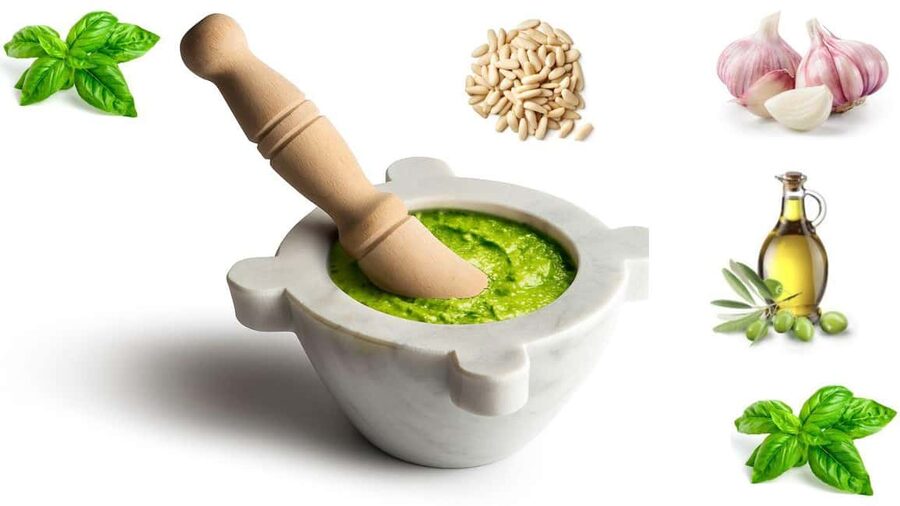
- Make pesto from scratch: You grind basil, Parmesan, pecorino, pine nuts, garlic, and extra virgin olive oil by hand.
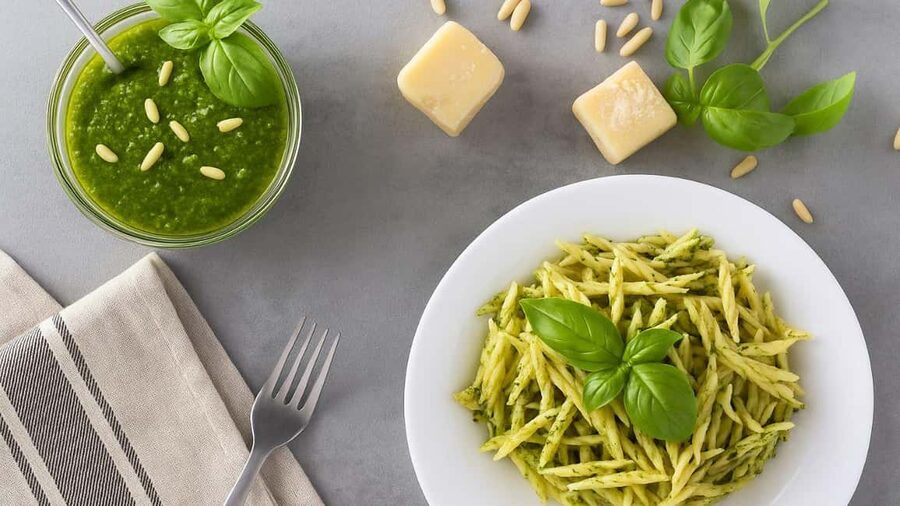
- Eat what you prepare: Your pesto is served with trofie, the short, twisted pasta strongly associated with Ligurian cooking.
- Learn in central Genoa: BioTigullio5Terre is at Via di Ravecca 51/r, about 100 meters from Columbus’s House.
- Keep a useful souvenir: Each participant receives a 90-gram jar of long-life Genoese pesto.
- Small class, personal instruction: The group is limited to six, with instruction in Italian, English, or French.
- Meet local guides: Barbara and Gaia are named instructors whose teaching style centers on family methods and regional producers.
Why Genoese pesto deserves a hands-on lesson
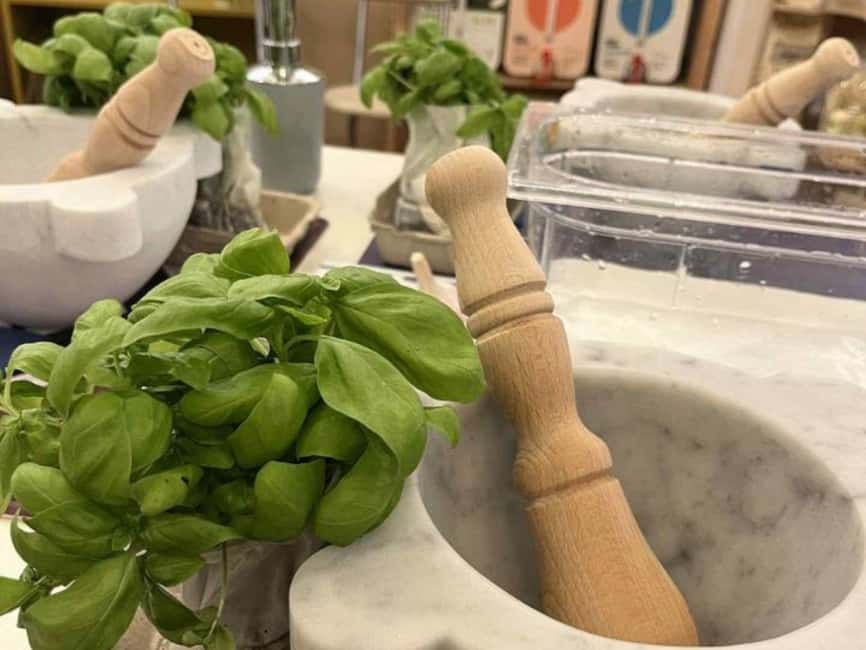
Pesto alla Genovese looks simple on a restaurant menu, but the method matters. The traditional version depends on how the ingredients are crushed and blended, not just on the ingredient list. A marble mortar gives you control over the texture, while the wooden pestle lets you work gradually instead of turning everything into a smooth paste at once.
That makes this class useful even if you already make pesto at home. One participant who had prepared pesto before still learned the finer points of a creamy sauce. The lesson is not aimed only at beginners, but you do not need any cooking experience to take part.
You will work with PDO basil, Parmesan, pecorino, pine nuts, garlic, and extra virgin olive oil. These ingredients also give the instructor a chance to explain where local products come from and how Ligurian food connects to small producers. Gaia has been praised for explaining the region and the family business project that supports local makers, while Barbara is described as a warm, clear teacher who can show the method step by step.
I like that the class treats pesto as part of Ligurian culture rather than as a quick recipe demonstration. You learn what goes into the sauce, but also why the region takes the preparation seriously.
More Wine Tours in Italy:
- Tuscany Day Trip from Florence: Siena, San Gimignano, Pisa and Lunch at a Winery
★ 5.0 · 21,634 reviews - Florence: Pasta Cooking Class with Unlimited Wine
★ 4.9 · 10,285 reviews - Florence: Chianti Wineries Tour with Wine Tasting
★ 4.5 · 10,071 reviews
Finding BioTigullio5Terre near Columbus’s House
The class takes place inside the BioTigullio5Terre shop at Via di Ravecca 51/r, in Genoa’s historic center. The meeting point is easy to identify by the large wooden sign outside. The shop is about 100 meters from Columbus’s House, so this class fits neatly into a walking day around the nearby historic sights.
You are not meeting at a separate school kitchen or countryside farm. You are entering a typical central Genoa shop that also functions as the family workshop. That setting gives the experience a direct connection to local food sales and producers, though the room may feel more active than a private studio. People may come in and out while the lesson is under way.
I would allow a few extra minutes to find number 51/r, especially if you are still getting used to Genoa’s narrow streets. The exact address matters here. Look for the wooden sign and the door marked 51/r rather than relying only on a general map pin.
The activity does not include transport. You make your own way to the shop, and the location is central enough to combine with other sightseeing. After the class, optional shop purchases are available, but they are not part of the $92 price.
The mortar, pestle, and slow work of pesto
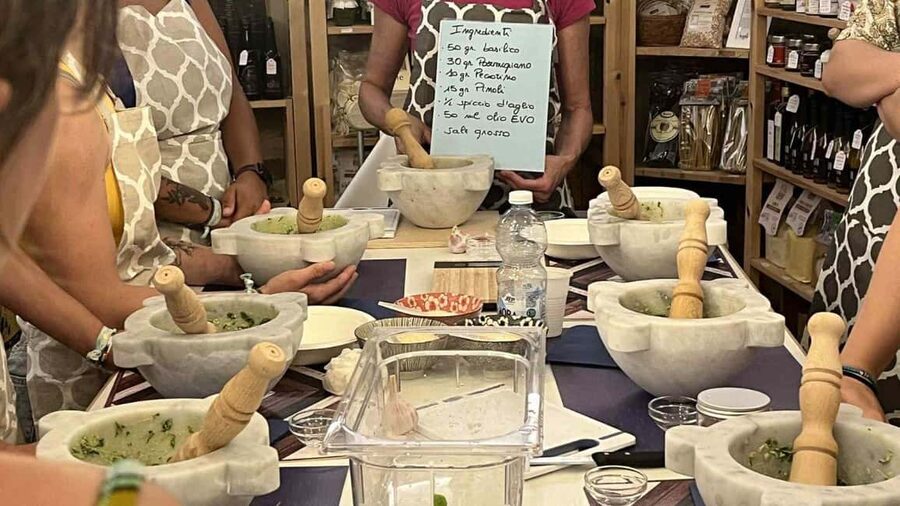
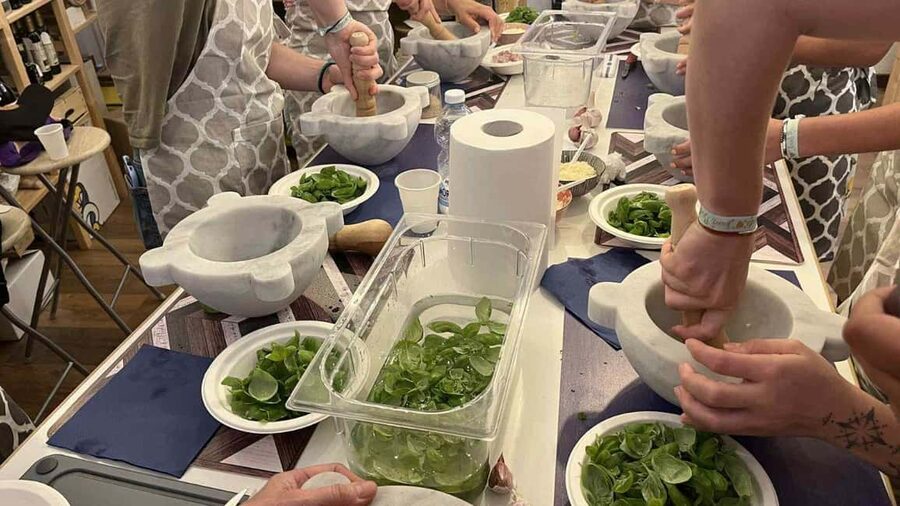
The central part of the class is practical. You receive the equipment and an apron, then make your own pesto with a marble mortar and wooden pestle. Each person prepares an individual batch, so you are not simply watching an instructor make one large bowl.
The order and pressure used while grinding are part of the lesson. You will work the fresh basil and other ingredients into a sauce with guidance from the instructor. That slow process gives you a better sense of how pesto gets its texture than a short demonstration with an electric blender.
The class is designed for all skill levels. The step-by-step format makes it approachable if you rarely cook, while experienced home cooks can focus on small technique details. You should wear comfortable clothes, since you will be working with food and using a traditional tool for much of the session.
Barbara and Gaia are both named as instructors in the experiences associated with this class. Barbara is especially noted for showing the recipe from scratch, using a regional map to explain where ingredients come from, and keeping the lesson easy to follow. Gaia brings in wider information about the region and the family’s work with local producers.
The group limit of six is important. You get more direct time with the instructor than you would in a large demonstration, and everyone has room to prepare a batch. If you prefer a quiet, formal kitchen, the shop setting may feel casual. If you like asking questions and watching a small food business at work, that informality is part of the appeal.
Trofie, fresh pesto, and a glass of Ligurian wine
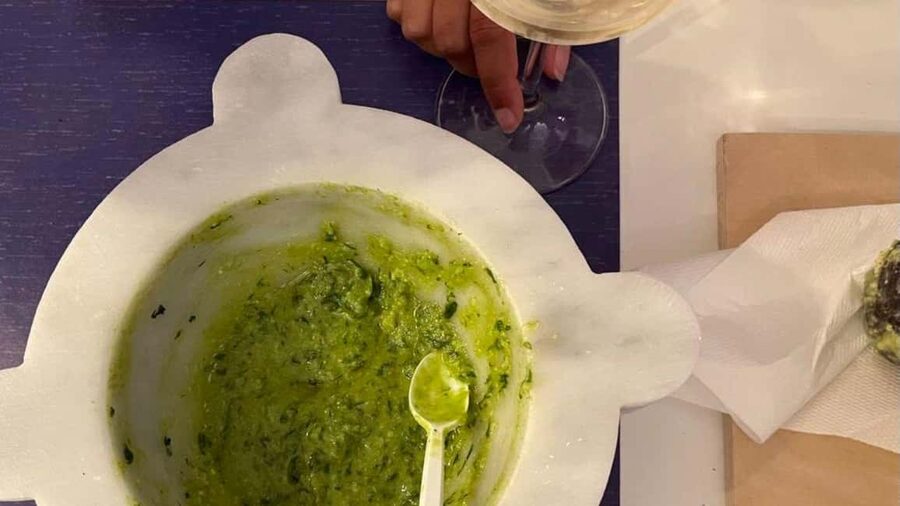
The payoff comes at the end of the practical lesson. Your freshly made pesto is served with trofie, the small, twisted pasta shape traditionally paired with Ligurian pesto. Eating the sauce with pasta gives you a better idea of the finished dish than tasting pesto alone from a spoon.
The meal is modest rather than a full restaurant lunch. It centers on trofie with the pesto you prepared, followed by a toast with local wine. The included wine is a glass of Ciliegiolo del Tigullio. The description also names Vermentino and Pigato as local options connected with the tasting, but the included item is specifically listed as Ciliegiolo del Tigullio.
One useful point is that you taste your own recipe. You can compare the fresh result with the method you have just learned, and you can ask about texture, balance, and the role of each ingredient while the lesson is still fresh in your mind.
Extra drinks are not included. If you want more wine or other beverages, budget separately. The food portion is best understood as a tasting and light meal attached to the workshop, not as a long, multi-course dining event.
Same region, a different bottle:
- Small-Group Wine Tasting Experience in the Tuscan Countryside
★ 5.0 · 7,392 reviews - Florence: Pasta & Tiramisu Cooking Class with Unlimited Wine
★ 4.9 · 6,708 reviews - Florence: Pasta Cooking Class with Unlimited Wine
★ 5.0 · 6,413 reviews - Pisa, Siena and San Gimignano Day Trip with Lunch & Wine Pairing
★ 4.5 · 6,006 reviews
The 90-gram jar is a practical souvenir
Each participant receives a free 90-gram jar of long-life Genoese pesto made with local ingredients. This is a small gift, but it adds real value because it gives you a ready-made reference point after the class.
You can compare the jar with the pesto you made yourself. The handmade batch is about method and freshness, while the jar is easier to carry and use later. It also lets you share a taste of Liguria after leaving Genoa.
The jar is not the main reason to book, but it helps soften the price. You are paying for instruction, food, wine, the small-group setting, equipment, and a take-home product rather than only for a plate of pasta.
The shop also sells mortars, so you may be able to buy the same type of tool used during the class. That purchase is optional and not included. For someone who wants to repeat the recipe at home, a mortar is more useful than a generic souvenir, but you should treat it as an extra expense.
How the $92 price measures up
At $92 per person, this is more expensive than a simple pasta tasting or a short market stop. The cost makes more sense if you value the teaching and the individual work. You are not only eating pesto. You are using traditional equipment, preparing your own portion, learning about regional ingredients, drinking local wine, and receiving a jar to take home.
The six-person limit is another part of the value. In a larger group, a mortar demonstration can become something you watch from the back. Here, every participant has a chance to work directly with the ingredients and ask questions.
The class is also convenient for a central Genoa itinerary. You do not need a long transfer outside the city, and the shop is close to Columbus’s House. That saves time compared with a rural food activity, though it also means you do not get a countryside setting or a wider meal.
I would recommend comparing this with your food budget. If you mainly want lunch, $92 is high. If you want a lasting skill, a local story, a small class, wine, and a souvenir, the price is easier to justify.
Who will enjoy this class most
This experience suits you if food is one of the reasons you visit Liguria. It is especially good for home cooks who want to understand the traditional version of a recipe they may already know, and for beginners who prefer a guided activity with a clear result.
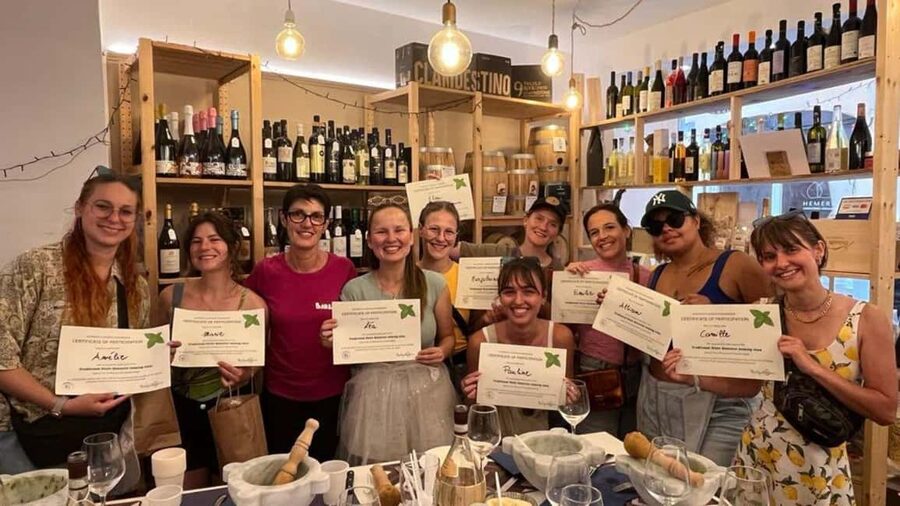
It also works well for couples, friends, and solo participants who like small-group classes. With only six places, the atmosphere should be more personal than a large food tour. The named instructors, including Barbara and Gaia, bring a family and regional focus rather than teaching only a fixed technical script.
You do not need cooking skills. The class is built around simple ingredients and step-by-step instruction. Comfortable clothes are the only item specifically requested.
The listed age restrictions exclude children under 16. The information repeats several younger age cutoffs, but the practical reading is that this is intended for participants aged 16 and older. Families with younger children should not assume they can join.
People with food allergies should state them when booking. The recipe includes basil, dairy cheeses, pine nuts, garlic, and olive oil, so this is not a class to book without checking your needs first.
What the shop setting adds, and what it does not
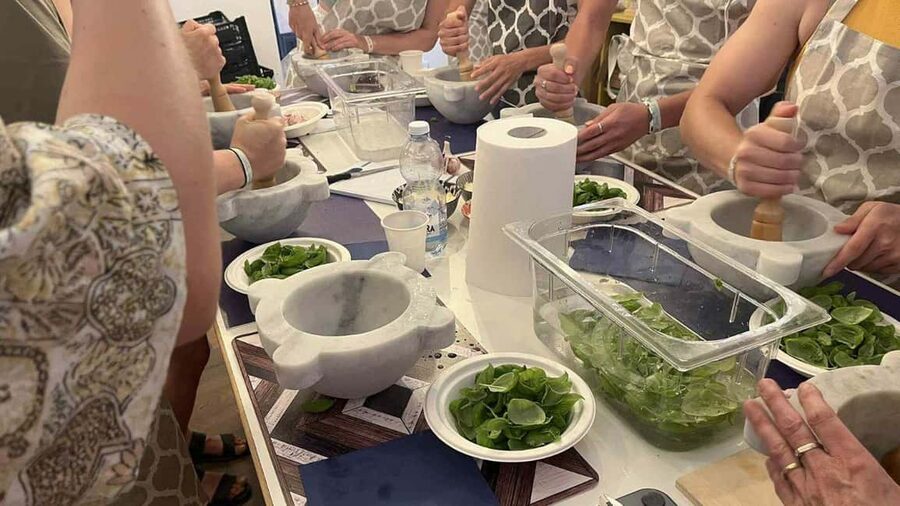
A family workshop inside a shop gives the class a useful sense of place. You are close to the products being discussed, and the lesson connects the recipe to the business’s work with local producers. The setting also keeps you in the center of Genoa instead of sending you to a separate cooking venue.
The tradeoff is atmosphere. This is not presented as a grand culinary school with a private dining room. The shop can have people coming in and out, which one instructor described as part of the pleasant character of the experience. I would choose it for local contact and practical instruction, not for silence or formal presentation.
That distinction helps set expectations. You will get a real working setting, family stories, and direct guidance. You should not expect a broad tour of Genoese cuisine or a full day of food preparation. The focus stays tightly on pesto, trofie, local wine, and the products sold by BioTigullio5Terre.
Booking details that affect your plans
The class lasts 2.5 hours, with start times checked according to availability. Since it includes preparation, tasting, and conversation, it takes more time than a quick tasting but less than a full-day cooking course.
Instruction is available in Italian, English, and French. Some content may be shown in its original language, so multilingual groups may hear occasional material in another language. English-speaking participants can still expect instruction in English when selecting that language.
You can cancel up to 24 hours before the activity for a full refund. A reserve-now, pay-later option is also available, which helps if your Genoa plans are not fixed.
Wear comfortable clothes and tell the provider about allergies at booking. Transport, extra drinks, and shop purchases are not included.
Should you book the Genoa pesto masterclass?
I would book this if you want a focused food experience with real hands-on work, especially if you like the idea of learning a recipe you can repeat at home. The small group, central location, named instructors, local wine, trofie tasting, and 90-gram jar give the 2.5 hours a solid shape.
I would skip it if you are looking for a cheap meal, a broad tour of Ligurian cooking, or a polished cooking-school environment. The $92 price needs to be weighed against your interest in technique and regional food.
For most food-focused visits to Genoa, this is a good choice when you want to do more than eat pesto. You make it, hear why the ingredients matter, and then sit down with the result.
FAQ
Where does the pesto class take place?
It takes place inside the BioTigullio5Terre shop at Via di Ravecca 51/r in Genoa. The shop is about 100 meters from Columbus’s House and has a large wooden sign outside.
How long does the experience last?
The class lasts 2.5 hours. Starting times depend on availability.
What ingredients will I use?
You will use PDO basil, Parmesan cheese, pecorino cheese, pine nuts, garlic, and extra virgin olive oil.
Is the wine included?
Yes. A glass of Ciliegiolo del Tigullio is included. Extra drinks are not included.
Do I receive anything to take home?
Yes. Each participant receives a free 90-gram jar of long-life Genoese pesto made with local ingredients.
What languages are available?
The instructors can teach in Italian, English, or French. Some content may be shown in its original language.
Can children take part?
The activity is listed as not suitable for children under 16. No cooking experience is required, but you should mention food allergies when booking.
Newest wine reviews around Italy
- Etna trekking and wine tasting★ 5.0 · 28 reviews
- Etna Tour and Lunch in a Winery with Wine Tasting★ 5.0 · 97 reviews
- Cooking Class and Wine Pairing in Capri★ 5.0 · 57 reviews
- WINE TOUR with sommelier in a winery near Cagliari★ 5.0 · 27 reviews
- Cagliari 3 Hours Luxury Motorboat Tour – Wine and Snorkeling★ 5.0 · 118 reviews
- Wine Experience: vineyard, wines and food★ 5.0 · 155 reviews
- Dinner in the vineyard with wine tasting and walk★ 5.0 · 58 reviews
- Wine Tour and Tasting of Lugana Wines in Desenzano★ 5.0 · 58 reviews
Genoa Wine Tours, compared.
Genova: Homemade Pasta & Pesto Local Chef Class with Wine
Read our review →
Lists this tasting appears in