
Reviewed · WINE & OLIVE OIL TASTINGS
Wine, food and olive oil by PhD student
Dubrovnik’s food story is best understood one bite and one sip at a time. This three-hour walk pairs four Croatian wines with four dishes, then adds an olive-oil tasting and dessert while you move through the Old Town. Guide Dom, an enologist with a master’s degree and a PhD focus in wine, also brings a personal connection to the city.
I like the thoughtful variety: fish, seafood, two meat dishes, dessert, and two award-winning extra virgin olive oils. I also like the small maximum of 12 people, which should make the food lessons easier to follow. The main consideration is the $205.59 price, a serious sum for three hours, especially if you are more interested in sightseeing than wine.
Key points at a glance
- Four family-run stops: You visit an olive-oil specialist, two restaurants, and a dessert stop in Dubrovnik’s Old Town.
- Award-winning oils: The tasting includes two Croatian extra virgin olive oils recognized at the NYIOOC.
- Four wines and four dishes: Expect fish, seafood, a 16th-century meat recipe, and another meat dish with Croatia’s key red grape.
- A guide with wine credentials: Dom is a local enologist with a master’s degree and doctoral work in wine.
- Sightseeing is built in: The walk passes Ploče Gate, Lazareti, the Franciscan monastery, Onofrio’s Fountain, Rupe Museum, Jesuit Stairs, and Rector’s Palace.
- A generous time commitment: Plan on about three hours, beginning at 4 pm at Large Onofrio’s Fountain and ending at Rector’s Palace.
Dubrovnik’s Old Town, served with a wine glass
The tour begins at Large Onofrio’s Fountain at 4 pm. That is a useful meeting point because the fountain sits near the western entrance to the Old Town and is one of Dubrovnik’s easiest landmarks to find.
From there, you walk through streets and squares while passing several major sights. The route includes Revelin Fortress, Ploče Gate, Lazareti, the Franciscan Monastery, Rupe Museum, the Farmers Market, the Jesuit Stairs, and Rector’s Palace.
This is not a standard sightseeing walk with a meal tacked onto the end. The city provides the setting for the food discussion. At Large Onofrio’s Fountain, you learn about Dubrovnik’s water system and the major engineering work carried out during the height of the Dubrovnik Republic.
That approach gives the tour a useful rhythm. You stop, taste, walk, and listen rather than sit in one restaurant for the entire afternoon. You also see some of the Old Town’s less direct corners, including rooftops and quieter lanes near the 16th-century granary that now houses Rupe Museum.
More Wine and Olive Oil Tastings in Croatia
- Split: Krka Waterfalls With Boat Cruise, Wine and Olive Oil
★ 4.3 · 1,507 reviews - Hvar: Island tour with Wine and Olive Oil Tasting
★ 4.9 · 77 reviews - Krka Waterfalls Tour with Wine and Olive Oil Tasting
★ 4.5 · 48 reviews
A 15-minute lesson in Croatian olive oil
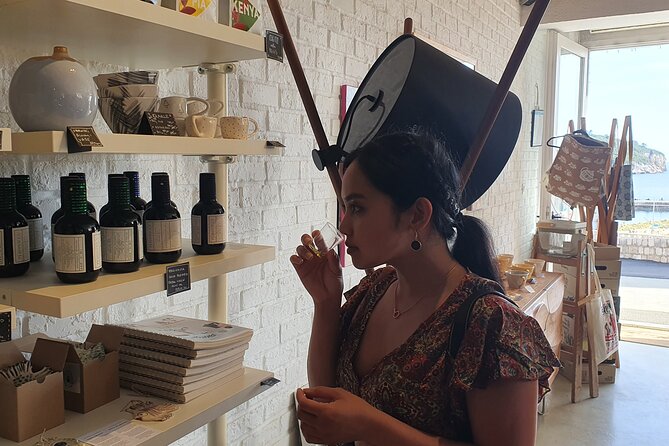
The first food stop focuses on extra virgin olive oil. You taste two Croatian oils that received recognition at the New York International Olive Oil Competition, or NYIOOC.
The guide leads a 15-minute evaluation and shows you how to identify the main qualities of extra virgin olive oil. This makes the tasting more useful than simply dipping bread into a bowl and choosing a favorite. You learn what to notice in the oil itself, including the basic signs of quality and character.
For me, this is one of the tour’s strongest details. Wine tastings are common in European cities, but an organized olive-oil evaluation gives you a skill you can use later in Croatia. If you plan to buy olive oil during your trip, this short lesson may help you judge what is in the bottle.
The stop is also a good fit for anyone who enjoys food but does not know much about tasting. The session is brief, so it should not take over the afternoon. Still, you need to pay attention, since 15 minutes passes quickly.
Four dishes, four wines, and a proper meal
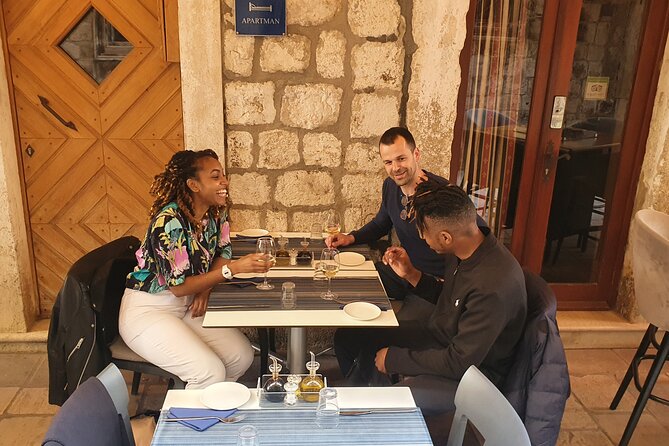
After the oil tasting, you visit two restaurants for four wines paired with four dishes. The meal is made with locally produced ingredients, and the menu includes seafood, fish, meat, and dessert.
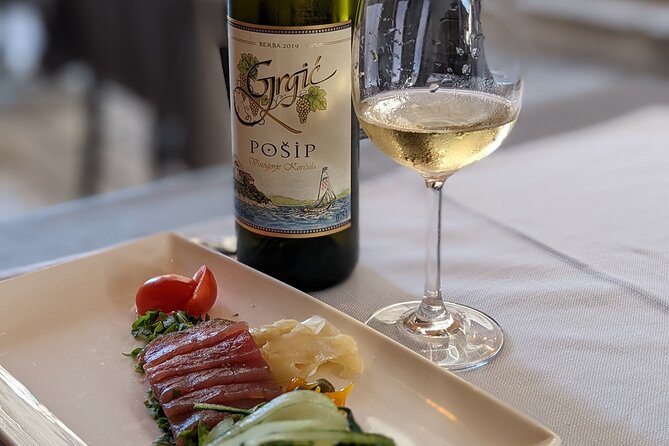
The first savory pairing is fish with a Croatian white wine. The wine comes from a Croatian grape variety that received attention from Decanter in 2021. You then try a seafood dish with another Croatian white wine connected to the same recognition.
The menu shifts next to a meat dish based on a recipe from the 16th century. It comes with a locally produced white wine recognized by Decanter in 2017. This is an especially useful pairing because it moves away from the easy assumption that white wine is only for fish.
The final savory course is another meat dish, this time with Croatia’s most important red grape. The wine comes from the oldest protected winegrowing area in Croatia, near Dubrovnik.
The menu has enough range to make the price easier to assess. You are not paying for a single tasting plate and a token pour. You receive four food pairings, and the meal is described as substantial rather than merely decorative. Still, exact portions and the specific dishes can change, so you should not book expecting a fixed restaurant menu with named recipes for every course.
Dessert comes at the fourth family-run place. It gives the walk a sweet finish and keeps the experience moving through several small businesses rather than concentrating all spending in one dining room.
What the wine focus adds
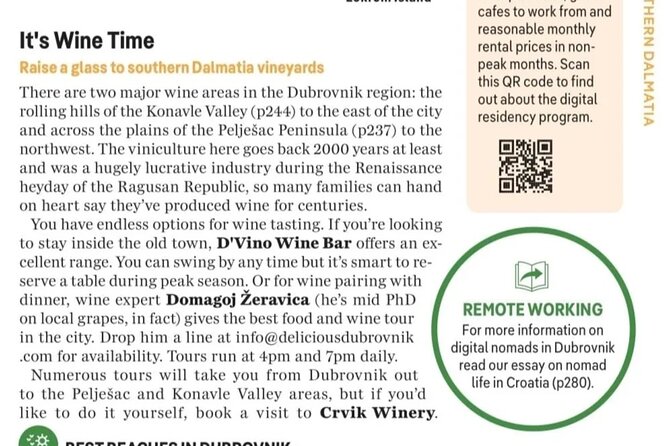
The guide’s background is central to the experience. Dom is presented as a Dubrovnik local, an enologist with a master’s degree and doctoral work in wine. That combination matters because the tour asks him to cover two subjects at once: the character of Croatian wine and the history of the city where you are drinking it.
You can expect discussion of local grape varieties, regional wine production, and why particular wines work with the food. The four wines are not random samples. They are matched to fish, seafood, and meat so you can compare the effect of the pairing.
The local connection also adds something that a generic wine host might miss. Dom grew up in Dubrovnik, so the walk includes a personal understanding of the Old Town alongside the academic wine material. One practical tip is to ask your wine questions as they come up. His role is not limited to pouring wine, and he has even continued answering wine questions for a participant after the tour.
Wine is available only to people aged 18 and older. That restriction matters for mixed-age groups. The experience is built around alcoholic drinks, so anyone who does not drink wine will receive less value from the main part of the tour.
More Wine and Olive Oil Tastings in Dubrovnik:
- Sorrento Farm and Food Experience including Olive Oil, Limoncello, Wine tasting
★ 5.0 · 2,524 reviews - From Mendoza: 3 Wineries, Olive Oil Factory Tour & Tasting
★ 4.6 · 901 reviews - From Chania: Olive Oil, Wine, Cheese & Honey Tasting Tour
★ 4.6 · 490 reviews - From Chania: Wine and Olive Oil Tasting Tour with Snacks
★ 4.8 · 354 reviews
From Onofrio’s Fountain to the Jesuit Stairs

The route gives the food a strong sense of place. At Large Onofrio’s Fountain, the discussion turns to the Dubrovnik Republic at its peak and the engineering projects that helped the city function.
Near the Rupe Museum, you see the old granary of Dubrovnik, a 16th-century building that sheds light on how the city stored and managed food supplies. This stop connects directly with the meal. Food in Dubrovnik was never only a matter of taste. Storage, trade, water, and political planning all shaped what could reach the table.
At the Jesuit Stairs and Rector’s Palace, the guide discusses the political system of the Dubrovnik Republic. You hear how the aristocracy handled threats from stronger powers and how the republic’s governing structure helped it survive.
These history stops are not separate lectures. They fill the walking time between tastings. If you want a food tour with no historical material, this may feel like extra content. I see it as an advantage, especially for a first afternoon in Dubrovnik, because it gives you a basic map of the city’s power, trade, and public works while you eat.
Four family-run places, not one long restaurant sitting
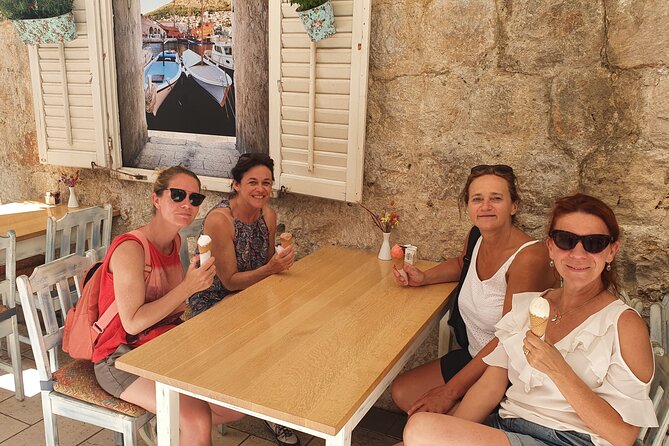
A key feature is the number of stops. You visit four family-run places: one for olive oil, two for the savory food and wine, and one for dessert.
That setup should appeal to you if you prefer small local businesses to a single formal meal. It also makes the experience feel closer to a neighborhood food walk, even though it takes place in the heavily visited Old Town.
The tradeoff is pace. You are walking between stops, listening to the guide, tasting several items, and keeping track of the route. Some people will enjoy the movement. Others may prefer to sit down for an uninterrupted lunch or dinner.
The starting time also shapes the day. At 4 pm, the tour works well as a late lunch or early dinner. Since the walk lasts about three hours, you may not need another full meal afterward. A light breakfast or lunch earlier in the day would leave room for the fish, seafood, meat dishes, and dessert.
Is $205.59 a good value?
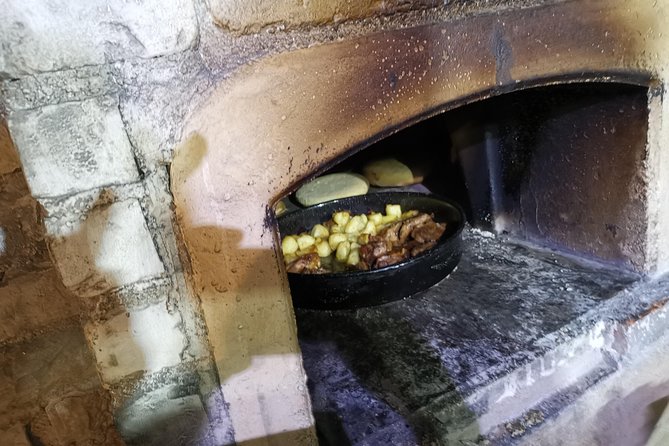
At $205.59 per person, this is one of the more expensive food walks you might consider in Dubrovnik. The price is easier to justify if you value several services at once: a small-group guide, a three-hour Old Town walk, an olive-oil lesson, four wines, four dishes, dessert, and local historical context.
The maximum group size is 12 people. That is small enough for questions and should reduce the chance of feeling lost in a large crowd. It also supports the educational side of the experience. A group of this size gives the guide a better chance to explain the oils and wines without turning every stop into a speech for a busload of people.
The value is weaker if you mainly want a cheap way to sample Croatian food. You can eat for less in Dubrovnik, and you can explore the Old Town without booking a guided tour. You are paying for interpretation, organization, several family-run stops, and a substantial tasting menu.
I would compare this price with the cost of booking separate wine and food experiences. If you already plan to visit wineries or take another food class, there may be overlap. If this will be your only organized introduction to Croatian food and wine, the package makes more sense.
What the strong praise gets right
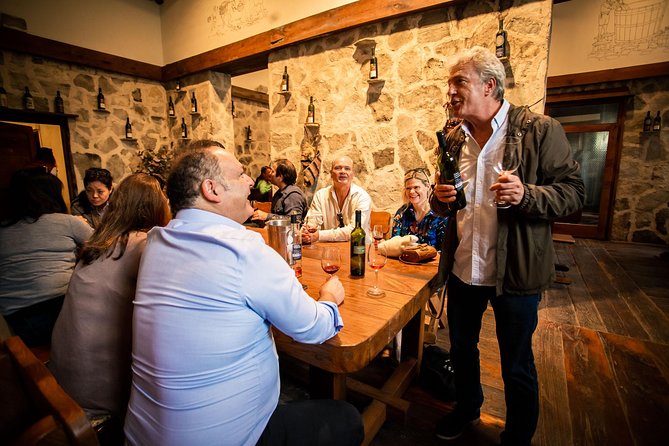
The most consistent strengths are the food, the wine, the olive oil, and Dom’s personal approach. The experience is not built around one famous restaurant. Its appeal comes from the combination of quality samples and the guide’s ability to explain them.
The food portions are described as more than small bites, which matters at this price. You get four savory dishes plus dessert, not just a few crackers, olives, and sample pours.
The guide also receives special emphasis for his understanding of local wine and olive oil. His Dubrovnik background gives the historical walk a personal connection, while his wine training gives the tasting a clear academic base.
One less enthusiastic assessment describes the experience as simple and basic, with the guide’s interests shaping the afternoon more than the participant’s preferences. That is a fair warning. This is a guided tasting with a strong wine focus, not a fully customized private food tour. If you want unusual ingredients, a flexible menu, or a tour built around your personal requests, ask before booking.
You may also be able to request a private format, based on the way the experience has been discussed with the provider. Do not assume that a private tour is included in the standard price. Confirm the arrangement directly if privacy matters to you.
Practical details before you book
The meeting point is Large Onofrio’s Fountain, at Poljana Paska Miličevića. The walk ends at Rector’s Palace, on Ulica Pred Dvorom, so you finish in a different part of the Old Town.
The activity is offered in English and uses a mobile ticket. Most people can participate, and service animals are allowed. The Old Town route includes walking through historic streets and passing between several food stops, so comfortable shoes are a sensible choice, though the provided information does not specify a required fitness level.
The experience needs good weather. If poor weather causes cancellation, you are offered another date or a full refund. You can also cancel for a full refund up to 24 hours before the 4 pm start time. Changes or cancellations made inside that 24-hour window are not accepted.
This experience is often booked well ahead, with an average lead time of 77 days. That is useful information if your Dubrovnik dates are fixed, especially because the group limit is only 12 people.
Who should book this Dubrovnik food walk?
I would choose this tour for a first or second day in Dubrovnik if I wanted food, orientation, and history in one booking. The route helps you get your bearings, and the menu introduces several Croatian flavors before you decide where to eat on your own.
It also suits wine drinkers who want more than a casual glass with dinner. The guide’s training, the four pairings, and the extra virgin olive-oil lesson give the afternoon a clear learning purpose.
I would skip it if you do not drink alcohol, need a fully flexible menu, or are trying to keep food costs low. I would also think twice if you prefer a quiet, seated meal rather than a walking experience with several stops.
For the right audience, this is a useful and satisfying way to meet Dubrovnik through its table. You get a real meal, not just nibbles, and the history gives each stop a reason to be there.
FAQ
Where does the tour start?
It starts at Large Onofrio’s Fountain, at Poljana Paska Miličevića in Dubrovnik’s Old Town.
Where does the tour end?
The tour ends at Rector’s Palace, at Ulica Pred Dvorom 3.
What time does the experience begin?
The start time is 4 pm.
How long does the tour last?
The tour lasts approximately three hours.
How many people can join?
The maximum group size is 12 people.
Is wine tasting available to all ages?
No. Wine tasting is available only to customers aged 18 and older.
What happens if the weather is poor?
The experience requires good weather. If it is canceled because of poor weather, you can choose another date or receive a full refund.
More Food Experiences in Dubrovnik
- Dubrovnik Gastronomy: 3-Hour Food and Wine Tour
★ 4.9 · 249 reviews - Pelješac Full-Day Wine and Food Tour from Dubrovnik
★ 5.0 · 72 reviews - From Split: Krka Waterfalls, Food & Wine Tasting Tour
★ 5.0 · 9,326 reviews - From Split: Krka Waterfalls, Food & Wine Tasting Tour
★ 4.9 · 6,598 reviews
Newest wine reviews around Dubrovnik
- Dubrovnik: Sunset Wine Tasting At Panorama Point★ 4.9 · 72 reviews
- Konavle Valley: Tour with Wine Tasting from Dubrovnik★ 4.5 · 39 reviews
- Pelješac Full-Day Wine and Food Tour from Dubrovnik★ 5.0 · 72 reviews
- From Dubrovnik: Island of Korčula with wine tasting★ 4.4 · 30 reviews
- Dubrovnik Gastronomy: 3-Hour Food and Wine Tour★ 4.9 · 249 reviews
- Dubrovnik: Sunset Panorama Tour with Glass of Wine★ 4.8 · 91 reviews
- Dubrovnik Sunset Tour with Scenic Views and Local Wine★ 5.0 · 49 reviews
- Dubrovnik: Sunset Catamaran Cruise with Sparkling Wine★ 4.7 · 61 reviews
Wine & Olive Oil Tastings, compared.
Sorrento Farm and Food Experience including Olive Oil, Limoncello, Wine tasting
Read our review →
Krka Waterfalls With Boat Cruise, Wine and Olive Oil
Read our review →
From Chania: Olive Oil, Wine, Cheese & Honey Tasting Tour
Read our review →
Lemon, Olive Oil and Wine Tasting Tour with Lunch
Read our review →
Alghero: Wine and Olive Oil Tasting at a Local Farm
Read our review →
Crete: Full-Day Cretan Wines, Olive Oil, Raki and Food Tour
Read our review →Lists this tasting appears in