
Reviewed · WINE TASTINGS
Alsatian Immersive Wine Tour, Wine Tasting & Alsatian lunch
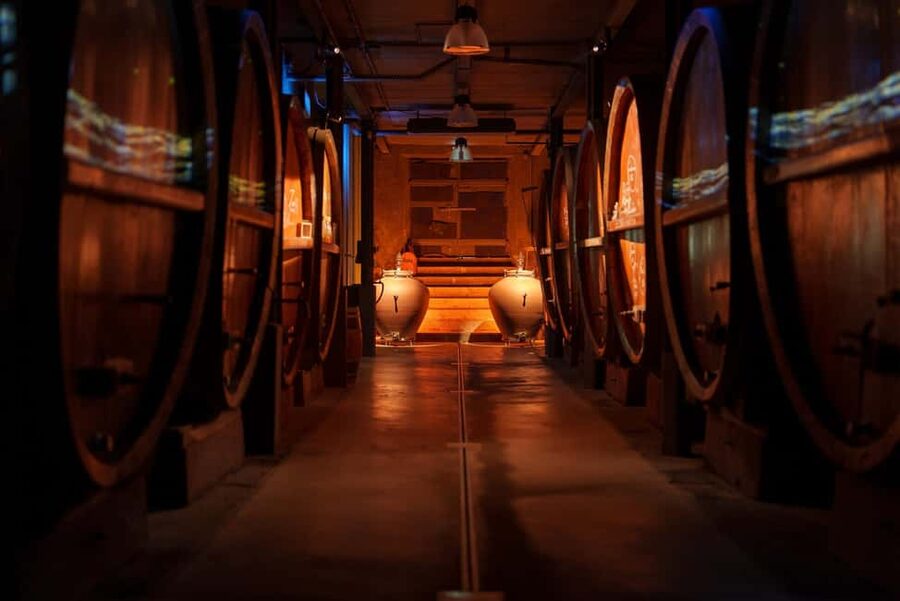
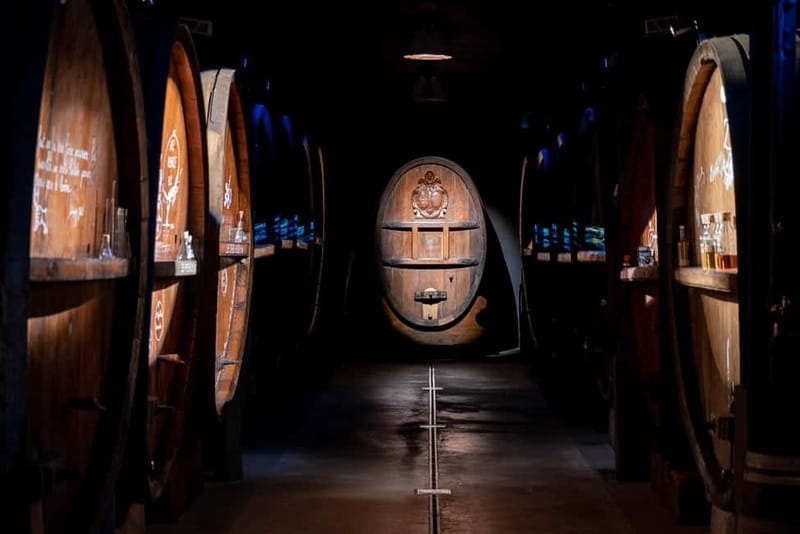
The most unusual part of this Gertwiller experience is the 180° film projected across century-old oak barrels. It turns the working cellar into a small theater, telling the winemaker’s personal story while you sit among the barrels. You also see a cask made for the 1900 Universal Exhibition, a fine bit of wine lore that is easy to miss on a standard tasting.
I like the way the tour connects family wine production since 1778 with a proper Alsatian meal, rather than stopping after a few sips. I also like the organic focus and the plain explanation of the process from grape to bottle. The main consideration is that you do not walk through the vineyards, so this suits you best if cellar work, food, and storytelling matter more than a vineyard hike.
Key points
- A 1850 cellar with a 1900 exhibition barrel: You see a genuine piece of winery history while learning how Alsatian wine is made.
- A 180° barrel-screen film: Video, sound, and barrel mapping create an unusual presentation of the family winery’s story.
- A full Alsatian meal: Soup, Alsatian meat pie, kougelhopf, and Bibeleskaes are served with wine, followed by coffee or tea.
- Organic production: The entire estate completed its organic conversion in 2020.
- A substantial tasting: The wine selection includes Alsatian bottles and Crémant, with one recent session reaching seven wines.
- Family-run atmosphere: The owners work directly with the wine and food, giving the visit a personal feel.
A family winery with 247 years of roots
Vins Zeyssolff, also known as Au Péché Vigneron, traces its family winemaking story to 1778. The cellar used for the tour dates from 1850, so the setting is not a modern tasting room dressed up with a few old props. The wine is stored and handled in a place with a long working life.
That matters because Alsace wine is easiest to understand when you see it as part of everyday regional culture. Here, the visit joins the practical work of making wine with the food people associate with Alsace. You are not simply tasting labels and moving on. You are learning how the bottles fit into the life of the region.
The estate converted its entire production to organic methods in 2020. The tour explains the traditional winemaking process still used in the cellar, following the path from grape to bottle. If you want a technical wine class, this may not go far into chemistry or vineyard management. If you want a clear introduction to how a family cellar functions, it offers the right amount of detail.
More Wine Tastings in France
- Bordeaux: Cité du Vin Entry Ticket and Wine Tasting
★ 4.6 · 3,885 reviews - Montmartre Hill French Gourmet Food and Wine Tasting Walking Tour
★ 5.0 · 2,588 reviews - From Paris: Loire Valley Castles Day Trip With Wine Tasting
★ 4.6 · 1,727 reviews
The one-hour cellar tour, from grape to bottle
The guided cellar portion lasts about an hour. Your guide takes you through the winery and explains the stages of production in sequence. The focus is on the traditional Alsatian method and on the work that continues inside this particular cellar.
The barrel made for the 1900 Universal Exhibition is a memorable stop. It gives the history a physical anchor. You are not hearing only about old winemaking traditions. You are looking at a surviving object connected to a major international event from more than a century ago.
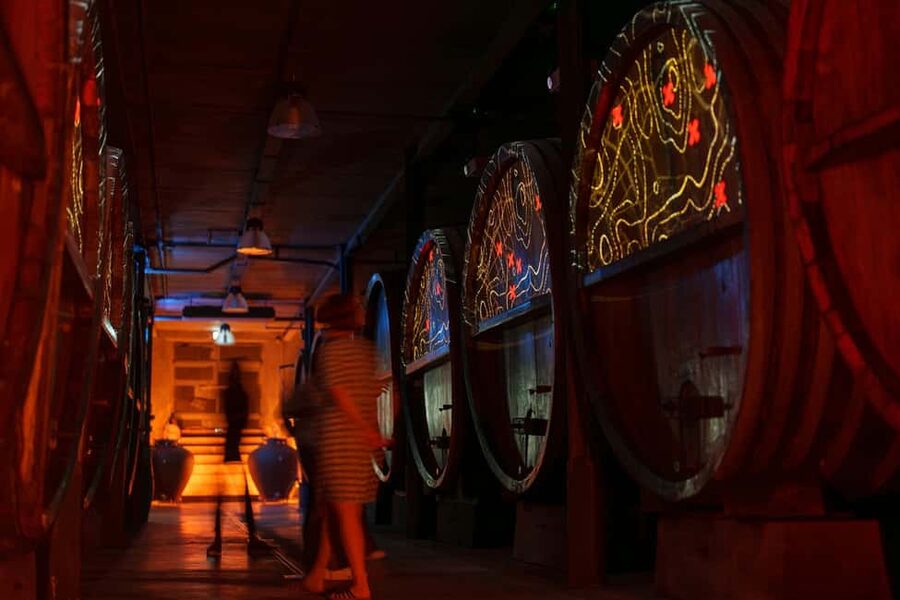
The cellar also contains century-old oak barrels used as part of the film presentation. Their age gives the room character, but the main value is that the barrels remain part of a working wine setting. You can see how the old and new meet here: traditional storage and production beside modern projection equipment.
One point to keep clear is the absence of a vineyard walk. The tour teaches you about vineyard work and the winemaking process, but you experience the vineyards through explanation and visual material rather than by walking among the vines. For some people, that will be a drawback. For others, especially on a rainy day or when time is short, the cellar-based format is efficient.
The cellar may be cool, as working wine cellars often are, so a light extra layer is sensible. That is practical advice rather than a special rule for this tour.
The 180° film projected on oak barrels
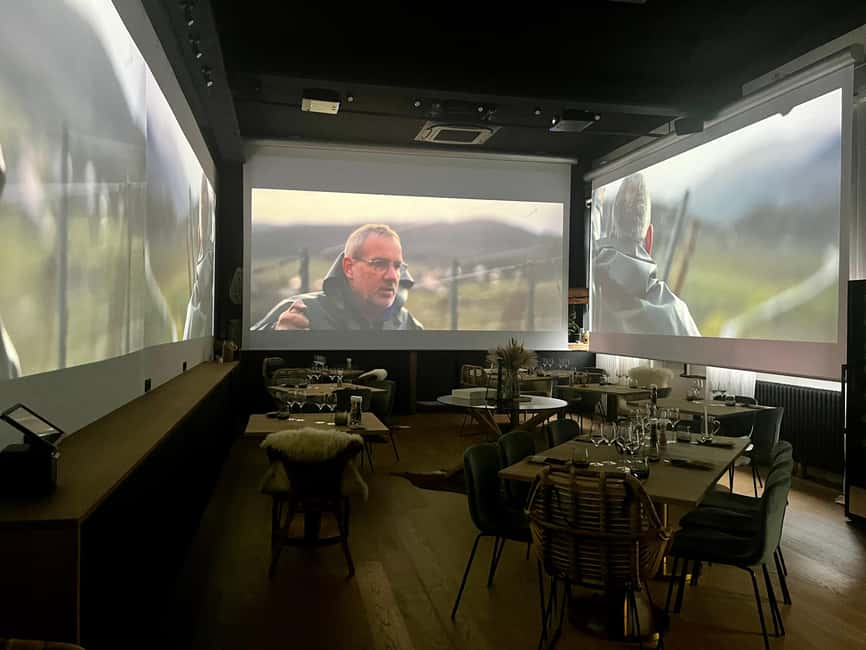
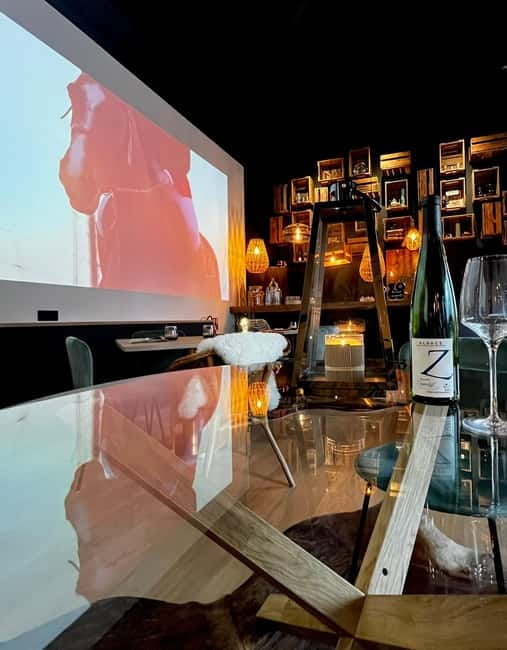
The most distinctive element is the scenographic presentation created after the cellar was renovated in 2020. A 180° film is projected onto the barrels, with sound and mapping used during some sequences. The program tells the winemaker’s personal story and explains the philosophy behind the work.
This is not a standard video shown on a flat screen. The images cover the curved barrels and the surrounding cellar, placing you inside the story rather than making you watch from a distance. The effect is especially useful if you are not already familiar with wine production, since the visual presentation gives the process a strong sense of place.
The film is also a reminder that this is a family business, not only a commercial tasting stop. The presentation is tied to the owner’s own history and way of working. That personal angle helps explain why the meal and the wine tasting are presented together.
Still, you should know what kind of experience you are booking. This is a short, polished audiovisual show within a winery tour, not a museum visit or a historical performance. If you prefer a quiet cellar with nothing but a guide and a glass, the projections may feel theatrical. If you enjoy seeing local history told with modern tools, this is likely to be the tour’s highlight.
Tasting Alsace one glass at a time
The tasting follows the cellar visit. You sample Alsatian wines and learn more about the region’s styles and traditions. Crémant is also included in the selection, giving you a chance to compare sparkling wine with the still wines produced by the estate.
The number of pours can make this more than a token tasting. One recent session included seven wines, which is generous for a 150-minute visit that also includes a meal. The exact lineup may differ, so I would not book expecting a fixed seven-wine flight. The useful point is that you should have enough samples to compare several expressions of Alsace.
Wine is served with the food as well, so the tasting is not isolated from the meal. That gives you a more practical sense of how local wine works at the table. A wine that seems light or sharp on its own can make more sense beside soup, pastry, or cheese.
If you are new to Alsatian wine, listen for the regional context rather than trying to memorize every bottle. The guide explains the wines as part of Alsace, and the food helps make those explanations easier to remember. If you already know the region’s wines, the family cellar, organic production, and unusual barrel history provide the extra interest.
The tour runs in French and English. Pay close attention when booking the language, since the available option matters to how much you gain from the explanations.
Same region, a different bottle:
- Authentic Parisian Gourmet Food Tour with 10 Local Dishes & Wines
★ 5.0 · 4,754 reviews - Loire Valley Castles Day Trip from Paris with Complementary Wine
★ 4.5 · 3,907 reviews - Bordeaux: River Garonne Cruise with Glass of Wine and Canelé
★ 4.5 · 3,630 reviews - Paris: Montmartre Cheese, Wine & Pastry Guided Walking Tour
★ 4.8 · 2,255 reviews
A proper Alsatian lunch in the winery
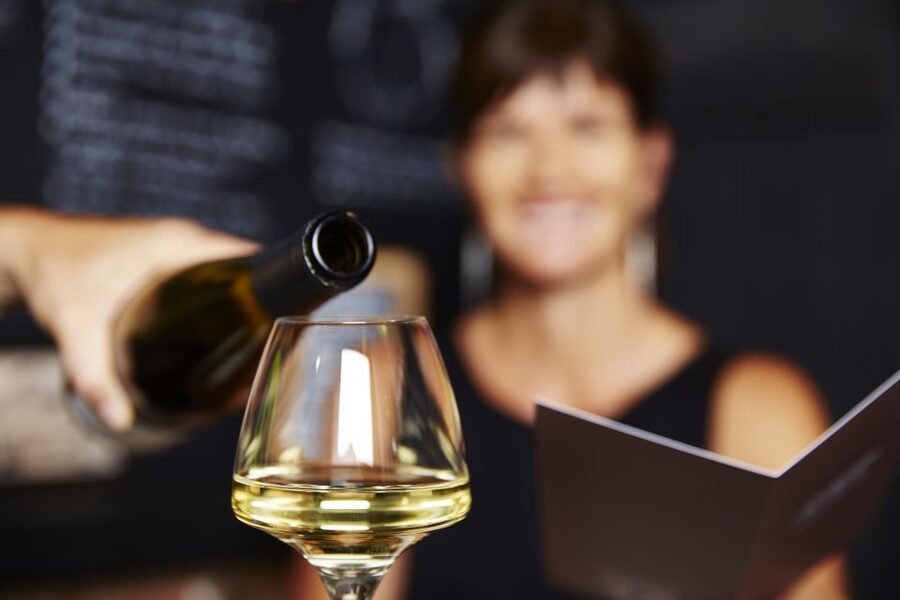
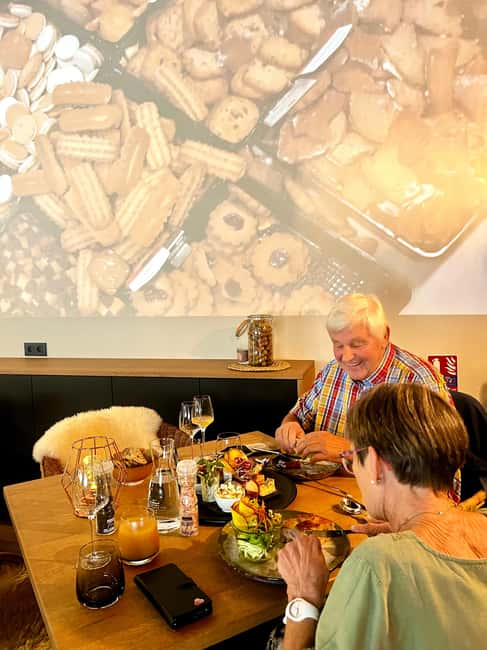
The meal is one of the strongest reasons to choose this experience instead of a short tasting alone. You eat in the winery’s new 100 percent immersive dining space, the same general setting where wine is labeled at other times. Lounge music and projected images continue the winery’s visual theme.
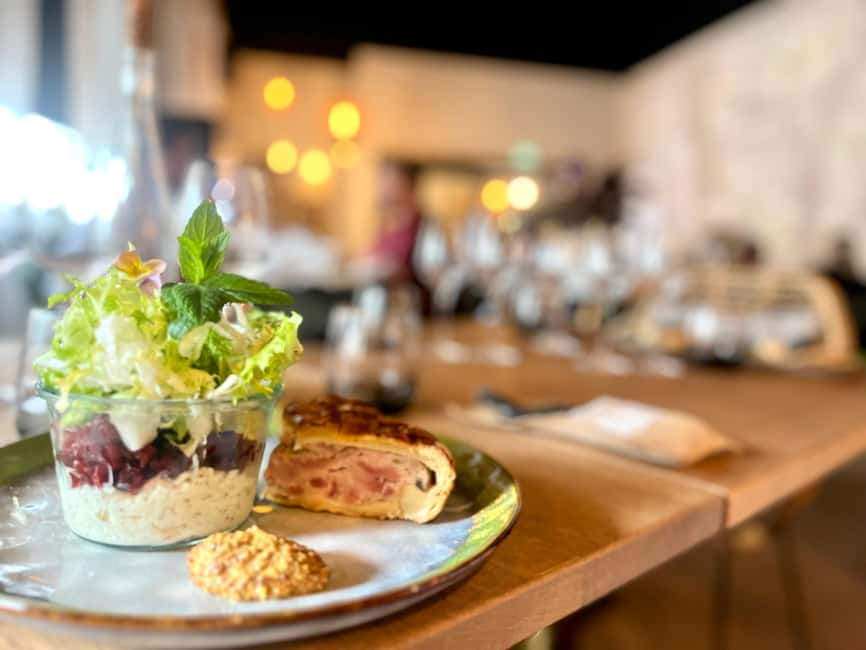
The published meal includes a soup, followed by Alsatian meat pie. Dessert brings two regional specialties: a slice of kougelhopf and Bibeleskaes, a creamy Alsatian fromage blanc. Coffee or tea finishes the meal.
This is a useful introduction to Alsace because it covers several different textures and types of food. The soup offers a warm start, the meat pie gives you a more substantial savory course, and the two desserts show different sides of local cooking. Kougelhopf is a well-known Alsatian ring-shaped cake, while Bibeleskaes is a fresh, creamy cheese preparation.
Food details can vary by service. One meal described by a Japanese-speaking participant included gazpacho, so the first course may not always be the same soup. I would treat the listed meal as the guide to what is planned, while allowing for seasonal or daily changes.
The wines accompany the dishes, rather than arriving only before or after lunch. That makes the meal feel like part of the wine lesson. It also means this is not the best choice if you want to rush through a tasting before another appointment. Allow the full 150 minutes.
Why the price works at $76
At $76 per person, this is not the cheapest way to taste an Alsatian wine. A simple cellar tasting can cost less and take less time. You are paying for several parts at once: a guided cellar tour, a substantial wine tasting, the 180° film, a regional lunch, dessert, and coffee or tea.
The meal changes the value calculation. If you were already planning to buy lunch and visit a winery separately, combining the two saves time and gives the food a clear connection to the wine. The unusual barrel presentation adds something you cannot get from an ordinary restaurant meal.
I see the price as strongest for people who want a complete half-day-style activity without committing to a full vineyard excursion. It is also a good fit for couples and small groups who want an experience with both food and storytelling.
The value is less clear if you only care about tasting a few high-end bottles or if you prefer to choose your own restaurant. You may also feel the tour is too long if you dislike audiovisual presentations. The fair way to judge it is as a combined winery visit, meal, and cultural show, not as a basic tasting.
The rhythm of the 150-minute visit
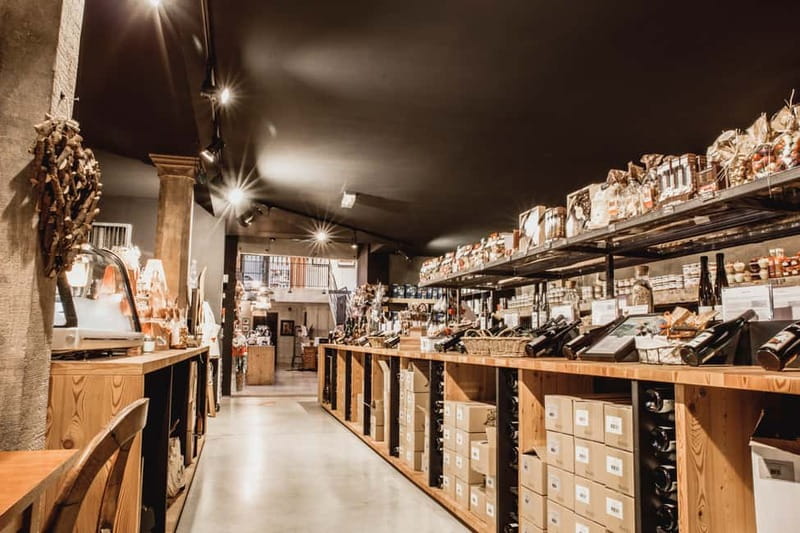
The timing is neatly divided into roughly one hour for the guided cellar tour, one hour for regional food, and about 30 minutes for shopping. That final period gives you time to consider bottles and buy a souvenir without having to make a decision during the meal.
The meeting and return point is at 156 Route de Strasbourg in Gertwiller, though the exact meeting point can depend on the option booked. Check the details you receive before setting out, especially if more than one starting option appears.
Gertwiller is a sensible setting for this kind of visit because the town is connected with Alsatian wine and regional food traditions. Still, the experience itself is centered at the winery. Do not expect a guided tour through several parts of town or a walk through nearby vineyards.
The 150-minute length also makes this easy to fit into a day in the Grand Est region. You get enough time for explanation and lunch, but the visit does not consume an entire day. Just leave room for the meal to run at a comfortable pace, particularly if the tasting includes many wines.
Food choices for children and vegetarians
Vegetarian options are available, but you need to request one in advance. That is important because the standard meal includes Alsatian meat pie.
Children have their own menu with knacks, vegetable chips, a drink, and dessert. You can also choose not to register children in advance and have them select a menu on the spot. The activity therefore works for families, though the adult wine tasting and cellar presentation are clearly the main focus.
For children who enjoy food, old barrels, and visual shows, the setting may keep the visit interesting. For very young children, the one-hour guided cellar section and the meal timing may require patience. The available children’s menu makes the practical side easier, but the supplied information does not specify a separate children’s tour.
Who will enjoy this Gertwiller experience
I would choose this tour if you want:
- A family-run winery rather than a large commercial wine center
- A clear introduction to the Alsace wine process
- A full regional meal with wine pairings
- An unusual visual presentation inside a historic cellar
- A tasting that may include several wines and Crémant
- A flexible plan with free cancellation up to 24 hours before the activity
It is especially useful for first-time visitors to Alsace who want wine and food in one stop. The guide explains the region while the meal gives you something concrete to connect with those explanations.
I would hesitate if your priority is walking through vineyards, visiting several wineries, or spending a long time on detailed grape analysis. This is one winery, one cellar, one meal, and one carefully produced presentation. Its strength is the combination.
Should you book it?
Book this experience if you want more than a tasting flight. The 1850 cellar, the 1900 exhibition barrel, the organic production, the barrel-screen film, and the Alsatian lunch give the visit several layers. The high 4.9 rating from 51 ratings also fits the clear pattern of strong satisfaction with the food, wine, guide, and warm family welcome.
The best reason to go is simple: you can understand the wine, taste it, and eat the food it belongs with, all in one place. The main reason to skip it is equally simple: you will not walk the vineyards, and the audiovisual presentation may not suit you.
For most people spending time in the Grand Est, I think the $76 price is fair when you want a relaxed, personal, food-centered wine experience. Reserve the English option if needed, request a vegetarian meal in advance, and leave enough time to enjoy the cellar rather than treating it as a quick stop.
FAQ
How long does the Alsatian wine tour last?
The full activity lasts 150 minutes, or two and a half hours. The plan includes about one hour for the cellar tour, one hour for regional food, and 30 minutes for shopping.
Where does the experience take place?
The activity takes place at Vins Zeyssolff, also called Au Péché Vigneron, in Gertwiller, Grand Est, France. The stated address is 156 Route de Strasbourg, though the meeting point can vary by the option booked.
What languages are available?
The tour is offered in French and English. Check the language carefully when booking.
Is lunch included?
Yes. Lunch includes Alsatian specialties, coffee or tea, and dessert. The listed meal includes soup, Alsatian meat pie, kougelhopf, and Bibeleskaes.
Which wines are included?
You taste Alsatian wines, including Crémant. Wine is also served with the meal. The exact selection is not specified, and one session included seven wines.
Is the winery organic?
The entire estate completed its organic conversion in 2020. The tour explains the winery’s production and cellar practices.
Is there a vineyard walk?
No vineyard walk is included in the stated itinerary. The experience focuses on the winery, cellar, wine tasting, immersive film, lunch, and shopping.
Are vegetarian meals available?
Yes. A vegetarian option is available, but you must specify it in advance.
Is there a children’s menu?
Yes. The children’s menu includes knacks, vegetable chips, a drink, and dessert. Children can also choose a menu on the spot if they are not registered in advance.
More Long Lunches in France
- From Paris: Day Trip to Champagne with 8 Tastings & Lunch
★ 4.8 · 1,501 reviews - Paris Cooking Class and Lunch with Wine plus Market Visit Option
★ 5.0 · 1,024 reviews - Saint-Emilion Electric Bike Day Tour with Wine Tastings & Lunch
★ 5.0 · 696 reviews - Champagne Day Trip from Paris with 8 Tastings & Lunch
★ 4.5 · 607 reviews
Newest wine reviews around France
- Saint Emilion Full Day Wine and Bike Tour★ 5.0 · 167 reviews
- Private Bordeaux History Tour with a glass of Bordeaux wine.★ 5.0 · 28 reviews
- Private – Best of Bordeaux Walking Tour + Glass of Bordeaux Wine★ 5.0 · 240 reviews
- Medoc Afternoon Wine Tour – 2 Wineries, tastings & delicacies★ 4.5 · 74 reviews
- Luxurious full day Bordeaux wine tour in a Tesla★ 4.5 · 31 reviews
- Bordeaux wines tasting workshop including Food & Wine pairings★ 5.0 · 31 reviews
- Wine Masterclass & Cheese Tasting Workshop in Bordeaux★ 5.0 · 29 reviews
- Discovery of the Bordeaux vineyard in 3 wines★ 5.0 · 133 reviews
Wine Tastings, compared.
Douro Valley w/ Boat Tour, Wine Tasting & Lunch
Read our review →
Complete Douro Valley Wine Tour with Lunch, Wine Tastings and River Cruise
Read our review →
Small-Group Wine Tasting Experience in the Tuscan Countryside
Read our review →
Montserrat & Cogwheel Train, Gourmet Wine Tasting & Tapas/Lunch
Read our review →
Tuscany & Montepulciano Day Trip with Lunch & Wine Tasting
Read our review →
SMALL-GROUP Wine Safaris: Tuscan Wine Tasting Tours from Florence
Read our review →Lists this tasting appears in