
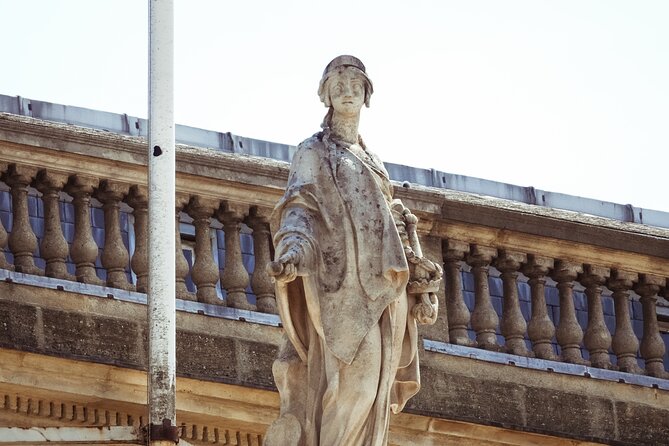
Reviewed · BORDEAUX WINE TOURS
Private Bordeaux History Tour with a glass of Bordeaux wine.
Bordeaux’s story unfolds quickly on this private walk, from the Gothic towers of Saint-André Cathedral to the medieval Porte Cailhau and the grand sweep of Place de la Bourse. I like the one-group format, which lets your guide adjust the pace and answer your questions. I also like the final glass of Bordeaux wine, a simple way to connect the city’s past with its best-known modern pleasure.
The tradeoff is pace. You cover about 13 stops in two hours, so most landmarks are viewed from outside and some stops last only five minutes. If you want long interior visits, this is not the right outing. If you want a clear first look at central Bordeaux, it uses your time well.
Key points at a glance
- Private from start to finish: Only your group takes part, with an English-speaking guide.
- A fast route through central Bordeaux: The walk links Saint-André Cathedral, Porte Cailhau, Place de la Bourse, the Grand Théâtre, and Place des Quinconces.
- Strong historical range: Expect stories about Eleanor of Aquitaine, Bordeaux’s English rule, the French Revolution, and the city’s urban redesign.
- Mostly exterior sightseeing: Monument entrances are not included, and the short schedule favors views, explanations, and photographs.
- Wine included at the end: Your booking includes one glass of Bordeaux wine at a partner bar.
- Good personal guide reports: Victor and Emma have led tours praised for clear explanations, warmth, and the ability to follow a group’s interests.
Why this private Bordeaux walk works
I like tours that help you understand a city before you spend the rest of your stay exploring on your own. This one gives you a useful map of Bordeaux’s historic center without asking you to commit half a day.
The route starts at Bordeaux Cathedral and ends at Place des Quinconces. Along the way, you pass religious monuments, old city gates, grand squares, shopping streets, covered passages, and revolutionary memorials. That mix matters. Bordeaux is not just a wine city. Its character comes from the meeting of medieval power, English connections, 18th-century town planning, commerce, religion, and politics.
The private format is the biggest practical advantage. With only your own group, you can ask why Bordeaux became English, how the city changed under its long-serving mayor, or where the best local wine experience might fit into your schedule. Guides Victor and Emma are specifically associated with this experience, and the strongest praise centers on their clear explanations and friendly manner.
At $90.36 per person, the tour is not the cheapest way to see Bordeaux. The price makes more sense for a small group that values private attention. If four people book together, the cost buys a dedicated guide and a wine stop. For one person or a couple watching every euro, a group walk or self-guided route may offer better value.
More History Tours in Bordeaux:
- Douro Valley: Historical Sites, Wine Experience, Lunch & Cruise
★ 5.0 · 5,133 reviews - Barcelona: Tapas Walking Tour with Food, Wine, and History
★ 4.8 · 4,261 reviews - Sevilla Food Tour: Tapas, Wine, History & Traditions
★ 5.0 · 3,468 reviews
Starting beneath Saint-André Cathedral
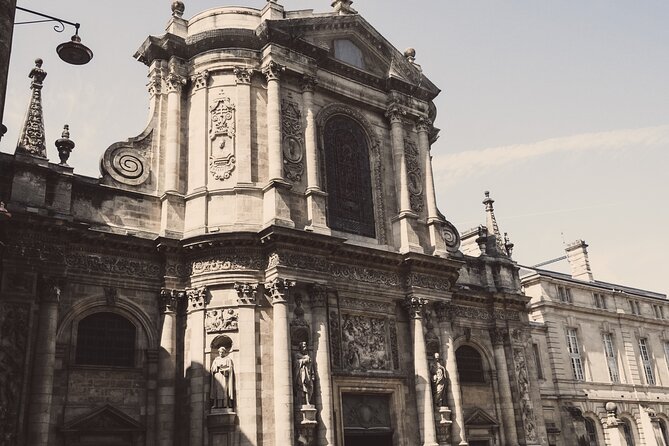
Meet at Cathédrale Saint-André de Bordeaux, on Place Pey Berland. This is a sensible starting point because the cathedral immediately gives you the scale and age of the city.
Your guide introduces the cathedral’s Gothic design, its tall nave, carved façade, and place in Bordeaux’s religious life. You also hear about its royal connection, including the marriage of Eleanor of Aquitaine and King Louis VII. That detail turns the building from an impressive church into a doorway to medieval European politics.
The cathedral stop lasts about 15 minutes and admission is free, but entrance inside monuments is not included. Treat this part as an exterior introduction unless your guide or the timing allows something more. If you want a careful look at the interior, organ, or architectural details, plan a separate visit.
From here, the walk moves toward Tour Pey-Berland and Rue Sainte-Catherine. The stop description connects this section with Bordeaux’s long pedestrian shopping street, described as the longest in Europe. You get a useful contrast between the solemn cathedral square and the daily energy of shops, cafés, and city life.
Medieval Bordeaux on Rue du Loup
Rue du Loup provides a change of scale. Instead of focusing on a huge monument, the guide points out medieval architecture and explains how Bordeaux became part of the English realm.
That political shift is one of the most useful subjects on the tour. It helps explain why Bordeaux grew wealthy through trade and wine, and why its identity cannot be reduced to modern French culture alone. You are not just looking at old stone. You are learning how control of the city affected its economy and place in Europe.
The stop is scheduled for about ten minutes. Expect a compact explanation rather than a long architectural inspection. This is a good place to ask questions, especially if you want the story behind Bordeaux’s English period made clearer.
Place du Palais and Porte Cailhau
Place du Palais introduces the design of Bordeaux’s urban spaces. Your guide explains the thinking behind the square rather than simply naming the buildings around it. That kind of context is useful because Bordeaux’s center can look like a series of handsome façades until someone points out how the pieces fit together.
Porte Cailhau is one of the route’s strongest stops. This 15th-century gateway once served as a main entrance to the city and commemorated King Charles VIII’s victory at Fornovo. Its Gothic and Renaissance details give you something to study, while its defensive role explains why gateways mattered in a walled city.
The schedule allows about 15 minutes here. You will have time for photographs and a short explanation, but not a full museum-style visit. Since admission inside monuments is excluded, plan on appreciating the gate from the street unless you arrange another visit.
More Wine Tours in Bordeaux:
- Bordeaux: Cité du Vin Entry Ticket and Wine Tasting
★ 4.6 · 3,885 reviews - Bordeaux: River Garonne Cruise with Glass of Wine and Canelé
★ 4.5 · 3,630 reviews - From Bordeaux: Afternoon Saint-Emilion Wine Tasting & snack
★ 4.8 · 1,581 reviews - Medoc or Saint Emilion Wine Tasting and Chateau from Bordeaux
★ 5.0 · 1,415 reviews
Place de la Bourse and the riverfront story
Place de la Bourse is one of Bordeaux’s defining views. The grand architecture reflects the city’s 18th-century confidence, and the nearby Miroir d’Eau adds a modern public space that often catches reflections of the façades.
The stop itself is listed as about five minutes, so the guide’s job is to give you the essential story and point out what deserves a closer look later. I would not rush away after the tour if you have time. This is one of the places where a short orientation pays off, because you can return independently for photographs and a slower look.
The broader route also identifies Pont de Pierre among Bordeaux’s important monuments, though the detailed stop list does not give it a separate visit. Keep that in mind when comparing this tour with a river-focused walk. You receive a central overview, not a dedicated bridge or waterfront tour.
Grand Théâtre, Place Gambetta, and Passage Sarget
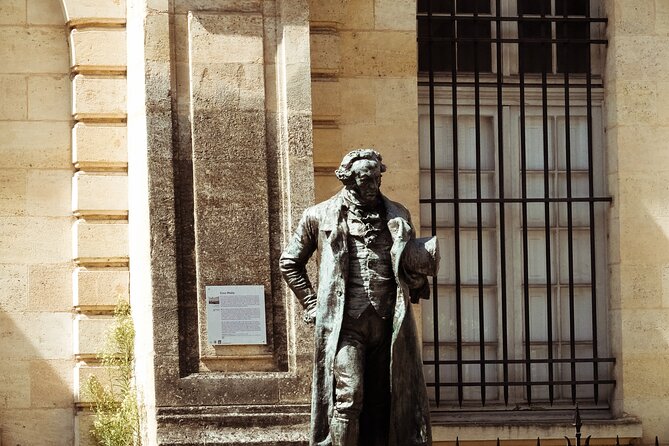
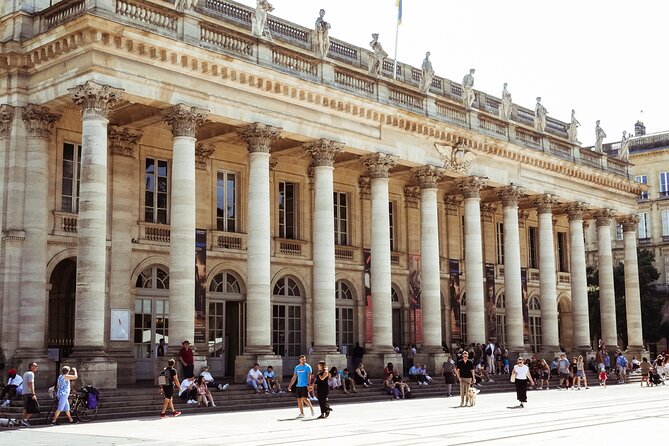
The Grand Théâtre is another major exterior highlight. Designed by Victor Louis and completed in 1780, it is known for its neoclassical colonnade and statues of the nine muses and goddesses. Your guide explains how it fits into Bordeaux’s artistic life and points out its grand architectural features.
The stop is only about five minutes. That is enough to understand why the building matters, but not enough for a leisurely interior visit. The theatre’s staircase, chandelier, and performance spaces are not part of the included tour. If those details interest you, schedule a separate entrance when possible.
Place Gambetta shows another side of Bordeaux. The square began as a western gate area and later became part of the city’s 18th-century transformation. Its gardens and surrounding buildings offer a quieter pause from the shopping streets. The guide also links the square to political events during the French Revolution.
Passage Sarget is a smaller but worthwhile stop. This late-19th-century covered passage connects Rue de la Porte-Dijeaux with Place des Grands-Hommes. Look for its glass roof, ironwork, and polished stone details. It reflects the era when arcades combined shopping, social life, and shelter from the weather.
The passage receives about ten minutes, which is more generous than the Grand Théâtre stop. That gives you time to notice the design instead of merely passing through.
Notre-Dame and the broad avenues
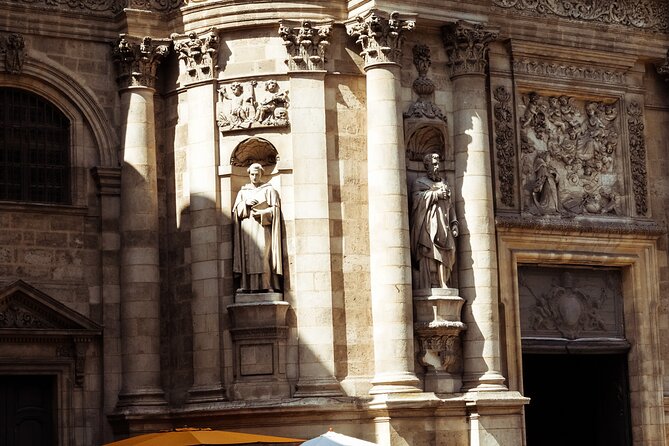
Place du Chapelet brings you to the Church of Notre-Dame, a 17th-century church known for its organ. The guide also explains its connection to a famous painter’s 19th-century funeral. It is a quieter cultural stop, useful for understanding how churches served as places of worship, music, ceremony, and public memory.
Allées de Tourny then shifts the focus to urban planning. This broad, tree-lined avenue was part of the work that reshaped Bordeaux and influenced later city planning in Paris. The stop lasts about five minutes, so listen for the main idea: Bordeaux’s elegant center was not accidental. It was planned and rebuilt in stages.
This section of the walk is especially useful if you care about how cities function. You see the difference between medieval streets, 18th-century avenues, covered passages, and formal squares within a relatively short distance.
Monument aux Girondins and Place des Quinconces
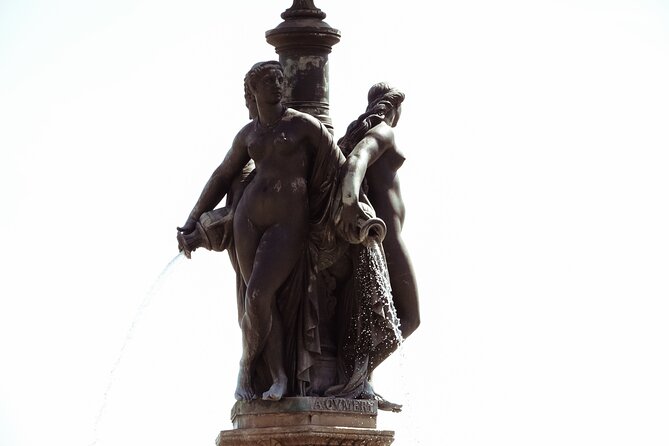
The tour ends at Place des Quinconces, one of Bordeaux’s largest public squares. The Monument aux Girondins rises here in memory of Girondin deputies who died during the French Revolution.
The monument’s sculptures refer to liberty, the Republic, and Bordeaux’s connection with the sea. It is dramatic, symbolic, and easy to appreciate even if you know little about the Revolution. Your guide helps explain the political story behind the statues instead of leaving you to guess from the stonework.
Ending here makes practical sense. You finish near a major open space and can continue exploring in several directions. The walk does not return you to the cathedral, so remember that the meeting and ending points are different.
The Bordeaux wine finish
A glass of Bordeaux wine at a partner bar is included. This is not presented as a full tasting or vineyard visit, and you should not expect a lesson covering every appellation in the region. It is a modest but fitting finish after a walk through the city’s political and commercial past.
I like this part because it gives the tour a social ending. You can ask your guide for a company recommendation afterward, another included feature that may help shape the rest of your stay. The experience provider also offers a top recommendation at the end of the tour, which is useful if you want ideas for food, wine, or nearby sights.
If wine is not your interest, the historical portion still carries the tour. The glass is an added touch, not the main event.
Timing, walking, and value
Two hours is a practical length for a first introduction. It is short enough to fit around a meal, museum visit, or afternoon train, yet long enough to connect many major sights.
The route is a walking tour through central Bordeaux. Wear comfortable shoes and expect regular stops rather than a seated presentation. Since the itinerary includes 13 named stops, the guide will need to keep moving. You get breadth more than long visits.
The strongest value comes from the private setup. A standard admission-free walking route can show you many of these places, but it cannot adjust as easily to your interests. If your group wants more architecture, less politics, or extra attention to Bordeaux’s English period, private guiding makes that possible.
The weaker value appears if you want interior access. Cathedral, theatre, and monument admissions are not included. You are paying for the guide’s interpretation, route planning, and personal attention, not a bundle of tickets.
Free cancellation is available up to 24 hours before the start time. Changes or cancellations made less than 24 hours ahead are not accepted, and the cut-off follows local Bordeaux time.
Who should book this tour?
I would choose this experience for a first visit, especially if you want to understand Bordeaux before exploring its museums, wine bars, and riverfront on your own.
It suits couples, families, and small groups who prefer a private guide to a large walking party. It also works well for people who enjoy asking questions. The examples of Victor and Emma suggest that the guiding style can be personal and detailed, with room to follow a group’s particular interests.
I would choose something else if your main goal is a long wine tasting, a visit inside several monuments, or a slow photography walk. The schedule is too tight for that. I would also compare the cost carefully if you are traveling alone.
FAQ
How long does the Bordeaux history tour last?
The tour lasts approximately two hours.
Where does the tour begin?
It begins at Bordeaux Cathedral, Cathédrale Saint-André de Bordeaux, on Place Pey Berland.
Where does the tour end?
The tour ends at Place des Quinconces.
Is the tour private?
Yes. Only your group participates in the private tour or activity.
Is wine included?
Yes. The tour includes one glass of Bordeaux wine at a partner bar.
Are entrance tickets to the monuments included?
No. Entrance inside the monuments is not included. The listed stops are free from an admission-ticket standpoint, but the experience is primarily an exterior walking tour.
Should you book it?
Book this tour if you want a fast, private orientation to Bordeaux with an English-speaking guide and a glass of local wine at the end. Its best qualities are the personal format, broad central route, and strong historical range, from medieval Bordeaux to the French Revolution and 18th-century city planning.
Skip it if you want extended time inside the cathedral or theatre, or if you are mainly seeking a vineyard excursion. For most first-time visitors with two hours to spare, the $90.36 price is reasonable when shared by a small group that values personal attention.
Newest wine reviews around Bordeaux
- Saint Emilion Full Day Wine and Bike Tour★ 5.0 · 167 reviews
- Private – Best of Bordeaux Walking Tour + Glass of Bordeaux Wine★ 5.0 · 240 reviews
- Medoc Afternoon Wine Tour – 2 Wineries, tastings & delicacies★ 4.5 · 74 reviews
- Luxurious full day Bordeaux wine tour in a Tesla★ 4.5 · 31 reviews
- Bordeaux wines tasting workshop including Food & Wine pairings★ 5.0 · 31 reviews
- Wine Masterclass & Cheese Tasting Workshop in Bordeaux★ 5.0 · 29 reviews
- Discovery of the Bordeaux vineyard in 3 wines★ 5.0 · 133 reviews
- Bordeaux Wine Masterclass: Blending workshop with appetizer★ 5.0 · 113 reviews
Bordeaux Wine Tours, compared.
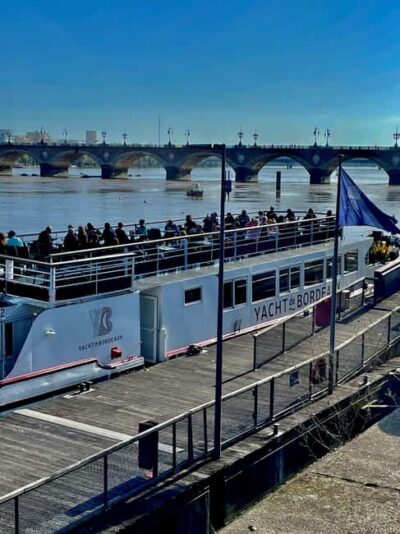
River Garonne Cruise with Glass of Wine and Canelé
Read our review →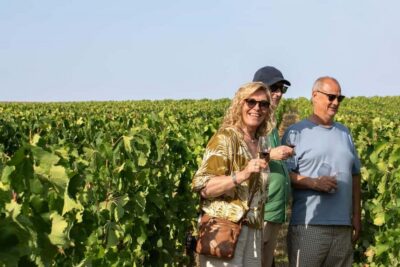
Afternoon Saint-Emilion Wine Tasting & snack
Read our review →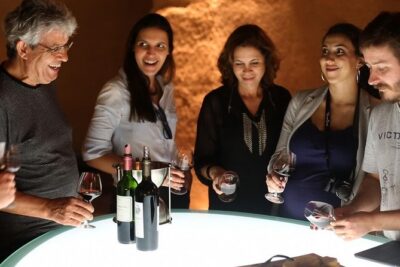
Medoc or Saint Emilion Wine Tasting and Chateau from Bordeaux
Read our review →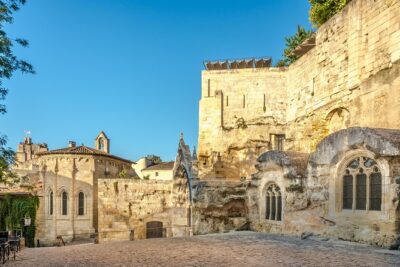
Saint Emilion Day Trip with Sightseeing Tour & Wine Tastings from Bordeaux
Read our review →
Saint-Emilion Electric Bike Day Tour with Wine Tastings & Lunch
Read our review →Lists this tasting appears in