
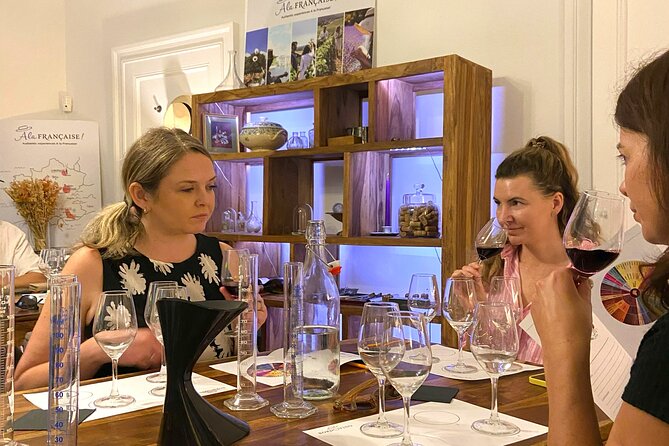
Reviewed · BORDEAUX WINE TOURS
Bordeaux Wine Masterclass: Blending workshop with appetizer
The most useful part of this Bordeaux wine masterclass is the blending exercise. After tasting French wines and learning how to read a label, you mix Merlot and Cabernet Sauvignon yourself. It turns an abstract lesson about Bordeaux into something you can taste in the glass.
I like the small group of no more than 12 and the relaxed, seated format. I also like the wide French focus: you do not taste only Bordeaux, but compare wines from Burgundy, Côtes du Rhône, Bordeaux, and the Loire Valley. The main consideration is timing. The tour is listed at about 90 minutes, while the description calls it a two-hour workshop, so plan a little flexibility.
Key points at a glance
- Taste across France: Sample at least seven wines, with the description indicating eight, from several major French regions.
- Make a Bordeaux blend: Work with local Merlot and Cabernet Sauvignon to see how proportions change the final wine.
- Learn practical wine skills: Practice aromas, color, flavor, terminology, label reading, and regional distinctions.
- Enjoy a modest food pairing: Expect cheese, cured meats, fresh bread, and chocolate, though the food is secondary to the wine.
- Meet an English-speaking guide: Past sessions have been led by guides including Gabriel, Chloé, Victoire, Fabien, Dorian, Hugo, and others.
- Allow extra time: The stated duration varies between 1 hour 30 minutes and 2 hours.
Starting at 3 Rue d’Enghien in central Bordeaux
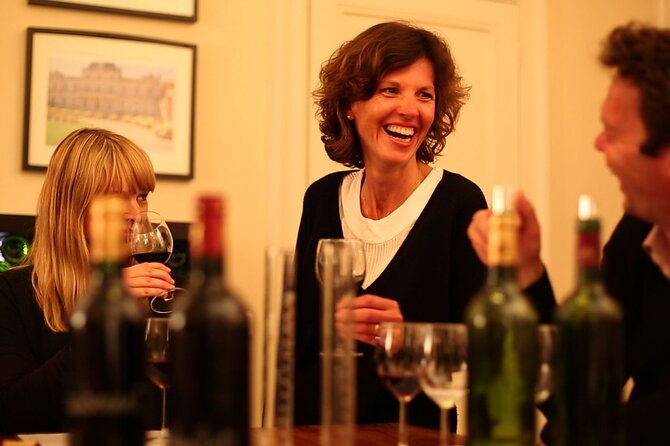
The experience begins at 10:30 am at 3 Rue d’Enghien, 33000 Bordeaux. It returns to the same meeting point, so you do not need to arrange a taxi, shuttle, or separate ride to a vineyard.
That simple setup is useful if you are staying in Bordeaux and want a wine activity without spending half a day on the road. It also works well early in a trip. You get a working vocabulary before you visit wine shops, château estates, or villages such as Saint-Émilion.
The session is offered in English. French is not offered as part of the stated tour, so English-speaking visitors should find the format straightforward. Confirmation is provided when you book, and the activity is limited to 12 people.
The age rule matters: you must be at least 18 to take part. Pets are not allowed. Most people can participate, but the available information does not describe special accessibility arrangements, so ask the operator directly if you have mobility needs.
More Workshops in Bordeaux:
- Bordeaux: Introduction to Bordeaux Wines Tasting Workshop
★ 4.8 · 196 reviews - Bordeaux Super Saver Wine Tasting class and St Emilion region
★ 5.0 · 184 reviews - Guided Bordeaux Wine Tasting Class with 6 Wines and pairings
★ 4.9 · 181 reviews
A quick tour of French wine regions
Your guide begins with an overview of France’s main wine regions. This is more useful than it may sound. French wine labels often emphasize the place and appellation rather than printing the grape variety in large type, which can make a bottle confusing if you are used to New World labels.
You learn terms such as terroir and appellation, then apply them while tasting. Terroir refers broadly to the environmental and local factors that shape a wine, while an appellation identifies a regulated wine-producing area with its own rules. You do not need to memorize every French classification. The point is to understand what the label is telling you and what it leaves for you to discover.
The selection includes wines from Burgundy, Côtes du Rhône, Bordeaux, and the Loire Valley. That range gives the class a useful comparative purpose. Burgundy helps place attention on a different regional tradition, Rhône wines bring another set of grapes and styles, Bordeaux provides the central lesson, and Loire wines widen the picture beyond the famous regions.
One practical benefit is that you start learning how to describe your own taste. Instead of saying only that you like or dislike a bottle, you can pay attention to fruit, acidity, body, aroma, color, and structure. Those words are useful when ordering wine with dinner or asking for help at a shop.
Smelling, looking, and tasting with purpose
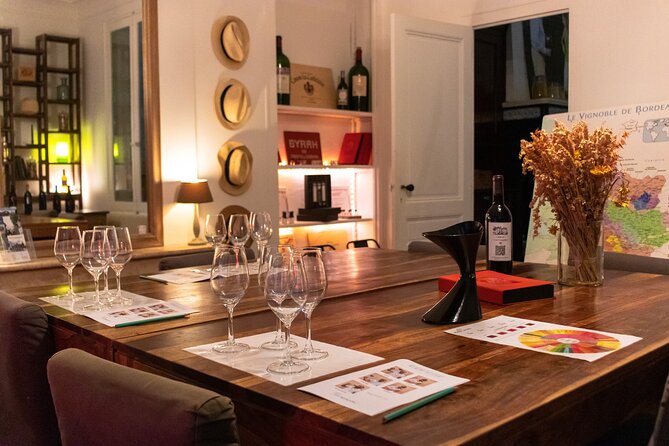
The class covers the basic mechanics of tasting. You examine the wine’s color, look for aromas, and then taste for flavor and balance. The smelling exercises are meant to sharpen your attention rather than turn you into a professional taster in one morning.
That distinction matters. Wine tasting is not a test of whether you can identify a precise fruit or vineyard. It is a way to slow down and notice what is in the glass. The guide helps you connect what you smell and taste with the wine’s grape, region, and production method.
Several guides have received warm praise for making this material easy to follow. Gabriel is described as especially attentive with questions. Chloé and Victoire are noted for friendly, clear instruction, while Fabien is credited with explaining how blending works. Other named guides include Dorian, Hugo, Rémi, Hector, Carol, and Fabian.
The exact guide depends on the date of your booking. The consistent theme is an informal class in which questions are encouraged. That makes this a good choice for beginners who might feel awkward in a formal tasting room, but it also has enough detail for people who already know the basics.
An experienced wine drinker can use the blind tasting and comparison work as a challenge. One session was particularly useful for comparing how different blends relate to Bordeaux’s Left Bank and Right Bank styles. The experience does not promise a professional qualification, but it gives you a sharper way to think about why two red wines can taste so different.
Seven or eight wines, plus a French appetizer plate
The included tasting covers at least seven different French wines. The detailed description says eight, so expect seven or more rather than relying on one exact number.
The wines are paired with a French appetizer platter containing cheese, cured meats, fresh bread, and chocolate. This is a pleasant part of the class, especially because food gives you a chance to see how a wine changes with salt, fat, sweetness, and texture.
Keep your expectations sensible. The food is a tasting accompaniment, not a full lunch. One account found there was plenty of wine but not much food, so eat beforehand if you need a substantial meal. The platter adds value and makes the class more social, but the wine instruction is the reason to book.
The variety of wine is also worth noting. If you expect an exclusive Bordeaux tasting, this may surprise you. The focus is Bordeaux, especially the final blending exercise, but much of the early lesson introduces French wine as a whole. That broader approach is useful for a first introduction and less ideal if you want a technical tasting devoted only to Médoc, Saint-Émilion, or Pomerol.
More Wine Tours in Bordeaux:
- Bordeaux: Cité du Vin Entry Ticket and Wine Tasting
★ 4.6 · 3,885 reviews - Bordeaux: River Garonne Cruise with Glass of Wine and Canelé
★ 4.5 · 3,630 reviews - From Bordeaux: Afternoon Saint-Emilion Wine Tasting & snack
★ 4.8 · 1,581 reviews - Medoc or Saint Emilion Wine Tasting and Chateau from Bordeaux
★ 5.0 · 1,415 reviews
The Bordeaux blending workshop
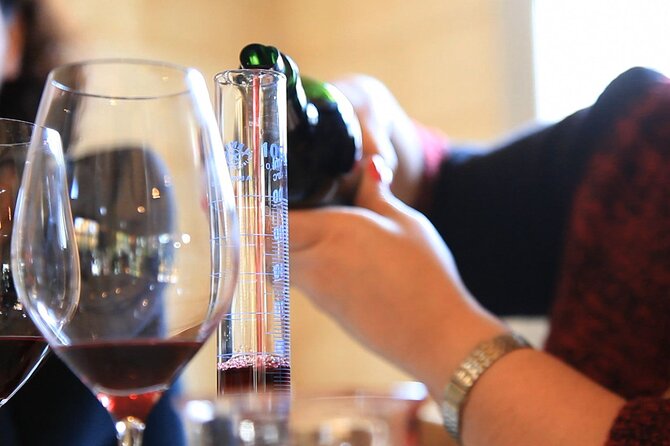
The final exercise is the heart of the class. You create a personal blend using two grapes associated with Bordeaux: Merlot and Cabernet Sauvignon.
You taste the components and then combine them. This demonstrates why Bordeaux producers blend rather than rely on one grape alone. Merlot can bring a softer, rounder character, while Cabernet Sauvignon can contribute structure and firmness. The finished result depends on proportion, and your own mixture gives you a direct lesson in balance.
You also get a practical sense of why two wines can seem better together than apart. A blend may soften a sharper component or add shape to a rounder one. You do not simply hear about the process from a guide. You make a small decision, taste the result, and compare it with other combinations.
This part is especially helpful if you plan to visit Bordeaux châteaux later in your trip. You will have a basic understanding of what the winemaker is trying to achieve when different lots are combined. It also gives the class a clear ending instead of leaving you with a series of unrelated samples.
At departure, you receive a diploma as a souvenir of the workshop. It is a small keepsake rather than a formal wine credential, but it adds a pleasant finish.
Why the small group matters
A maximum of 12 people is a good size for this kind of class. You can ask questions without trying to speak over a crowd, and the guide has a realistic chance to check in with the group during the tasting and blending work.
The social side is part of the appeal. You are seated with people who have come to learn about wine, and the food platter gives you an easy way to talk between pours. The format has also been used for birthday trips, friend groups, and hen parties, though it remains focused enough for solo participants and couples.
The tone appears to be relaxed rather than formal. Guides answer questions, share regional background, and keep the lesson moving. That balance is important. A class that is too technical can lose beginners, while a purely social tasting may leave experienced drinkers wanting more substance.
The tradeoff is that a group of 12 is intimate, not private. If you want one-on-one coaching or a custom tasting built around your favorite grapes, this is not that sort of appointment. You are joining a set lesson with a shared sequence of wines.
Value at $54.42 per person
At $54.42 per person, the price is reasonable if you value instruction as much as the wine itself. The fee includes the guide, the tasting, the appetizer platter, the blending activity, and the diploma. You are also paying for a central Bordeaux experience that does not require transportation outside the city.
The price is less compelling if your only goal is to drink a large quantity of wine. The food is light, and the session lasts roughly 90 minutes to two hours. This is an educational tasting, not a long meal or a full-day vineyard outing.
I see the best value for visitors who want to build confidence before buying French wine or touring château estates. A single well-explained lesson can help you get more from later tastings. You learn the terms, compare several regions, and practice describing what you like.
There is also a useful timing advantage. The 10:30 am start leaves the rest of the day open for Bordeaux sightseeing, lunch, or another wine activity. If you are planning an afternoon excursion to a vineyard, this workshop can work as a classroom introduction. Just leave enough time between bookings because the stated duration is not completely consistent.
What this class does not replace
This workshop does not take you into the vineyards or show you a working château. You do not get hotel pickup, drop-off, or a rural estate visit. The experience takes place at the Bordeaux meeting point and ends there.
That is not a flaw if you want a compact city activity. It is a limitation if your main goal is to see vines, cellars, barrels, or production facilities. Pair this class with a separate Saint-Émilion or Médoc outing if you want both the theory and the countryside.
It also does not promise a sommelier qualification. You receive a diploma, but the real result is practical familiarity with French wine. You should leave better prepared to read a label, discuss a bottle, notice aromas, and understand the basic purpose of blending.
Who should book it
I would point beginners toward this class first. You get structure without needing prior wine knowledge, and the guide explains the vocabulary while you taste. The class also suits couples, small friend groups, and anyone looking for a social morning activity in Bordeaux.
It works for experienced wine drinkers who enjoy blind tasting and want a hands-on look at Bordeaux blending. The session may feel introductory if you already know French appellations, grape chemistry, and regional classifications in detail, but the practical blending exercise can still make it worthwhile.
You should book it if you want a short, central, English-language wine lesson with food and a participatory finish. Choose something else if you want a full meal, a private tasting, or a day among the vineyards.
Free cancellation is available if you cancel at least 24 hours before the start time. Cancellations made later are not refunded, and changes are not accepted within that same 24-hour window. The activity also requires a minimum number of participants, so an operator cancellation may result in another date, another experience, or a full refund.
Final call: a smart first wine activity in Bordeaux
This is a strong choice for getting your bearings with French wine. The best features are the small group, the range of regions, the clear tasting practice, and the chance to make a Merlot and Cabernet Sauvignon blend with your own hands.
I would book it near the start of a Bordeaux stay, especially if you plan to visit wineries afterward. Go in expecting a focused class with light snacks, not a vineyard tour or a large lunch. For $54.42, it offers a useful lesson, several wines, and a memorable experiment without taking over your day.
FAQ
Where does the Bordeaux wine masterclass begin?
It begins at 3 Rue d’Enghien, 33000 Bordeaux, France, at 10:30 am. The activity ends back at the same meeting point.
How long does the experience last?
The listed duration is approximately 1 hour 30 minutes. The detailed description calls it a two-hour workshop, so you should allow some extra time.
How many wines are included?
The included section lists seven different wines, while the detailed description says you will sample eight. Plan on tasting at least seven French wines.
What types of wine will I taste?
The class includes wines from Burgundy, Côtes du Rhône, Bordeaux, and the Loire Valley. The session has a broad French focus, with special attention to Bordeaux blending.
What food is included?
You receive a French appetizer platter with cheese, cured meats, fresh bread, and chocolate. It is a light accompaniment rather than a full meal.
Can I participate if I am new to wine?
Yes. The class is designed for wine lovers at all levels and covers basic terminology, tasting methods, aromas, flavors, color, and French wine labels.
What is the cancellation policy?
You can cancel for a full refund up to 24 hours before the experience begins. Cancellations or changes made less than 24 hours before the start time are not accepted for a refund.
Newest wine reviews around Bordeaux
- Saint Emilion Full Day Wine and Bike Tour★ 5.0 · 167 reviews
- Private Bordeaux History Tour with a glass of Bordeaux wine.★ 5.0 · 28 reviews
- Private – Best of Bordeaux Walking Tour + Glass of Bordeaux Wine★ 5.0 · 240 reviews
- Medoc Afternoon Wine Tour – 2 Wineries, tastings & delicacies★ 4.5 · 74 reviews
- Luxurious full day Bordeaux wine tour in a Tesla★ 4.5 · 31 reviews
- Bordeaux wines tasting workshop including Food & Wine pairings★ 5.0 · 31 reviews
- Wine Masterclass & Cheese Tasting Workshop in Bordeaux★ 5.0 · 29 reviews
- Discovery of the Bordeaux vineyard in 3 wines★ 5.0 · 133 reviews
Bordeaux Wine Tours, compared.
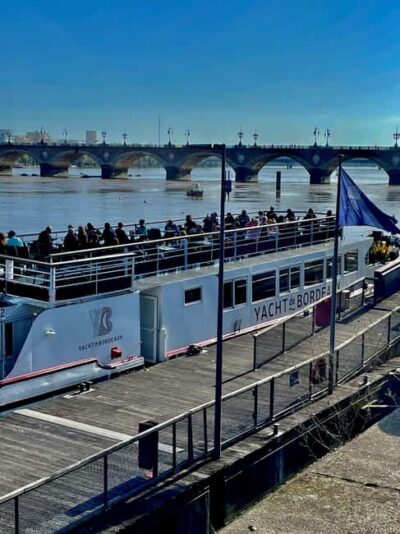
River Garonne Cruise with Glass of Wine and Canelé
Read our review →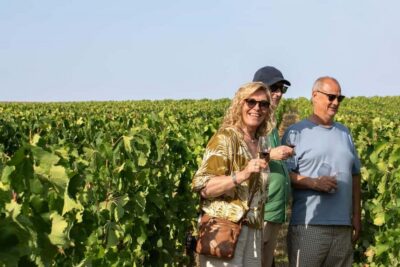
Afternoon Saint-Emilion Wine Tasting & snack
Read our review →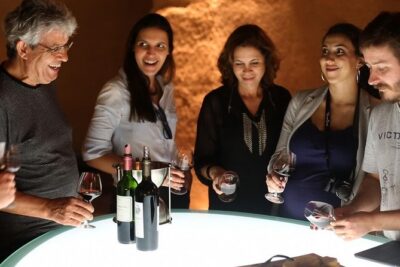
Medoc or Saint Emilion Wine Tasting and Chateau from Bordeaux
Read our review →
Saint Emilion Day Trip with Sightseeing Tour & Wine Tastings from Bordeaux
Read our review →
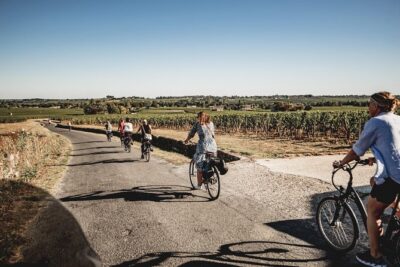
Saint-Emilion Electric Bike Day Tour with Wine Tastings & Lunch
Read our review →Lists this tasting appears in