
Reviewed · BORDEAUX WINE TOURS
Bordeaux: Introduction to Bordeaux Wines Tasting Workshop
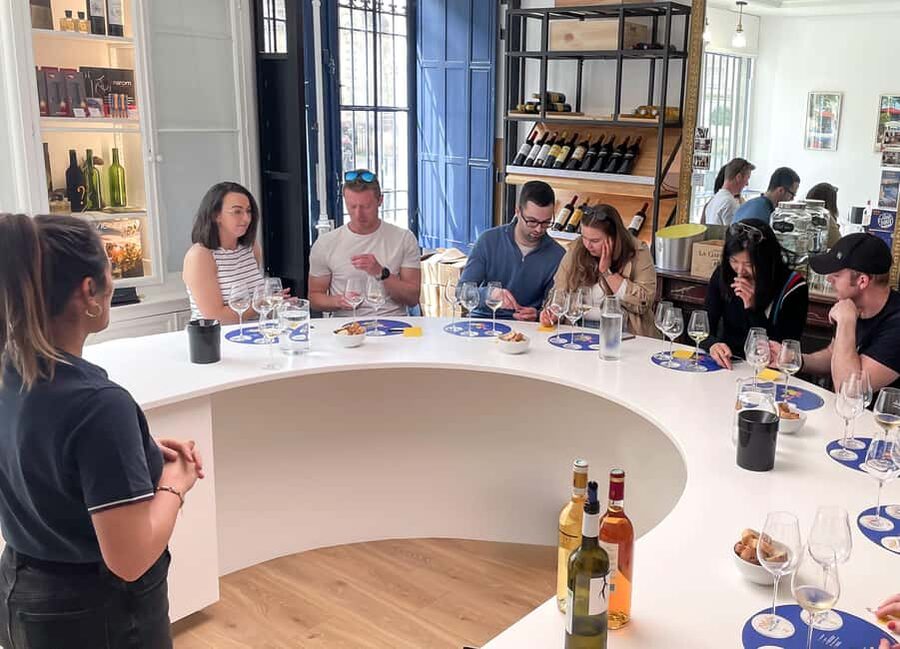
Bordeaux wine can feel like a puzzle of grape names, appellations, estates, and blends. This one-hour workshop gives you the pieces in a friendly setting, with one white and two reds, including a Grand Cru, served with local cheese and charcuterie.
I like two things here: the aroma exercises turn vague wine talk into something you can actually practice, and the focus on soil, climate, grape varieties, and blending helps explain why Bordeaux wines taste different. The central location near the Grand Théâtre also makes this easy to fit into a city day.
The main drawback is the short format. One hour is enough for a useful introduction, but not enough to explore Bordeaux’s many appellations in detail. One participant also felt the opening discussion lasted a little too long before the wine started flowing.
Key points at a glance
- Three Bordeaux wines in one hour: Taste one white and two reds, including a Grand Cru.
- A practical introduction to terroir: Learn how soil, climate, grape variety, appellation, and blending shape flavor.
- Aroma and blind-tasting exercises: Train your nose and palate instead of simply listening to a lecture.
- Local food pairing: Share cheese, charcuterie, baguette, and water alongside the wines.
- A good prelude to a wine-country tour: The class can give you useful context before visiting Saint-Émilion or nearby estates.
- Small, friendly format: English and French instruction, with opportunities to ask questions about your own wine preferences.
What this Bordeaux wine workshop actually teaches
This is not simply a stop for three glasses of wine. It is a compact introduction to how Bordeaux wine is made, labeled, tasted, and matched with food.
The guide begins with the ideas that often confuse newcomers. You learn what terroir means, how a wine’s soil and climate affect the grapes, and why the grape variety matters. You also look at appellations, the named wine areas that help define Bordeaux bottles, and blending, a key part of the region’s style.
That foundation is useful because Bordeaux is not always labeled in the simplest way. You may see an estate name or an appellation rather than a familiar grape name on the front of the bottle. The workshop helps you read those clues with less guesswork.
The history of Bordeaux wine is also part of the session. It is covered as context rather than as a long museum lecture, and the best guides keep bringing the subject back to what is in your glass.
I especially like that the class connects natural factors with taste. Instead of simply being told that one bottle is better than another, you are encouraged to think about why a wine feels dry, fruity, earthy, fresh, full, or structured.
More Workshops in Bordeaux:
- Bordeaux Super Saver Wine Tasting class and St Emilion region
★ 5.0 · 184 reviews - Guided Bordeaux Wine Tasting Class with 6 Wines and pairings
★ 4.9 · 181 reviews - Bordeaux Wine Masterclass: Blending workshop with appetizer
★ 5.0 · 113 reviews
The tasting begins with one white Bordeaux
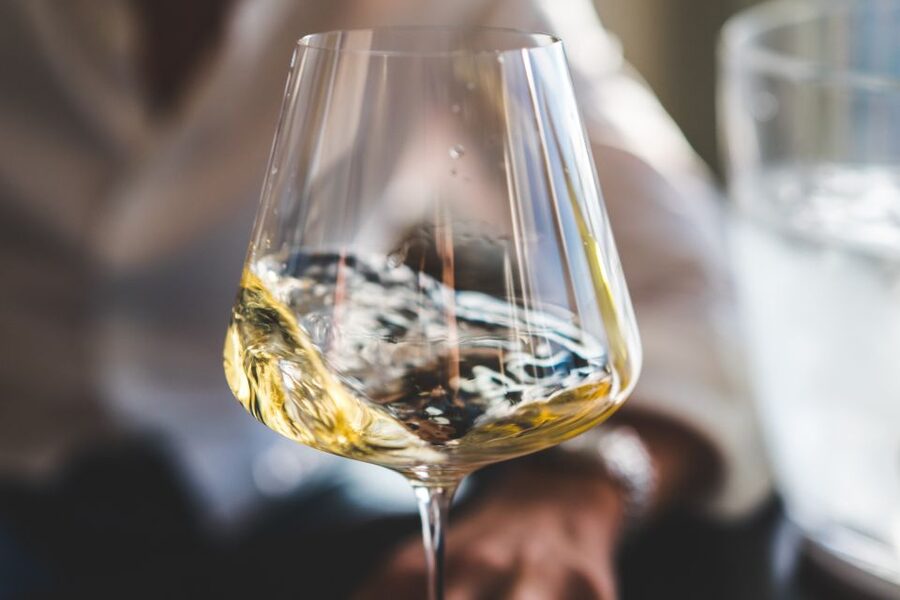
The first wine is a white Bordeaux. That gives you a useful contrast before the two reds arrive and lets you consider how freshness, aroma, and texture work in a different style of wine.
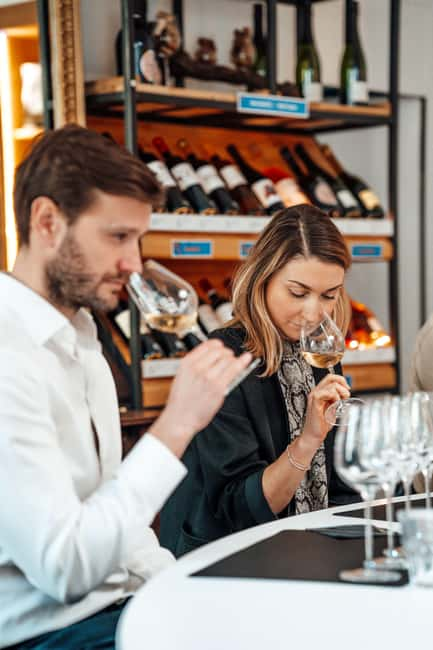
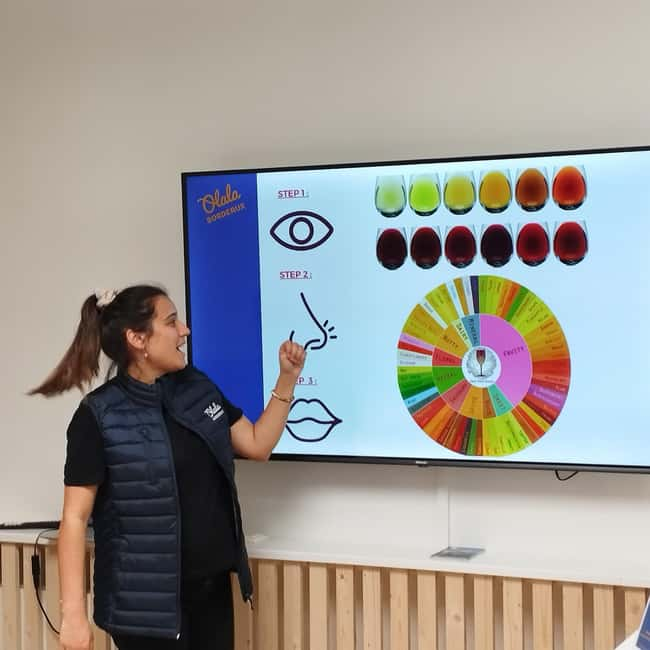
The guide walks you through the basic tasting steps. You look at the wine, smell it, taste it, and think about its finish. The purpose is not to turn you into a professional taster in an hour. It is to give you a method you can use the next time you open a bottle at home or order wine with dinner.
An aroma kit or smell exercise may be included as part of the session. This is one of the more memorable teaching tools because it helps you separate real smells from wine vocabulary. You might recognize familiar aromas before trying to find them in the glass.
That matters for beginners. Many people assume they have a poor sense of smell because they cannot instantly identify the fruit, flower, spice, or earthy note described by a sommelier. An aroma activity shows you that tasting is partly about memory and comparison. You do not need a perfect palate to take part.
The white wine also gives the group a natural way to discuss food pairing. Cheese and baguette can change how the wine feels, and the guide explains how food affects the palate rather than treating pairing as a list of strict rules.
Two reds, one Grand Cru, and the logic of blending
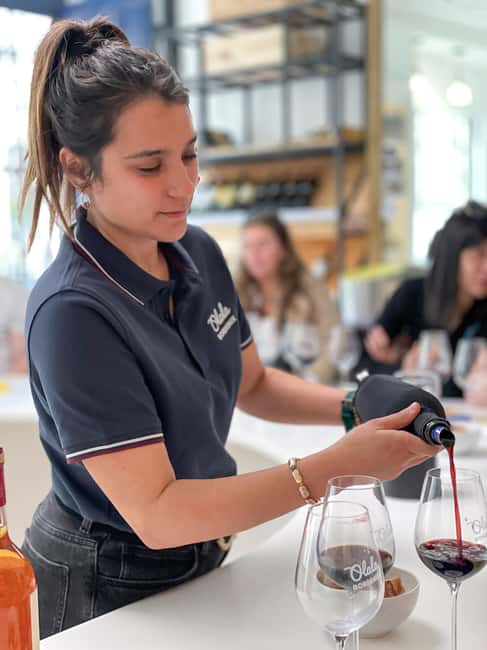
The red wines form the main part of the tasting. One is a Grand Cru, giving you the chance to try a more prestigious Bordeaux designation alongside another regional red.
The point is not simply that one bottle carries a grander label. The guide uses the wines to explain structure, balance, aroma, and the effect of blending. Bordeaux is well known for combining grape varieties, and the class shows why a producer might blend wines rather than rely on a single grape.
You may compare how the two reds differ in fruit, body, tannin, acidity, and finish. The guide also links those differences to place and production choices. Soil and climate are not abstract classroom topics here. They become part of the conversation about what you taste.
A blind-tasting exercise may add a playful challenge. You taste without relying on the label and try to describe what is in front of you. It is a good way to take the pressure off. You are not being tested for a correct professional answer. You are being encouraged to trust your senses and explain what you notice.
I would not expect a full lesson on every major Bordeaux appellation. There simply is not time. But you should leave with a clearer idea of why Bordeaux wines can vary so much and why the label deserves a closer look.
Cheese, charcuterie, and a useful pairing lesson
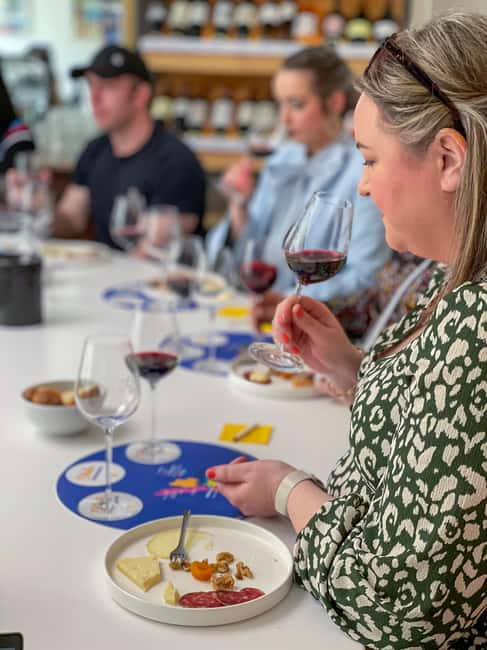
The food is more than decoration. You receive a board with local cheeses and charcuterie, along with baguette and water. The portion is described as generous enough to make the hour feel like a small tasting meal rather than three isolated samples.
Cheese and cured meats also make the tasting more practical. You can see how salt, fat, texture, and strong flavors affect wine. A wine that seems sharp on its own may feel softer with food. Another may become more pronounced beside a salty or creamy bite.
This is the kind of lesson you can use right away in France and at home. You do not need to remember a long list of pairing rules. Pay attention to how the wine changes when you eat, then use that information when choosing a bottle for your own table.
The food comes from local producers, which adds a regional touch without turning the workshop into a full food tour. If you are looking for a substantial lunch or dinner, this is not it. Think of the board as a well-chosen companion to the wine.
More Wine Tours in Bordeaux:
- Bordeaux: Cité du Vin Entry Ticket and Wine Tasting
★ 4.6 · 3,885 reviews - Bordeaux: River Garonne Cruise with Glass of Wine and Canelé
★ 4.5 · 3,630 reviews - From Bordeaux: Afternoon Saint-Emilion Wine Tasting & snack
★ 4.8 · 1,581 reviews - Medoc or Saint Emilion Wine Tasting and Chateau from Bordeaux
★ 5.0 · 1,415 reviews
The setting near Bordeaux’s Grand Théâtre
The workshop takes place in central Bordeaux, a short walk from the Grand Théâtre. That location is handy if you are already visiting the historic center and want an activity that does not require transport into the countryside.
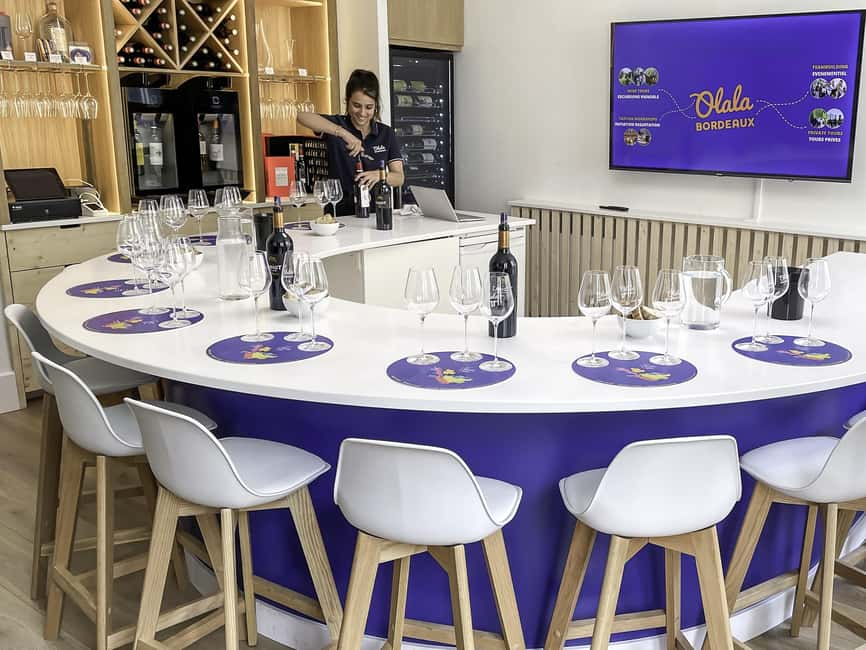
The dedicated tasting space is small and brightly lit. One useful detail is the white tables, which make it easier to examine the wine’s color. It may sound minor, but a clean, simple setting helps keep the attention on the glass and the discussion.
You should check the exact meeting point for the option you book, since it can vary. The central location makes this easiest to schedule before or after sightseeing around the Grand Théâtre, but leave enough time to find the correct address.
The room has a wine-bar feel as well as a classroom feel. That balance is important. The experience is structured, but it does not require formal wine knowledge or a serious attitude. You can ask about your own preferences, including why you like certain wines and dislike others.
A guide-led class with room for questions
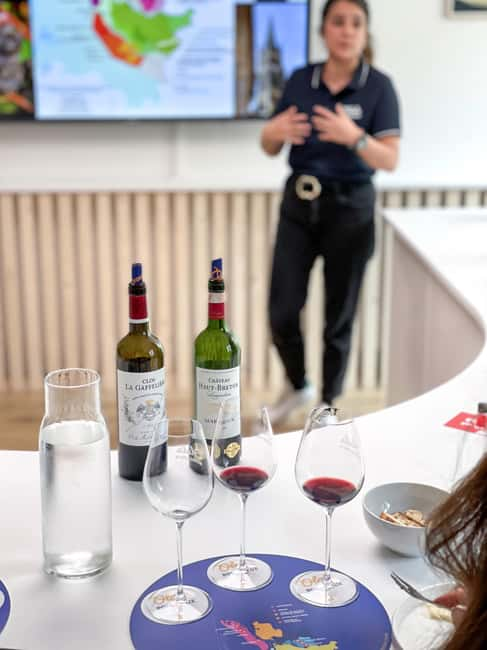
The quality of this experience depends partly on the guide, and the named hosts associated with the workshop include Antoine, Anna, Noé, Pierre, Eva, Enzo, Olivier, Juliette, and Paulina. Your guide will depend on the date and option you choose.
The strongest part of the format is the chance to ask questions as you taste. You can ask about a bottle you saw in a shop, a wine you want to serve with dinner, or the difference between Bordeaux styles. The session is meant to be conversational, not a one-way speech.
Antoine is praised for combining clear information with fun activities. Anna is described as attentive and interactive. Noé is noted for explaining the wines and pairings with care, while Pierre helped make the material accessible and interesting. Those details suggest a workshop where the host’s personality plays a real role.
The language options are English and French. That makes the session practical for international visitors, though the exact balance of languages depends on the group and guide.
Group size can be small, which suits the subject. A small group gives you more space to ask questions and compare impressions. It also means the atmosphere may depend on who else has booked that hour, but the format works well for couples, solo visitors, and people traveling in a group.
How this compares with a visit to La Cité du Vin
If you are already planning to visit La Cité du Vin, this class should not feel like a replacement. The two experiences serve different purposes.
La Cité du Vin gives you a large-scale cultural and educational visit, with broad coverage of wine around the world. This workshop is narrower and more hands-on. You sit with actual glasses, smell the wines, taste food, and ask direct questions.
That makes the class a sensible companion to a museum visit rather than a repeat. One participant booked it after visiting La Cité du Vin and still found that the guide introduced new subjects and wine choices.
I would choose this workshop if you want direct instruction and tasting practice. I would choose La Cité du Vin if you want a larger exhibition experience and more time to explore wine as a global subject. If your schedule allows both, they can work well together.
Is one hour enough?
For a first look at Bordeaux wine, yes. The session covers the essentials without asking you to spend half a day in a classroom.
You taste three wines, learn a basic tasting method, discuss production, practice identifying aromas, and try local food with the glasses. That is a good amount for sixty minutes, particularly if you are fitting the activity between sightseeing stops.
The limitation is depth. Bordeaux has many appellations, producers, grape combinations, and styles. You will not master the region in one sitting, and a short session can make it hard to apply every tasting idea immediately.
One participant felt the lesson spent a little too long talking before serving wine. That is a fair consideration if you prefer a relaxed tasting with information added along the way. Most of the available feedback describes the class as well paced, but the balance between discussion and tasting may vary with the guide.
For the best result, arrive ready to participate. Smell the wines carefully, compare your impressions with the group, and ask about anything that seems unclear. You will get more from the hour than if you simply wait for the guide to provide the answers.
The value of the $34 price
At $34 per person, the workshop offers more than three small pours. The price includes the guide, one white wine, two reds, one Grand Cru, a local cheese and charcuterie board with baguette, water, and information brochures.
That is strong value if you want both tasting and instruction. A casual wine bar visit might give you three glasses, but it would not necessarily explain terroir, appellations, blending, aroma recognition, and food pairing in a clear sequence.
The value is also practical. You leave with a basic system for judging wine and choosing bottles, not just a pleasant memory of what you drank. If the class helps you avoid one poor purchase or gives you confidence ordering wine at dinner, it has done useful work.
It is less compelling if you already know Bordeaux well or want a full-day estate visit. You are paying for an introduction in the city, not transport to vineyards, cellar tours, or extended tastings at several producers.
Who should book this tasting?
I would recommend it to first-time Bordeaux visitors, casual wine drinkers, and anyone who wants a better start before a day trip to Saint-Émilion or another wine area.
It is also a good choice for solo visitors. The group may include people traveling alone as well as couples, and the question-based format gives you an easy way to take part without feeling out of place.
You do not need to know wine terms in advance. In fact, the less confident you feel, the more useful the class may be. The guide introduces the vocabulary and gives you a way to connect it to the glass.
It suits adults who enjoy food and drink but may not suit children. The activity is not suitable for anyone under 16, and unaccompanied minors are not allowed. Pets are not allowed either.
I would be more cautious if you want a quiet, private tasting or a deep technical lesson. Small groups are available, but the session is still a shared class. It is social, guided, and designed for a broad range of wine experience.
Practical details before you reserve
The workshop lasts one hour and runs at various starting times, so check availability for your day. English and French are offered, and the meeting point may change according to the option booked.
You can cancel up to 24 hours before the activity for a full refund. A reserve-now, pay-later option is also available, which helps if your Bordeaux schedule is still shifting.
The experience includes water, but personal expenses are not included. Wear whatever is comfortable for a central city activity, and remember that the food board is a tasting accompaniment, not a full meal.
The overall rating is 4.8 from 196 reviews, with especially strong praise for the guides, clear explanations, aroma activities, food, central setting, and price. The one consistent point to keep in mind is the limited time. This is a well-packed introduction, not a complete course.
Should you book it?
Book this workshop if you want to understand Bordeaux wine before ordering more of it. The combination of three wines, a Grand Cru, local food, aroma practice, and plain explanations gives you useful tools without taking up half your day.
It is particularly smart before a full-day wine-country excursion. You will recognize more of the vocabulary and have a better sense of what to look for at a winery.
Skip it if you already have strong knowledge of Bordeaux or if you want to visit vineyards rather than learn in the city. For most visitors, though, $34 buys an approachable hour with real food, real wine, and skills you can use long after the glasses are cleared.
FAQ
Where does the Bordeaux wine tasting take place?
It takes place in the heart of Bordeaux, a short distance from the Grand Théâtre. The exact meeting point may vary depending on the option booked.
How long does the workshop last?
The workshop lasts one hour.
How many wines are included?
You receive one white Bordeaux wine and two red Bordeaux wines. One of the red wines is a Grand Cru.
Is food included?
Yes. The tasting includes local cheese, charcuterie, baguette, and water.
Is a guide included?
Yes. A guide or wine expert leads the workshop.
Which languages are available?
The activity is offered in English and French.
Is this a small-group activity?
A small-group option is available.
Is the workshop suitable for children?
No. The activity is not suitable for children under 16.
Are pets allowed?
No. Pets are not allowed.
Can I cancel for a refund?
Yes. You can cancel up to 24 hours in advance for a full refund.
Can I reserve now and pay later?
Yes. A reserve-now, pay-later option is available.
Does the workshop include personal expenses?
No. Personal expenses are not included.
Newest wine reviews around Bordeaux
- Saint Emilion Full Day Wine and Bike Tour★ 5.0 · 167 reviews
- Private Bordeaux History Tour with a glass of Bordeaux wine.★ 5.0 · 28 reviews
- Private – Best of Bordeaux Walking Tour + Glass of Bordeaux Wine★ 5.0 · 240 reviews
- Medoc Afternoon Wine Tour – 2 Wineries, tastings & delicacies★ 4.5 · 74 reviews
- Luxurious full day Bordeaux wine tour in a Tesla★ 4.5 · 31 reviews
- Bordeaux wines tasting workshop including Food & Wine pairings★ 5.0 · 31 reviews
- Discovery of the Bordeaux vineyard in 3 wines★ 5.0 · 133 reviews
- Wine Masterclass & Cheese Tasting Workshop in Bordeaux★ 5.0 · 29 reviews
Bordeaux Wine Tours, compared.
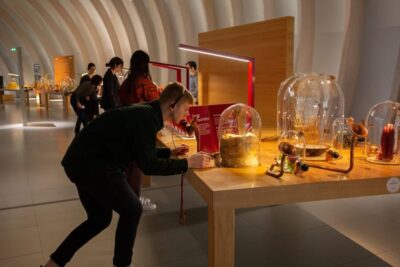
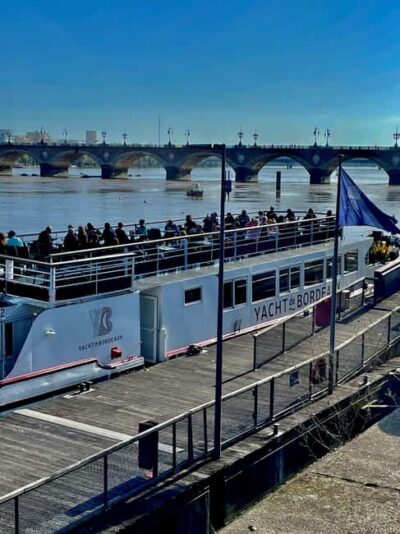
River Garonne Cruise with Glass of Wine and Canelé
Read our review →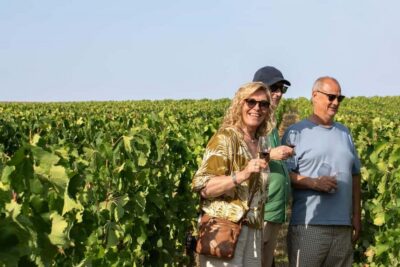
Afternoon Saint-Emilion Wine Tasting & snack
Read our review →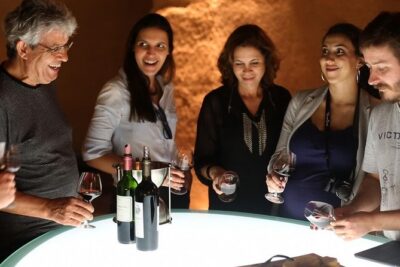
Medoc or Saint Emilion Wine Tasting and Chateau from Bordeaux
Read our review →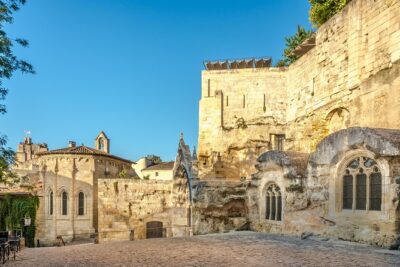
Saint Emilion Day Trip with Sightseeing Tour & Wine Tastings from Bordeaux
Read our review →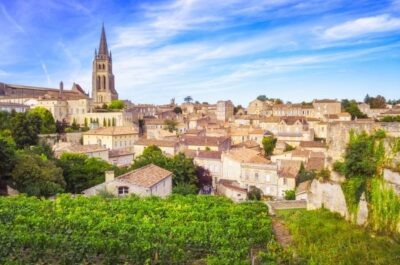
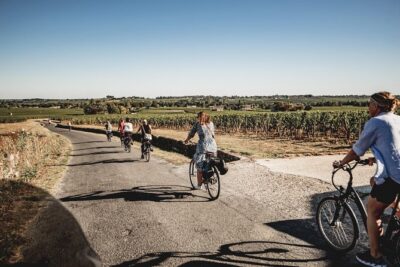
Saint-Emilion Electric Bike Day Tour with Wine Tastings & Lunch
Read our review →Lists this tasting appears in