Reviewed · BORDEAUX WINE TOURS
Guided Bordeaux Wine Tasting Class with 6 Wines and pairings
Bordeaux wine becomes far less mysterious when you can compare Left Bank and Right Bank styles in the same sitting. This relaxed 75-minute class moves from tasting technique to grape varieties, soils, blending, and food pairings, with six Bordeaux wines in your glass.
I like the intimate six-person limit and the guides’ easy teaching style. Cécilia, Mathilde, and the other hosts adapt the session to your level, so you can ask basic questions without feeling out of place. I also like the aroma game, which gives you something practical to do instead of simply sipping and nodding.
The main consideration is that this is a tasting class, not a vineyard visit. You will learn about Bordeaux in a cellar, tasting room, or patio rather than walking among vines, and the listed wine sequence appears to allow some variation, so ask how many pours are planned when you book.
Key points at a glance
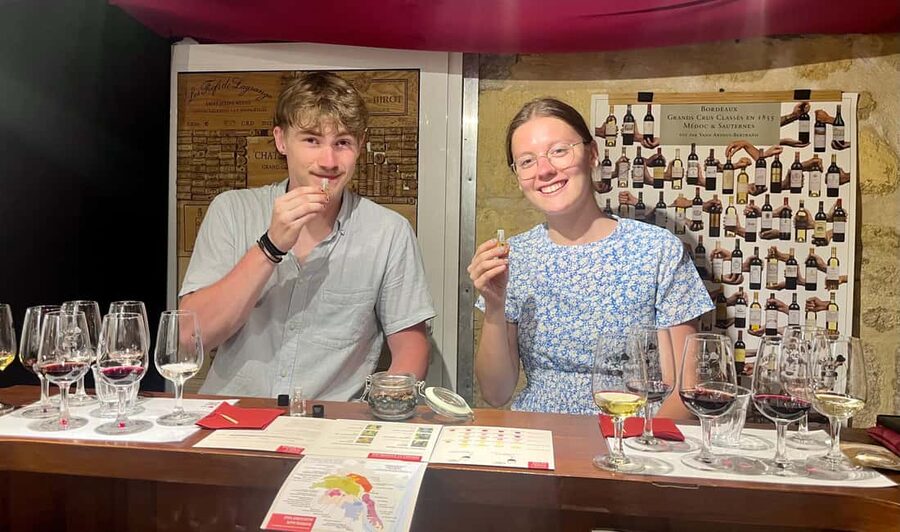
- Six Bordeaux wines in 75 minutes: Expect a guided flight covering white, red, sweet, and possibly mystery styles.
- Left Bank versus Right Bank: Learn how place, soil, grape choice, and blending shape the wine.
- A real lesson, not just a tasting: Practice looking, smelling, tasting, and describing what you notice.
- Aroma game included: Scent bottles help you connect familiar smells with what appears in the glass.
- Small groups of six or fewer: The format leaves room for questions and personal wine advice.
- Food pairings and a take-home booklet: You get simple tools to keep practicing after the class.
A compact Bordeaux lesson with a useful tasting flight
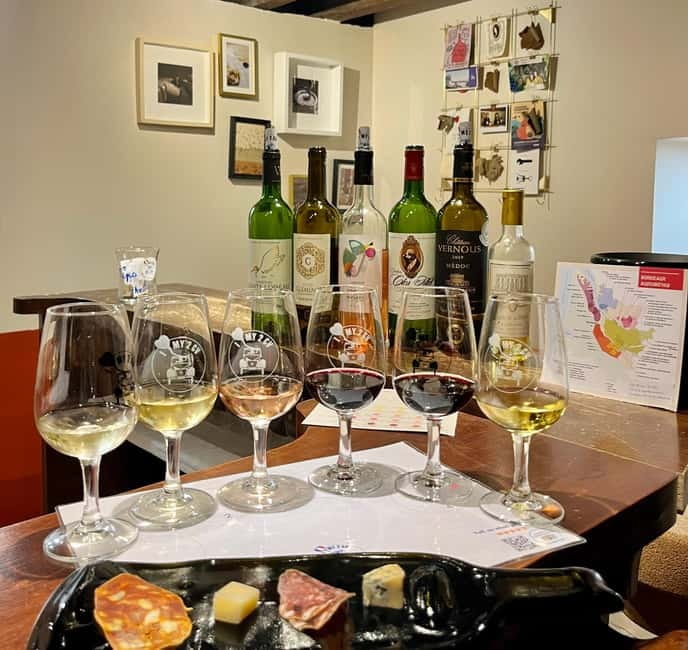
This class is designed for the visitor who wants Bordeaux to make sense before ordering another bottle. In a little over an hour, you get an introduction to the region’s appellations, grape varieties, blends, classifications, soils, and winemaking traditions.
The wine lineup is intended to show range rather than offer six near-identical pours. The detailed format includes a mystery wine, dry whites from the Left and Right Banks, red blends, and a sweet wine. The activity information also describes six glasses, so the exact arrangement may change. If the number of pours matters to you, confirm the final lineup before arrival.
That variety is the point. Bordeaux is not one flavor or one grape. A glass can be shaped by its bank of the Gironde, its soil, the grapes used in the blend, the age of the wine, and the choices made in the cellar. You do not need to memorize every appellation to benefit from the lesson. You need a clear way to compare them.
More Wine and Food Pairings in Bordeaux
- Saint-Emilion Food and Wine Day Tour
★ 5.0 · 323 reviews - Bordeaux Old Town Food and Wine Tour
★ 5.0 · 278 reviews - Tasting of 6 Bordeaux wines and pairing charcuterie & cheese
★ 5.0 · 199 reviews
Finding the discreet entrance at number 25
The meeting point is easy to miss from the street. At number 25, look for a door with the ring marked I LOVE TASTING. The tasting room is not plainly visible from outside, so do not assume you are at the wrong place when you see what appears to be an ordinary front door.
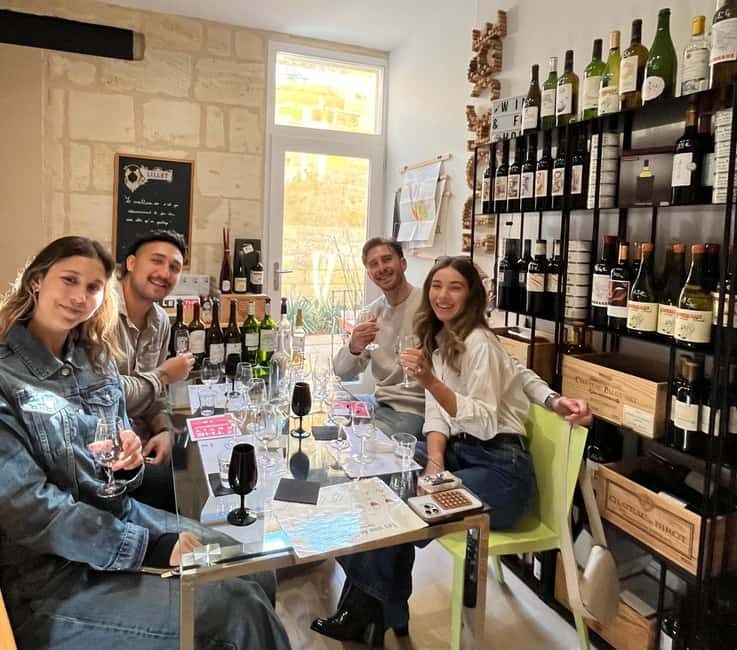
Inside, the setting may be a converted cellar, a dedicated tasting room, or a private patio in fine weather. The setting is part of the appeal. It feels more personal than a large commercial tasting hall, though anyone expecting a grand château should adjust those expectations.
The experience provider is I love my 2cv Sas Verrevidophobe. There is no hotel pickup or drop-off, so you need to make your own way to the meeting point. The class is best treated as a city-based wine lesson, not as transport to the countryside.
Learning the basic method before the first serious sip
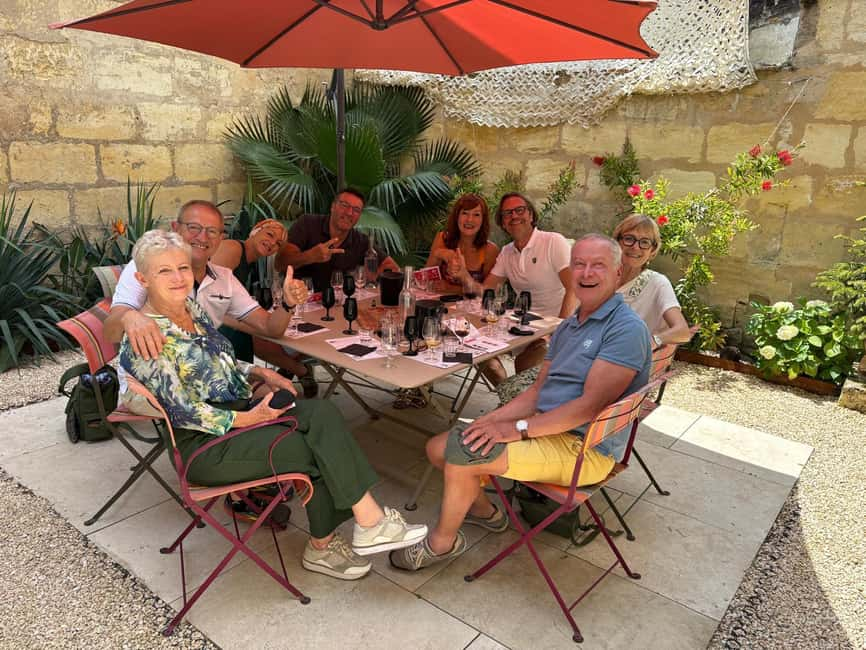
The guide begins by showing you how to approach the glass. You look at the color, notice clarity and depth, smell before tasting, then pay attention to texture, balance, alcohol, and finish.
That order matters. Many beginners rush straight to flavor and then decide that wine simply tastes like wine. The aroma game helps break that habit. You smell separate scents first, then try to spot similar notes in the wine. You might not suddenly identify every fruit, flower, spice, or oak note, but you will leave with a better system.
I particularly like this practical approach because it removes some of the awkwardness from wine tasting. You are not being tested on the correct answer. You are learning to describe what you notice and compare it with the group.
The guides use different tools to make the lesson clear, including maps, tasting aids, and explanations of how wine develops. Some sessions may also adapt the discussion to your previous experience and preferred styles. Beginners can ask basic questions, while more experienced drinkers can focus on blending, oak, and regional differences.
Comparing Bordeaux’s two banks
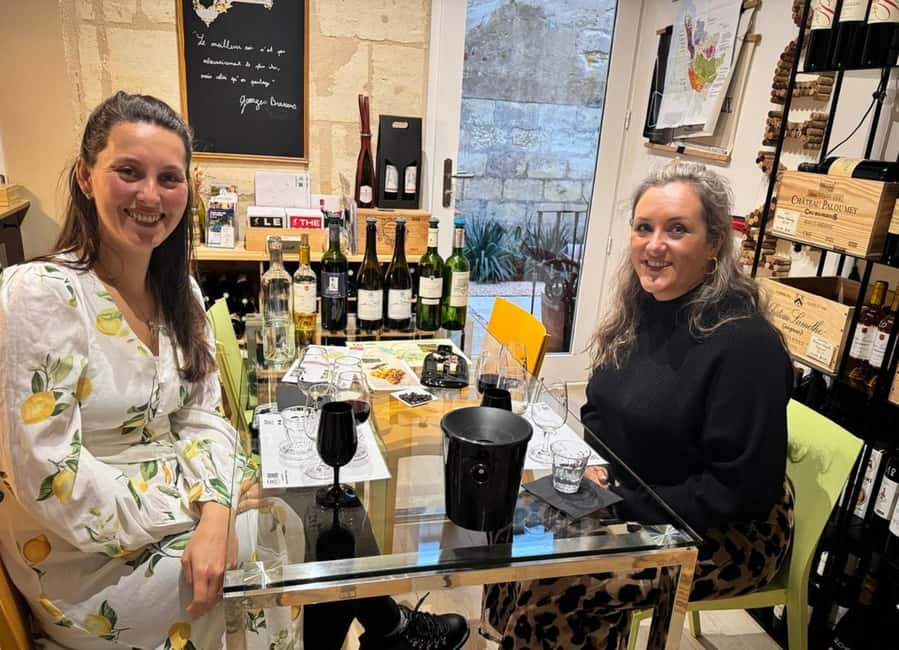
The Left Bank and Right Bank discussion is one of the most useful parts of the class. It gives you a simple framework for understanding why Bordeaux bottles can taste so different even when they come from the same broad region.
The lesson connects grape choice to local conditions. You learn why Cabernet Sauvignon is often associated with the Left Bank and why Merlot has a stronger place on the Right Bank. Soil also enters the conversation, including the contrast between gravel and clay.
The point is not to turn you into a Bordeaux expert in 75 minutes. It is to give you enough background to read a menu, understand an appellation, and make a more confident choice at dinner.
The tasting also covers blends. Bordeaux is famous for combining grape varieties rather than relying on one grape alone in many of its best-known reds. Your guide explains how blending affects structure, aroma, softness, and balance. You may also hear about aging in oak barrels and how time changes a wine’s character.
This kind of explanation is more useful than a long list of appellation names. Once you understand the broad pattern, names such as Médoc or other Bordeaux areas begin to carry meaning instead of sounding like a set of facts to memorize.
More Wine and Food Pairings in France
- Introduction to Bordeaux wines paired with cheeses & charcuterie
★ 5.0 · 175 reviews - Bordeaux Wines Masterclass paired with cheeses & charcuterie
★ 5.0 · 110 reviews - Workshop Bordeaux wine tasting: 4 reds & charcuterie pairing
★ 5.0 · 72 reviews - Bordeaux Food and Wine Tour : Authentic Artisanal Flavors
★ 5.0 · 62 reviews
Six glasses, from dry white to sweet wine
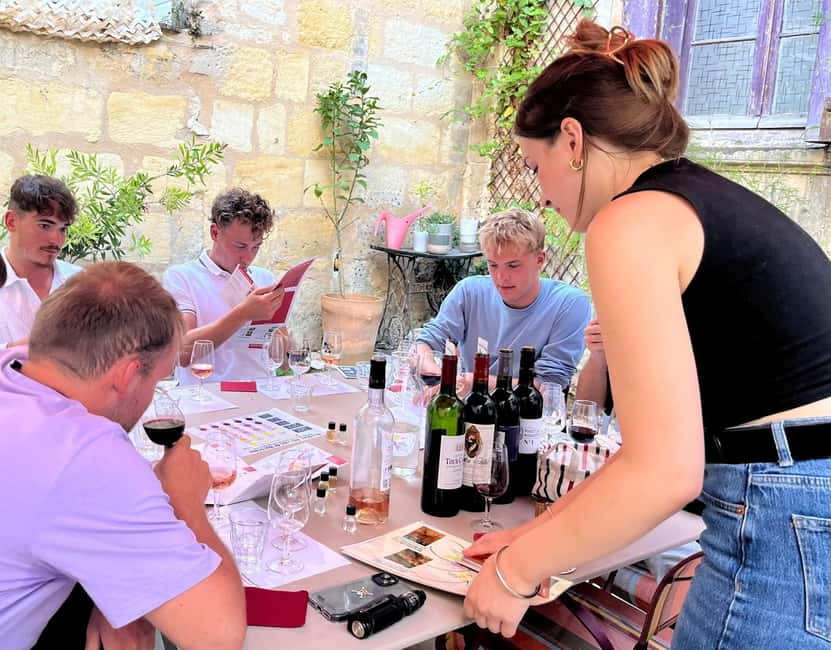
The tasting flight is built around contrast. Dry white wines give you a clean way to compare different areas and styles. Red wines then show how blends, grape choices, and regional conditions affect body, texture, and aroma. A sweet wine closes the range with a different balance of sugar and acidity.
The information provided describes two dry whites, three reds, one sweet wine, and a mystery wine. Since the activity also specifies six glasses, the mystery element may be included within the six rather than added to it. The exact order can be adapted to the group, and your guide may adjust choices to suit individual preferences.
The mystery wine is a good teaching device. It asks you to use your senses before being influenced by the label. That can reveal how quickly assumptions shape your judgment.
The wines may come from Grand Cru Classé estates, organic family producers, or other selected winemakers. That mix helps you see Bordeaux beyond famous names and expensive bottles. It also makes the class more useful for shopping, since you can learn what you enjoy without assuming that the most prestigious label is automatically the best fit.
Do not expect full glasses. This is a tasting, and the focus is comparison and instruction. Six pours can still be substantial, so plan the rest of your day sensibly and avoid treating the class as a quick pre-dinner drink.
Food pairings that make the lesson stick
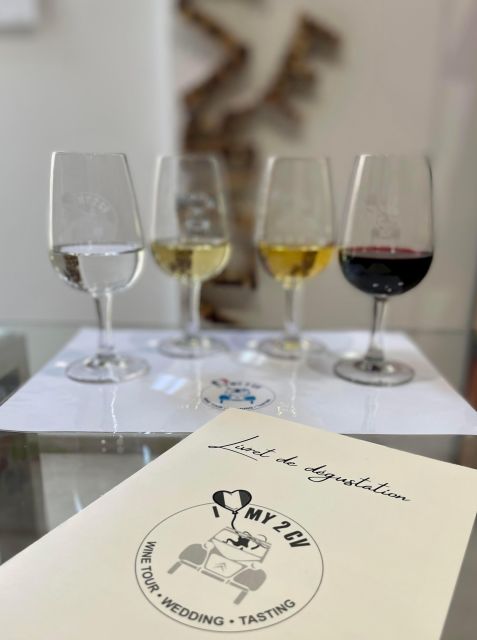
The food pairing section is simple but useful. Small tastes are matched with selected wines so you can see how food changes the way a wine feels and tastes.
This is where abstract terms become practical. A wine that seems sharp on its own may work better with food. A red with firm structure may feel smoother beside a suitable dish. Sweet wine can also show why dessert does not always call for the sweetest possible pairing.
The class is not presented as a full meal. One participant felt that a little more food would have been welcome, so arrive fed if you need lunch or dinner. Think of the pairing as a teaching tool, not a replacement for a meal.
I like this part because it helps you use the lesson after you leave. You can apply the same idea at a Bordeaux restaurant: taste the wine alone, take a bite, then taste again. The change is often easier to notice than the difference between technical tasting terms.
Guides who teach rather than recite
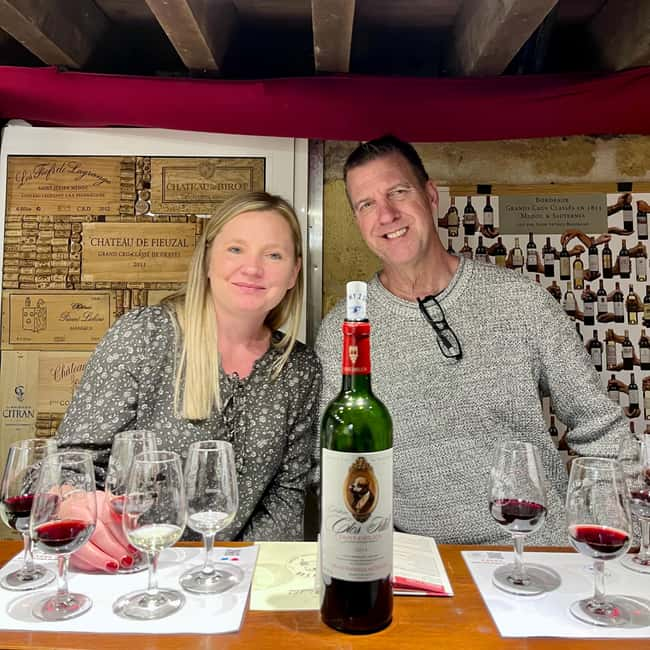
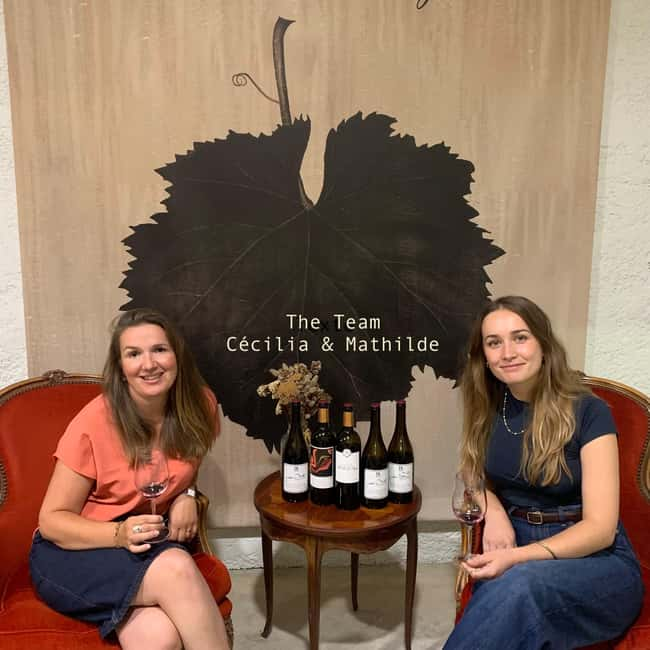
The strongest feature of this experience is the human instruction. Cécilia and Mathilde are trained at the Université du Vin, and the host team includes guides such as Ilona, Camille, Hugo, Aurélienne, and Elenor.
The sessions are repeatedly described as warm, clear, and adaptable. Cécilia has helped complete beginners identify aromas, explained gravel versus clay soils, and offered advice about finding a wine that fits a person’s taste. Mathilde combines regional history with grape and appellation lessons, while Hugo has covered the science of winemaking and cellar work.
That range matters. A fixed script can leave beginners lost or experienced drinkers bored. Here, the guide can spend more time on aromas, blending, oak, food, or buying advice depending on what interests you.
The small group helps. With a maximum of six participants, you have a fair chance to ask questions. If only two or three people book a session, it may feel close to a private lesson. That can be a bonus, but it also means the atmosphere depends on the people in your time slot.
The guides also offer practical local conversation. Cécilia has given visitors advice about the wider area, and one host even helped with onward travel ideas for Montpellier and Avignon. That is not the main purpose of the class, but it can add a friendly local touch.
Cellar, tasting room, or patio
The setting changes with the weather and the size of the session. In warm conditions, the tasting may take place in a private patio or garden. At other times, you may sit in the cool of a cellar or in a specially equipped room.
A garden session can feel relaxed and informal. The cellar gives the lesson a stronger wine setting, while the dedicated room is likely the most reliable option throughout the year. The atmosphere is homelike rather than grand, and that suits the teaching style.
Some sessions have included charming domestic details, such as a private home setting and even cats in the background. These touches will appeal to you if you prefer personal, local experiences. They may not suit you if you want a polished château presentation with formal service.
The discreet entrance is part of the setting. Use the door instructions carefully, look for the marked ring, and allow enough time to find number 25.
Is $53 a fair price?
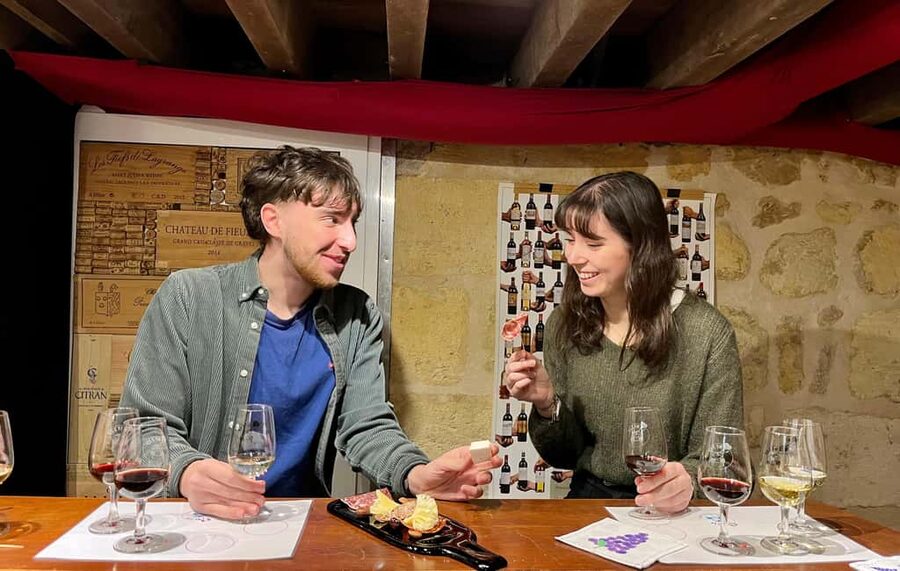
At $53 per person, the value depends on what you want from Bordeaux. If you are looking for a full countryside excursion with transport, vineyard walks, and several hours at estates, this is not that experience. You would need a separate tour.
If you want a focused introduction in the city, the price is reasonable. It covers a 75-minute guided class, six glasses, an aroma game, food pairings, and a personal tasting booklet. You also get access to a trained guide who can respond to your questions instead of leaving you to decode a label alone.
The booklet has lasting value. You can use it to repeat the tasting method later, record what you like, and compare bottles at restaurants or wine shops. At the end, the tasted wines are available for purchase in the cellar, so you can take home a bottle if something suits your taste.
Keep the buying option separate from the cost of the class. You are not required to purchase wine, and the lesson should be useful even if your luggage is already full.
Who should book this class?
I would choose this for a first visit to Bordeaux, especially if you have limited time or are staying in the city. It works well before a restaurant meal, before shopping for bottles, or as a compact activity on a rainy or cold day.
It is also a good fit if you feel overwhelmed by Bordeaux labels. The class gives you enough structure to ask better questions and make less random choices.
Couples and solo visitors should both fit comfortably. The six-person limit keeps the session personal, and a small booking may create a more private format.
You should look elsewhere if your main goal is to visit working vineyards, see large estates, or spend half a day in the countryside. You may also want to skip it if you dislike structured tasting or prefer to drink without discussion.
The activity is not suitable for people with mobility impairments, according to the available information. Languages are English, French, and Spanish, though availability can vary by time slot. One visitor who had hoped for Spanish attended in English instead, so check the language option before booking.
Final verdict: a smart first step into Bordeaux wine
I would book this class if you want a friendly, practical introduction rather than a formal lecture or a full vineyard day. The strongest reasons are the small group, the capable guides, the aroma practice, and the clear comparison between Bordeaux regions and styles.
The main limitation is its short length and city setting. You will not see the vineyards, and the food is a series of pairings rather than a meal. Still, at $53, this is a useful way to turn Bordeaux wine from a wall of unfamiliar names into something you can taste, discuss, and order with more confidence.
FAQ
How long does the Bordeaux wine tasting class last?
The class lasts 75 minutes.
How many wines will I taste?
The activity includes six glasses of Bordeaux wine. The detailed tasting plan describes a mystery wine, dry whites, red wines, and a sweet wine, so the exact lineup may vary.
Does the class include food?
Yes. Wine and food pairings are included, but the pairing is not presented as a full meal.
Is a tasting booklet included?
Yes. Each participant receives a personal booklet about Bordeaux wines and the tasting method.
What else is included besides the wine?
The experience includes the wine tasting class, an aroma game, six glasses of Bordeaux wine, food pairings, and the tasting booklet.
What languages are available?
The guides offer the class in English, French, and Spanish. Check the language available for your chosen time.
How large is the group?
The group is limited to six participants.
Where does the tasting take place?
Depending on the weather and arrangements, it can take place in a private patio, a cellar, or a specially equipped tasting room. The meeting point is at number 25, marked by a ring that says I LOVE TASTING.
Is transportation provided?
No. Hotel pickup and drop-off are not included.
Can I buy the wines after the class?
Yes. The wines tasted during the experience are available for sale in the cellar, allowing you to purchase bottles to take home.
More Wine Tastings in France
- Saint Emilion Half-Day Trip with Wine Tasting & Winery Visit from Bordeaux
★ 4.5 · 1,034 reviews - From Bordeaux: Half-Day Saint-Émilion Tour and Wine Tasting
★ 4.7 · 699 reviews - Saint-Emilion Electric Bike Day Tour with Wine Tastings & Lunch
★ 5.0 · 696 reviews - Bordeaux Wine and Trade Museum Admission Ticket with Wine Tasting
★ 4.5 · 599 reviews
More Wine Tastings in Bordeaux
- Bordeaux: Cité du Vin Entry Ticket and Wine Tasting
★ 4.6 · 3,885 reviews - From Bordeaux: Afternoon Saint-Emilion Wine Tasting & snack
★ 4.8 · 1,581 reviews - Medoc or Saint Emilion Wine Tasting and Chateau from Bordeaux
★ 5.0 · 1,415 reviews - Saint Emilion Day Trip with Sightseeing Tour & Wine Tastings from Bordeaux
★ 5.0 · 1,120 reviews
Newest wine reviews around Bordeaux
- Saint Emilion Full Day Wine and Bike Tour★ 5.0 · 167 reviews
- Private Bordeaux History Tour with a glass of Bordeaux wine.★ 5.0 · 28 reviews
- Private – Best of Bordeaux Walking Tour + Glass of Bordeaux Wine★ 5.0 · 240 reviews
- Medoc Afternoon Wine Tour – 2 Wineries, tastings & delicacies★ 4.5 · 74 reviews
- Luxurious full day Bordeaux wine tour in a Tesla★ 4.5 · 31 reviews
- Bordeaux wines tasting workshop including Food & Wine pairings★ 5.0 · 31 reviews
- Wine Masterclass & Cheese Tasting Workshop in Bordeaux★ 5.0 · 29 reviews
- Discovery of the Bordeaux vineyard in 3 wines★ 5.0 · 133 reviews
Bordeaux Wine Tours, compared.
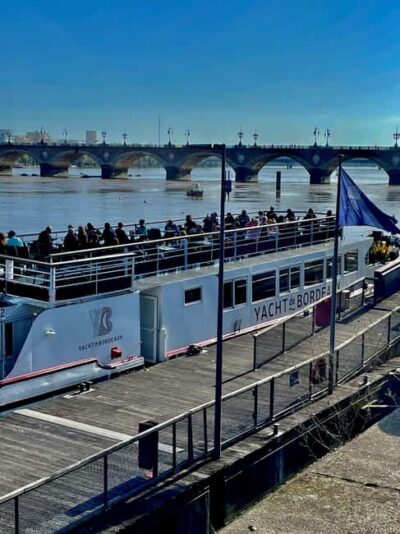
River Garonne Cruise with Glass of Wine and Canelé
Read our review →
Afternoon Saint-Emilion Wine Tasting & snack
Read our review →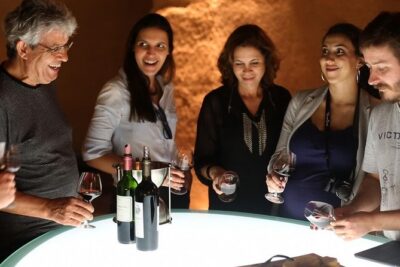
Medoc or Saint Emilion Wine Tasting and Chateau from Bordeaux
Read our review →
Saint Emilion Day Trip with Sightseeing Tour & Wine Tastings from Bordeaux
Read our review →