
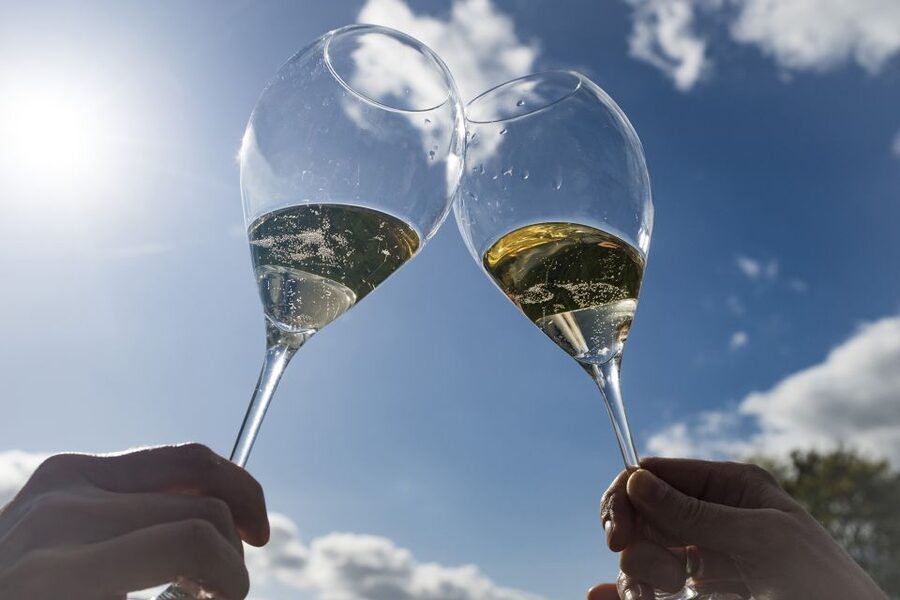
Reviewed · CHAMPAGNE TOURS
From Epernay : Bubble Champagne Tour 6 tastings
The best part of this Epernay tour is its mix of small-producer Champagne and famous regional sights. In just three and a half hours, you visit a working family grower, taste three Grand Cru or Premier Cru Champagnes, and see the villages and vineyards around the Marne Valley and Côte des Blancs.
I like the intimate group size, capped at eight, and I like the way the tour goes beyond sparkling wine with three traditional local spirits: Ratafia, Fine de la Marne, and Marc de Champagne. The main consideration is that you visit a small producer rather than a vast Champagne house, so you will not see the long commercial cellars some visitors hope for.
Key points at a glance
- Three Champagne tastings at a family grower: See the press, winery, and cellar, then taste Grand Cru or Premier Cru wines.
- Six drinks in total: The three Champagnes are joined by Ratafia, Fine de la Marne, and Marc de Champagne.
- Hautvillers and Dom Pérignon: Visit the church where Dom Pérignon is buried and stop at a sweeping view over the Marne Valley.
- The Côte des Blancs by premium minibus: Pass through Chouilly, Oger, and Cramant, with views of Chardonnay country and major Champagne properties.
- Small groups with local guides: The vehicle carries between two and eight people, with guides including Philippe, Victoria, Isabelle, Lucie, Nina, and Charlotte.
- A useful half-day format: The 210-minute outing fits well before or after a train connection, another cellar visit, or an afternoon in Epernay.
Why this tour feels different from a big-house visit
Champagne tourism often splits into two styles. One takes you into a famous brand with polished displays, large production figures, and grand cellars. The other brings you closer to the growers who work a smaller patch of vines and sell Champagne under their own name.
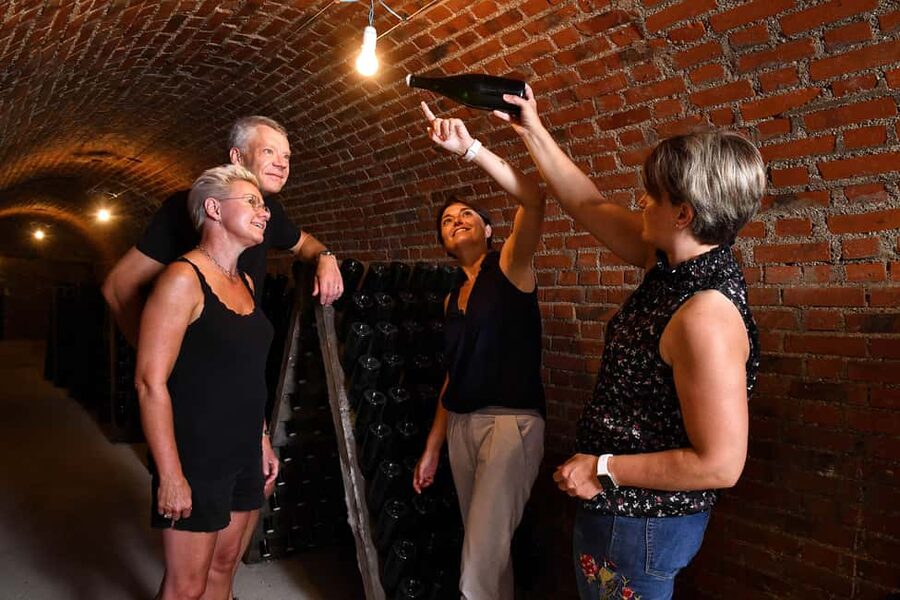
This experience leans toward the second style. At the family producer, you hear how Champagne is made and see the press, winery, and cellar. The visit gives you a clearer sense of the work behind a bottle, from grapes arriving at the press to the wine resting before release.
I find that useful because a Champagne label can tell you far more than the name of the house. The village, grape varieties, vineyard classification, and producer scale all shape what you taste. A small grower visit gives you a better point of comparison if you later enter one of Epernay’s famous houses.
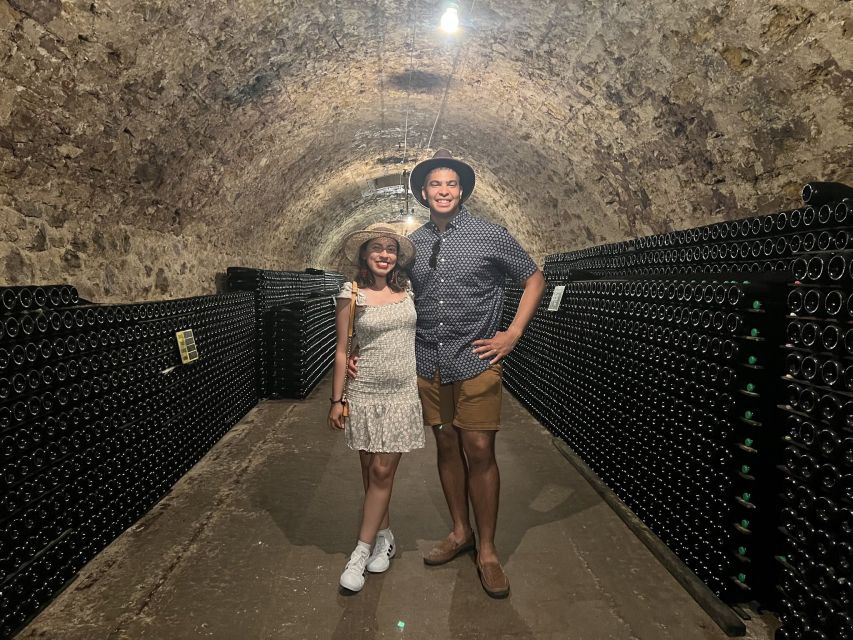
There is a tradeoff. The tour does not promise an enormous underground cellar or a large-scale production center. If you want to see the industrial side of Moët & Chandon or walk through kilometers of aging bottles, choose a separate big-house tour. If you want a personal explanation and a relaxed tasting, this format makes more sense.
More Champagne Tours in France:
- Paris 3-Courses Gourmet Dinner Seine River Cruise with Champagne
★ 4.0 · 1,659 reviews - Top Private Cruises in Paris with French Champagne and surprises
★ 5.0 · 1,553 reviews - From Paris: Day Trip to Champagne with 8 Tastings & Lunch
★ 4.8 · 1,501 reviews
Hautvillers begins the Champagne story
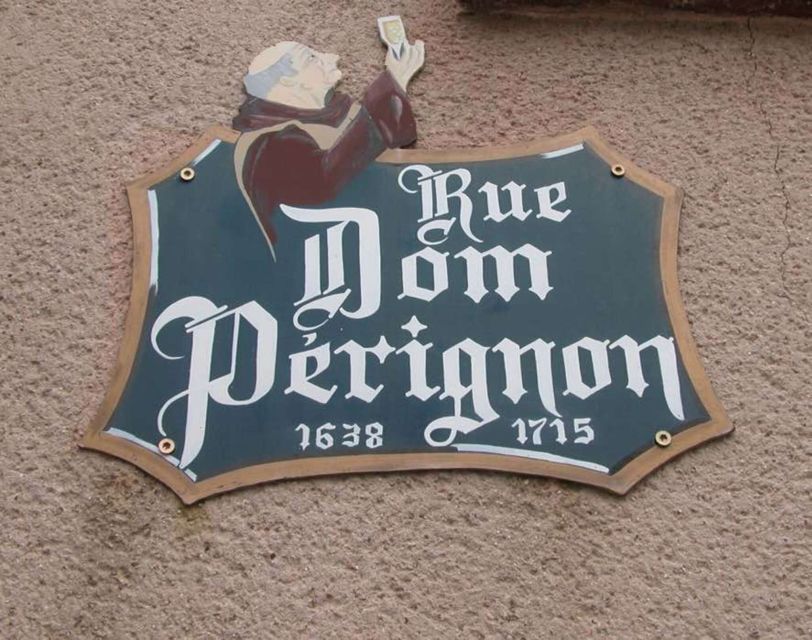
The route includes Hautvillers, often called the cradle of Champagne. The village is tied to Dom Pérignon, the Benedictine monk remembered for his early work and experiments with wine in this area.
You visit Abbaye Saint-Pierre d’Hautvillers and the church where Dom Pérignon’s grave is located. The visit lasts about 30 minutes, enough to put a human and religious setting around a name that otherwise appears mainly on a famous bottle.
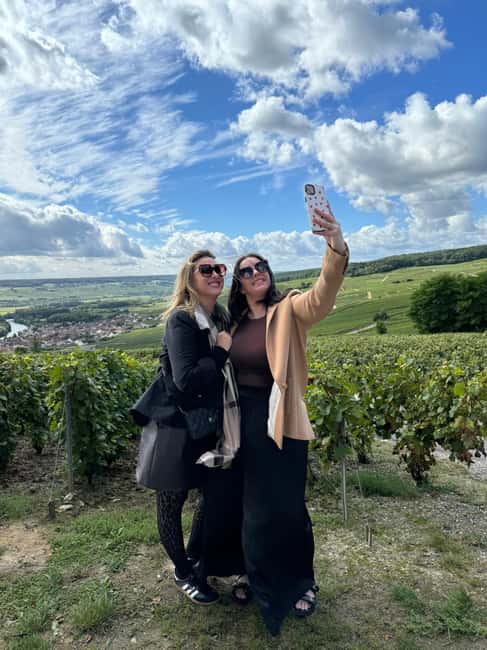
The village also gives you one of the tour’s best photo stops. From the hills above the Marne Valley, you look across vineyard-covered slopes and the river corridor below. The guide explains that Dom Pérignon carried out experiments in this area, and the stop also introduces sustainable viticulture and vineyard management.
That practical detail matters. You are not simply driven to a viewpoint, handed a few minutes for photos, and sent on. The guide connects the view to how vines are managed and how growers work with the local terrain. The exact view depends on weather, and fog or rain can soften the scene, but the tour runs in all conditions.
Through the vineyards near Epernay
After Hautvillers, the minibus moves through the celebrated villages and vineyards around Epernay. This is a small-group tour, not a walking route, so you cover more ground than you could on foot and reach places outside the city center.
The Marne Valley here is mainly associated with Pinot Noir plantings. Later, the route reaches the Côte des Blancs, where Chardonnay takes the lead. That change in grape and setting gives the drive some purpose. You are seeing two important parts of Champagne rather than repeating the same type of vineyard stop.
The itinerary includes Chouilly, Oger, and Cramant. Oger is the main tasting stop, while Cramant provides another photo opportunity and the spirits portion of the experience. The route also passes Château de Saran, an impressive LVMH property, and the production site of Moët & Chandon.
You do not visit those large properties as part of this tour. Instead, the guide points them out and explains their place in the Champagne world. That is a good compromise if you want to recognize the major names while spending your actual tasting time with a family producer.
The premium air-conditioned vehicle is important here. Champagne villages have narrow roads, and the tour covers several stops in a short period. The vehicle is comfortable for the three-and-a-half-hour outing, though one tall step into the van may be awkward for some people.
The family grower visit in Oger
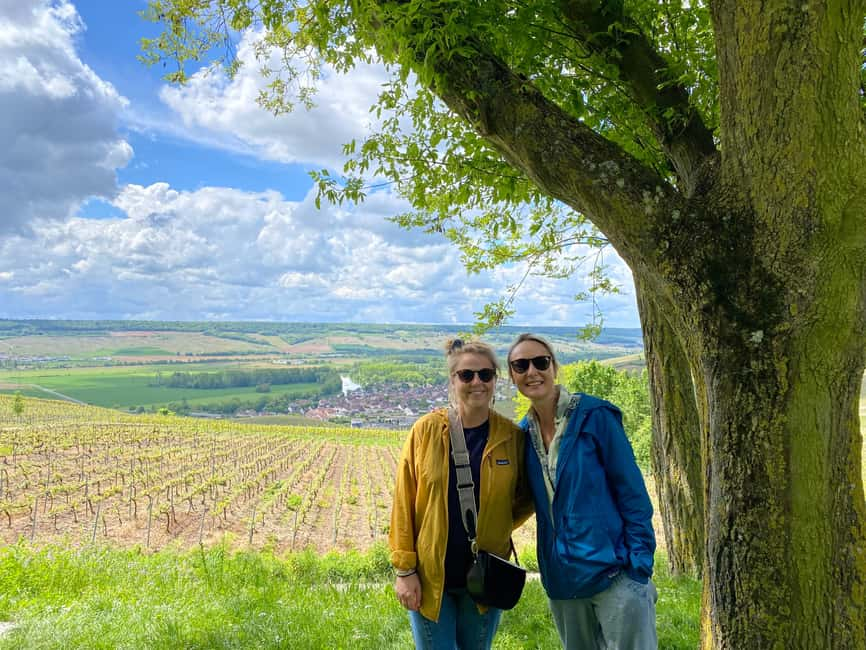
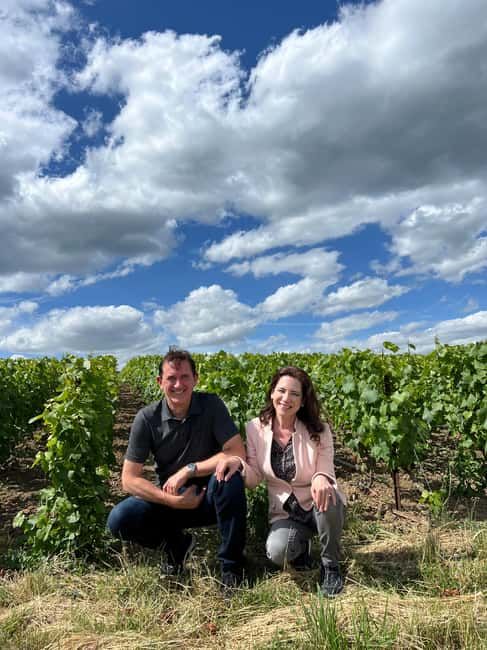
The main visit takes place with an independent family producer in Oger. You see the press, production area, and cellar before sitting down to taste three Champagnes.
The classification matters. Grand Cru and Premier Cru are vineyard and village designations within Champagne, and the tasting gives you a chance to compare wines from highly regarded growing areas. The experience is not just a quick pour at a shop counter. You get an explanation of the production process and a look at the place where the work happens.
The tasting style is relaxed and personal. Several people who had visited a large Champagne house earlier in the day found the grower visit more useful for understanding the drink and region, rather than simply hearing a brand presentation. That contrast is worth keeping in mind when planning your day in Epernay.
Three Champagne samples are enough for a focused introduction, especially when you are also tasting three local spirits. You may find the amount modest if your main goal is to compare a long list of cuvées. On the other hand, the smaller number leaves room for questions and conversation, and you can buy bottles from the producer if you find a favorite.
One practical point: the specific wines can vary. The experience promises three Grand Cru or Premier Cru Champagnes, but it does not specify the exact labels, vintages, or blend styles in advance. If you want detailed technical comparisons, ask the guide or producer what is being poured on the day.
More Wine Tours in France:
- Authentic Parisian Gourmet Food Tour with 10 Local Dishes & Wines
★ 5.0 · 4,754 reviews - Loire Valley Castles Day Trip from Paris with Complementary Wine
★ 4.5 · 3,907 reviews - Bordeaux: Cité du Vin Entry Ticket and Wine Tasting
★ 4.6 · 3,885 reviews - Bordeaux: River Garonne Cruise with Glass of Wine and Canelé
★ 4.5 · 3,630 reviews
Six tastings, not six Champagnes
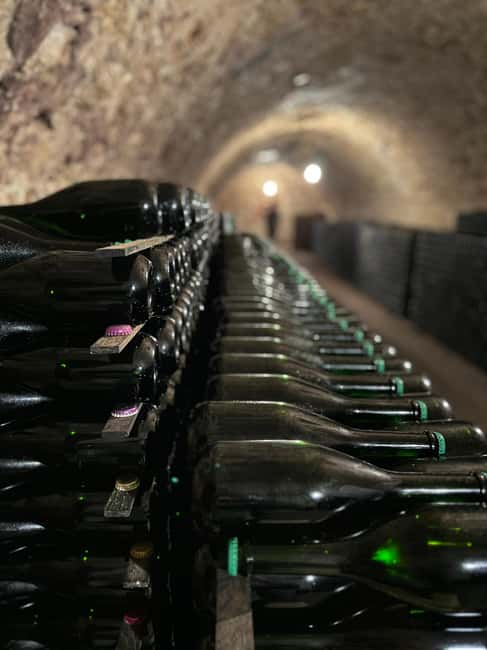
The tour title refers to six tastings, but only three are Champagne. The other three are classic regional alcohols and aperitifs from Goyard Distillery, described as the oldest distillery in Champagne.
You taste:
- Three Grand Cru or Premier Cru Champagnes
- Ratafia
- Fine de la Marne
- Marc de Champagne
This broader tasting is one of the most useful features of the outing. Ratafia is a sweetened fortified style commonly served as an aperitif or digestif. Fine de la Marne and Marc de Champagne are distilled spirits, offering a sharper contrast to the soft bubbles and fruit of Champagne.
The tasting at Cramant is listed as a spirits stop, and another small scenic stop may be used for the final pour. The precise order can vary, so think of the six drinks as part of the whole route rather than a fixed tasting flight in one room.
Drink responsibly. Six samples over 210 minutes can still add up, especially when the spirits are included. Eat before the tour or plan a meal afterward, since lunch is not included.
Epernay’s Avenue of Champagne
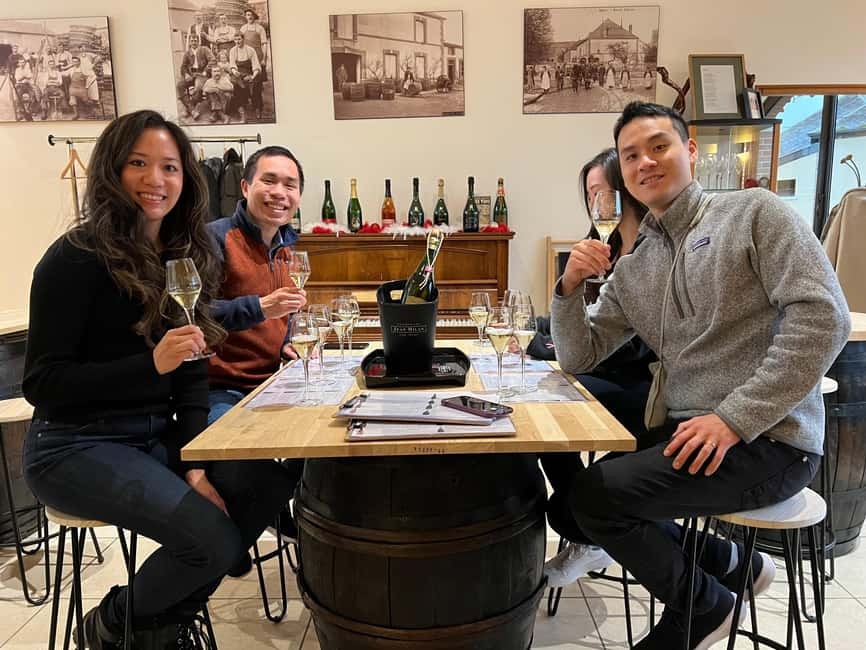
Near the end, the vehicle makes a commented passage along Avenue de Champagne. This grand street is Epernay’s most famous address, lined with mansions and production buildings connected to major names such as Moët & Chandon, Perrier-Jouët, and Pol Roger.
The passage is brief, about 10 minutes, and it is not a substitute for entering one of the houses. Still, it helps you understand Epernay’s identity. Beneath and around this avenue are some of the city’s celebrated Champagne cellars, while the imposing buildings above ground reflect the wealth built on the region’s wine trade.
I like seeing the avenue after visiting a smaller grower. The contrast is clear. The large houses have international reach and grand addresses; the family producer offers a closer look at day-to-day wine work. Together, the two sides give you a more complete picture of Champagne than either one alone.
What the guides add to the day
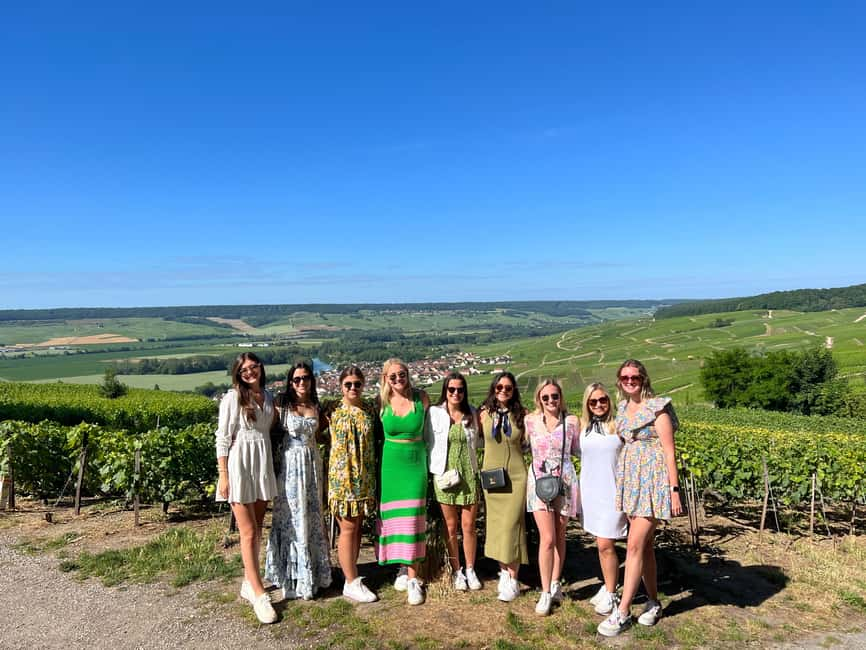
The guides are a major part of the experience. Philippe is described as friendly, punctual, and easy to talk with. Victoria is praised for her enthusiasm and local knowledge, and Isabelle is especially good at combining history, production details, humor, and practical tips.
Charlotte grew up in the area and is able to answer questions about the region while stopping for photographs. Nina, Lucie, Marine, Carole, and Juliet are also named as guides who bring a warm, personal approach. Since the group can be as small as two people, you may receive something close to a private tour without booking one.
The small group also makes conversation easier. With eight people at most, you can ask about grape varieties, village classifications, sustainable farming, or where to buy bottles in Epernay. A larger bus tour would cover similar ground but would feel less flexible.
The English-language guiding is a clear benefit for international visitors. Still, the depth of explanation may vary slightly by guide and by the questions you ask. Come prepared with a few topics you want covered, especially if you care about cellar aging, dosage, blending, or the difference between grower and house Champagne.
Price, timing, and practical value
At $194 per person, this is not the cheapest way to taste Champagne. The price includes transport from Epernay, a guide and driver, a premium air-conditioned vehicle, the family grower visit, three Champagnes, and three additional tastings.
I see the value in the transport and access. Renting a car after six tastings is a poor plan, and reaching several villages, viewpoints, and the Côte des Blancs on your own would take more effort. The tour also saves you from arranging a producer appointment, which can be difficult for independent growers.
The 210-minute length works well for a half-day. You can take a train from Paris to Epernay, walk to the meeting point, and still have time for another activity or meal. Hotel pickup and drop-off are not included, so you need to reach the designated Epernay meeting point yourself.
There are two starting location options tied to the Epernay tourist office, and the precise meeting point can vary by booking choice. Check that detail before leaving your hotel. Large bags and luggage are not allowed in the vehicle, so use a small day bag and make other arrangements for suitcases.
The tour can be booked in the afternoon with a 2 p.m. departure under a separate option. That gives you useful flexibility if you want to visit a Champagne house in the morning or arrive in Epernay by train around midday.
Who should book this Champagne tour
I would choose this tour if you want a broad introduction to the region in one compact outing. It suits first-time visitors who want vineyards, villages, a grower, historic Hautvillers, scenic stops, and a taste of both Champagne and local spirits.
It is also a good choice for anyone who prefers small groups and conversation over a polished mass-market presentation. Couples and families may especially like the possibility of having only a few people in the vehicle, though the tour is not suitable for wheelchair users.
I would hesitate if your top priority is a major Champagne house with huge cellars. You may also prefer a longer food-and-wine day if you want a substantial meal, since lunch is not included. The high step into the vehicle is another consideration for anyone with limited mobility.
Rain will not cancel the outing, but weather can affect the views. Pack a light waterproof layer and comfortable shoes for the church and producer visit. Leave your luggage behind.
Should you book it?
Book this tour if you want a personal look at Champagne country, not only a famous label and a grand cellar. The strongest combination is the small family grower, the six varied tastings, and the route through Hautvillers and the Côte des Blancs.
Skip it if you specifically want a large-house production tour or a full meal. For most visitors based in Epernay, though, the $194 price buys a sensible mix of transport, local guidance, scenery, and tasting access in a manageable half-day.
FAQ
How long does the Champagne tour last?
The tour lasts 210 minutes, or three and a half hours.
Where does the tour start?
The listed starting point is the Office de Tourisme d’Epernay en Champagne. The exact meeting point may vary according to the option booked.
Where does the tour finish?
Drop-off is at the Office de Tourisme d’Epernay en Champagne or another listed Epernay drop-off point connected to the booking option.
How many people can join the group?
The group is limited to eight participants. Some departures may have only two people.
What language is the tour conducted in?
The live tour guide speaks English.
How many Champagne tastings are included?
Three Champagne tastings are included. They are Grand Cru or Premier Cru Champagnes from the family grower visit.
What are the three additional tastings?
The additional tastings are Ratafia, Fine de la Marne, and Marc de Champagne from Goyard Distillery.
Does the tour visit a large Champagne house?
No large-house cellar visit is included. The route passes Château de Saran, the Moët & Chandon production site, and the Avenue de Champagne, while the main producer visit is with a family grower.
Is lunch included?
No. Lunch is not included in the tour price.
Can I bring luggage?
Large bags and luggage are not allowed in the vehicle. Bring only a small day bag.
Is the tour suitable for wheelchair users?
No. The tour is not suitable for wheelchair users.
What happens if it rains?
The tour runs rain or shine. Weather may affect the views at outdoor photo stops.
Can I cancel the booking?
You can cancel up to 24 hours before the activity for a full refund. A reserve-now, pay-later option is also available.
Newest wine reviews around France
- Saint Emilion Full Day Wine and Bike Tour★ 5.0 · 167 reviews
- Private – Best of Bordeaux Walking Tour + Glass of Bordeaux Wine★ 5.0 · 240 reviews
- Private Bordeaux History Tour with a glass of Bordeaux wine.★ 5.0 · 28 reviews
- Medoc Afternoon Wine Tour – 2 Wineries, tastings & delicacies★ 4.5 · 74 reviews
- Luxurious full day Bordeaux wine tour in a Tesla★ 4.5 · 31 reviews
- Bordeaux wines tasting workshop including Food & Wine pairings★ 5.0 · 31 reviews
- Wine Masterclass & Cheese Tasting Workshop in Bordeaux★ 5.0 · 29 reviews
- Discovery of the Bordeaux vineyard in 3 wines★ 5.0 · 133 reviews
Champagne Tours, compared.
Premium Morning Snorkel Sail with Champagne Brunch
Read our review →
Paris 3-Courses Gourmet Dinner Seine River Cruise with Champagne
Read our review →
Top Private Cruises in Paris with French Champagne and surprises
Read our review →
Day Trip to Champagne with 8 Tastings & Lunch
Read our review →
Private Boat Ride in Miami with Experienced Captain and Champagne
Read our review →
Lists this tasting appears in