
Reviewed · BORDEAUX WINE TOURS
Bordeaux:Wine Masterclass & Blending workshop with appetizer
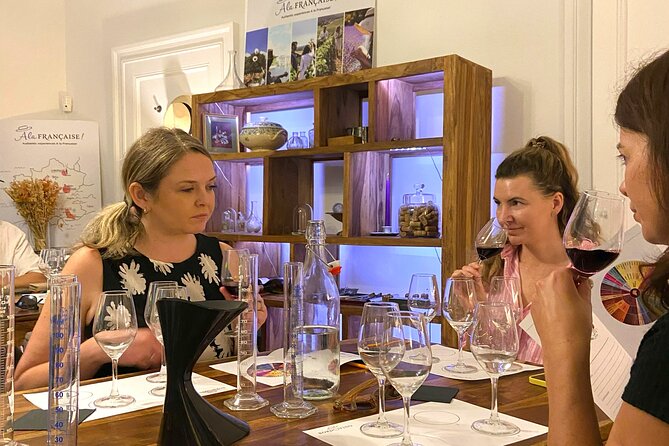
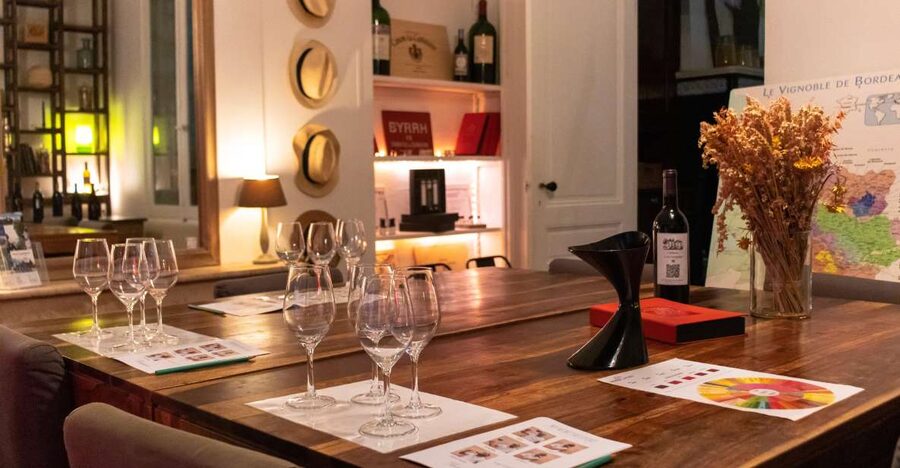
Bordeaux’s wine world can feel intimidating, but this 90-minute masterclass gives you a clear way in. You taste six wines, compare single-grape and blended bottles, then make your own small cuvée with help from an English-speaking educator. It is practical, social, and far less formal than a winery lecture.
I like the small group size, capped at 12, and the way the tasting is tied to food rather than treated as a series of empty glasses. I also like the focus on blending, since Bordeaux wine is best understood as a team effort between grapes. The main caution is that a very small group can make the discussion feel personal and exposed, so come ready to share your impressions without expecting every answer to be handled in exactly the same way.
Key points
- Six wines in 90 minutes: You taste white and red wines, single-varietal examples, blends, and a famous Bordeaux wine in a blind tasting.
- A hands-on blending session: You create your own cuvée and see how different grape varieties change a wine.
- French apéritif included: Fresh bread, sausage, cheese, and dark chocolate give you useful food pairings.
- Central Bordeaux meeting point: The class begins at À La Française’s apartment, 3 Rue d’Enghien.
- English-language instruction: A professional wine educator explains tasting, grape varieties, and Bordeaux traditions without requiring French.
- Small-group format: The maximum group size is 12, though the class may be cancelled if only one person books.
Why this Bordeaux class is useful for beginners
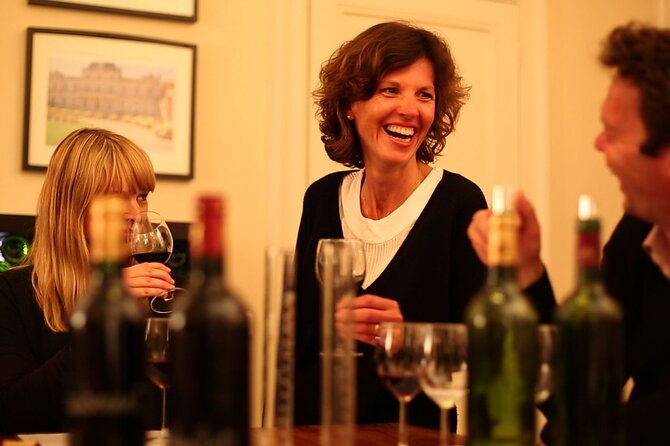
Many wine tastings leave you with a pleasant buzz and a few names you forget by dinner. This class has a more useful goal: helping you understand what is in your glass and why it tastes that way.
You begin with a welcome glass of white wine, followed by a glass of red. This simple opening gives you a quick comparison between wine styles before the technical work begins. Your guide explains the basics of tasting, including how to look at the wine, smell it, and assess its taste without feeling that there is a secret answer you must guess.
That matters in Bordeaux. The region has a serious reputation, and labels can look like a puzzle if you are not familiar with French wine. The class gives you a few solid reference points, so you can feel more comfortable ordering wine in a restaurant or choosing a bottle later in your trip.
The tone is designed to be casual rather than ceremonial. You do not need advanced wine knowledge, and the activity is aimed at helping you compare rather than memorize. If your usual wine vocabulary stops at good or strong, this is a sensible place to begin.
More Workshops in Bordeaux:
- Bordeaux: Introduction to Bordeaux Wines Tasting Workshop
★ 4.8 · 196 reviews - Bordeaux Super Saver Wine Tasting class and St Emilion region
★ 5.0 · 184 reviews - Guided Bordeaux Wine Tasting Class with 6 Wines and pairings
★ 4.9 · 181 reviews
Starting at 10:30 at 3 Rue d’Enghien
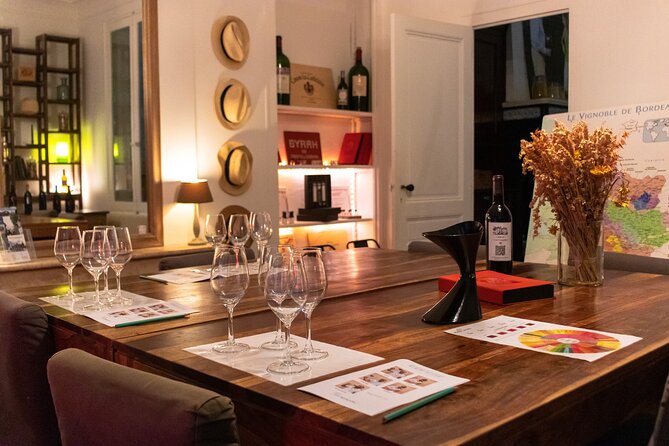
You meet at 10:25 am at À La Française’s apartment, located at 3 Rue d’Enghien, 33000 Bordeaux. The tasting itself begins at 10:30 am and ends around noon.
This is a city-based class, not a trip through the vineyards. That is an important distinction when you are planning your day. You will not spend time traveling between châteaux, walking through vines, or touring a cellar. Instead, you get a concentrated lesson indoors, which makes good sense if you have only a short stay in Bordeaux or if you want an introduction before visiting wine country.
Arrive a few minutes early. The meeting point is specific, and arriving at 10:25 gives you time to find the apartment without cutting into the opening glass or the first explanation. Since the class is built around a small group, late arrivals can be more disruptive than they would be on a large bus tour.
The duration is listed as 90 minutes, and the scheduled time from 10:30 am to noon matches that. The description also refers to a two-hour activity in one place, but you should plan on the stated 90-minute session.
Six wines that show how Bordeaux works
The tasting is organized to teach a point, not simply to offer six unrelated pours. You first learn about Bordeaux’s main grape varieties, including Merlot and Cabernet Sauvignon, then taste two single-varietal wines.
This comparison is valuable because it lets you notice what each grape contributes on its own. Merlot and Cabernet Sauvignon are often blended in Bordeaux, so tasting them separately gives you a cleaner way to understand their differences before they are combined.
You then taste two blended wines prepared in front of you. This is where the class moves from vocabulary to something you can actually sense. A blend can change the balance, body, aroma, and finish of a wine, even when the grapes come from the same broad region.
The educator explains the art of blending and connects it to Bordeaux’s wine traditions. You are not simply told that Bordeaux uses blends. You see why blending matters and how the parts can work together.
The final wine exercise is a blind tasting of a famous Bordeaux wine. You try to guess where it comes from, using the clues you have learned during the session. This is not a test you need to pass. It is a useful way to put the earlier lessons together and see how much you can identify from smell and taste alone.
In total, six wines are tasted. The lineup includes the opening white and red wines, two single-varietal wines, two prepared blends, and the blind-tasting wine. The class is built around small glasses and guided comparison, not heavy drinking, but you should still plan your day sensibly.
The blending workshop is the heart of the class
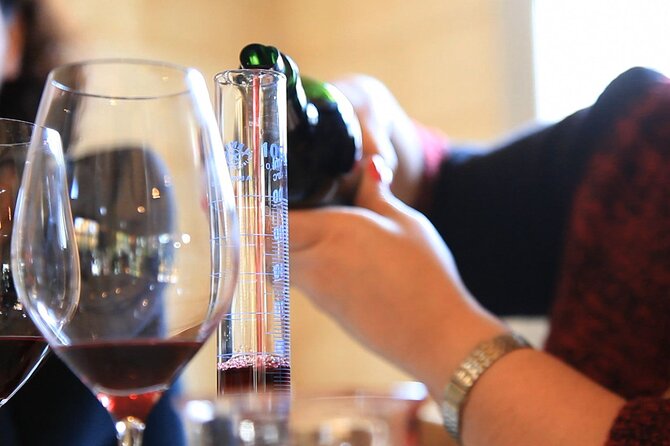
The most distinctive part of this experience is the chance to create your own cuvée. Many tastings explain blending with a map or a lecture. Here, you take part in the process.
You learn how Bordeaux winemakers use different grape varieties to shape a final wine. You then make your own blend, with guidance from the educator. The exercise turns a vague idea into something personal. You can taste how a change in proportions affects the result and decide which balance suits your palate.
This is especially helpful if you have already visited Bordeaux’s Left Bank or Right Bank vineyards. One recent participant who had taken a regional wine tour beforehand found that this workshop added more information about the wines themselves. That makes sense. A château visit can show you where the wine is made, while a blending class helps you understand how the wine is assembled.
The workshop also gives you a better reason to pay attention to blends when you shop. Instead of thinking of a blend as an obscure formula, you begin to see it as a deliberate design. One grape may add softness, another structure, and another aroma or freshness. The class does not require you to remember every technical term. It gives you a working idea you can use.
More Wine Tours in Bordeaux:
- Bordeaux: Cité du Vin Entry Ticket and Wine Tasting
★ 4.6 · 3,885 reviews - Bordeaux: River Garonne Cruise with Glass of Wine and Canelé
★ 4.5 · 3,630 reviews - From Bordeaux: Afternoon Saint-Emilion Wine Tasting & snack
★ 4.8 · 1,581 reviews - Medoc or Saint Emilion Wine Tasting and Chateau from Bordeaux
★ 5.0 · 1,415 reviews
French apéritif with cheese, sausage, and chocolate
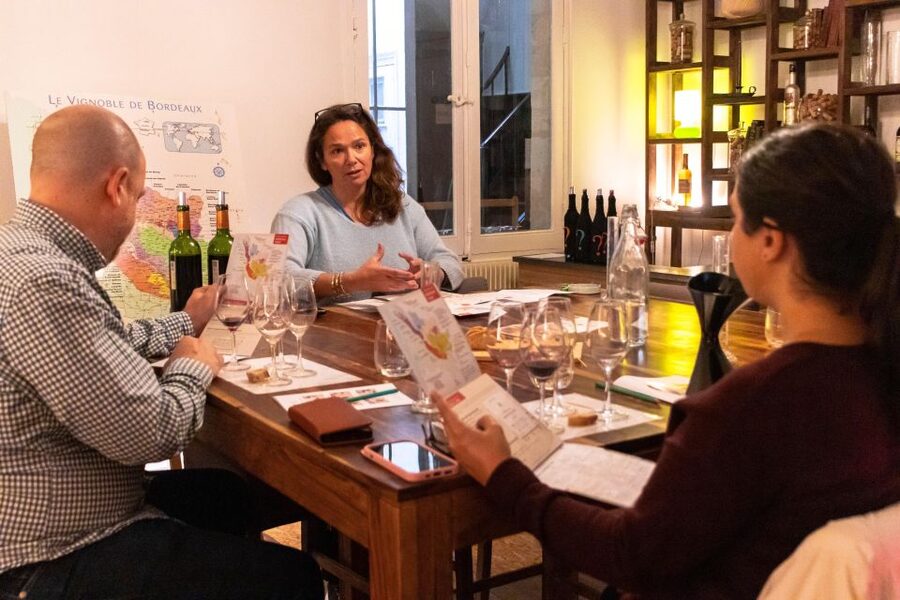
The food is not a full lunch, and you should not book it as one. It is a traditional French apéritif, with fresh bread, sausage, cheese, and dark chocolate served alongside the wines.
I like this pairing because it keeps the tasting connected to how wine is enjoyed in France. Food changes the way wine tastes, and the class lets you notice those changes as you work through the glasses. Cheese, charcuterie, bread, and chocolate also provide enough substance to make a late-morning tasting more comfortable.
The snack platter is included in the price, but lunch is not. If you normally eat early or plan a full meal afterward, keep that distinction in mind. You finish around noon, so it is easy to continue with lunch in Bordeaux once the session ends.
The apéritif also helps the social side of the class. Wine discussion can feel stiff when everyone is focused only on the glass. A shared plate gives the group something natural to talk about and makes the experience feel more like a French gathering than a formal exam.
A small group can be a strength and a challenge
The class accepts up to 12 people. That is a good ceiling for a tasting because you can hear the guide clearly and ask questions without waiting through a long line of answers.
A small group also gives the educator time to explain the tasting in more detail. One recent class had only two participants, and that created plenty of room for questions. Another participant praised the amount of regional information and felt the session added more than an earlier Left Bank and Right Bank tour.
Still, two people can make the experience feel more exposed. With no larger group to spread the attention around, the educator may ask you directly what you smell or taste. That is useful if you like active teaching, but it can feel uncomfortable if you are shy about giving an answer.
One piece of feedback described feeling discouraged when answers were compared too closely. I would treat that as a fair point to keep in mind, especially if you are new to wine. Tasting is subjective, and a good wine class should make room for uncertainty. You can improve your experience by remembering that your impressions do not need to match anyone else’s. If you prefer a quiet tasting with little participation, this workshop may not be your best fit.
The operator requires at least two participants to run the class. If only one person books, the session may be cancelled and the full amount refunded. That is not ideal for a firm itinerary, so avoid placing it before a hard-to-miss train or flight.
What the educator teaches in plain terms
The professional wine educator covers several useful subjects during the session:
- How to taste wine without feeling intimidated
- The history of Bordeaux wines
- The region’s main grape varieties
- The difference between single-varietal wines and blends
- How blending affects the finished wine
- How to use smell and taste during a blind tasting
- How food changes the tasting experience
The strongest part of the teaching is the order. You learn the basic method first, then taste examples, then try blending, and finally use your new skills in the blind tasting. That progression gives the class a clear shape.
The instruction is in English. French language instruction is not included, so this is a better choice if you want explanations in English rather than a bilingual lesson.
No guide name is provided for this specific booking, so I would not choose it because of a particular instructor’s reputation. Choose it for the format and subject matter. The educator is described as professional and friendly, but your experience can depend on the person leading the session and the size of the group.
Is $53 good value for Bordeaux?
At $53 per person, this is not the cheapest way to drink wine in Bordeaux. You could buy a bottle and a few snacks for less. But that comparison misses the main point.
You are paying for six guided tastings, structured instruction, a blending workshop, a blind tasting, and a French apéritif. You also save the time and effort of arranging six different wines yourself. For someone who wants to understand Bordeaux rather than simply drink it, the price is reasonable.
The value is strongest if you are a beginner, if you have limited time, or if you want a foundation before visiting wineries. It is also useful for anyone who has tasted Bordeaux wines but still finds the labels and grape blends confusing.
The value is weaker if you already have advanced wine training or want a vineyard-and-château experience. This class takes place at an apartment in Bordeaux and focuses on tasting technique. It does not include transport, a château visit, or a full meal.
The flexible booking terms help. You can cancel up to 24 hours ahead for a full refund, and you can reserve now and pay later. Those conditions are useful when your Bordeaux schedule is still taking shape.
Who should book this wine workshop?
I would recommend it to you if:
- You are new to wine tasting and want a friendly starting point.
- You want to understand Merlot, Cabernet Sauvignon, and Bordeaux blends.
- You have visited or plan to visit the Left Bank or Right Bank and want more context.
- You like hands-on classes rather than passive tastings.
- You enjoy pairing wine with cheese and charcuterie.
- You want an English-language activity in central Bordeaux.
- You have 90 minutes free in the morning.
I would hesitate if you want a vineyard setting, a château tour, a substantial meal, or a completely private experience. I would also think twice if you dislike being asked to describe what you smell and taste.
The class is not suitable for people with mobility impairments, according to the activity information. Pets are not allowed.
My verdict on the Bordeaux blending class
Book this experience if you want to leave Bordeaux with a clearer understanding of how its wines are made and how to taste them. The blending exercise, six-wine lineup, and apéritif give the session more substance than a basic wine flight.
The main decision comes down to your preferred style. If you enjoy questions, comparisons, and a little participation, the small group should work well. If you want a relaxed tasting where nobody asks for your opinion, choose something less interactive.
For $53, I see this as a good orientation to Bordeaux wine, especially early in your visit. It will not replace a day among the vineyards, but it can make that later countryside visit more rewarding because you will understand what you are tasting.
FAQ
Where does the Bordeaux wine masterclass meet?
The class meets at À La Française’s apartment at 3 Rue d’Enghien, 33000 Bordeaux.
What time should I arrive?
You should arrive at 10:25 am for the 10:30 am start.
How long does the activity last?
The activity lasts 90 minutes and ends around noon.
How many wines are included?
Six wines are included in the tasting.
Is the blending workshop included?
Yes. The activity includes a blending session where you create your own cuvée.
What food is served?
The included French appetizer platter contains items such as fresh bread, sausage, cheese, and dark chocolate.
Is the class offered in English?
Yes. The live tour guide and wine instruction are in English.
Can I cancel for a refund?
You can cancel up to 24 hours in advance for a full refund.
What happens if only one person books?
The class may be cancelled because at least two participants are legally required to operate it. If that happens, you will be contacted and receive a full refund.
Newest wine reviews around Bordeaux
- Saint Emilion Full Day Wine and Bike Tour★ 5.0 · 167 reviews
- Private Bordeaux History Tour with a glass of Bordeaux wine.★ 5.0 · 28 reviews
- Private – Best of Bordeaux Walking Tour + Glass of Bordeaux Wine★ 5.0 · 240 reviews
- Medoc Afternoon Wine Tour – 2 Wineries, tastings & delicacies★ 4.5 · 74 reviews
- Luxurious full day Bordeaux wine tour in a Tesla★ 4.5 · 31 reviews
- Bordeaux wines tasting workshop including Food & Wine pairings★ 5.0 · 31 reviews
- Wine Masterclass & Cheese Tasting Workshop in Bordeaux★ 5.0 · 29 reviews
- Discovery of the Bordeaux vineyard in 3 wines★ 5.0 · 133 reviews
Bordeaux Wine Tours, compared.
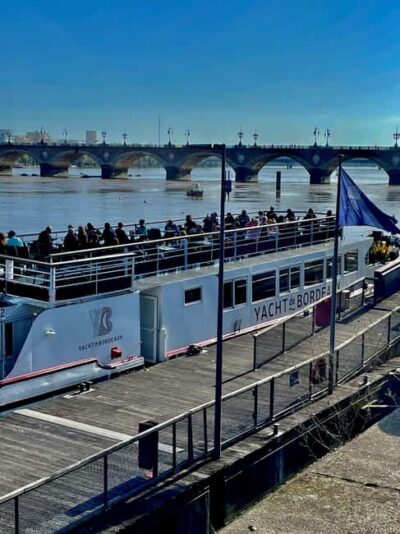
River Garonne Cruise with Glass of Wine and Canelé
Read our review →
Afternoon Saint-Emilion Wine Tasting & snack
Read our review →
Medoc or Saint Emilion Wine Tasting and Chateau from Bordeaux
Read our review →
Saint Emilion Day Trip with Sightseeing Tour & Wine Tastings from Bordeaux
Read our review →
Saint-Emilion Electric Bike Day Tour with Wine Tastings & Lunch
Read our review →Lists this tasting appears in